New Jersey Fluke Bag Limit Explained
Few things can deflate an angler's excitement faster than reeling in a beautiful fluke, only to realize you've misunderstood the complex bag limits and might have to throw it back – or worse, face a penalty. The regulations surrounding summer flounder, affectionately known as fluke here in the Garden State, can feel like a moving target, especially with different rules for various bodies of water. This comprehensive guide is designed to cut through that confusion, explaining New Jersey's fluke bag limits, size restrictions, and season dates, so you can fish with confidence and keep your legal catch.
Demystifying the New Jersey Fluke Bag Limit
The New Jersey Department of Environmental Protection (NJDEP) Division of Fish and Wildlife sets these regulations to ensure sustainable fishing for future generations, and for fluke, these rules are particularly important due to population management efforts. It’s not just about a single number; it's about understanding how many you can keep and under what circumstances.
The Standard Statewide Daily Catch Limit for Fluke
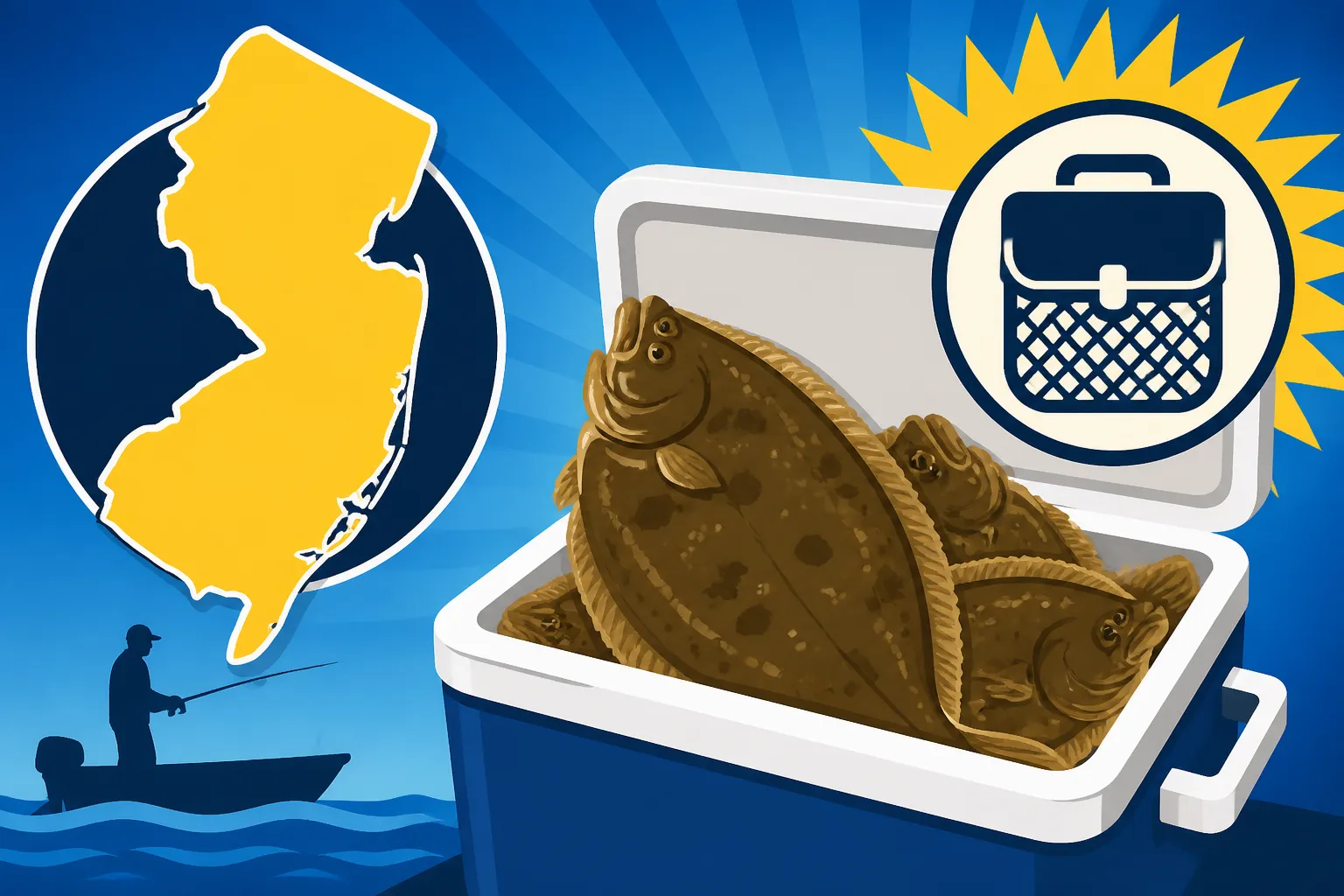
For most of New Jersey's coastal waters, including the vast Atlantic Ocean, the various inlets like Manasquan and Barnegat, and expansive bays like Raritan Bay and Barnegat Bay, the daily bag limit for fluke is fairly straightforward. Currently, and anticipated to remain consistent for 2026, anglers are permitted to keep three summer flounder (fluke) per person per day. This means that if you're out fishing from a boat, a pier, or even the surf, you can only legally possess three fluke that meet the minimum size requirements within a 24-hour period.
This limit applies whether you're fishing recreationally from your own boat, chartering a private vessel, or joining a party boat. Each individual angler is responsible for their own catch and ensuring they don't exceed this limit. It’s a measure designed to distribute the harvest equitably among all anglers and protect the overall stock. Understanding this standard limit is your first step to a worry-free day on the water.
Understanding the "Possession Limit" as it Applies to Fluke
Beyond the daily catch limit, there’s also the concept of a possession limit, which often causes confusion. For fluke in New Jersey, the possession limit generally mirrors the daily bag limit when you're actively fishing or transporting your catch immediately after fishing. This means you shouldn't have more than three legal-sized fluke in your possession at any given time, regardless of how many days you've been fishing or how many trips you've made.
However, there can be nuances if, for example, you're on a multi-day trip or are storing fish in a freezer at your home. The key is that the daily bag limit applies to what you catch and keep within a single calendar day (or a fishing trip that spans part of two days but is considered one continuous outing). Once you've safely stored your catch at your permanent residence, it typically falls outside the immediate "possession" rule for active fishing trips, but it's always wise to double-check the fine print in the current Reading the New Jersey Fish and Wildlife Digest to ensure you're compliant, especially if you're freezing a significant quantity of fish over multiple outings.
Distinct Fluke Regulations for Delaware Bay
One of the most frequent points of confusion for anglers targeting fluke in New Jersey is the unique set of rules that apply to the Delaware Bay. It’s easy to assume statewide regulations apply everywhere, but the Delaware Bay is a special case that requires specific attention.
The Unique Management of Delaware Bay
The Delaware Bay is a shared waterway, managed cooperatively by both New Jersey and Delaware. This bi-state management agreement often results in slightly different fishing regulations for species like fluke to balance conservation efforts and recreational opportunities on both sides of the bay. These differences can be a headache if you're not aware of them, potentially leading to unintentional violations. The rationale behind these distinct rules often involves specific stock assessments for the Delaware Bay population, which may differ from the broader Atlantic Coast stock.
Anglers venturing into Delaware Bay, whether from ports like Fortescue or sailing down from further north, must be acutely aware that the regulations change the moment they enter those waters. It's a critical distinction to make when planning your trip to avoid any surprises. This shared responsibility is why the limits for summer flounder can vary significantly from the rest of New Jersey's marine fishing grounds. To dive deeper into these unique regulations, check out our guide on Why Is the Delaware Bay Fluke Limit Different From the Rest of New Jersey?.
Specific Bag and Size Rules for Delaware Bay
For anglers fishing specifically in the New Jersey waters of Delaware Bay, the regulations for fluke currently feature both a distinct size limit and a "slot" limit, which further complicates things but aims to protect certain age classes of fish. As of the most recent regulations, and expected for 2026:
- Minimum Size Limit: 17 inches
- Daily Bag Limit: 3 fish per person
- Slot Limit: Within your three-fish bag, you can keep one fish between 17 and less than 18 inches, and two fish that are 18 inches or greater.
This slot limit means you can't just keep any three fish over 17 inches. You need to ensure that at least two of them are 18 inches or longer. This type of regulation is designed to protect larger, often more reproductively valuable fish, while still allowing for a reasonable harvest of smaller, legal-sized fluke. It requires anglers to be extra diligent with their measurements, making a reliable measuring device an absolute must-have. You can find excellent, easy-to-read measuring boards on platforms like Amazon that are perfect for keeping on your boat or in your tackle box.
Here’s a quick comparison of the fluke bag and size limits across different New Jersey waters:
| Waterway | Minimum Size | Daily Bag Limit | Specific Slot Limit (if any) |
|---|---|---|---|
| Standard NJ Waters | 18 inches | 3 fish | None |
| Delaware Bay | 17 inches | 3 fish | 1 fish between 17" and <18", 2 fish 18" or greater |
Understanding Fluke Size Limits and Season Dates
Knowing the bag limit is only half the battle. You also need to be keenly aware of the minimum size limits and the specific season dates, as keeping an undersized fish or fishing out of season can lead to severe penalties, regardless of your bag count. These regulations work in tandem to manage the fluke population effectively.
The Importance of the Minimum Size Limit
The minimum size limit for fluke is arguably the most critical regulation for individual anglers to follow. For most of New Jersey's coastal waters, the minimum size is 18 inches, while in the Delaware Bay, it's 17 inches with the aforementioned slot. This isn't just a suggestion; it's a strict rule. If you catch a fluke that measures even a hair under the legal length, it must be immediately released unharmed.
Accuracy in measuring your catch is paramount. Many experienced anglers carry a dedicated fish measuring board or a sturdy, clearly marked measuring tape. When measuring, lay the fish flat on its side, mouth closed against the bump stop, and measure to the tip of the tail. Don't measure along the curve of the body. Having a reliable, waterproof measuring tool is non-negotiable, and you can easily pick one up from retailers like Amazon, ensuring you're always prepared. For more detailed insights, our guide on New Jersey Fluke Size Limit: 18 Inches provides excellent information.
Key Season Dates for Fluke Fishing in New Jersey
Fluke fishing isn't a year-round affair in New Jersey; there's a specific season during which it's legal to target and harvest these fish. These seasons are established to protect the species during critical spawning periods and allow for population recovery. As anticipated for 2026, the fluke season dates generally fall within these windows:
- Standard NJ Waters: Typically, the season opens in early May and runs through late September. For instance, in recent years, it has often started around May 4th and closed around September 27th.
- Delaware Bay: The season in Delaware Bay typically has a slightly different timeframe, often opening a bit later and closing earlier. Recent seasons have seen it open in late May (e.g., May 24th) and close in early September (e.g., September 5th).
These dates can shift slightly year to year based on federal and regional stock assessments, so always consult the most current regulations published by the NJDEP Division of Fish and Wildlife before you head out. Missing these dates means you cannot legally keep any fluke, even if they meet the size and bag limits. You can find comprehensive details about specific dates in our resource, New Jersey Fluke Season Dates for 2026.
Tips for Staying Compliant and Enjoying Your Fluke Fishing
Navigating fishing regulations can be daunting, but with a little preparation and vigilance, you can ensure every trip is enjoyable and fully compliant. Beyond just knowing the numbers, adopting good practices will make you a more responsible and successful angler.
Always Check the Latest Regulations Before You Go
Fishing regulations are dynamic; they can and do change. What was true last year, or even last month, might have been updated. The NJDEP Division of Fish and Wildlife is the primary source for the most accurate and up-to-date rules. Before every fishing trip, especially at the start of a new season, make it a habit to check their official website or grab a copy of the physical New Jersey Fish and Wildlife Digest: Where to Find the Current Rules. This digest is an invaluable resource that details all bag limits, size limits, and season dates for every species in both freshwater and saltwater.
It's also a good idea to chat with local tackle shop owners. They are often the first to know about regulation changes and can offer practical advice based on current conditions. Don't rely solely on what you heard from a friend or saw in an old social media post; verify it with official sources. This proactive approach will save you potential headaches and ensure your catch is always legal.
Essential Gear for Fluke Compliance and Best Practices
Having the right gear isn't just about catching fish; it's about fishing responsibly. For fluke, a few items are absolutely essential for compliance and ensuring the health of the fish you release.
Firstly, a reliable measuring device is non-negotiable. Whether it's a fixed measuring board, a flexible tape measure, or even a sticker on your cooler, make sure it's accurate and easily accessible. When you've got a hot bite going, you don't want to be fumbling around trying to find something to measure with. Many anglers prefer sturdy, brightly colored measuring boards that float, just in case they go overboard. These are readily available on Amazon and from most local tackle shops.
Secondly, consider proper release tools. While fluke are generally hardy, minimizing handling time and ensuring a quick, clean release of undersized fish is crucial for their survival. A de-hooking tool can help remove hooks cleanly without touching the fish, reducing stress and injury. Barbless hooks can also make releasing fish much easier, though they are not always practical for fluke fishing where strong hooks are often preferred. Learning How to Fish for Fluke in New Jersey effectively includes responsible handling practices.
Consequences of Non-Compliance
The penalties for violating fishing regulations in New Jersey can be significant, ranging from hefty fines to the forfeiture of your fishing equipment, and even suspension of your fishing privileges. Conservation Police Officers (CPOs) routinely patrol New Jersey's waterways, conducting checks on anglers to ensure compliance with licenses, bag limits, and size restrictions. It's not uncommon to see them at boat ramps, along popular shorelines, or even boarding boats out on the water.
Ignorance of the law is not an excuse. Even an honest mistake of mismeasuring a fish by an inch can lead to a summons. Beyond the legal consequences, violating regulations impacts the very fish populations we love to target. Adhering to bag and size limits helps maintain healthy stocks, ensuring that there will be fluke to catch for years to come. Always ensure you also have your New Jersey Fishing License Guide for 2026 in possession, as this is often the first thing a CPO will check. Understanding How Bag and Size Limits Work in New Jersey is fundamental to responsible angling.
Disclaimer
Please remember that fishing regulations, including bag and size limits, can change without much advance notice. While every effort has been made to provide accurate and up-to-date information for New Jersey's fluke fishing regulations as anticipated for 2026, it is the angler's sole responsibility to consult the most current official New Jersey Division of Fish and Wildlife regulations before heading out on the water. This guide is for informational purposes only and should not be considered a substitute for the official regulatory digest.