Why Is the Delaware Bay Fluke Limit Different From the Rest of New Jersey?
It’s a truly frustrating experience for any angler in New Jersey: you think you’ve got a handle on the fishing regulations, then you head to a specific body of water, and suddenly, everything’s different. This is a common head-scratcher when it comes to fluke (summer flounder) in Delaware Bay. You might catch a perfectly legal fish there that would be undersized just a few miles north, or vice versa, leaving you scratching your head. This guide is here to clear up that confusion, explaining precisely why the Delaware Bay fluke limits diverge from the rest of New Jersey’s coast and what it means for your fishing trips.
Understanding Fluke Regulations in New Jersey and the Confusion They Cause
Fishing in New Jersey, especially for popular species like fluke, often feels like navigating a maze of ever-changing rules. Just when you memorize the current bag and size limits, they seem to shift, leaving many anglers feeling bewildered and worried about accidentally breaking the law. It’s a real challenge to stay on top of everything, and the situation with Delaware Bay fluke adds another layer of complexity that can really throw you for a loop.
The Statewide Standard for Summer Flounder (Fluke)
For the vast majority of New Jersey’s coastal waters, including our ocean beaches, back bays, and estuaries from Sandy Hook all the way down to Cape May (excluding the Delaware Bay portion), there's a relatively consistent set of regulations for summer flounder, commonly known as fluke. These regulations typically dictate a minimum size limit and a daily bag limit per angler. For instance, in many recent seasons, you might find the statewide rule to be something like a three-fish bag limit with a minimum size of 18 inches.
These regulations are put in place by the New Jersey Department of Environmental Protection (NJDEP) Division of Fish and Wildlife, often in concert with regional management plans. The goal is always to manage the stock sustainably, ensuring that future generations of anglers can also enjoy the thrill of catching these delicious flatfish. However, even these "statewide" rules aren't set in stone. They can change annually based on stock assessments and federal guidelines, making it essential to regularly check the official sources, such as the New Jersey Fish and Wildlife Digest: Where to Find the Current Rules.
Why Delaware Bay Stands Apart
Now, here's where the plot thickens and the source of much angler frustration comes into play: the Delaware Bay. While it's undeniably part of New Jersey's geographical boundary, its unique status as a shared waterway with the state of Delaware means that it's subject to a slightly different regulatory framework. It's not just a random decision by New Jersey officials; rather, it’s a necessary collaboration driven by the very nature of shared natural resources.
The fish in Delaware Bay don’t carry passports. They swim freely between the waters managed by New Jersey and those managed by Delaware. To effectively conserve and manage a migratory species like fluke within such a shared ecosystem, both states need to work together to establish harmonious rules. If New Jersey had one set of rules and Delaware had a drastically different set for the same body of water, it would lead to confusion, enforcement nightmares, and potentially unsustainable fishing pressure. This interstate cooperation is the fundamental reason why you'll often see specific, sometimes slightly different, regulations for fluke when you’re fishing in the waters of Delaware Bay, rather than just adhering to the general New Jersey Fluke Size and Bag Limits Explained that apply elsewhere.
The Interstate Management of Delaware Bay Fluke
The management of fisheries, especially for species that migrate across state lines or reside in shared waterways like the Delaware Bay, is a complex dance. It's not just about one state making arbitrary decisions; it's about a collaborative effort to ensure the long-term health of the fish populations. This collaborative approach is spearheaded by a vital organization that often flies under the radar for many anglers.
The Atlantic States Marine Fisheries Commission (ASMFC) Role
The key player in establishing consistent management for migratory marine species along the Atlantic coast, including our beloved fluke, is the Atlantic States Marine Fisheries Commission (ASMFC). The ASMFC is an interstate compact, established by Congress, that helps coordinate the conservation and management of shared marine fishery resources from Maine to Florida. When it comes to the Delaware Bay, the ASMFC provides a critical platform for both New Jersey and Delaware to come to a joint agreement on regulations for species that inhabit these shared waters.
Essentially, the ASMFC develops fishery management plans based on scientific assessments of fish stocks. They then recommend management measures—like size limits, bag limits, and season dates—to the individual states. While states technically have the authority to implement these rules, there's significant pressure and incentive to comply with the ASMFC's recommendations to ensure coast-wide sustainability. This means that New Jersey and Delaware sit at the table, review the data, and collectively decide on the best management practices for fluke within the bay, often aligning their regulations as closely as possible to maintain a fair and effective system. This cooperative approach is crucial, especially when considering the nuances of How New Jersey Sets Its Fishing Regulations Each Year.
Balancing Conservation and Angler Access
The process of setting these regulations for Delaware Bay fluke, or any species for that matter, is a constant balancing act. On one side, you have the imperative of conservation. Scientists and fishery managers rely on extensive data, including population surveys, catch statistics, and biological studies, to assess the health of the fluke stock. Their primary goal is to prevent overfishing and ensure the species can reproduce successfully and maintain healthy numbers for the future. This means making tough decisions that might sometimes reduce angler harvest.
On the other side of the scale is angler access and socio-economic impact. Fishing isn't just a hobby; it's a significant part of the culture and economy in many coastal communities. Regulations that are too restrictive can harm bait and tackle shops, charter businesses, and local tourism. Therefore, the ASMFC, and subsequently New Jersey and Delaware, must weigh the scientific recommendations against the practical realities and desires of the angling public. Public comment periods are a vital part of this process, allowing anglers to voice their opinions and concerns. This ongoing dialogue ensures that while we’re protecting the resource, we’re also trying to maximize opportunities for anglers within sustainable limits. It’s a complex and often contentious process, but it’s what allows us to keep fishing in these beautiful waters.
Specific Differences in Delaware Bay Fluke Limits
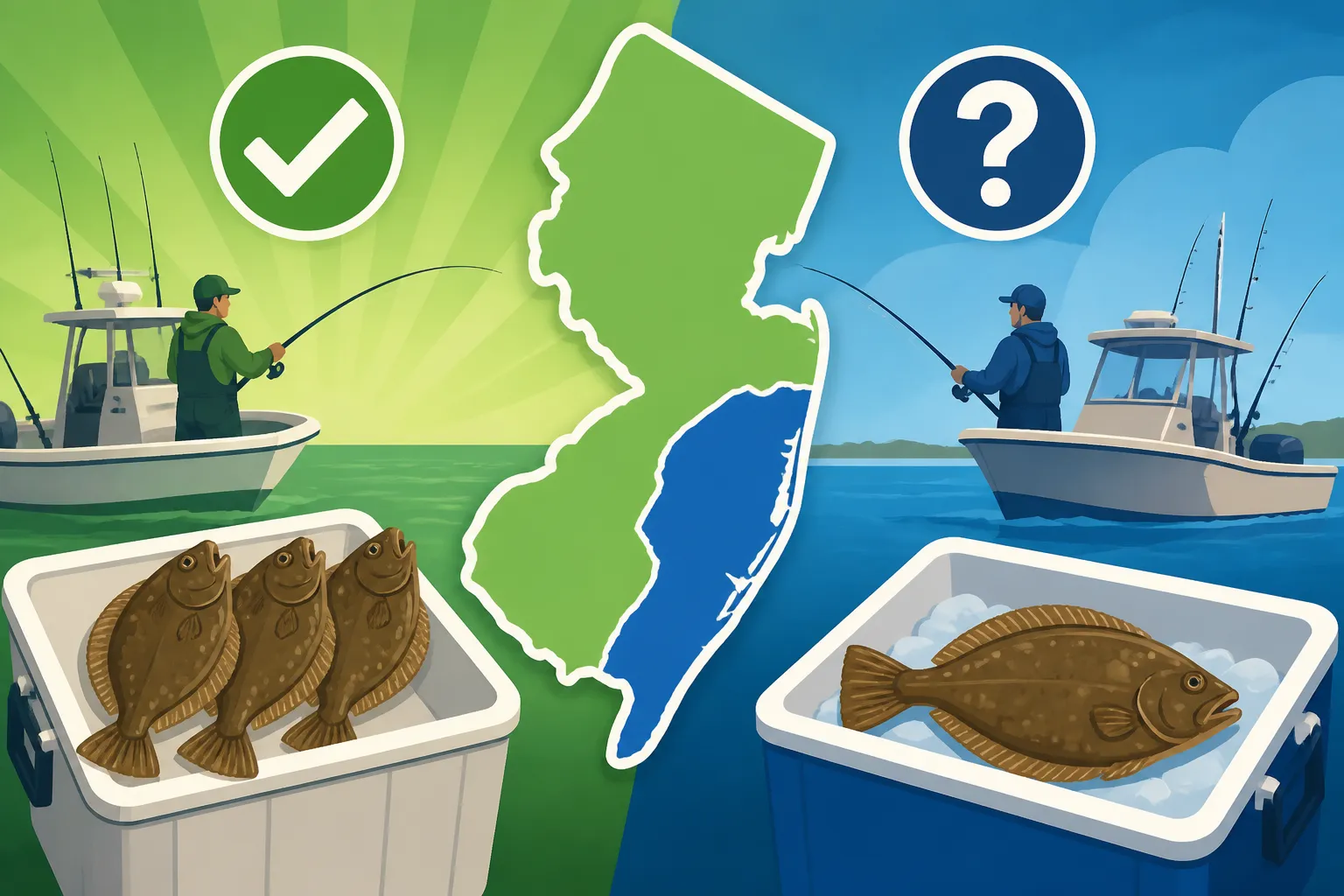
The practical result of this interstate management is that you, as an angler, might encounter different rules when fishing for fluke in Delaware Bay compared to other New Jersey waters. It's not about making things difficult; it's about tailoring regulations to the specific stock dynamics and management needs of that shared water body.
Comparing Size and Bag Limits
Let's get down to the brass tacks: what do these differences actually look like? While regulations can change year to year, a common scenario we've seen in recent seasons (like 2024, for example) illustrates the point perfectly.
Consider the following hypothetical, but realistic, comparison:
New Jersey Fluke Regulations – 2024 Example
| Area of New Jersey | Minimum Size Limit | Daily Bag Limit | Season Dates |
|---|---|---|---|
| General NJ (Ocean/Bays) | 18 inches | 3 fish | May 4 – September 25 (example dates) |
| Delaware Bay (NJ Side) | 17.5 inches | 4 fish | May 4 – September 25 (example dates) |
Please note: These numbers are illustrative based on recent patterns. Always verify the most current regulations with the official NJ Fish and Wildlife Digest or the Delaware Division of Fish & Wildlife before you head out.
As you can see from this example, the difference might seem subtle—a half-inch in size, an extra fish in the bag—but it's significant. If you’re fishing in Delaware Bay and catch a 17.75-inch fluke, that’s a keeper in those waters. However, if you then take that same fish out of the Delaware Bay and into the ocean waters of New Jersey, it suddenly becomes an undersized fish, and possessing it could lead to a fine. This is why knowing exactly where you are fishing and what rules apply is paramount. Checking the current year's How Bag and Size Limits Work in New Jersey is always a good practice.
Implications for Anglers Fishing Delaware Bay
For anglers, these differing limits mean you have to be extra vigilant. It's not enough to know the general New Jersey fluke rules; you need to specifically confirm the Delaware Bay rules if that's where you're headed. This isn't just about avoiding a citation from the New Jersey Conservation Police and License Checks; it's about being a responsible angler who contributes to the sustainable management of the fishery.
Here are a few key implications and tips:
- Check Before Every Trip: Seriously, make it a habit. Before you launch your boat or head to a pier along the Delaware Bay, pull up the latest regulations from both New Jersey Fish & Wildlife and the Delaware Division of Fish & Wildlife. They often publish joint press releases or coordinated information. Sometimes, specific portions of the bay, like reciprocal waters, might have even more nuanced rules.
- Know Your Location: If you're on a boat, ensure your GPS is working and you understand the boundaries. The line between where general New Jersey rules end and Delaware Bay rules begin can sometimes be subtle, especially in the mouth of the bay or tributaries.
- Educate Yourself and Others: Share this information with your fishing buddies. The more informed everyone is, the better for the fishery as a whole. You can even find essential gear like a reliable ruler or measuring device on platforms like Amazon to make sure your catches are legal.
- Understand Penalties: Getting caught with an undersized fish or over the bag limit can result in significant fines. Conservation officers take these rules seriously because they are vital for protecting fish stocks. Don't let a simple misunderstanding ruin your day or deplete the resource.
Navigating Future Regulation Changes
Just when you think you've got it all figured out, the regulations shift again. This isn't done to annoy anglers, but rather to respond to dynamic environmental factors and scientific data. Staying informed is the best defense against regulatory headaches.
How Regulations are Set Annually
The process for setting annual fishing regulations is incredibly complex and involves multiple stages. It usually starts with scientific stock assessments, which evaluate the health and population size of species like fluke. These assessments are conducted by state and federal biologists, often through organizations like the National Oceanic and Atmospheric Administration (NOAA) and the ASMFC. Based on these findings, catch limits are recommended.
Then, regional fishery management councils and the ASMFC propose specific regulatory measures (size limits, bag limits, season dates) designed to keep catches within those limits. These proposals go through public comment periods, where anglers, fishing groups, and other stakeholders can provide feedback. Finally, the state agencies, like the New Jersey Division of Fish and Wildlife, adopt the final regulations. This whole process is cyclical, meaning what was true last year might not be true this year. Factors like water temperature, spawning success, and even fishing pressure from surrounding states can influence these annual adjustments. Keeping an eye on the New Jersey Fishing Season Dates and Closures can give you an early heads-up on potential changes.
Staying Informed on Delaware Bay Specifics
Given the annual changes and the specific nuances of Delaware Bay regulations, actively seeking out the latest information is crucial.
- Official State Websites: Both the New Jersey Division of Fish and Wildlife and the Delaware Division of Fish & Wildlife websites are your primary, most reliable sources. They will publish the current year's regulations as soon as they are finalized.
- The NJ Fish and Wildlife Digest: This is an indispensable resource. It’s updated annually and provides comprehensive details on all freshwater and saltwater regulations. You can find it online, or pick up a hard copy at most bait and tackle shops throughout the state.
- Email Newsletters and Social Media: Many state agencies and fishing organizations offer email newsletters or maintain active social media presences where they announce regulation changes. Signing up for these alerts can ensure you get timely updates directly to your inbox.
- Local Bait and Tackle Shops: These local hubs are often the first to know about changes, especially those that affect nearby waters like Delaware Bay. The folks behind the counter at your favorite shop usually have their finger on the pulse of local rules and conditions. They can also point you to handy tools, sometimes available on Amazon, to help you stay compliant.
- Fishing Forums and Groups: Online communities can be a great place to discuss regulations and get clarification, but always cross-reference information found there with official sources to ensure accuracy. Remember, peer advice is helpful, but official documents are law.
By proactively staying informed, you can enjoy your time fishing in the unique waters of Delaware Bay without the worry of inadvertently violating regulations. It's all part of being a knowledgeable and responsible angler.
Disclaimer
The information provided in this guide is for general informational purposes only and is subject to change. While we strive to provide accurate and up-to-date content, fishing regulations, season dates, and limits are set by governmental agencies and can be modified at any time. It is the angler's sole responsibility to consult the official New Jersey Department of Environmental Protection (NJDEP) Division of Fish and Wildlife regulations, and any relevant interstate agreements, before engaging in any fishing activity. Failure to do so may result in penalties.