Why New Jersey’s Saltwater Registry Replaced the Federal Registry
It can be incredibly confusing to keep up with all the ins and outs of fishing regulations, especially when federal and state rules seem to intertwine and then diverge. Many anglers in New Jersey have scratched their heads trying to understand why, years ago, our state decided to create its own saltwater recreational angler registry program, effectively stepping away from the federal system. This guide is here to untangle that knot, explaining the journey from a federal requirement to New Jersey's independent approach, and what it all means for you when you're out on the water.
The Federal Mandate for Saltwater Angler Data
Before New Jersey created its own system, there was a national push for better data on recreational saltwater fishing. For a long time, the information collected on commercial fishing dwarfed the data available for recreational anglers. This created a significant gap in understanding the full impact of fishing pressure on various marine species. The federal government recognized this imbalance, and it sparked the creation of a nationwide registry.
The Need for National Data on Recreational Anglers
The motivation behind the federal registry was really quite straightforward: better management. Fisheries managers, both at the federal and state levels, need accurate data to make informed decisions about bag limits, size restrictions, and seasons. Without a clear picture of how many people are fishing, how often, and what they're catching (even if it's mostly catch and release), it's tough to assess fish stocks accurately. The federal program, known as the National Saltwater Angler Registry (NSAR), was designed to fill this void by collecting basic contact information from anyone fishing recreationally in federal waters or in state waters that hadn't established their own approved program. The idea was that by knowing who was out there, they could then conduct more targeted surveys to understand catch rates, fishing effort, and angler demographics, which are all crucial pieces of the conservation puzzle.
Initial Challenges and Angler Frustrations
However, the implementation of the federal registry wasn't without its bumps in the road, especially for folks like us who just want to enjoy a day on the water. One of the biggest points of contention for many anglers was the fee. While it wasn't a huge amount, typically around $15 to $25 annually, it felt like just another expense piled on top of a freshwater license, boat registration, and all the gear we already buy. People questioned what they were getting for their money, especially if they already held a state freshwater license and felt they were already contributing to conservation. Plus, there was a degree of bureaucratic confusion. Anglers had to register with the National Marine Fisheries Service (NMFS), which sometimes felt like navigating a maze of government websites. It wasn't always clear who needed to register, where, and when, leading to frustration and, in some cases, non-compliance from anglers who felt it was an unnecessary burden or simply too confusing to bother with.
New Jersey's Decision to Opt Out of the Federal System
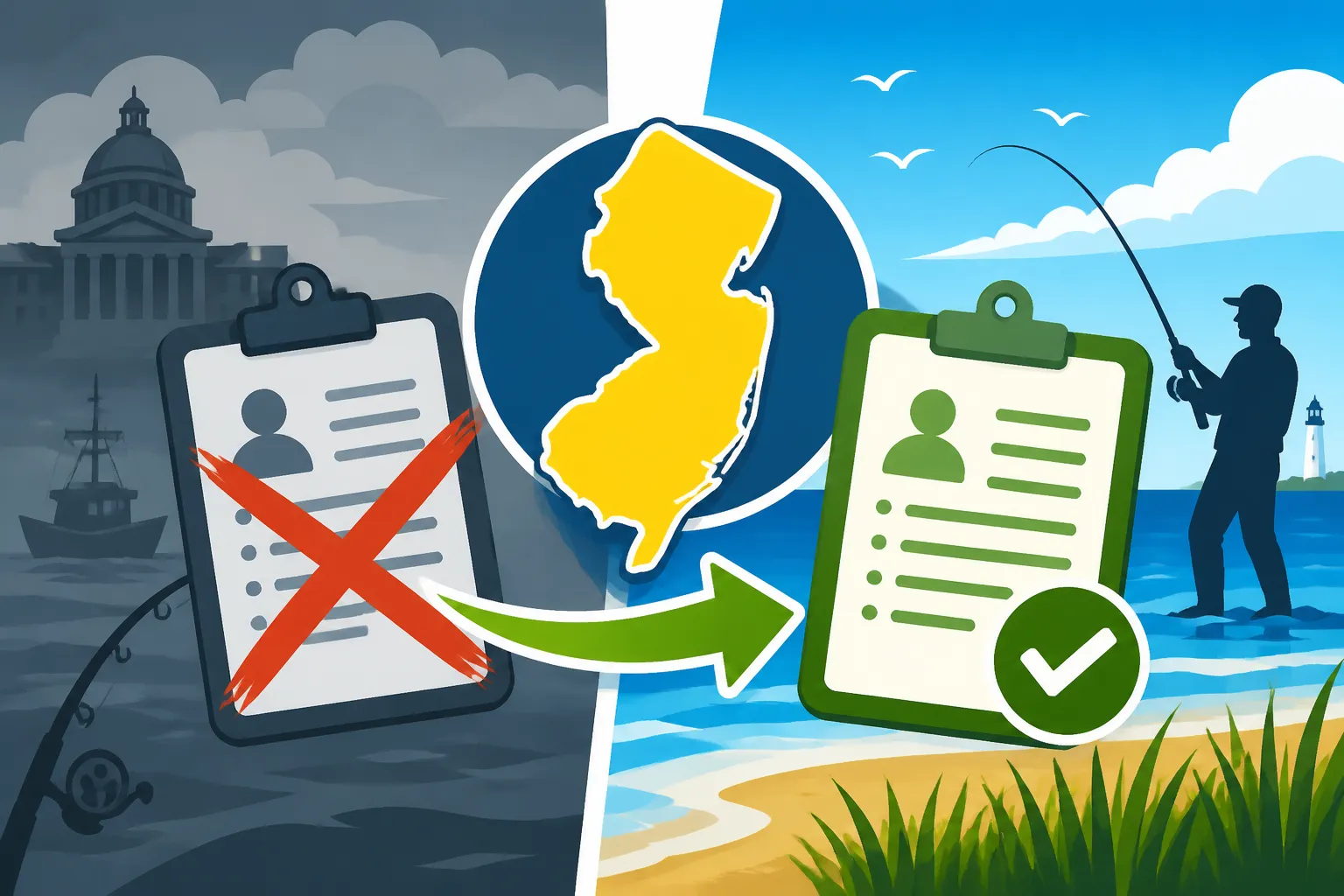
Given the challenges and widespread sentiment among its anglers, New Jersey, like several other coastal states, eventually decided to establish its own independent saltwater recreational angler registry. This wasn't a knee-jerk reaction but a well-considered move aimed at better serving the state's unique fishing community and its distinct marine ecosystems. It reflected a desire to have more direct control over data collection and management decisions that directly impact New Jersey's coastal resources and the anglers who rely on them.
State-Specific Management Needs
New Jersey boasts a diverse and vibrant saltwater fishing scene, from the back bays to offshore canyons. Our state’s Department of Environmental Protection (DEP), specifically the Division of Fish and Wildlife, has a deep understanding of these local waters and the specific species that inhabit them. They recognized that while federal data collection was valuable, a state-run program could be more finely tuned to New Jersey's specific needs and priorities. For instance, species like summer flounder (fluke), striped bass, and black sea bass are incredibly important to our recreational fishery. Having a registry managed directly by the state means that the data collected can be immediately integrated into New Jersey's own management models, allowing for quicker and more precise adjustments to regulations based on local stock assessments and environmental factors. This localized approach allows for a much more responsive system, directly benefiting the health of our fisheries and the experiences of our anglers.
Addressing Local Concerns and Data Accuracy
A significant driver for New Jersey to establish its own registry was to address the specific concerns raised by its angling community and to improve the accuracy of data. Many anglers felt that the federal system didn't adequately capture the nuances of fishing effort and success within New Jersey's unique geographical areas. By taking over the registry, the state could design a program that asked the right questions, at the right times, to the right anglers, ensuring the data collected was truly representative of fishing activity along the Jersey Shore. This wasn't just about collecting numbers; it was about building trust. When anglers feel that their state agency is listening and designing programs that reflect their realities, they are more likely to participate, leading to more complete and reliable data. This local control allowed for a more tailored approach to angler surveys, enabling New Jersey to get a clearer picture of fishing trends, which in turn helps ensure sustainable fisheries for generations to come.
The Benefits for New Jersey Anglers
Perhaps the most immediately tangible benefit for New Jersey anglers when the state replaced the federal registry was the elimination of the fee. The New Jersey Saltwater Registry is free to join, removing that particular financial barrier that many found frustrating. This was a direct response to angler feedback and a way for the state to encourage participation without adding another cost. Beyond the financial aspect, having a state-run registry means simplified access and clearer communication. Instead of navigating a federal website, anglers can now register directly through the New Jersey Division of Fish and Wildlife, often in conjunction with purchasing their freshwater license or other state permits. This streamlines the process and ensures that information regarding state-specific regulations and fishing opportunities can be more easily disseminated. It makes complying with the rules less of a hassle, allowing us to focus more on the fishing itself. The fact that the state decided to offer the registry at no cost was a huge win for the angling community, demonstrating a commitment to supporting recreational fishing. This also makes it simpler for folks who fish both fresh and saltwater to keep their paperwork in order, as outlined in our guide on Freshwater License and Saltwater Registry Rules for Anglers Who Fish Both.
The Mechanism of the New Jersey Saltwater Registry
So, with New Jersey taking the reins, how exactly does the state's saltwater registry work? It's actually designed to be quite user-friendly, especially compared to the initial federal system, aiming to encourage maximum participation from every angler who casts a line in our coastal waters. The primary goal remains the same: to collect vital data, but now it's done through a more localized and angler-friendly approach.
How to Register for New Jersey's Saltwater Registry Program
Getting registered for New Jersey's saltwater program is surprisingly simple, and that’s by design. The state wants to make it as easy as possible for everyone to comply. You can register online through the New Jersey Division of Fish and Wildlife's website, which is typically the quickest and most convenient method. The process usually involves providing some basic personal information, such as your name, address, and contact details. It's not like getting a full-blown fishing license; it's more about registering your presence as a saltwater angler so the state can account for fishing effort. There are also options to register in person at licensed agents, which can be handy if you're already at a tackle shop picking up some bait. The state even has an automated phone system for registration. This multi-pronged approach ensures that no matter where you are or what your comfort level is with technology, you can easily fulfill the New Jersey Saltwater Registry Program Requirements. Once registered, you'll typically receive a confirmation, which you should keep on hand as proof, much like your fishing license.
Understanding the "Free" Aspect of the Registry
One of the most significant selling points of the New Jersey Saltwater Registry, and a major reason for its popularity among anglers, is that it is completely free of charge. This was a deliberate move by the state to differentiate itself from the federal program it replaced, which had a fee. The idea behind making it free was to remove any financial barrier to participation, encouraging as many recreational saltwater anglers as possible to register. The more anglers who register, the more comprehensive and accurate the data collected for fisheries management becomes. This helps ensure that the information used to make decisions about seasons, limits, and conservation efforts truly reflects the full scope of recreational fishing activity in New Jersey. So, when you hear that The New Jersey Saltwater Registry Is Free to Join, it’s not just a perk; it’s a strategic choice to boost angler cooperation and data integrity.
Differences from a Traditional Fishing License
It's crucial to understand that the New Jersey Saltwater Registry is not a fishing license. This is a point of confusion for many anglers, especially those new to the sport or visiting from out of state. A traditional fishing license, which you do need for freshwater fishing in New Jersey, grants you the legal right to fish. It typically comes with a fee, and the funds generated often go directly into fisheries management, stocking programs, and conservation efforts. The saltwater registry, on the other hand, is purely a data collection tool. It doesn't grant you any additional fishing rights that aren't already covered by state or federal regulations. Its sole purpose is to identify you as an active saltwater angler so that agencies can conduct surveys and gather information on recreational fishing effort and harvest. This distinction is vital because even if you're registered for saltwater, you'll still need a separate freshwater license if you plan to fish in lakes, rivers, or streams. This separate requirement is also why we have a dedicated guide, Why Does New Jersey Require Saltwater Registration Separately From a License?, to help clarify these distinctions.
| Feature | Federal Saltwater Registry (Prior) | New Jersey Saltwater Registry (Current) |
|---|---|---|
| Administering Body | National Marine Fisheries Service (NMFS) | New Jersey Division of Fish and Wildlife |
| Cost | ~$15 – $25 Annual Fee | Free |
| Purpose | Data collection for federal fisheries management | Data collection for state fisheries management |
| Requirement | For recreational saltwater fishing in federal waters or non-exempt states | For recreational saltwater fishing within New Jersey's state waters |
| Integration | Separate federal process | Integrated with state regulations and DFW services |
| Angler Benefit | Contributes to national data | Free, localized data, direct state communication |
Comparing the Federal and New Jersey Systems
Understanding why New Jersey opted for its own saltwater registry really comes down to comparing the federal system it replaced with the state's current program. While both aimed to collect essential data for fisheries management, their approaches, especially regarding cost and local relevance, diverged significantly, leading to the shift we now experience.
Key Differences in Scope and Reporting
The federal registry, when it was active nationally, had a very broad scope, intending to capture data from recreational saltwater anglers across all coastal states that hadn't established their own compliant programs. Its reporting mechanisms were designed to feed into national stock assessments, which are crucial for managing species that migrate along the entire Atlantic coast. While comprehensive, this national scope sometimes meant that the data wasn't as granular or immediately actionable for specific state-level management issues. New Jersey's system, however, focuses purely on fishing activity within our state's jurisdiction. This localized approach allows the Division of Fish and Wildlife to tailor its surveys and data analysis specifically to the species and fishing practices prevalent along the Jersey Shore. It means that when you register for New Jersey's Saltwater Registry Program, the information you provide directly contributes to decisions made about our local striped bass, fluke, or weakfish populations, rather than being pooled into a larger, less specific national dataset. This localized reporting can often lead to more targeted and effective management strategies for New Jersey's unique marine resources.
Impact on Interstate Anglers
For anglers who might fish across state lines, the shift from a federal registry to individual state registries can introduce a layer of complexity. Under the federal system, a single federal registration might have covered you in multiple states if they hadn't opted out. However, with New Jersey operating its own program, anglers who fish in New Jersey's saltwater and then cross into, say, New York or Delaware waters, would need to ensure they comply with those states' respective requirements. If those neighboring states also have their own registries, you'd need to register with each one. Conversely, if a neighboring state still falls under the federal umbrella, you'd need to comply with the federal registry for fishing in their waters. This is why it's always critical to check the regulations of any state you plan to fish in, as fishing license reciprocity between New Jersey and neighboring states often applies to freshwater, but saltwater registries are typically state-specific. It’s a bit of a patchwork, but the trade-off, from New Jersey's perspective, is better local data. This also extends to certain charter operations, as clarified in our article, Does the New Jersey Saltwater Registry Cover Charter Boat Passengers?, which explains that while private recreational anglers need to register, charter boat captains cover the registration for their passengers.
The Broader Implications for New Jersey Fishing
New Jersey's decision to replace the federal saltwater registry with its own program wasn't just about a change in paperwork or a removed fee. It had, and continues to have, significant implications for how our state manages its marine fisheries, the quality of data available, and ultimately, the long-term health of our coastal ecosystems. It represents a more direct and arguably more effective approach to conservation efforts within our borders.
Enhanced Data for Sustainable Fisheries Management
At its core, the New Jersey Saltwater Registry is a tool for enhanced data collection, which is paramount for sustainable fisheries management. Before the registry, estimating the total recreational fishing effort and harvest was often done through broader surveys that could lack the precision needed for specific state-level species management. By having its own registry, New Jersey can directly control the data collection process, allowing the Division of Fish and Wildlife to conduct more targeted and comprehensive surveys of its registered anglers. This means better estimates of catch rates, fishing pressure, and angler demographics for key species like striped bass, fluke, and black sea bass. More accurate data allows managers to set bag and size limits, define seasons, and implement other conservation measures that are truly reflective of local fish stocks and fishing activity, rather than relying on broader, less specific federal estimates. This ability to get a clearer picture of what's happening on our local waters is invaluable for making decisions that protect our marine resources for the future. For instance, the details found in the New Jersey Fish and Wildlife Digest often stem from this improved, localized data.
Future Outlook for Saltwater Angling in New Jersey
Looking ahead, New Jersey's independent saltwater registry bodes well for the future of recreational angling in the state. By fostering a direct relationship with its saltwater fishing community through a free, accessible registration program, the state is building a foundation of cooperation and trust. This is critical for effective conservation. When anglers feel heard and see the direct benefits of their participation in terms of better-managed fisheries, they are more likely to support regulations and engage in responsible fishing practices. The enhanced data collected will undoubtedly lead to more informed and adaptive management strategies, helping to ensure healthy fish populations for years to come. Furthermore, it allows New Jersey to be a stronger voice in regional and national fisheries management discussions, armed with robust local data to advocate for its unique interests. Anglers can stay informed about upcoming changes and how the registry data influences them by checking out resources like New Jersey Fishing Regulation Changes for 2026. As we continue to enjoy the incredible fishing opportunities New Jersey offers, this state-run registry remains a quiet but powerful force in keeping our waters vibrant and productive. For those looking for supplementary items like waterproof pouches to carry their registration or new fishing gear, many anglers find a wide selection available on platforms like Amazon.
Disclaimer
The information provided in this guide is for general informational purposes only and is subject to change. Fishing regulations, license requirements, and registry rules are regularly updated by the New Jersey Department of Environmental Protection (NJDEP) Division of Fish and Wildlife. Always consult the official NJDEP Division of Fish and Wildlife website or the current New Jersey Fish and Wildlife Digest for the most accurate and up-to-date information before engaging in any fishing activity.