Delaware Bay Fluke Rules vs the Rest of New Jersey
It can be incredibly frustrating to hit the water, all geared up for a day of fluke fishing, only to realize halfway through that the rules for where you're casting are completely different from what you thought. New Jersey's fishing regulations, particularly for popular species like summer flounder (fluke), can feel like a moving target, especially when you factor in unique regions like Delaware Bay. This guide is here to untangle that confusion, offering a comprehensive look at how fluke rules in Delaware Bay stand apart from the rest of the Garden State's waters, ensuring you stay compliant and confident on your next outing.
Understanding the Unique Challenges of Delaware Bay Fluke Fishing
Delaware Bay isn't just another stretch of water along New Jersey's coast; it's a dynamic, shared estuary with a distinct ecosystem and, consequently, its own set of rules. For anglers, this means paying extra attention to the details.
Why Delaware Bay Has Different Rules
The primary reason Delaware Bay operates under separate fishing regulations for species like fluke boils down to its unique jurisdictional status. This large tidal estuary is bordered by both New Jersey and Delaware, and unlike some other shared waterways where a single state's license might be recognized across borders (though always double-check these reciprocal agreements carefully, as they can change), the fishing regulations themselves often diverge. The federal government also plays a role in fisheries management, particularly for migratory species, and decisions made by bodies like the Atlantic States Marine Fisheries Commission (ASMFC) often influence state-specific rules.
Fluke, being a highly migratory species, move in and out of the bay throughout the season. Their presence and abundance in Delaware Bay can fluctuate based on water temperature, food availability, and spawning cycles, sometimes differing from their patterns in the open ocean or other New Jersey back bays. This means that while anglers along the Jersey Shore might be experiencing one set of conditions and fish behavior, those in the Delaware Bay might be dealing with something entirely different. Consequently, management strategies are tailored to address the specific dynamics of the bay's fishery, aiming to protect the stock in these shared waters while providing recreational opportunities for both states' anglers. It's a delicate balancing act that often results in nuances that can catch an uninformed angler off guard.
The Importance of Conservation in Shared Waters
Conservation is a paramount concern when dealing with shared natural resources like Delaware Bay. Imagine two neighbors sharing a garden; if one over-harvests, it impacts the other. The same principle applies here. Both New Jersey and Delaware have a vested interest in the health of the fluke population within the bay. When one state implements a particular size or bag limit, it's often done in coordination, or at least in consideration, of the other state's management efforts. This ensures that the collective impact on the fluke stock is sustainable.
However, achieving perfect harmony isn't always easy. Different states might have varying scientific assessments, angler demographics, or political pressures that lead to slightly different regulatory approaches. This is where the ASMFC steps in, often setting coast-wide guidelines or targets that states must then meet through their individual regulations. The goal is always the same: to ensure that future generations can enjoy the thrill of catching fluke. For anglers, this means that while the varying rules might seem inconvenient at times, they are ultimately designed to protect the very fish we love to pursue. Understanding this broader conservation context can help put the seemingly arbitrary differences in perspective.
Diving Deep into New Jersey's General Fluke Regulations
Before we zero in on Delaware Bay, it's crucial to understand what New Jersey's "general" fluke rules entail. These are the regulations that apply to most of the state's coastal waters, bays, and inlets, from Sandy Hook down to Cape May, excluding the specific carve-out for Delaware Bay.
Statewide Fluke Size and Bag Limits
For the majority of New Jersey's marine waters and back bays, the state sets specific size and bag limits for summer flounder, commonly known as fluke. These limits are subject to change annually, sometimes even mid-season, based on scientific assessments of the stock, federal mandates, and public input. For instance, in a typical year, anglers might be allowed to keep a certain number of fluke per day, with each fish needing to meet a minimum length requirement. It's not uncommon for the statewide limit to be, say, three fluke per person per day, with a minimum size of 18 inches. However, these numbers are illustrative; the actual figures are published by the New Jersey Department of Environmental Protection (NJDEP) Division of Fish and Wildlife and are the official source.
The intent behind these limits is to allow enough fish to spawn and replenish the population while still providing ample recreational opportunities. Anglers often find themselves fishing in a variety of spots throughout the state, from the thoroughfares of Barnegat Bay to the ocean surf at Island Beach State Park, and generally, these statewide rules apply. It's a good habit to consult the latest "New Jersey Fish and Wildlife Digest" or the official NJDEP website before every season to confirm the current regulations. Ignoring these limits can lead to hefty fines, so staying informed is paramount. For a deeper dive into these specifics, check out our guide on New Jersey Fluke Size and Bag Limits Explained.
Season Dates and General Fishing Considerations
Just like size and bag limits, the fluke season dates are also subject to annual review and change. Typically, the season for summer flounder in New Jersey begins in late spring or early summer and extends well into the fall. For example, a season might run from early May through late September or even into early October. These dates are chosen to coincide with the migratory patterns of fluke as they move into shallower coastal waters and bays for feeding and then back offshore for spawning.
During the season, certain techniques and baits prove consistently effective across most New Jersey waters. Drifting with bucktail jigs tipped with Gulp! or natural bait like strips of squid or spearing is a perennial favorite. Many anglers also find success by casting from shore or piers, using similar bait setups. Popular areas like the Barnegat Light Inlet or the Manasquan Inlet see thousands of anglers targeting fluke when the season is open. Beyond just the fishing itself, understanding when the season opens and closes helps anglers plan their trips, boat maintenance, and tackle purchases. Knowing the window of opportunity is just as important as knowing what you can keep. You can learn more about specific timing in our article on New Jersey Fluke Season Dates for 2026.
The Specifics of Delaware Bay Fluke Regulations
Now, let's address the elephant in the room: Delaware Bay. This unique body of water often has its own set of rules, creating a distinct fishing environment that demands special attention from New Jersey anglers.
Size and Bag Limits Unique to Delaware Bay
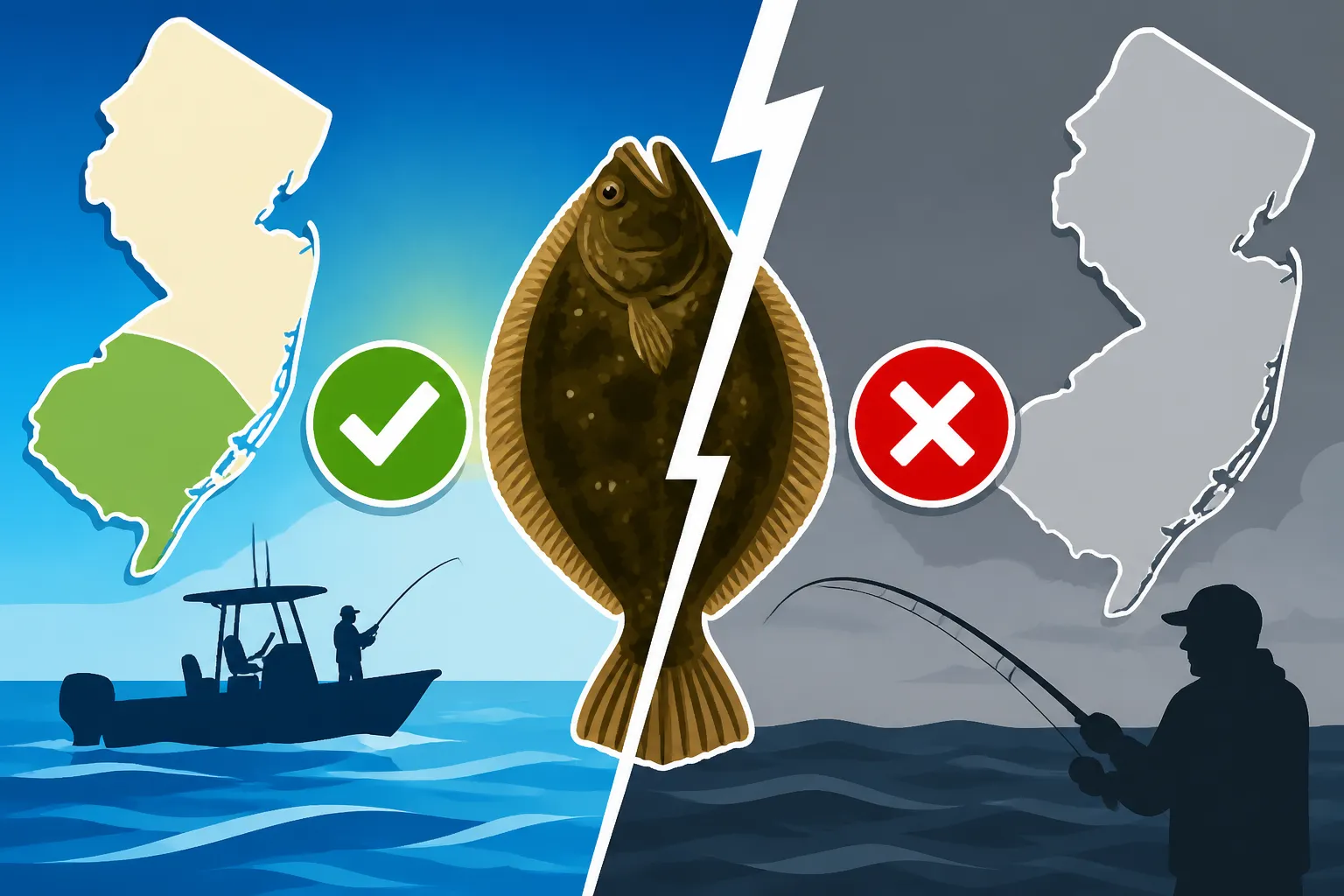
This is where many anglers can get tripped up. The fluke regulations for Delaware Bay often differ, sometimes significantly, from the general New Jersey statewide rules. For instance, while the rest of the state might have an 18-inch minimum size and a three-fish bag limit, Delaware Bay might have a slightly different minimum size, say 17 inches, or a different bag limit, perhaps two fish. These differences are a direct result of the cooperative management efforts between New Jersey and Delaware, often influenced by federal guidelines and specific stock assessments for the bay itself.
The reasoning behind these variations is complex. Sometimes, the population dynamics within the bay require more conservative measures, leading to stricter limits. Other times, the bay's unique ecosystem might support a slightly different approach. For example, there might be a particular size class of fluke that dominates the bay at a certain time of year, prompting a tailored size limit to protect that cohort. It’s crucial to understand that these aren't arbitrary changes but are rooted in scientific data and management objectives aimed at ensuring the long-term health of the fluke fishery in that specific region. Always, and I mean always, verify the current Delaware Bay regulations before you drop a line there. Anglers found with fish that don't meet the specific Delaware Bay limits, even if they would be legal elsewhere in NJ, can face penalties. If you're wondering about the specifics, our post on Why Is the Delaware Bay Fluke Limit Different From the Rest of New Jersey? offers an in-depth explanation.
Defining the Delaware Bay Boundary for Anglers
Understanding where the "Delaware Bay rules" actually begin and end is paramount to staying legal. For regulatory purposes, New Jersey defines the waters of Delaware Bay. Generally, this includes all the bay waters west of an imaginary line drawn from Cape May Point, New Jersey, to Cape Henlopen, Delaware. However, the precise geographical boundaries can sometimes be confusing, especially near the mouth of the bay or in feeder rivers.
It's not just a matter of "inside the bay" versus "outside the bay." Anglers need to be aware of the exact coordinates or landmarks that delineate the zone where Delaware Bay regulations apply. For those fishing out of ports like Fortescue, Maurice River, or even Cape May, understanding this boundary is critical. Imagine you launch your boat from a Cape May marina and decide to fish just inside the bay, then later move out into the ocean. You need to know which set of rules applies at any given moment. The best way to visualize this is often by consulting official charts or maps provided by the NJDEP, which sometimes illustrate these demarcation lines. Even a GPS unit with updated charting can help, but nothing beats knowing the official definition. For details on how your license operates in these waters, consult New Jersey Fishing License Validity in Delaware Bay Waters.
Practical Implications and Avoiding Violations
Navigating the world of fishing regulations can feel like a labyrinth. But with a bit of diligence, you can ensure your fishing trips are both successful and compliant.
Checking Current Regulations Annually
I cannot stress this enough: always check the current regulations before you head out. This is not a "set it and forget it" kind of deal. Fishing regulations, especially for highly managed species like fluke, are dynamic. They can change annually, and in rare cases, even mid-season if a stock assessment shows a sudden, critical shift. What was legal last year, or even last month, might not be legal today. The New Jersey Department of Environmental Protection (NJDEP) Division of Fish and Wildlife is the official source for all current rules. They publish the annual "New Jersey Fish and Wildlife Digest," which is your bible for fishing regulations. This digest is available online as a PDF, and often in print at tackle shops.
Imagine forgetting to check and heading out with last year's regulations in mind. You might accidentally keep an undersized fish or go over the bag limit for the current season. That small mistake, born of ignorance, can lead to a hefty fine, confiscation of your catch, and even a suspension of your fishing privileges. It's simply not worth the risk. Make it a routine to download the latest digest or visit the official website. Many anglers bookmark the specific regulation pages for quick reference on their phones. Some even purchase laminated copies or small reference cards. You can often find compact, waterproof guides to New Jersey fishing regulations available on platforms like Amazon, which can be a handy tool to keep in your tackle box or boat. Keeping up to date on New Jersey Fishing Regulation Changes for 2026 is vital for any serious angler.
Carrying Proof of Regulations and Your License
Beyond just knowing the rules, you need to be able to prove you're playing by them. This means having your valid New Jersey fishing license with you whenever you're actively fishing. Whether it's a physical printout, a screenshot on your smartphone, or a digital copy accessible through an official app, it needs to be readily available for inspection by a New Jersey Conservation Police Officer. These officers have the authority to check your license and your catch at any time.
Equally important, especially when fishing areas with complex rules like Delaware Bay, is having access to the current regulations. While not legally required to carry the digest itself, you are expected to know the rules. Being able to quickly reference the official online digest on your phone if questioned about a specific size or bag limit can be incredibly helpful. This preparedness can often streamline an encounter with law enforcement and demonstrate your commitment to responsible angling. Remember, the excuse "I didn't know" rarely holds up in court. For details on what constitutes proper proof, read our article on Carrying Proof of Your New Jersey Fishing License. And trust me, you absolutely want to avoid being in a situation that leads to What Happens If You Get Caught Fishing Without a License in New Jersey?. That's a story you don't want to tell at the bait shop.
Gear, Techniques, and Best Practices for Different Waters
While the regulations might vary, the spirit of fluke fishing remains constant. However, understanding subtle differences in your approach can significantly boost your success, especially when targeting fluke in different environments like the open ocean versus a large estuary like Delaware Bay.
Adapting Your Approach for Bay vs. Ocean Fluke
Fishing for fluke in the calm, often shallower waters of Delaware Bay can be a somewhat different experience than battling them in the open ocean off the Jersey Shore. In the bay, where currents might be less ferocious and depths shallower, lighter tackle can often be more effective. You might find success with smaller bucktail jigs, perhaps 1/2 oz to 1 oz, tipped with a longer strip of Gulp! or natural bait. The presentation needs to be subtle, allowing the bait to dance naturally near the bottom as you drift. Kayak anglers often excel in these bay conditions, quietly drifting over oyster beds or channel edges.
Conversely, when you're out in the open ocean, especially targeting deeper wrecks or reefs, you'll need heavier gear. Stronger currents and greater depths necessitate heavier bucktails (2 oz or more), larger sinkers, and more robust rods and reels. You might be targeting larger, ocean-run fluke that put up a more substantial fight. The key is matching your gear and technique to the conditions you face. For instance, if you're fishing a strong tidal rip in the bay, you might need to bump up your weight. If you're working a quiet flat, scaling down can make all the difference. Knowing how to adapt your setup makes you a much more versatile and successful fluke angler. For a general guide on techniques, check out How to Fish for Fluke in New Jersey.
Essential Gear for Responsible Fluke Fishing
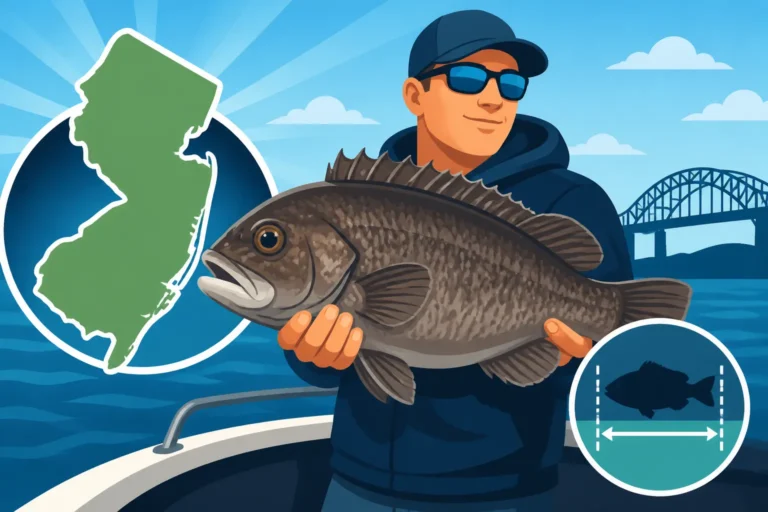
Beyond just your rod, reel, and bait, there's some essential gear every fluke angler should have to ensure responsible fishing practices and compliance with regulations. First and foremost, a reliable measuring device is crucial. This could be a simple, foldable ruler, a sticker on your tackle box, or a dedicated fish measuring board. Having a clearly marked, accurate way to measure your catch instantly confirms if it meets the minimum size limit before you even consider putting it in the cooler. Many anglers swear by specialized measuring boards from brands like Sea Striker or Ketch, which are widely available, including on Amazon, ensuring quick and accurate measurements.
Secondly, a good dehooking tool is indispensable. Fluke are often caught and released, either because they're undersized, or because you've already met your bag limit. A dehooker allows you to quickly and safely remove the hook from a fish's mouth without excessive handling or damage, increasing its chances of survival. Pliers or forceps work, but a specialized dehooker minimizes contact. Lastly, a cooler with plenty of ice is a must for any legal keepers. Properly icing your fish not only keeps the meat fresh but also ensures your catch is presented in the best possible condition, should a Conservation Police Officer wish to inspect it. Having these tools readily available demonstrates your commitment to both the law and the welfare of the fish. If you're just starting, our article on Best New Jersey Fishing Gear for Beginners can help you get equipped.
Navigating Reciprocal Agreements and Jurisdictional Nuances
The lines between states, and even between state and federal waters, aren't always crystal clear to the casual angler. Understanding these boundaries and agreements can prevent a lot of headaches on the water.
Delaware River and Bay Reciprocity
The concept of reciprocal agreements is a great convenience for anglers fishing shared waterways. For parts of the Delaware River that form a boundary between New Jersey and Pennsylvania, there are often agreements that allow an angler with a valid fishing license from either state to fish certain sections of the river. This means you don't necessarily need two separate licenses if you're casting from a boat that might drift between jurisdictions. However, it's absolutely critical to understand the exact stretches of water where these agreements apply and if they cover all species or just specific ones.
The situation with Delaware Bay is slightly more complex. While New Jersey and Delaware coordinate on regulations for species like fluke, it doesn't always mean that a New Jersey fishing license is valid in Delaware's portions of the bay, or vice-versa, for all types of fishing. For saltwater, New Jersey requires registration for its saltwater anglers through the New Jersey Saltwater Registry Program Requirements, which is free to join. While both states work together on management, always assume you need to comply with the license and registration requirements of the state whose waters you are actively fishing in, unless there is a very specific, well-documented reciprocal agreement that clearly states otherwise. It's not uncommon for anglers to ask, Do You Need Two Licenses to Fish the Delaware River Between New Jersey and Pennsylvania?, and the answer depends entirely on the specific segment of the river. Always verify with the official state Fish and Wildlife agencies.
Understanding Federal vs. State Waters
For recreational anglers, the distinction between state and federal waters primarily comes into play when fishing offshore in the ocean, rather than within the confines of a bay. State waters generally extend out to three nautical miles from the coastline. Within this zone, New Jersey's Division of Fish and Wildlife sets the rules. Beyond three nautical miles, you enter federal waters, also known as the Exclusive Economic Zone (EEZ). In federal waters, regulations are set by federal agencies, primarily the National Oceanic and Atmospheric Administration (NOAA) Fisheries, in conjunction with regional fishery management councils.
While fluke are primarily managed within state waters, understanding this distinction is crucial for anglers who venture further offshore to target other species like tuna, mahi-mahi, or certain types of snapper or grouper, which may have entirely different federal regulations regarding size, bag limits, and seasons. For fluke, the vast majority of recreational fishing takes place within New Jersey's state waters or the immediate vicinity of Delaware Bay, meaning state-specific regulations are almost always applicable. However, being aware of the federal boundary is part of being a well-informed angler, especially if your fishing ambitions grow to include offshore species.
Comparing Fluke Regulations: New Jersey vs. Delaware Bay (Illustrative)
To really bring home the differences, here's an illustrative table comparing hypothetical (but often representative) fluke regulations for general New Jersey waters versus Delaware Bay. Remember, these are examples only and you must check current regulations before fishing.
| Regulation Aspect | General New Jersey Waters (Example) | Delaware Bay (Example) |
|---|---|---|
| Minimum Size Limit | 18 inches | 17.5 inches |
| Daily Bag Limit | 3 fish per person | 2 fish per person |
| Season Dates | May 15 – September 27 | May 1 – September 15 |
| Jurisdiction | NJDEP Fish & Wildlife | Joint NJDEP & DE DNREC |
This table vividly demonstrates how even subtle differences in size limits, bag limits, or season dates can exist, making it imperative for anglers to be aware of which set of rules applies to their specific fishing location.
Disclaimer
The information provided in this article is for general guidance and informational purposes only and is subject to change. Fishing regulations are dynamic and are frequently updated by the New Jersey Department of Environmental Protection (NJDEP) Division of Fish and Wildlife. It is the angler's sole responsibility to consult the most current official New Jersey Fish and Wildlife Digest or the NJDEP website before engaging in any fishing activity. Failure to comply with current regulations can result in significant penalties.