Where to Catch Striped Bass in New Jersey
Finding striped bass in New Jersey's incredibly diverse waters can feel like a treasure hunt, especially with their migratory patterns and varying habits across different environments. You've heard the stories of epic blitzes and monster fish, but knowing where to start can be truly overwhelming, whether you're a seasoned angler or just starting out. This comprehensive guide is designed to cut through the confusion, helping you pinpoint the prime locations across the Garden State where you're most likely to hook into some fantastic striped bass.
Bays and Estuaries: The Nurseries and Feeding Grounds
New Jersey's expansive network of bays and estuaries acts as crucial nursery habitat and a buffet for striped bass. These calmer, nutrient-rich waters are often the first places stripers appear in the spring and the last places they linger in the fall. They offer a different kind of fishing experience than the open ocean, focusing more on subtle movements, structure, and tide.
Raritan Bay and Sandy Hook Bay
When we talk about spring striped bass fishing in New Jersey, Raritan Bay almost always comes up first, and for good reason. This massive body of water, nestled between New Jersey and Staten Island, is a major staging area for migratory stripers. They pour into the bay in early spring, following schools of bunker and herring, making it an absolute hotspot. It’s not uncommon to find massive schools of fish here, often resulting in incredible action. Anglers typically target the deeper channels, the mouths of rivers like the Raritan and Kills, and areas around structure like the Gedney Channel or the Raritan Bay Slough. The bite can be furious, with both boaters and shore anglers finding success.
As the season progresses, Sandy Hook Bay, which is directly adjacent to Raritan Bay, also becomes a prime location. It's generally shallower but offers plenty of productive ground, especially around the numerous mussel beds, submerged structures, and the edges of the shipping channels. Many anglers find success trolling tubes and mojos in these areas, or live-lining bunker if you can net them. The confluence of these two bays provides a vast and varied hunting ground for stripers throughout the spring and into the early summer. Don't overlook the early morning and late evening bites in these areas, as stripers are often most active during these low-light conditions, especially when they're feasting on baitfish.
Barnegat Bay and Great Bay
Moving south, Barnegat Bay is another powerhouse for striped bass, albeit with a slightly different character than Raritan Bay. This long, narrow bay stretching along the coast is shallower on average but boasts a myriad of islands, sedges, sod banks, and creek mouths that create perfect ambush points for stripers. In the spring and fall, particularly during the New Jersey Striped Bass Slot Limit and Season, stripers move into the bay, often pushing baitfish into tight corners, leading to those exciting "blitzes" we all dream about. Look for working birds or busting bait to locate the schools. Popular spots include the Oyster Creek Channel, the areas around Barnegat Inlet, and the deeper holes near the bridges connecting the mainland to the barrier islands.
Great Bay, located further south near Atlantic City, offers similar opportunities. It's a vast expanse of shallow water with numerous marshes, creeks, and sandbars, perfect for kayak or shallow-draft boat fishing. Stripers here often hug the sod banks, especially during incoming and outgoing tides, looking for crabs and small baitfish. Fly anglers particularly love Great Bay for its sight-fishing opportunities in the clearer backwater creeks. Both Barnegat and Great Bay require a keen understanding of the tides and currents, as these dictate where the baitfish gather and, consequently, where the stripers will be waiting. These bay systems are dynamic, and understanding the local nuances can make all the difference to your success.
Back Bay Creeks and Tidal Rivers
Beyond the major bays, New Jersey is crisscrossed with countless smaller tidal creeks and rivers that feed into the larger estuaries. These often overlooked gems can hold surprisingly large numbers of striped bass, especially resident fish that spend their entire lives in these backwaters. The Mullica River, the Great Egg Harbor River, the Toms River, and the Navesink River are just a few examples that offer excellent striper fishing. Stripers in these areas often relate to structure like bridge pilings, fallen trees, and sharp bends in the river. They'll ambush anything from small baitfish to crabs and worms.
Fishing these smaller waterways requires a different approach. Lighter tackle is often preferred, and stealth can be key. Kayaks, canoes, or small skiffs allow access to areas larger boats can't reach. The Toms River Striped Bass Fishing Guide and Navesink River Striped Bass Fishing Guide can offer more specific insights for those areas. Focusing on outgoing tides, when bait and crustaceans are flushed out of the marshes, can be particularly productive. Look for eddies and current breaks where fish can conserve energy while waiting for a meal. These spots are often less pressured than the main bay areas, providing a more serene and rewarding fishing experience. You can find some excellent specialized baits and jigs for these shallow water scenarios on Amazon.
Inlets and Coastal Waters: Where Ocean Meets Bay
New Jersey's inlets are natural funnels, concentrating baitfish and predators alike. These dynamic environments, where ocean currents surge into and out of the calmer bay waters, are prime locations for striped bass. They offer consistent action throughout much of the fishing season.
Manasquan Inlet and Point Pleasant Canal
Manasquan Inlet is a legendary spot for striped bass, known for its consistent action, especially during the spring and fall migrations. The deep, strong currents here bring in abundant baitfish, attracting large schools of stripers. Anglers fish from the jetties, the beachfronts just outside the inlet, and from boats both inside and outside the mouth. The changing tides are paramount here; understanding when the fish feed most actively during the incoming or outgoing flows is key. Many anglers swear by fishing around the slack tide periods, as well as the moments when the current is at its strongest, as these are often when stripers are most aggressively feeding.
The adjacent Point Pleasant Canal, connecting the Manasquan River to Barnegat Bay, is another highly productive area. The constant flow of water through the canal creates a perfect feeding lane. Stripers often stack up along the bulkheads and under the bridges, ambushing bait swept through the narrow passage. Both boat and shore anglers can do very well here, especially at night when the lights attract baitfish. Bucktail jigs, soft plastics, and live eels are perennial favorites in this area. It's a busy spot, so good etiquette and awareness of other anglers are important.
Barnegat Inlet and Island Beach State Park
Barnegat Inlet is a powerhouse. It's a deep, swift-moving inlet that connects Barnegat Bay to the Atlantic Ocean, and it's a magnet for striped bass during the spring and fall runs. The legendary "Barnegat Light" area offers excellent fishing from the jetties, particularly on the outgoing tide. Giant stripers, some well over the slot limit, are often caught here, especially when large schools of bunker are present. Boaters will often drift through the inlet or work the rips and eddies just outside its mouth. The currents here are no joke, so safety is always a top priority for boaters and jetty anglers alike.
Just south of Barnegat Inlet lies Island Beach State Park, a pristine stretch of undeveloped barrier island that offers some of the best surf fishing for striped bass in the state. During the fall run, particularly, waves of migratory stripers move down the coast, often within casting distance of the beach. Island Beach State Park Shore Fishing Rules are important to know before heading out. Anglers can fish from the open beach or, with a 4×4 permit, drive onto designated sections. Bait like clam, bunker, and eels are effective, as are a variety of lures such as poppers, metals, and swim shads. It's truly a special place to experience the raw power of the ocean and the thrill of battling a surf-caught striper.
Sandy Hook and Northern Beaches
The beaches and points of Sandy Hook and the surrounding northern coast of New Jersey are classic striper grounds, especially during the spring and fall migrations. As fish move north in the spring and south in the fall, they often pass close to shore, particularly in areas with good rips, sloughs, and structure. Sandy Hook itself, being a long peninsula, creates natural currents and eddies that concentrate bait and stripers. Anglers often target the sudsy water behind sandbars, the mouths of small creeks, and any areas where currents converge.
Popular spots include the Highlands Bridge area, the northern tip of Sandy Hook, and the beaches down towards Sea Bright and Monmouth Beach. While surf fishing is prevalent, boaters also do very well working the beachfronts and the nearshore shoals. During a strong fall run, these areas can see incredible action, with stripers aggressively chasing baitfish close to the beach. Long-casting plugs, metal lures, and jigs are all effective, as is bait like bunker and clam. Many anglers find that fishing after dark on these beaches can yield some of the largest stripers, as the biggest fish often feed under the cover of night.
Major Rivers and Upriver Holds: Freshwater Incursions
While many think of striped bass as a saltwater species, they are anadromous, meaning they spawn in freshwater and spend most of their adult lives in saltwater. This means certain major rivers offer excellent, though sometimes overlooked, opportunities, particularly for "resident" or holdover fish and during specific migration periods.
Delaware River
The Delaware River is unique in New Jersey's striper fishery. While primarily known for its freshwater fishing, the tidal lower reaches and even well upriver can hold striped bass, especially during the spring spawning migration. Stripers will push far upriver, even into the freshwater sections, to spawn. This offers a distinct fishing experience, often with a different set of challenges and rewards. Fish caught here can be incredibly powerful, fighting hard in the river currents. Anglers often target specific holes, deep bends, and areas around current breaks and bridge pilings.
The spring run sees fish moving through areas like Trenton and even further north. Live bait, especially herring or eels, can be deadly effective. Large soft plastics and swimbaits also produce. Understanding the river's flow and how it impacts fish behavior is crucial here. While the main migratory push for most of the Jersey Shore occurs in the bays and ocean, the Delaware provides a consistent, albeit sometimes more subtle, opportunity for those willing to explore its vast waters.
Hudson River and Raritan River Estuaries
While much of the Hudson River's New Jersey shoreline is urban, the immense size of the river and its estuary means it holds a significant population of striped bass. The areas around the Newark Bay, Hackensack River, and Passaic River mouths, which feed into the Hudson, are key zones. These are often considered "urban fisheries" but can yield impressive results. Stripers here thrive on the abundance of baitfish, including bunker, herring, and spearing. Fishing around bridge structures, industrial outflows, and deeper channels can be productive.
The lower Raritan River, before it widens into Raritan Bay, also offers fantastic opportunities. Stripers will push upriver in search of food and cover. Areas around Perth Amboy, South Amboy, and further upstream are often productive. Like the smaller tidal creeks, these river sections require an understanding of local currents and where fish might hold. Night fishing under bridge lights can be particularly effective in these urban river settings. These areas can be surprisingly productive, even though they might not have the picturesque beauty of a barrier island beach.
Offshore Structures and Reefs: Deepwater Dwellers
While many associate striped bass with shallow water, migratory stripers will often utilize deeper offshore structures, particularly during certain times of the year or for larger, more mature fish. These areas often require a boat to access but can offer incredible action.
Artificial Reefs and Wrecks
New Jersey boasts an impressive network of artificial reefs and natural wrecks that provide habitat for a vast array of marine life, including striped bass. While black sea bass and tautog are often the primary targets on these structures, stripers will absolutely stage and feed around them, especially larger migratory fish. These reefs offer vertical relief in an otherwise flat ocean bottom, attracting baitfish and, consequently, the predators that feed on them. Look for reefs like the Axel Carlson Reef, Manasquan River Reef, or Sandy Hook Reef.
During the fall, as stripers migrate south, and in the late spring, before they move fully into the bays or closer to shore, these offshore structures can hold massive schools of fish. Trolling mojo rigs, parachutes, or live-lining bunker are common and effective methods here. Sometimes, vertical jigging with heavy metal jigs can also entice a bite. It’s important to remember that these are ocean-going fish, accustomed to strong currents, so heavier tackle is often needed. Before heading out, you might check the New Jersey Fish and Wildlife Digest for current regulations and specific reef locations.
Nearshore Ocean Shoals and Bumps
Beyond the designated artificial reefs, the open ocean along the New Jersey coast features numerous natural shoals, humps, and subtle bottom contours that attract baitfish and, in turn, striped bass. These areas might not be marked on every chart as a "fishing spot" but are well-known to experienced captains. These slight changes in depth create current eddies and upwellings that bring nutrients to the surface, creating feeding zones. Spots like the Shrewsbury Rocks, various "lumps" off the coast, or even subtle sand wave patterns can hold fish.
During the spring and fall migrations, stripers will cruise these areas, often forming large schools that can be spotted by changes in water color, working birds, or even directly on sonar. Trolling large plugs, spoons, or live bait can be very effective over these shoals. Anglers chasing trophy-sized stripers often focus on these deeper, more expansive ocean grounds, where the biggest fish feel comfortable roaming. These areas require a good boat, reliable electronics, and an understanding of ocean conditions, but the rewards can be truly spectacular. An investment in good quality charts or a solid fishing app on your phone, perhaps even a waterproof tablet mount from Amazon, can be a game-changer for finding these subtle spots.
Key Factors for Finding Striped Bass
No matter where you choose to fish for striped bass in New Jersey, several universal factors will always play a huge role in your success. Understanding these elements can turn a slow day into a memorable one.
Tides and Currents
Striped bass are highly attuned to tides and currents. In bays and inlets, the moving water concentrates baitfish, pushing them through choke points or against structure where stripers can ambush them. The "best" tide can vary by location and time of year, but generally, the periods around the change of tide (both incoming and outgoing) are prime. How to Read Tide Charts for Better Fishing in New Jersey can provide valuable insights. A strong current often means active fish, while slack tide can sometimes slow the bite, though not always. Observing how the current interacts with the bottom structure, jetties, or bridge pilings will reveal where fish are most likely to hold and feed.
It's not just about the direction of the tide, but also its strength. A super-strong tide might make it difficult for fish to hold, or for you to present your bait effectively, while a weaker tide might not move enough bait to trigger a strong bite. Experienced anglers often keep detailed logs of successful trips, noting tide stages and moon phases, to better predict future action.
Baitfish Presence
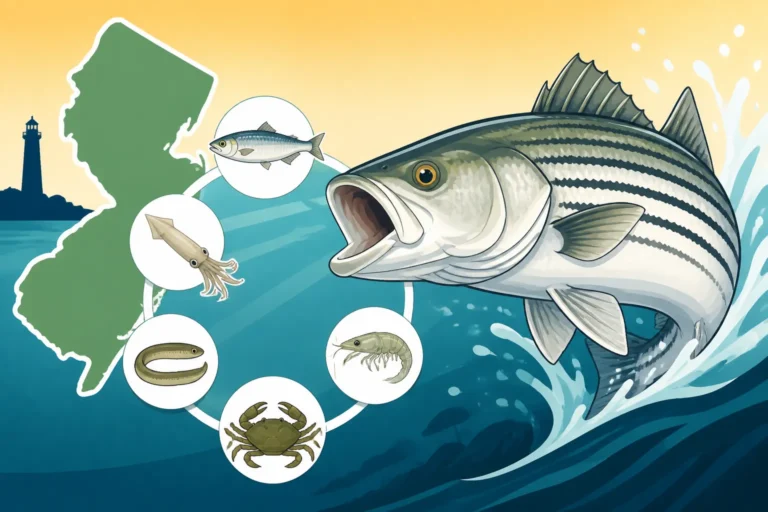
Where there's bait, there are usually stripers. New Jersey's waters are rich with various forage species, including bunker (menhaden), herring, spearing, sand eels, and crabs. Striped bass are opportunistic predators and will gorge themselves when a plentiful food source is available. Look for visual cues: diving birds (gulls, terns, ospreys) are often a dead giveaway that baitfish are being pushed to the surface. Slick spots on the water, nervous bait skipping across the surface, or even a sudden shift in water color can indicate bait presence.
Understanding the seasonal movements of baitfish is crucial. For instance, the arrival of bunker in the spring often signals the start of the striper run in Raritan Bay. During the fall, huge schools of bunker and mullet moving south along the coast fuel the epic New Jersey's Fall Run. Matching the hatch, or presenting a lure or bait that mimics the prevalent forage, is a highly effective strategy. Having a variety of lures on hand that resemble these different baitfish, easily sourced from a general fishing supply on Amazon, can increase your odds.
Structure and Bottom Contour
Striped bass are ambush predators and love to relate to structure. This could be anything from a subtle change in bottom depth (a hump or a channel edge) to man-made structures like bridge pilings, jetties, wrecks, and artificial reefs. These features provide current breaks, cover from predators, and prime ambush points for unsuspecting baitfish. In bays, sod banks, mussel beds, and marsh edges are key. Along the coast, rock piles, submerged jetties, and sandbars create excellent striper habitat.
When approaching a new spot, take some time to "read" the water and identify potential structure. On a boat, your fishfinder can be invaluable for identifying changes in bottom contour or marking bait schools around structure. From shore, look for eddies, rips, and areas where the water moves differently. Even a single large boulder can hold a striper waiting for an easy meal. Focus your efforts on these areas, presenting your bait or lure in a way that allows it to drift naturally with the current, mimicking an injured or disoriented baitfish.
Planning Your Striped Bass Trip
Knowing where to go is just the first step. To truly maximize your chances, a little bit of planning goes a long way. Consider the time of year, what gear you'll need, and how to stay safe on the water.
| Location Type | Prime Season(s) | Key Features | Typical Access | Common Bait/Lures |
|---|---|---|---|---|
| Raritan & Sandy Hook Bay | Spring, Early Summer | Deep channels, river mouths, shipping lanes | Boat, Shore, Kayak | Bunker (live/chunk), Mojos, Eels |
| Barnegat & Great Bay | Spring, Fall | Shallow flats, sod banks, islands, inlets | Boat, Kayak, Shore | Bunker, Clam, Soft Plastics, Plugs |
| Manasquan & Barnegat Inlets | Spring, Fall, Summer | Strong currents, jetties, deep rips | Boat, Jetty, Shore | Live Eel, Bunker, Bucktails, Plugs |
| Island Beach State Park | Fall, Spring | Pristine beaches, sandbars, ocean rips | Shore (4×4 access) | Bunker, Clam, Plugs, Metals |
| Delaware River (tidal) | Spring | Deep channels, bridge pilings, freshwater incursions | Boat, Shore | Herring (live), Eels, Large Swimbaits |
| Offshore Reefs/Shoals | Spring, Fall | Submerged structures, bottom contours | Boat | Mojos, Parachutes, Live Bunker |
Seasonal Considerations
The Best Time of Year to Fish for Striped Bass in New Jersey truly depends on where you are and what kind of fishing you prefer. Spring sees the major migratory push into Raritan Bay and along the coast, with fish moving north. Summer can be tougher, with stripers often moving to deeper, cooler waters offshore or becoming more nocturnal in the bays. Fall is another spectacular time, as fish aggressively feed on their southward migration, often creating chaotic blitzes along the entire coast.
Winter sees many stripers leave New Jersey waters, but holdover fish can still be found in deep, tidal rivers and estuaries that don't freeze over, offering a challenging but rewarding fishery for those brave enough to face the cold. Understanding these seasonal shifts is fundamental to being in the right place at the right time.
Gear and Tackle
For striped bass, you'll generally want stout gear. A medium-heavy to heavy spinning or conventional rod, paired with a reel spooled with 20-50 lb braid, is a good starting point. The specific setup will, of course, depend on your chosen location and technique. For surf fishing, a longer rod (10-12 feet) is often necessary for casting heavy baits and lures a long distance. For boat fishing in the bays, a shorter, more sensitive rod might be preferred.
Lures can range from big wooden plugs and poppers to soft plastic swimbaits, bucktail jigs, and metal spoons. Bait fishing often involves bunker (chunked or live), fresh clam, or live eels. Always check local tackle shops for the freshest bait and to get the latest intel on what's biting. Don't forget essentials like a good pair of pliers, a reliable headlamp for night fishing, and a sturdy cooler for your catch. You can find a huge variety of specialized striper lures and tackle on Amazon to round out your fishing arsenal.
Safety and Regulations
Safety should always be your top priority. If fishing from a boat, ensure all safety gear is onboard and in good working order. If fishing from jetties or rocks, wear appropriate footwear and a PFD if conditions warrant. When surf fishing, be aware of sneaker waves and rip currents.
Always, always be aware of the current New Jersey fishing regulations, especially regarding striped bass. Bag limits, size limits (New Jersey Striped Bass Slot Limit: 28 to 38 Inches), and circle hook requirements for bait fishing can change, and ignorance is no excuse. A valid New Jersey Fishing License Guide for 2026 and, if applicable, the New Jersey Saltwater Registry Explained are also mandatory. Knowing and following the rules not only keeps you out of trouble but also contributes to the conservation of this incredible fishery for future generations.
Striped bass fishing in New Jersey is an experience unlike any other. With a bit of research, understanding of their habits, and a willingness to explore, you'll be well on your way to enjoying some of the best striper fishing the East Coast has to offer!
Disclaimer
This article is for general informational purposes only and does not constitute professional advice. Laws, prices and regulations vary by location and change over time. Consult a qualified professional for guidance on your specific situation.