New Jersey Fluke Identification Guide
Few things are more frustrating for a New Jersey angler than reeling in what you think is a beautiful fluke, only to stare at it on the deck, scratching your head, wondering if it's the right species, the right size, and ultimately, whether you can keep it. The pressure of making a quick decision, especially when regulations are specific, can really take the fun out of a catch. This guide is here to clear up all that confusion, giving you the confidence to identify a true New Jersey fluke, or summer flounder, every single time you pull one aboard, ensuring you stay within the bounds of the law and contribute to responsible fishing.
Why Fluke Identification Matters for New Jersey Anglers
When you're out on the water, whether you're drifting the back bays of Barnegat or jigging off the coast, the thrill of a fluke bite is undeniable. But that excitement can quickly turn to anxiety if you're unsure exactly what you've caught. It's not just about knowing your fish; it's about adhering to the strict regulations that protect our precious marine resources. Many anglers, especially those new to New Jersey's waters, simply don't realize how crucial accurate identification is until they find themselves in a tricky situation.
The Legal Ramifications of Misidentification
Let's be honest, no one wants to get a ticket while they're out enjoying a day of fishing. Conservation Police Officers (CPOs) in New Jersey are well-trained and they're out there to ensure everyone plays by the rules. If you're caught with a fish that's misidentified, meaning it's either the wrong species or, more commonly, a different flatfish that doesn't meet the current New Jersey Fluke Size Limit: 18 Inches or bag limits, you could face penalties. These fines aren't just a slap on the wrist; they can be quite substantial and certainly put a damper on your fishing budget. Imagine spending a fun day on the water, only to have a significant chunk of your hard-earned money go towards a violation you could have easily avoided with a little more knowledge.
Beyond monetary fines, there's also the potential for your fishing license to be suspended or revoked, depending on the severity and frequency of the infraction. This isn't just a hypothetical scenario; it happens to anglers who repeatedly disregard or are ignorant of the regulations. It’s a harsh reminder that fishing isn't just a pastime; it's an activity that comes with responsibilities. Knowing your fish isn't just about avoiding a ticket; it's about preserving your right to fish in the future. Always make sure you're confident in your identification before placing a fish in your cooler, and if there's even a sliver of doubt, it's always best to practice catch and release.
Conservation and Responsible Angling Practices
The regulations surrounding fluke, including size and bag limits, aren't just arbitrary rules designed to make your life harder. They are scientifically determined measures put in place to manage fish populations and ensure sustainable fishing for generations to come. When you correctly identify your fluke, and release those that don't meet the legal requirements, you're directly contributing to the health of the fishery. Catching and releasing an undersized fluke, or releasing a flatfish that isn't a fluke at all, helps those fish grow to maturity, spawn, and contribute to future populations.
Think about it: every small fluke you let go has the potential to become a trophy-sized fish down the line. This is particularly important for a species like summer flounder, which faces significant fishing pressure. By being a responsible angler who takes the time to learn and abide by these rules, you're setting an example for others and supporting the long-term viability of the sport we all love. It's a small effort that yields big returns for our environment and our future fishing opportunities. The goal is to keep the waters stocked, and that means everyone doing their part to understand and respect the various species, not just the target ones.
Key Characteristics of a True New Jersey Fluke (Summer Flounder)
Okay, let's get down to the nitty-gritty of what makes a fluke, well, a fluke! Often, people use the terms "fluke" and "summer flounder" interchangeably, and in New Jersey, they are indeed the same fish. But how do you confidently identify one amidst the other flatfish that call our waters home? It comes down to a few very distinct features that, once you know them, become second nature to spot.
Eye Placement: The Most Crucial Identifier
This is the big one, the absolute giveaway! A true New Jersey fluke (summer flounder) is a left-eyed flatfish. What does that mean? If you hold the fish with its dark, camouflaged side facing up and its belly side facing down, both of its eyes will be on the left side of its head. You can even imagine it's looking left. This is perhaps the single most reliable way to distinguish a fluke from its common look-alikes, like the winter flounder.
It sounds simple, but in the heat of the moment, with a fish flopping around, it's easy to get disoriented. Take a moment, lay the fish flat, and orient it correctly. The dark, pigmented side (the "top") will always have both eyes. If those eyes are on the left, congratulations, you've got yourself a fluke! This fundamental characteristic is biologically consistent and won't change based on the fish's size, age, or where you caught it. Knowing this one fact can save you a lot of confusion and potential headaches when you're trying to figure out if your catch is legal.
Mouth and Teeth: What to Look For
Beyond the eyes, the fluke's mouth provides another set of strong identification clues. Fluke are ambush predators, and their mouths are designed for hunting. They have a relatively large mouth compared to other flounder species, and more importantly, they possess sharp, prominent canine teeth. These teeth are very visible and are used to grasp and hold onto prey like baitfish, squid, or crabs. When you open a fluke's mouth, you won't see tiny, brush-like teeth; you'll see some serious chompers ready for action.
Compare this to, say, a winter flounder, which has a much smaller mouth and almost no noticeable teeth, designed for nibbling on invertebrates from the seafloor. The large, toothy grin of a fluke is a clear sign you're dealing with a summer flounder. This feature, combined with the eye placement, creates an unmistakable profile. Just be careful when handling them – those teeth are sharp for a reason, and you don't want to learn that the hard way!
Body Shape and Coloration: Blending In
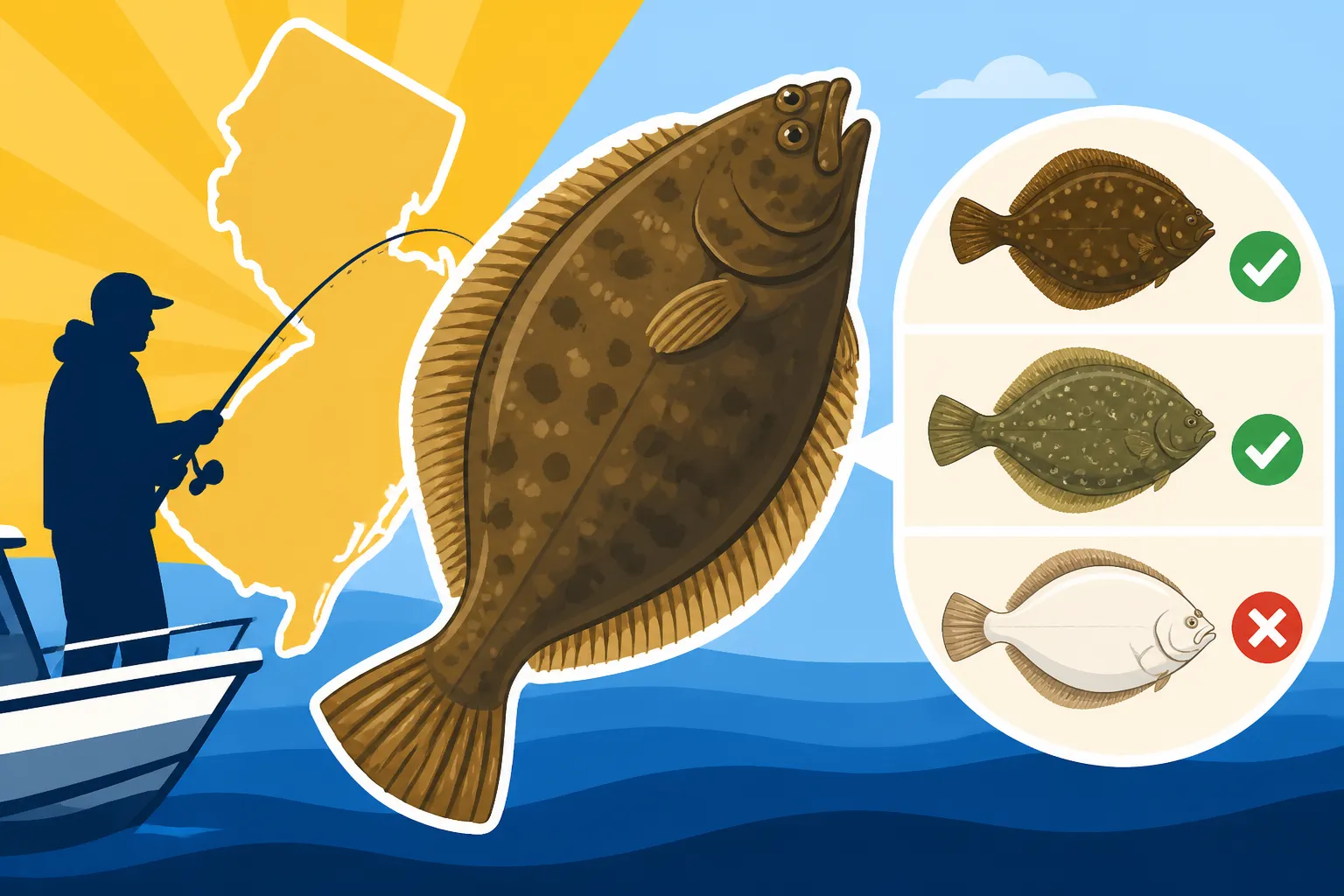
While eye placement and teeth are definitive, the overall body shape and coloration also offer strong hints. Fluke typically have a somewhat elongated, oval body shape, not perfectly round. Their body is relatively thin, allowing them to lie flat against the seafloor. The top side (the left side, where the eyes are) is usually a mottled brown, gray, or olive color, often with distinctive spots or patterns that help them blend seamlessly into various seafloor environments, from sandy bottoms to rocky structure. Many fluke will have five prominent, dark ocellated (ringed) spots arranged in an arch, though these can sometimes be faint or vary.
The underside of the fluke is always white, a stark contrast to its camouflaged top. This countershading helps them disappear when viewed from above against the dark bottom, and from below against the bright surface light. Other flounder species might have slightly different body shapes – some rounder, some thicker – and their coloration, while also camouflaged, can vary in pattern and hue. For example, a winter flounder tends to be a darker, more uniform brown with a thicker body. By observing the combination of these traits, you'll be well on your way to quickly identifying your catch. This blend of features is what allows them to be such effective predators in their diverse habitats.
Common Look-Alikes: Separating Fluke from the Crowd
New Jersey waters are teeming with various flatfish, and while they might all seem similar at first glance, each species has its own unique characteristics. Misidentifying a fluke often happens because anglers confuse it with other flounder species. Understanding these differences is not just academic; it's essential for staying compliant with regulations, as Freshwater vs Saltwater Fishing Rules in New Jersey can have significant differences, and even within saltwater, different species have different rules.
Winter Flounder (Blackback) Differences
The winter flounder, often called "blackback" due to its typically darker dorsal side, is probably the most commonly confused species with the summer flounder (fluke). However, there are two key differences that make identification relatively straightforward: eye placement and mouth size. Unlike the fluke, the winter flounder is a right-eyed flatfish. If you lay a winter flounder with its dark side up and belly down, both eyes will be on the right side of its head. This is the absolute opposite of a fluke!
Furthermore, winter flounder have a much smaller mouth than a fluke, with tiny, almost imperceptible teeth. Their diet consists primarily of small invertebrates and crustaceans picked off the bottom, so they don't need the sharp, predatory teeth of a fluke. Their body shape is also generally thicker and rounder than a fluke's, and their coloration tends to be a more uniform dark brown or olive, often without the distinct spots found on many fluke. Knowing these two primary distinctions – eye placement and mouth – will immediately help you tell the difference. Don't forget, Winter Flounder Average Size in New Jersey Waters and bag limits are different from fluke, so correct identification is crucial!
Windowpane Flounder Distinctions
The windowpane flounder is another flatfish you might encounter, though it's less commonly confused with a fluke than a winter flounder because it looks quite distinct. Like the fluke, it is also a left-eyed flatfish. This can be a point of confusion if you're only focusing on eye placement. However, the windowpane flounder has a very thin, almost translucent body, giving it its namesake "windowpane" appearance. Its body is much rounder and more disc-like than the fluke's more elongated oval shape.
The most striking difference is its fins. A windowpane flounder has very large, delicate dorsal and anal fins that nearly encircle its entire body, giving it a somewhat ethereal, almost kite-like appearance when swimming. Its mouth is also very small, similar to a winter flounder, and it lacks the prominent teeth of a fluke. The coloration is typically a light, sandy brown with faint, irregular spots or blotches. You'll often find them in shallower, sandy areas. Once you see a windowpane, its unique, delicate structure and large fins make it hard to mistake for anything else. If you're ever struggling to tell them apart, consider investing in a waterproof fish identification card or app – many are available on platforms like Amazon – to have a quick reference right on the boat.
Atlantic Halibut (Rare but Important)
While incredibly rare to catch recreationally in New Jersey waters, especially inshore, the Atlantic halibut is worth mentioning simply because it's the largest flatfish out there. It's highly unlikely you'll ever encounter one, but it's important to know just in case. The Atlantic halibut is also a right-eyed flatfish, similar to the winter flounder. However, its sheer size, massive mouth, and powerful tail set it apart.
If you somehow hooked into a halibut, you would immediately know it by its enormous scale. Juveniles could potentially be confused with other flatfish, but again, their occurrence in typical New Jersey recreational fishing grounds is extremely uncommon. They prefer much deeper, colder waters further north. Still, it's a good reminder that the ocean holds many surprises, and having a general understanding of different species, even rare ones, can only enhance your knowledge and prepare you for any unexpected catch.
Here's a quick comparison table to help visualize the key differences:
| Feature | New Jersey Fluke (Summer Flounder) | Winter Flounder (Blackback) | Windowpane Flounder |
|---|---|---|---|
| Eye Placement | Left-eyed | Right-eyed | Left-eyed |
| Mouth/Teeth | Large mouth, sharp canine teeth | Small mouth, tiny teeth | Small mouth, tiny teeth |
| Body Shape | Elongated oval, relatively thin | Thicker, rounder body | Very thin, round disc-like |
| Coloration | Mottled brown/gray, often with 5 distinct spots | Dark, uniform brown/olive | Light sandy brown, translucent |
| Fins | Normal-sized | Normal-sized | Very large, delicate dorsal/anal fins |
Practical Tips for On-the-Water Identification
Even with all the knowledge in the world, identifying a fish quickly and accurately on a rocking boat or a sandy beach can be a challenge. The key is to have a systematic approach and to be prepared. This isn't just about making sure you're within the legal limits; it's about treating the fish with respect, whether you're keeping it or releasing it. The more confident you are, the less stress you'll feel when a fish comes over the rail.
Handling Your Catch for a Clear View
First things first: safety for both you and the fish. When you land a flatfish, try to handle it gently and minimize its time out of the water, especially if you intend to release it. Use a wet towel or glove to protect your hands and the fish's delicate slime coat. Lay the fish flat on a wet, smooth surface like a cooler lid or a measuring board. This allows you to clearly see its features without the fish flopping uncontrollably.
Once it's stable, take a moment to confirm eye placement. Orient the fish so its dark, camouflaged side is facing up. If both eyes are on the left, it's a fluke. If they're on the right, it's a winter flounder or another right-eyed species. Then, gently open its mouth to check for those characteristic sharp teeth. Don't rush this process. A few extra seconds of careful observation can save you a lot of trouble. Using a fish gripper can also help secure the fish for a quick check, making the process safer and less stressful for everyone involved. Some great options are available from brands like Bubba Blade or Rapala, which you can find easily on Amazon.
Using a Measuring Device Correctly
New Jersey's New Jersey Fluke Size Limit: 18 Inches is not just a suggestion; it's a hard and fast rule. Every fluke you intend to keep must meet or exceed this minimum length. It's imperative to have a reliable measuring device readily accessible on your boat or in your tackle bag. A simple, flat measuring board is ideal, as it allows you to lay the fish flat and get an accurate measurement. Don't eyeball it; that's a recipe for disaster.
When measuring, lay the fish flat against the board, ensuring its mouth is closed and touching the zero mark. The measurement is taken from the tip of the jaw to the tip of the tail, with the tail compressed (squeezed) to give the maximum possible length. Be honest with yourself. If it's even a hair short, it's not a keeper. Remember, the CPOs aren't going to be lenient if your fish is just "almost" legal. Having a sturdy, clearly marked measuring board is non-negotiable for serious fluke anglers. Many fishing-specific measuring tools are available that can be attached to your boat or cooler for easy access, making quick measurements a breeze.
When in Doubt: Release Safely
This is perhaps the most important tip of all: when in doubt, let it out. If you've gone through all the identification steps and you're still not 100% sure if it's a legal fluke, or if it meets the size limit, the safest and most responsible action is to release the fish. It's far better to release a legal fish than to keep an illegal one. This simple rule will keep you out of trouble and contribute positively to the fishery.
To release a fish safely, do so quickly and gently. Support its body, avoid dropping it, and place it back into the water headfirst. If you've been handling it for a bit, try to revive it by gently moving it back and forth in the water to get oxygen flowing over its gills, especially if it seems sluggish. Remember, our goal is to enjoy the sport and protect it. By practicing responsible Catch and Release Rules in New Jersey, you're ensuring there will be plenty of fish for future generations of anglers.
Understanding New Jersey's Fluke Regulations
Fishing regulations can sometimes feel like a moving target, especially for a popular species like fluke. However, staying informed is critical for every angler in New Jersey. These rules are put in place after careful consideration of scientific data, aiming to balance recreational fishing opportunities with the long-term health of the fish population. It's not just about knowing your fish, but also knowing the rules that govern how we interact with them.
New Jersey Fluke Size and Bag Limits Explained
The most talked-about regulations for fluke are undoubtedly the size and bag limits. As of my last check, New Jersey maintains a specific minimum size limit for fluke, typically 18 inches. This means any fluke you catch must measure at least that length from the tip of its jaw to the end of its compressed tail to be considered legal. Anything shorter, and it needs to go back into the water, even if it's a fluke. The bag limit, which dictates how many fish of a specific species you can keep per day, is also strictly enforced. For fluke, this limit is usually five fish per person per day.
It's crucial to note that these regulations can and do change. New Jersey Fluke Season Dates for 2026 and limits are often set annually based on stock assessments and management decisions. That's why it's so important to check the current New Jersey Fish and Wildlife Digest: Where to Find the Current Rules or the New Jersey Division of Fish and Wildlife website before every season, and even before each trip if there's any uncertainty. What was legal last year might not be this year, and ignorance of the law is never an excuse. Always have the most up-to-date information on hand, perhaps saved to your phone or a printed copy in your tackle box. This proactive approach shows true respect for the resource and avoids any unexpected encounters with the law.
The Importance of the Saltwater Registry
Beyond the size and bag limits, New Jersey also requires all saltwater anglers to register with the New Jersey Saltwater Registry Explained. This is often a point of confusion for anglers, as it's separate from a freshwater fishing license. While a freshwater license lets you fish in lakes, rivers, and ponds for species like trout and bass, the saltwater registry is specifically for marine fishing. The good news is that The New Jersey Saltwater Registry Is Free to Join.
Why is this registry so important? It's a critical tool for fisheries managers. The data collected from the registry, including angler contact information, allows the state to participate in federal recreational fishing surveys. These surveys are vital for estimating recreational catch and effort, which directly informs management decisions about species like fluke, striped bass, and black sea bass. Without accurate data, it's much harder to set sustainable limits. So, while it might seem like just another piece of paperwork, registering is a simple way you contribute to the science that ensures healthy fish stocks. Even if you're fishing on a party boat where the vessel itself covers some aspects of licensing, individuals are still responsible for their own registry. Make sure you understand New Jersey Saltwater Registry Program Requirements fully.
Beyond Identification: Ensuring a Healthy Fluke Fishery
Identifying a fluke correctly is a fantastic start, but being a truly responsible angler goes a step further. It involves understanding the broader impact of our actions and actively participating in conservation efforts. Every decision we make, from how we handle a fish to how we stay informed, plays a role in the health of New Jersey's fluke population and the overall marine ecosystem.
Catch and Release Best Practices
Sometimes, you'll catch a fluke that's undersized, or maybe you've already met your bag limit, or perhaps you've identified it as a different species that needs to go back. In these situations, proper Catch and Release Rules in New Jersey are paramount. The goal is to return the fish to the water in the best possible condition, maximizing its chances of survival. This means minimizing the time the fish spends out of the water.
When you bring a fish aboard, have your de-hooking tool ready. If the hook is easily accessible, remove it quickly. If the fish is deeply hooked, especially in the gills or gut, it's often best to simply cut the line as close to the hook as possible. Trying to dig out a deep hook can cause more damage. Avoid handling the fish by its gills or eyes. Instead, support its belly and use a wet hand or glove if possible to avoid removing its protective slime coat. Gently lower the fish back into the water headfirst. If the fish seems stunned or slow to swim away, hold it upright in the water and move it back and forth to force water over its gills until it regains its strength and swims off on its own power. These simple steps can dramatically increase a released fish's survival rate, ensuring it can grow larger and contribute to future spawning cycles.
Reporting Unusual Catches and Observations
As anglers, we are often the first to notice changes in our local waters. Sometimes, you might catch a fish that looks particularly unusual, perhaps an invasive species, or a fish with strange markings or signs of disease. Or, you might observe unusual fish behavior, large fish kills, or pollution. Reporting these observations to the New Jersey Department of Environmental Protection (NJDEP) or the Division of Fish and Wildlife is incredibly valuable. Your eyes and ears on the water provide crucial "citizen science" data that biologists and conservationists might not otherwise obtain.
For instance, if you catch something you suspect might be an invasive species that isn't typically found in New Jersey, such as a northern snakehead in saltwater (highly unlikely, but you get the idea), it's important to report it. Similarly, if you see significant numbers of diseased fish, or a strange bloom in the water, a quick call or email to the authorities can trigger an investigation and potentially prevent further issues. You can usually find contact information for these departments in the Reading the New Jersey Fish and Wildlife Digest. Your role as an angler extends beyond simply catching fish; it involves being an active steward of our marine and freshwater environments. Your observations, no matter how small they seem, can contribute to important conservation efforts and help maintain the health of New Jersey's cherished fishing grounds.
Disclaimer
This article is for general informational purposes only and does not constitute professional advice. Laws, prices and regulations vary by location and change over time. Consult a qualified professional for guidance on your specific situation.