What Is the Difference Between Bluefish and Striped Bass?
It’s a common scenario on the docks and along the beaches of New Jersey: an excited angler holds up a gleaming fish, proudly asking, "Is this a striper or a bluefish?" Even seasoned fishermen can sometimes mix them up in the heat of the moment, especially when they're feeding in the same areas. This guide will walk you through the distinct characteristics, behaviors, and angling experiences that set bluefish apart from striped bass, ensuring you can identify your catch with confidence and understand what makes each species unique to our waters.
Visual Differences Between Bluefish and Striped Bass
When you pull a fish out of the water, the first thing you'll notice are its physical attributes. While both bluefish and striped bass are powerful, silver-sided predators, they have several key visual cues that make identification straightforward once you know what to look for.
Body Shape and Coloration
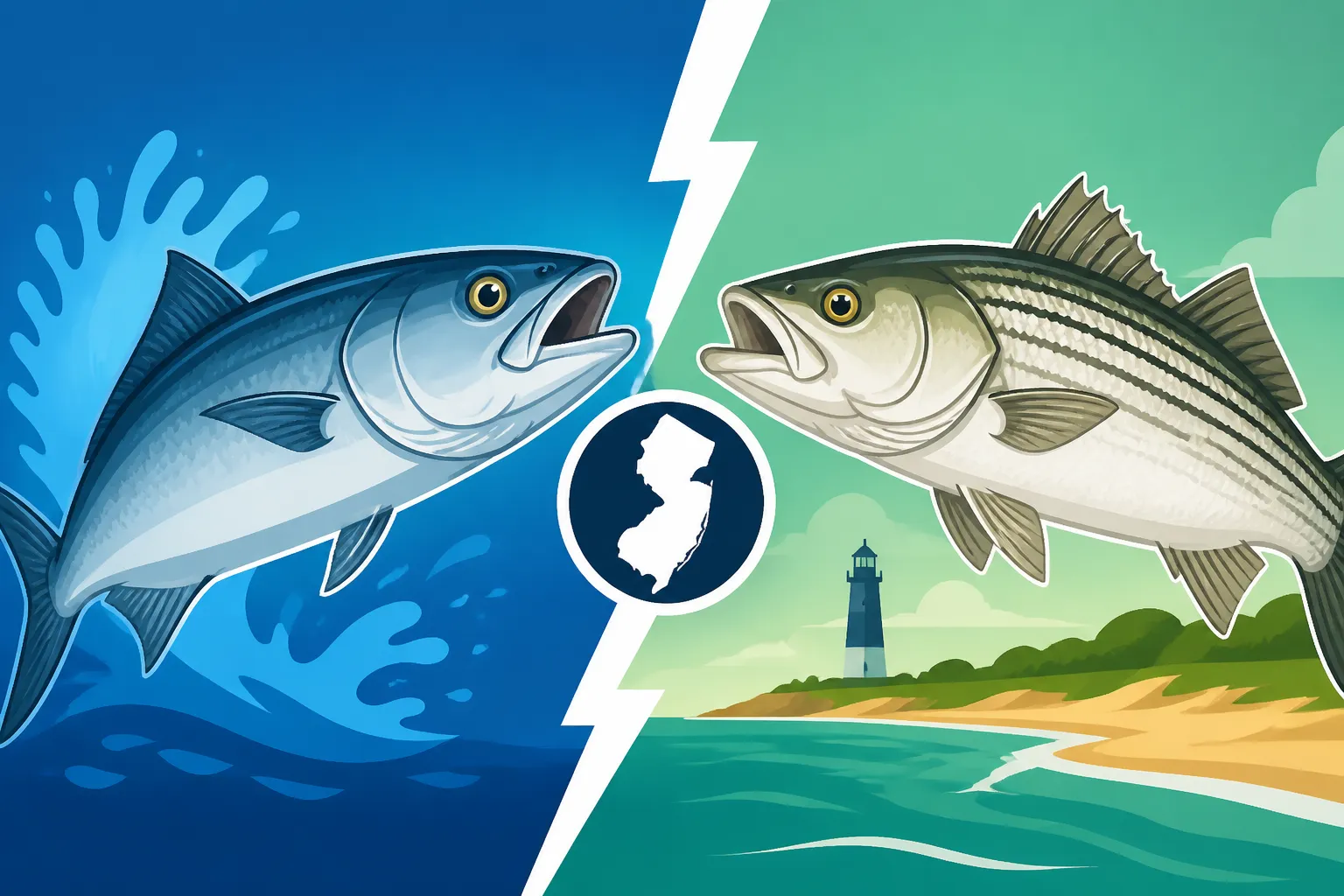
Striped bass, often affectionately called "stripers" by local anglers, tend to have a more elongated, torpedo-like body shape. They're built for sustained cruising and powerful runs. Their most defining characteristic, and the source of their name, are the seven or eight dark, prominent horizontal stripes running along their silver-white sides. These stripes are usually continuous from head to tail, giving them a very distinctive appearance. Their back is typically a darker olive green to bluish-black, fading to silvery sides and a white belly. A larger striper can be quite thick through the body, giving it a very robust feel.
Bluefish, on the other hand, possess a more compact, somewhat stout body that tapers significantly towards the tail. They have a distinct greenish-blue or steely blue back that transitions quickly to very bright, almost iridescent silver sides and a white belly. Unlike stripers, bluefish lack any prominent horizontal stripes on their bodies. Their coloration is often described as more metallic and vibrant. When you see a "chopper" bluefish, meaning a larger one, they can look incredibly powerful, almost football-shaped in their midsection.
Mouth and Teeth Structure
This is perhaps the most tell-tale difference and one that any experienced angler will immediately point out. Striped bass have a mouth that is moderately large, with a slightly protruding lower jaw. Their teeth are small, rasp-like, and set in bands within the jaws and on the tongue. They are designed for grasping and holding prey, not for shearing or cutting. When you accidentally get a finger in a striper's mouth, it feels rough, like sandpaper, but rarely causes a serious cut. This tooth structure dictates their feeding habits and how they attack bait, often crushing or swallowing their prey whole.
Bluefish, conversely, are infamous for their formidable dental work. They possess extremely sharp, conical, razor-like teeth that are perfectly designed for slicing and dicing. These teeth are very prominent and can inflict serious damage on fishing lines, leaders, and unsuspecting fingers. Many a seasoned angler has had a favorite plug or soft plastic lure completely shredded by a bluefish's bite. If you're using light tackle or fluorocarbon leaders, bluefish will cut right through them as if they were butter. This aggressive mouth structure is central to their feeding behavior, which involves blitzing through schools of baitfish, chopping them to pieces. Why Do Bluefish Have Sharp Teeth? delves deeper into this.
Fin Characteristics
While perhaps not as obvious as the stripes or teeth, the fins also offer clear distinctions. Striped bass have two dorsal fins that are distinctly separated. The first dorsal fin is spiny and triangular, while the second is softer and longer. Their caudal (tail) fin is moderately forked, providing propulsion for their powerful runs. The pectoral and pelvic fins are relatively small in proportion to their body.
Bluefish have two dorsal fins as well, but they are typically closer together, almost appearing as one long fin when extended, with a distinct notch between the spiny and soft-rayed sections. Their caudal fin is deeply forked and very strong, allowing for incredibly fast bursts of speed. The fins, especially the anal and second dorsal fins, can sometimes have a yellowish tint, particularly in smaller fish or specific regions. These fin structures are built for explosive, quick movements rather than the more sustained power of a striper.
Habitat and Distribution in New Jersey Waters
Understanding where these fish typically hang out in New Jersey can also help you distinguish between them, even before you see your catch up close. Both are migratory species, but their preferences and typical patterns can differ.
Where Striped Bass Call Home
Striped bass are highly adaptable and can be found in a wide variety of New Jersey's coastal and estuarine environments. They love structure, whether it's rock piles, jetties, bridge pilings, or submerged wrecks. You'll find them in both the surf and in our expansive bays like Raritan Bay and Barnegat Bay, as well as pushing up into tidal rivers such as the Mullica and the Delaware River. They can tolerate a wide range of salinities, often moving far upriver into brackish or even nearly fresh water to feed or spawn.
During their seasonal migrations, particularly the spring and fall runs, stripers will move along the entire Jersey Shore. They often follow baitfish schools like bunker (Atlantic menhaden) close to the beaches, making them a prime target for surf anglers. In the cooler months, larger trophy fish might be found in deeper offshore waters, while resident populations remain in many of our bays and tidal rivers year-round. For more on their movements, check out When Do Striped Bass Migrate Through New Jersey?.
Where Bluefish Roam
Bluefish are primarily an open ocean and bay species, although they will occasionally venture into the lower reaches of tidal rivers, especially when chasing bait. They prefer warmer water temperatures than striped bass, so they tend to arrive later in the spring and depart earlier in the fall. You'll commonly encounter them in the surf, around inlets, over offshore reefs and wrecks, and throughout the deeper sections of New Jersey's bays. They are less prone to venturing into low-salinity freshwater environments compared to stripers.
Bluefish are known for their schooling behavior and often travel in large, aggressive groups, especially during their "blitzes" along the coast. During these feeding frenzies, they can create a spectacle of splashing water and diving birds, indicating their presence. New Jersey Bluefish Season Peak Timing covers when you're most likely to encounter these voracious eaters.
Overlapping Territories
It's important to note that despite their preferences, bluefish and striped bass frequently occupy the same areas, especially during the warmer months. Both species prey on similar baitfish, and a school of bunker or spearing can attract both stripers and blues to the same location. This is why anglers often catch a mix of both species on the same trip, sometimes even on consecutive casts. For instance, when the bunker are thick in Raritan Bay or off Island Beach State Park, both predator species will be on the hunt. This overlap makes knowing the visual differences even more crucial.
Dietary Habits and Predatory Behavior
The way these two fish hunt and what they prefer to eat also highlights their differences, impacting how anglers approach catching them.
Striped Bass Feeding Strategies
Striped bass are opportunistic predators with a varied diet. While they certainly love baitfish like bunker, herring, spearing, and anchovies, they also readily consume crabs, worms, clams, and even eels. They're not as overtly aggressive in their feeding as bluefish, often preferring to ambush their prey or cruise through schools of bait, picking off individuals. Their small, rasping teeth are perfectly suited for this approach – grabbing and swallowing whole.
Stripers can be quite particular about what they eat on a given day, often "keying in" on a specific baitfish. This makes presenting the right lure or bait crucial for success. You might find them lurking near structure, waiting for an easy meal to swim by, or working the edges of bait schools. They often feed more actively during low light conditions, such as dawn, dusk, and throughout the night, using their superior night vision to their advantage. How to Fish for Striped Bass in New Jersey provides detailed techniques for targeting them.
The Voracious Appetite of Bluefish
Bluefish are the quintessential "choppers" of the ocean, living up to their name with an incredibly aggressive and indiscriminate feeding style. They are pure predators, driven by a seemingly insatiable appetite. Their diet consists almost exclusively of other fish, including bunker, mullet, mackerel, spearing, and even juvenile stripers. They will often tear through schools of baitfish, leaving a trail of mangled bodies, sometimes killing more than they can eat. Their sharp teeth are essential for this cutting and dismembering action.
When bluefish are in a feeding frenzy, or "blitz," they are highly visible, with water churning and baitfish scattering. This behavior can be exciting for anglers, as bluefish will strike almost anything thrown their way during these times, often with reckless abandon. They typically feed more actively during daylight hours, although they can also be caught at night, especially around lit docks or bridges. They are much less selective than stripers, often hitting lures and baits that stripers would ignore.
Impact on Baitfish
The feeding habits of both species have a significant impact on local baitfish populations. Striped bass, while powerful predators, tend to hunt with a bit more discretion, focusing on efficiency. Bluefish, however, can be incredibly destructive. A large school of bluefish can decimate a school of baitfish in a very short amount of time, sometimes leading to visible "slicks" of oil and fish parts on the surface. This intense predation is part of the natural marine ecosystem but certainly makes bluefish a dominant force in New Jersey's coastal food web.
Fishing Techniques and Angler Experience
Beyond identification, the experience of catching a bluefish versus a striped bass is quite different, from the tackle you use to the fight they put up and even how you handle them after the catch.
Targeting Striped Bass
Fishing for striped bass in New Jersey often involves a blend of patience, skill, and strategic lure or bait presentation. Anglers use a variety of methods, including chunking with cut bait (like bunker or clam), live-lining bunker or eels, throwing artificial lures such as bucktails, topwater plugs, or soft plastics, and even trolling. Because stripers can be picky, having a diverse tackle box is key. Many anglers swear by specific colors and sizes of lures, often stocking up on favorites from retailers like Amazon.
When a striper hits, you'll feel a powerful, often head-shaking tug, followed by strong, sustained runs. They are celebrated for their stamina and fighting spirit. Hooking a legal-sized striper (which varies by year and location, so always check New Jersey Striped Bass Slot Limit Explained) is a thrilling experience that tests your gear and your technique. Anglers need to be mindful of regulations, including specific slot limits, and handle fish carefully, especially if planning catch and release.
Catching Bluefish
Catching bluefish, especially during a blitz, can be a fast and furious affair. They hit lures and baits with explosive aggression, often without hesitation. Their sharp teeth mean you absolutely need a heavy monofilament or fluorocarbon leader, or even a wire leader, to avoid constant bite-offs. Poppers, metal spoons, and fast-retrieved jigs are highly effective at triggering their aggressive strikes. Since they aren't as selective, you can often use simpler rigs. Many anglers find reliable bluefish lures and tackle on Amazon before hitting the water.
The fight from a bluefish is characterized by quick, powerful bursts and violent head shakes. They are known for their sheer power and erratic movements, often making spectacular jumps or thrashing wildly at the boat or on the beach. While they may not have the long, powerful runs of a large striper, their explosive energy and constant thrashing make for an exciting battle. Be extremely careful when handling a landed bluefish; their teeth are no joke, even when they seem subdued. A pair of pliers and a de-hooker are essential tools.
Fight and Fillet Qualities
The differences extend to what happens once the fish is landed. Striped bass are renowned for their firm, flaky white meat, which has a mild, delicious flavor. They are highly prized as table fare, making them a popular target for anglers looking to bring home dinner. Properly bled and iced, a striper fillet is a culinary treat.
Bluefish have a stronger, more "fishy" flavor, often described as rich or even oily, especially in larger specimens. While some anglers love bluefish, others find the taste too intense. It's often recommended to bleed bluefish immediately and cook them fresh or smoke them, as their oil content can cause them to spoil quickly or develop a stronger flavor if not handled properly. Smaller bluefish, often called "snappers," tend to have a milder taste than the larger "choppers."
Both fish offer a unique and rewarding angling experience in New Jersey, but understanding their distinct characteristics will make you a more informed and successful fisherman.
Here's a quick summary of the key differences:
| Feature | Striped Bass | Bluefish |
|---|---|---|
| Body Shape | Elongated, torpedo-like, robust | Compact, stout, tapering sharply at tail |
| Coloration | Dark back (olive/bluish-black), silver sides, 7-8 dark horizontal stripes | Greenish-blue back, iridescent silver sides, no stripes |
| Mouth/Teeth | Moderately large, small rasp-like teeth | Large, prominent, razor-sharp conical teeth |
| Dorsal Fins | Two distinctly separated dorsal fins | Two dorsal fins, closer, often notched |
| Primary Habitat | Bays, estuaries, tidal rivers, surf, nearshore ocean, likes structure | Open ocean, bays, surf, inlets, reefs/wrecks, prefers warmer water |
| Feeding Style | Opportunistic, ambush predator, consumes fish, crustaceans, worms | Aggressive, voracious, cuts/shreds prey, primarily eats fish |
| Fight | Powerful, sustained runs, head shakes | Explosive bursts, violent thrashing, jumps |
| Table Fare | Mild, firm, flaky white meat, highly prized | Stronger, oilier flavor, best fresh/smoked, smaller fish milder |
It's clear that while they might share some New Jersey waters and target similar prey, the striped bass and the bluefish are two distinct, incredible species that offer vastly different challenges and rewards to the angler. Knowing these differences will not only help you identify your catch but also refine your techniques and appreciation for both of these powerful swimmers.
Disclaimer
This article is for general informational purposes only and does not constitute professional advice. Laws, prices and regulations vary by location and change over time. Consult a qualified professional for guidance on your specific situation.