Why Do Bluefish Have Sharp Teeth?
There's nothing quite like the rush of hooking into a bluefish, those fierce, fast-fighting torpedoes of the New Jersey coast. But if you've ever landed one, you've probably felt that pang of respect—and maybe a little apprehension—when you see their gaping maw. Those aren't just any fish teeth; they're truly something else. It's a common moment for new anglers, staring at that mouthful of razors and wondering, "Why do bluefish have those teeth?" This guide is here to demystify those formidable chompers, explaining their purpose, how they impact your fishing, and why understanding them is key to a safe and successful bluefish encounter in New Jersey waters.
The Evolutionary Design of a Bluefish's Mouth
Bluefish aren't just casually equipped; their entire mouth structure is a masterclass in predatory evolution. They are built for one thing: aggressive, efficient hunting. Imagine a fish that needs to catch incredibly fast, agile baitfish like bunker (Atlantic menhaden), mullet, or anchovies. These aren't slow-moving targets that can be swallowed whole with minimal fuss. These are prey items that require precision, speed, and the ability to incapacitate quickly.
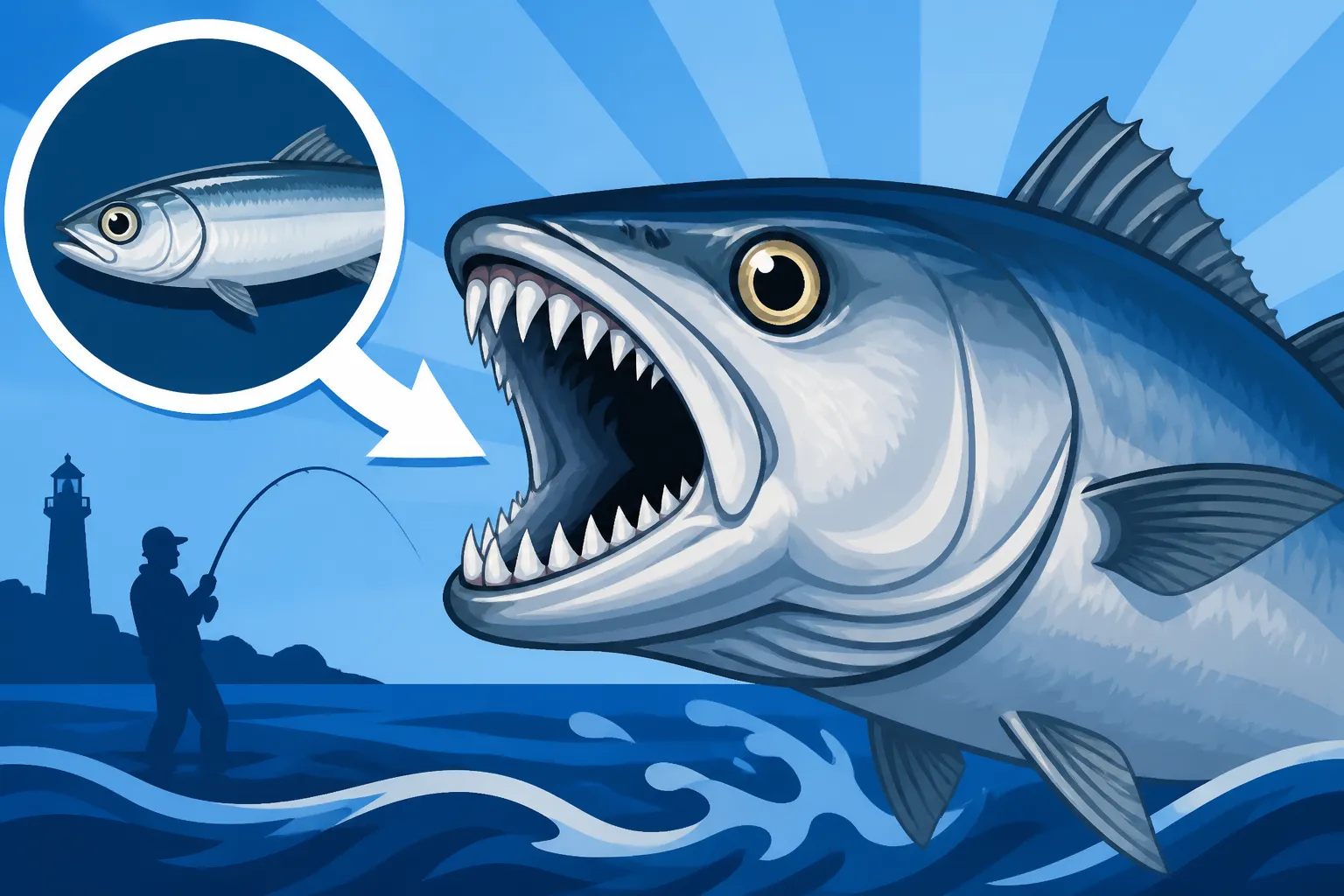
Their teeth are a direct response to this need. Unlike many other species, bluefish teeth are triangular, razor-sharp, and pointed inward, designed not for crushing shells or grinding vegetation, but for slicing and tearing. When a bluefish clamps down, it's not just holding; it's cutting. This allows them to effectively dismember larger prey, often taking a chunk out of a baitfish and coming back for more, or simply slicing smaller fish in half. It’s an incredibly effective feeding strategy that leaves little chance for their prey to escape once they're in range. This efficiency is why they can be so devastating during a "bluefish blitz," turning a school of baitfish into a frothing, bloody spectacle in minutes.
The placement of these teeth is also key. They line both the upper and lower jaws, fitting together almost like scissors when the mouth closes. This allows for a clean, powerful cut. It's a stark contrast to a fish like a fluke, which has small, sharp teeth designed more for gripping bottom-dwelling prey, or a striped bass, which has rows of small, rasp-like teeth for holding onto struggling bait. A bluefish's teeth are pure cutting instruments, perfectly adapted for their high-octane, piscivorous diet.
Anatomy of a Bluefish Bite
When you look closely at a bluefish's mouth, it's not just the individual teeth that are impressive, but the entire setup. Their jaws are incredibly powerful, capable of generating significant force, which is essential for slicing through tough scales and flesh. These aren't fragile teeth; they are robust and designed for constant, brutal use.
The teeth themselves are surprisingly numerous, forming a dense, serrated edge along the jawline. Each tooth is sharply pointed and slightly recurved, meaning it points slightly backward into the mouth. This recurved shape helps to hold onto slippery prey, ensuring that once a bluefish bites down, its meal isn't going anywhere. It’s a design that prioritizes both cutting power and retention.
What's also fascinating about bluefish teeth is their regenerative capacity. Like sharks, bluefish can and do lose teeth. Whether from impact during a feeding frenzy or just natural wear and tear, individual teeth can break off. However, they are constantly being replaced by new teeth growing in behind them, ensuring that the bluefish always maintains its formidable cutting edge. This continuous replacement cycle means that even a bluefish that has been in many battles will still have a fresh set of sharp teeth ready for its next meal. This biological advantage ensures they remain effective predators throughout their lives, playing a crucial role in the marine ecosystem of places like New Jersey.
Understanding this anatomy is crucial for anglers, not just for safety, but for understanding why certain types of tackle are absolutely essential when targeting these toothy critters. Without the right precautions, those teeth will make short work of your fishing line.
Protecting Your Gear and Yourself from Bluefish Teeth
Anyone who has ever had a bluefish on the line knows that protecting your gear is paramount. Those razor-sharp teeth can sever even heavy monofilament or fluorocarbon line in a split second, leading to lost fish and lost tackle. It's a frustrating experience, watching your line go slack after a strong run, knowing that bluefish just outsmarted your setup. This is where appropriate terminal tackle becomes non-negotiable.
Wire Leaders: Your Best Defense
The most effective way to prevent bluefish from cutting your line is to use a wire leader. A wire leader is a short section of wire, typically stainless steel, that you tie between your main fishing line and your lure or hook. This creates a barrier that even the sharpest bluefish teeth cannot penetrate. There are a few different types of wire leaders you can choose from:
- Single-Strand Wire: This is a stiff, durable wire that is very abrasion-resistant. It's excellent for preventing bite-offs, but can be prone to kinking if not handled carefully.
- Multi-Strand Wire (Braided Wire): This type is more flexible than single-strand wire, making it easier to work with and less prone to kinking. It's often coated to provide even more protection and reduce visibility. Brands like Berkley and Malin offer great options that you can find easily on Amazon.
- Fluorocarbon Leaders (Heavy Test): While not as bite-proof as wire, very heavy fluorocarbon leaders (think 50-80 lb test or more, depending on the size of the bluefish) can sometimes withstand a quick bite without being severed immediately. However, it's a gamble, and a direct hit from a sharp tooth will still likely cut through. For smaller bluefish, or when targeting other species where bluefish are an accidental bycatch, a heavy fluorocarbon leader can offer some protection while maintaining a more subtle presentation.
Always match the strength of your leader to the size of the bluefish you expect to encounter. For the choppers that frequent the New Jersey Bluefish Season Peak Timing, you'll want something robust.
Safe Handling Techniques and Tools
Catching a bluefish is exhilarating, but landing and unhooking one requires caution. Getting bitten is a very real danger, and a bluefish bite can cause a deep, nasty wound. Don't let the excitement of the catch override your safety instincts.
Here are some essential tools and techniques for safely handling bluefish:
- Lip Grippers: These tools allow you to firmly hold a bluefish by its lower jaw without putting your hands near its teeth. Brands like BogaGrip or even more budget-friendly options available on Amazon are indispensable. Once you have a firm grip, the fish is much easier to control.
- Long-Nose Pliers or Dehookers: These are crucial for removing hooks from a bluefish's mouth. The longer the pliers, the better, as they keep your fingers well away from those teeth. A dehooker, specifically designed for quick, clean hook removal, is even better, especially if you're practicing Catch and Release Rules in New Jersey.
- Heavy-Duty Gloves: While not a substitute for proper tools, a good pair of puncture-resistant gloves can add an extra layer of protection, particularly when handling the fish to measure or photograph. Again, a quick search on Amazon will reveal many suitable options for anglers.
- Netting: A sturdy landing net can help you control a thrashing bluefish boat-side or on the beach. Once in the net, it's easier to use your lip grippers and pliers to manage the fish.
Never try to "tail" a bluefish with your bare hands or stick your fingers into its mouth to remove a hook. These fish are powerful, and even a seemingly subdued bluefish can give a surprising, painful bite. Remember, the goal is to enjoy the catch, not to end your day with a trip to the emergency room. For more general advice on what to bring, check out What Should You Bring on a New Jersey Party Boat Trip?.
Comparing Bluefish Teeth to Other New Jersey Game Fish
It's helpful to understand just how specialized bluefish teeth are by comparing them to other popular game fish found in New Jersey waters. Each species has developed a unique dental structure tailored to its primary diet and hunting style.
Let's take a look at a quick comparison:
| Fish Species | Primary Diet | Tooth/Jaw Characteristics | Handling Considerations |
|---|---|---|---|
| Bluefish | Fast-moving baitfish | Razor-sharp, triangular, pointed inward; very strong jaws. Designed for slicing and tearing. | Extreme caution. Use wire leaders, lip grippers, long pliers. Avoid bare hands. |
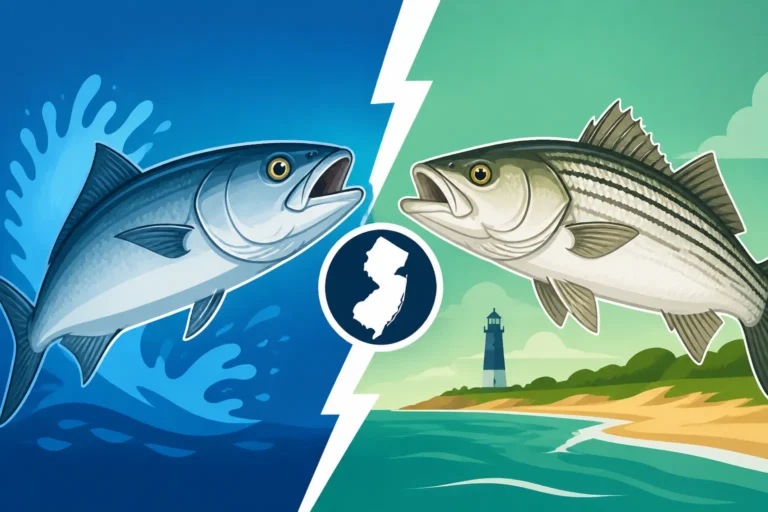
| Striped Bass | Baitfish, crabs, worms | Multiple rows of small, rasp-like teeth (cardiform teeth); strong, but not designed for cutting. Good for gripping and crushing. | Still capable of abrasion. Handle by the jaw, use pliers for deep hooks. |
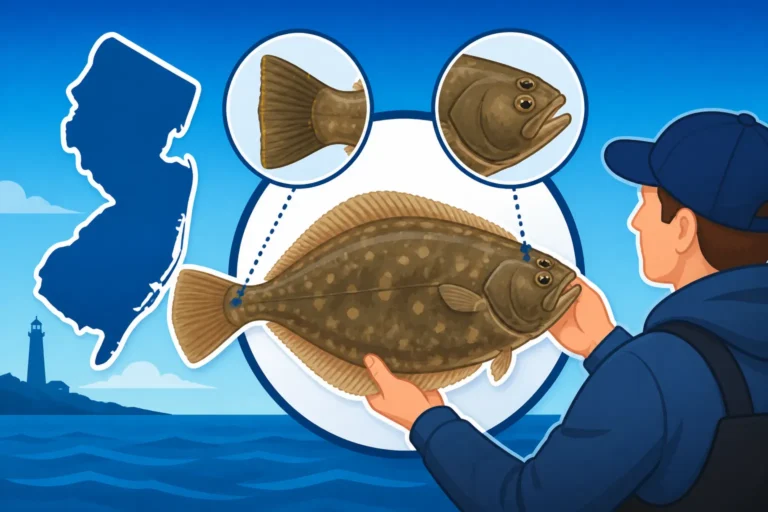
| Fluke | Baitfish, squid, crustaceans | Small, sharp, conical teeth; jaws are strong for gripping and crushing. | Can give a painful nip. Use a net and pliers for hook removal. |
| Tautog | Mussels, crabs, barnacles | Strong, crushing molars in the back; conical front teeth for grabbing. Designed for breaking shells. | Minimal bite risk, but powerful jaws can crush fingers if mishandled. |
| Largemouth Bass | Baitfish, frogs, insects | Rows of small, fine teeth (like sandpaper); powerful jaws for engulfing prey. | Grasp by the lower lip (bass thumb). No significant bite risk from teeth themselves. |
As you can see, the bluefish stands out with its formidable cutting implements. While a striped bass has a strong jaw and teeth that can certainly abrade your skin, it won't cut through a line or a finger like a bluefish will. This comparison highlights why the specific precautions for bluefish are so critical for anglers targeting them along the Jersey Shore Party Boat Fishing Guide or from the beaches. Knowing What Is the Difference Between Bluefish and Striped Bass? in terms of their mouth parts alone can save you a lot of trouble!
The Bluefish's Role in the New Jersey Marine Ecosystem
Beyond their impressive dentition, bluefish play a vital and sometimes aggressive role in the coastal ecosystems of New Jersey. Their sharp teeth are not just a fishing challenge; they are a key factor in how bluefish influence the health and balance of baitfish populations and, consequently, other predators.
Bluefish are known for their voracious appetites, and their cutting teeth allow them to consume a massive amount of food quickly. During feeding frenzies, often called "bluefish blitzes," these fish can decimate schools of baitfish, creating a chaotic scene of fleeing prey and aggressive predators. This intense predation helps control populations of smaller fish, preventing any single species from becoming overly dominant and ensuring a healthier diversity. It's a natural, albeit brutal, part of the food web. If you've ever witnessed a Why Do Bluefish Blitzes Happen Near the Shore?, you've seen this raw power in action. They are efficient, relentless, and their sharp teeth are at the heart of that efficiency.
Furthermore, bluefish themselves are a significant food source for larger marine predators, including sharks, tuna, and even marine mammals. Their abundant numbers and protein-rich flesh make them an important link in the food chain. So, while their teeth might seem solely designed for terrorizing baitfish and challenging anglers, they are also part of a larger ecological puzzle, contributing to the energy transfer that sustains a diverse marine environment. Understanding their New Jersey Bluefish Size and Behavior helps paint a fuller picture of their impact.
In essence, the bluefish's sharp teeth are more than just a physical trait; they are a statement of its evolutionary success as an apex predator in the coastal waters of New Jersey. They embody the wild, untamed nature of fishing and remind us of the powerful adaptations that exist in the natural world. So, the next time you see those teeth, you'll know exactly why they're there—and you'll be better prepared to appreciate this magnificent, toothy game fish safely and responsibly.
Disclaimer
This article is for general informational purposes only and does not constitute professional advice. Laws, prices and regulations vary by location and change over time. Consult a qualified professional for guidance on your specific situation.