Point Pleasant Canal Fluke Fishing Tips
Fishing the Point Pleasant Canal for fluke can feel like a real puzzle sometimes. You’re there, watching the water churn, maybe seeing baitfish, but the fluke just aren’t biting, or you're catching a ton of shorts. It’s frustrating when you know the potential is there, but you can’t quite unlock it. This guide is all about giving you the proven tips and tricks to not just find, but consistently catch those keeper fluke in one of New Jersey's most unique and productive fishing spots.
Understanding the Point Pleasant Canal's Unique Fluke Dynamics
The Point Pleasant Canal isn't just any waterway; it's a vital artery connecting the Manasquan River to Barnegat Bay, creating a powerful, dynamic environment that fluke absolutely love. But what makes it so special, and sometimes, so challenging? It's all about the current, the structure, and the abundant bait.
The Role of Strong Currents and Tidal Flow
Unlike open bays or the ocean, the Point Pleasant Canal acts like a giant funnel. This means the tides really get pushed through here, creating incredibly strong currents. For fluke, which are ambush predators that love to lay in wait, this strong current is a buffet line. It sweeps baitfish, crabs, and shrimp right past their noses. Think about it: a fluke doesn't want to expend a ton of energy chasing down food against a ripping current. Instead, they position themselves strategically, just out of the main flow, waiting for an easy meal to drift by.
The challenge for us anglers is that these strong currents also make it tough to present your bait naturally. If your rig is too light, it'll just blow through. Too heavy, and it'll get stuck on the bottom. You need to constantly adjust your weight and technique to match the speed of the current. On a hard-running tide, a 3 or 4-ounce sinker might barely hold bottom, while on a slack tide, an ounce could be too much. It's a constant dance. When you're trying to figure out the best times to fish, remembering that the current dictates everything is key. You'll often hear local anglers talking about fishing the "edges" or "eddies" – these are the spots where the current slows down just enough for fluke to hold, yet still provides that steady flow of food.
Key Structure and Ambush Points
Beyond the current, the canal is loaded with structure, and structure is like a magnet for fluke. We’re talking about rock piles, bridge pilings, submerged debris, sudden depth changes, and the edges of the channel itself. These aren't just random spots; they're prime ambush points. Fluke will lie on the bottom, often partially buried in the sand or mud, using the structure for cover. They're masters of camouflage, blending perfectly with their surroundings.
The Route 88 bridge, for instance, has significant pilings and rock armor around its base. These areas break up the current and create perfect lies for fluke. Similarly, the bulkheads and docks lining the canal offer submerged structure and shadows where fluke can hide. Even subtle changes in the bottom contour, like a drop-off from a shallower flat into the main channel, can be a hotspot. When you're fishing from shore, pay close attention to any visible structure. From a boat, your fish finder will be invaluable for locating those hidden humps and bumps. Remember, if it looks like a place a baitfish would try to hide, it’s probably also a place a fluke is waiting to pounce. Don't be afraid to cast right up against a bulkhead or a bridge piling, letting your bait drift back into deeper water along the structure.
Mastering Tides and Timing for Canal Fluke
One of the biggest lessons you'll learn when fishing the Point Pleasant Canal for fluke is that timing, specifically understanding the tides, is absolutely everything. Ignoring the tide chart is like trying to drive blindfolded – you might get lucky, but you'll mostly hit walls.
The Critical Importance of Moving Water
Fluke are built for moving water. They don't have the streamlined bodies of tuna or stripers; they're flat, designed to lay on the bottom. A strong current brings food to them. Without it, they have to work much harder, and they often become less active. This is why the periods of strong tidal flow are generally the most productive. The water moving through the canal washes out all sorts of forage – spearing, peanut bunker, crabs, shrimp – making it easy pickings for hungry fluke.
The prime window typically starts about an hour or two after the dead low or dead high tide, as the current really begins to pick up, and it continues until about an hour before the next slack. This means you've got about a 2-3 hour window on each side of the peak current where the fishing can be lights out. Don't just show up at random; consult a tide chart for Point Pleasant or Manasquan Inlet. You can easily find these online or through fishing apps. Understanding How to Read Tide Charts for Better Fishing in New Jersey is a game-changer here. Many anglers swear by the outgoing tide in the canal, believing it washes more bait out of the back bays into the fluke's feeding zone. However, the incoming tide can be equally productive, especially if baitfish are moving into the canal from the ocean.
Targeting the Slack Water Transition Periods
While the strong currents are excellent, the transition periods around slack water also offer unique opportunities. Slack tide, when the water briefly stops moving before reversing direction, isn't always a bust for fluke, though it can be slower. However, the period just before slack and just after slack can be fantastic. As the current slows down, baitfish that were holding tight to structure might relax their guard and move out a bit, making them vulnerable. Fluke, in turn, might become more active, venturing out from their primary ambush points.
During these transition times, the lighter currents allow for different presentations. You might be able to use lighter bucktails or jigs, or really work soft plastics more effectively. It’s also a good time to thoroughly probe areas that are too difficult to fish during peak current. For example, if you're trying to fish close to a bridge piling that gets hammered by the current, the slack water offers a calmer window to get your bait right into those hard-to-reach spots. Just be aware that the bite might be more subtle, and you'll need to be extra vigilant for those soft taps. Think of it as a shift from a "drift and wait" strategy to a more active "cast and retrieve" approach. If you’re looking to find a local guide who knows the nuances of these tides inside and out, especially when to hit those transition periods, a platform like FishingBooker can connect you with experienced captains in the Point Pleasant area.
Essential Gear and Rigs for Canal Fluke
Having the right tackle for Point Pleasant Canal fluke is non-negotiable. The strong currents and the potential for larger fish demand robust, yet sensitive, gear. Skimping here will only lead to frustration and lost fish.
Rods, Reels, and Line for the Fight
For fluke in the canal, you need a rod that's sensitive enough to feel those subtle bites, yet powerful enough to handle heavy sinkers and pull a stubborn doormat fluke away from structure. A medium to medium-heavy spinning rod, typically in the 6.5 to 7.5-foot range, with a fast action tip is ideal. Look for something that can comfortably handle 1 to 4 ounces of weight. Popular models from brands like St. Croix or Ugly Stik (for a more budget-friendly option) are great choices.
Pair this with a quality spinning reel in the 3000 to 4000 size class. It needs a smooth drag system and enough line capacity. Shimano, Penn, and Daiwa all make excellent reels that will stand up to the saltwater environment.
For your main line, braided line is the way to go, hands down. Its no-stretch property transmits every tap and bump directly to your rod tip, which is crucial for detecting fluke bites in a strong current. A 15-20 lb test braid is usually sufficient. Attach a fluorocarbon leader of 20-30 lb test, about 3-4 feet long, using a strong knot like an FG knot or an Albright knot. Fluorocarbon is nearly invisible underwater and is more abrasion-resistant, which is important when fishing around rocks and pilings. Don't forget, having a robust setup is key to landing those bigger fish, especially given the New Jersey Fluke Size and Bag Limits Explained.
Proven Fluke Rigs and Baits
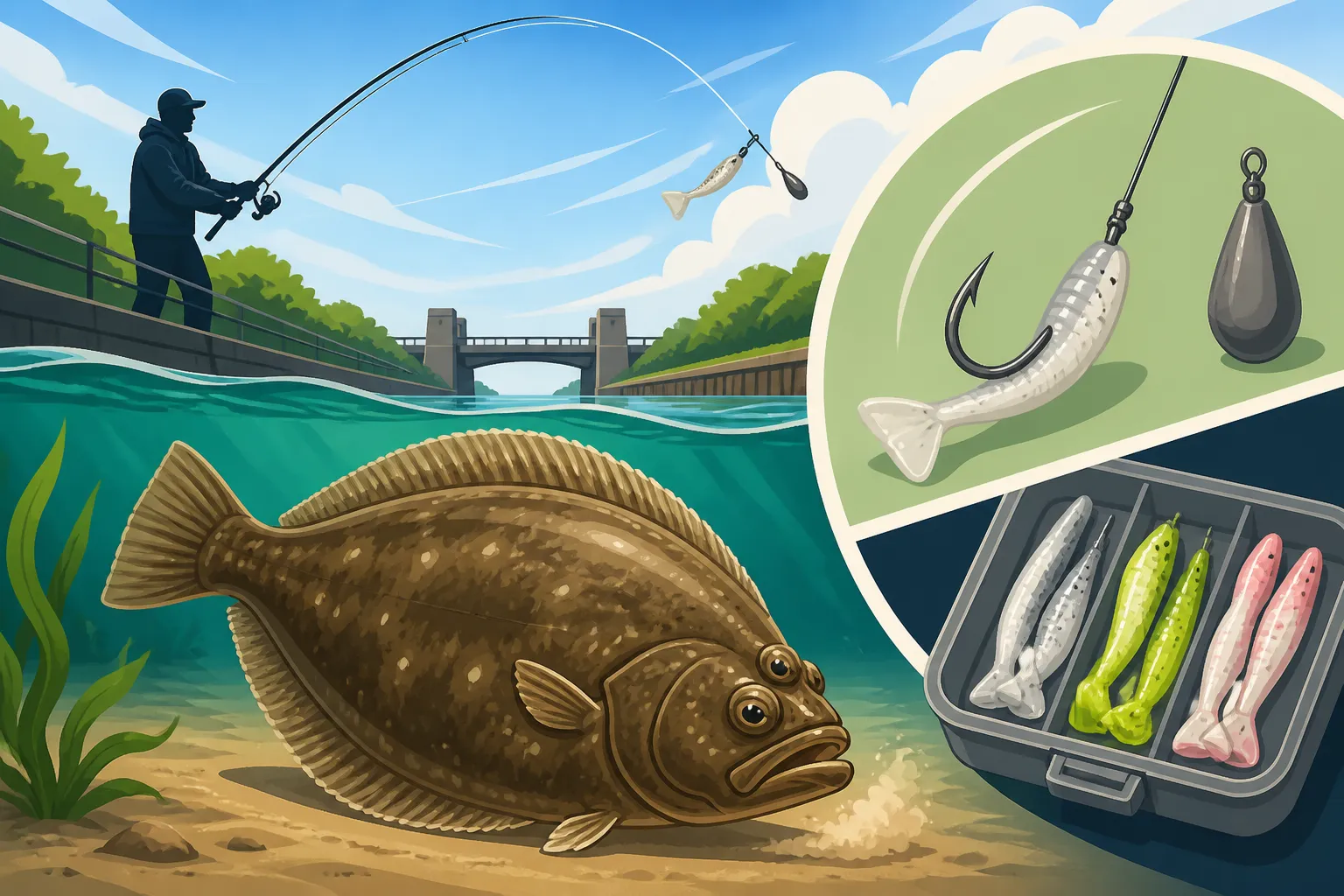
When it comes to rigs, simplicity and effectiveness are paramount in the canal. The classic "Point Pleasant Rig" (also known as a three-way swivel rig) is a local favorite. It consists of a three-way swivel, with your main line tied to one eye, a short leader (12-18 inches) to a bank or pyramid sinker on another eye, and a longer leader (24-36 inches) to your hook on the third eye. This allows your bait to flutter naturally above the bottom while the sinker holds it in place.
Another highly effective option, especially when drifting from a boat or trying to cover water from shore, is a bucktail jig. Bucktails from ½ ounce to 3 ounces are common, depending on the current. Tip your bucktail with a long strip of natural bait or a scented soft plastic. Speaking of bait, here's where you can really entice those fluke:
- Natural Bait: Spearing, squid strips, and killifish (mummichogs) are perennial favorites. A long, thin strip of squid or a whole spearing on your hook offers irresistible scent and visual appeal. Herring strips can also be highly effective, especially when larger baitfish are present.
- Artificial Baits: Scented soft plastics, particularly those designed to imitate baitfish or squid, are incredibly popular and effective. Gulp! Alive! baits, such as the Swimming Mullet or Shrimp in chartreuse, white, or pink, are almost legendary for their fluke-catching ability. The debate of Gulp Bait vs Live Bait for Fluke Fishing is ongoing, but many anglers find success combining both. A bucktail tipped with a Gulp! or a strip of squid can be deadly.
When rigging your bait, ensure it has a natural presentation. For example, if using a strip of squid, thread it onto the hook so it flows and wiggles enticingly in the current, not spinning unnaturally. For detailed guidance on rigging, check out our guide on How to Tie a Fluke Rig.
Effective Techniques for Catching Fluke in the Canal
Fishing the Point Pleasant Canal isn't just about showing up with the right gear; it's about employing the right techniques to outsmart those bottom-dwelling predators. The current here demands specific approaches.
Drifting and Jigging the Channel Edges
Whether you're fishing from a boat or shore, the concept of drifting and jigging along the channel edges is king. From a boat, you’ll want to position yourself upstream (or upcurrent) from your target area and allow the boat to slowly drift with the current. This presents your bait naturally to any fluke lying in wait. Pay close attention to your depth finder to identify drop-offs, humps, and structure on the bottom. When you pass over these areas, be ready for a strike.
If you’re fishing from shore, you can achieve a similar effect by casting slightly upcurrent and allowing your rig to sweep downstream, maintaining bottom contact. This method covers a lot of water and mimics natural baitfish being carried by the current. As your bait drifts, keep your rod tip low and maintain just enough slack to feel bites without letting the line belly too much in the current. Every few seconds, give your rod tip a subtle twitch or lift and drop to impart action to your bait. This is called "jigging" or "working" the bait, and it often triggers strikes from inquisitive fluke. The key is to keep your bait moving but close to the bottom – remember, fluke are ambush predators that feed upwards. For more in-depth techniques, our article on How to Drift Fish for Fluke offers even more insights.
Fishing Near Structure and Current Breaks
Fluke are masters of using their environment to their advantage, and that means holding tight to structure or in areas where the current breaks. These are often the most productive, yet challenging, spots to fish. Think about bridge pilings, jetty rocks, docks, and even subtle depressions or sandbars on the bottom. These features create eddies and calmer pockets of water where fluke can rest while still having access to the passing food.
When fishing these areas, precise casting is crucial. You want to get your bait as close as possible to the structure without getting snagged. Cast your rig so it lands just upstream of the structure, allowing the current to carry it naturally into the prime ambush zone. If you're using a bucktail, let it sink to the bottom near the structure, then use a series of short, sharp lifts and drops to make it "hop" and "swim" right in front of the fluke's nose. Be prepared for an immediate strike as your bait hits the sweet spot. These spots often hold the bigger, more territorial fluke, so be ready for a strong fight. If you’re ever unsure about where exactly these hotspots are, especially when fishing a new area in the canal, booking a local guide through a service like FishingBooker can provide invaluable on-the-water expertise and get you straight to the fish.
Recognizing the Fluke Bite and Setting the Hook
The fluke bite can be incredibly subtle, especially in a strong current, which makes it even harder to detect. Sometimes it's a solid thump, other times it's a soft "tick-tick," or even just a sudden increase in weight or pressure on your line. This is where that sensitive braided line and fast-action rod become so important.
When you feel anything out of the ordinary, don't just snatch the rod back. Fluke often "mouth" the bait first, swimming a short distance with it before fully committing. Instead, drop your rod tip slightly towards the water, giving the fish a moment to fully take the bait. This is often called "feeding them line" or "giving them the drop." After a second or two, when you feel steady weight or a more pronounced pull, set the hook with a firm, sweeping motion upwards. Don't go for a hard, jerking snap, as you might pull the hook right out of their soft mouths. A good, steady sweep will usually do the trick. Many seasoned anglers will tell you that the most important thing is to pay attention to your line and feel every bump and drift. If your line suddenly stops drifting, or moves in an unnatural direction, it's often a sign that a fluke has picked up your bait. Persistence and patience are key, as you might get a lot of short strikes before that solid keeper commits!
The Annual Fluke Season and Regulations in the Canal
Staying on top of the regulations is not just about avoiding fines; it's about contributing to the conservation of this incredible fishery. Fluke populations are managed carefully, and rules can change.
Key Season Dates and Size Limits
The fluke (summer flounder) season in New Jersey typically runs for a significant portion of the year, allowing ample opportunity to target them in the Point Pleasant Canal. While the exact dates and regulations can vary slightly year to year based on state and federal management decisions, the season generally opens in May and extends through late September or early October. It's absolutely crucial to check the most current regulations from the New Jersey Department of Environmental Protection (NJDEP) Fish and Wildlife before you head out, as New Jersey Fluke Season Dates for 2026 are set annually.
The size and bag limits are equally important. For instance, in recent years, the recreational minimum size limit for fluke in most New Jersey waters has been 18 inches, with a daily bag limit of two fish. However, specific areas, like the Delaware Bay, might have slightly different rules, as discussed in Delaware Bay Fluke Rules vs the Rest of New Jersey. Always carry a measuring device with you – a tape measure on your cooler or boat, or a sticker on your rod – so you can quickly and accurately check your catch. Releasing undersized fish unharmed is vital for the sustainability of the fishery, so handle them carefully and get them back in the water quickly.
The Importance of Conservation and Responsible Angling
Beyond simply adhering to the rules, practicing responsible angling is a huge part of being a good steward of the resource. This means handling undersized fish gently and releasing them quickly to maximize their survival chances. If a fluke swallows the hook, try to cut the line as close to the hook as possible rather than tearing out its insides. Using circle hooks can also help reduce gut hooking, though they're not always mandatory for fluke.
Another aspect of responsible angling is being mindful of your fellow anglers and the environment. The Point Pleasant Canal can get crowded, especially on prime tides and weekends. Be courteous, give others space, and don't hog the best spots. Pick up your trash, dispose of fishing line properly, and be aware of any protected areas or special restrictions. These collective efforts ensure that the Point Pleasant Canal remains a productive and enjoyable fishing destination for generations of anglers. If you're interested in broadening your fluke knowledge, our comprehensive guide on How to Fish for Fluke in New Jersey covers even more techniques and strategies for different environments. Remember, every fish we release responsibly helps keep our waters full for tomorrow.
| Factor | Ideal Conditions for Fluke in Point Pleasant Canal | Notes |
|---|---|---|
| Tide | Incoming or Outgoing (strongest flow) | 1-2 hours after dead slack until 1 hour before next slack. |
| Current Speed | Moderate to Strong | Fluke prefer moving water for ambush feeding. |
| Water Depth | 10-30 feet along channel edges and structure | Deeper pockets and drop-offs are key ambush points. |
| Bottom Type | Sand, Mud, Gravel, near Rock Structure | Fluke camouflage well in these bottoms; structure provides cover. |
| Bait | Live Killifish, Spearing, Squid Strips | Gulp! Alive! Swimming Mullet/Shrimp (Chartreuse, White) are also excellent. |
| Rig | Three-Way Swivel Rig, Bucktail Jig | Match sinker weight to current strength (1-4 oz typically). |
| Time of Day | Dependent on tide, often better in low light | Early morning, late evening can be productive if tides align. |
Disclaimer
Fishing conditions and regulations in New Jersey can change. Always consult the latest New Jersey Department of Environmental Protection (NJDEP) Fish and Wildlife regulations before heading out. This guide is for informational purposes only and does not constitute legal advice. Adherence to all local, state, and federal laws is the sole responsibility of the angler.