How to Drift Fish for Fluke
There's nothing quite like the feeling of a solid thump on your line when you're targeting summer flounder, affectionately known as fluke, here in New Jersey. But let's be honest, it can be incredibly frustrating to spend a beautiful day on the water, watching other boats haul in fish after fish, while your cooler stays stubbornly empty. Many anglers struggle to consistently locate and entice these flatfish, often due to an unfamiliarity with their habits or the most effective presentation methods. This comprehensive guide is designed to transform your fluke fishing success by diving deep into the art and science of drift fishing, a technique that seasoned New Jersey anglers swear by.
Understanding Fluke Behavior and Habitat for Drift Fishing
Before you even think about dropping a line, it's crucial to understand what makes a fluke tick. These bottom-dwelling predators aren't just randomly distributed; they have specific preferences when it comes to where they hang out and how they react to their environment. Learning these nuances is the foundation of becoming a successful drift angler in our New Jersey waters.
Where Fluke Hide in New Jersey Waters
Fluke are masters of camouflage, burying themselves in the sand or mud, waiting to ambush unsuspecting prey. This tells us a lot about where we should be looking for them. They love areas with a mixed bottom composition – think sandy patches adjacent to mussel beds, rocky outcrops, or even old tires and debris on the seabed. These structures provide them cover and act as natural funnels for baitfish. Imagine a large flat sandy expanse; a fluke won't just sit in the middle of it. They'll be on the edges, near any subtle change in depth, a slight rise, or where a channel begins to slope up. These are classic ambush points. You'll find them congregating along the edges of channels, drop-offs, and around any kind of underwater structure that breaks the current, offering them a place to hide and dart out. It’s all about conserving energy while staying ready to pounce.
How Tides and Currents Influence Fluke Location
Tides and currents are, without exaggeration, the single most important factors in successful fluke drift fishing. Fluke are not strong swimmers against heavy current; instead, they position themselves strategically to let the current bring food to them. On a strong incoming or outgoing tide, they'll often be found lying with their heads pointed into the current, hugging the bottom structure. This allows them to dart sideways to grab baitfish or crustaceans that are swept past them.
Think of it this way: a strong current might push baitfish along the edge of a channel. The fluke will lie just inside that channel, or on top of the adjacent flat, where the current isn't quite as strong, waiting for the buffet to come to them. During slack tide, when the current slows or completely stops, fluke tend to spread out more and become less aggressive. They're still catchable, but the bites can be more subtle, and they might require more active jigging to provoke a strike. Understanding How to Read Tide Charts for Better Fishing in New Jersey is absolutely paramount for fluke anglers. Knowing when the current will be optimal for your drift path will dramatically increase your chances.
Ideal Water Temperatures for Active Fluke
While fluke can be caught in a range of temperatures, they definitely have their sweet spot. As their common name "summer flounder" suggests, they prefer warmer waters, typically becoming most active when the water temperature is between 60 and 70 degrees Fahrenheit. Below 55 degrees, they tend to be sluggish and less inclined to chase bait. Above 75 degrees, especially in shallow back bays during a heatwave, they might move to deeper, cooler water or become lethargic.
Early in the season, when the water is still warming up, you’ll often find them in shallower sun-warmed bays like Barnegat Bay or Great Egg Harbor Bay. As the summer progresses and bay waters become very warm, they might push out to cooler ocean waters or deeper channels. Keeping an eye on water temperature gauges on your boat or through local fishing reports can give you a significant advantage in locating active fish. This is particularly relevant when considering the Best Time of Year to Fish for Fluke in New Jersey, as their activity levels are directly tied to temperature.
Essential Gear for Successful Fluke Drifting
Having the right tackle isn't about having the most expensive gear; it's about having the appropriate gear that allows you to present your bait effectively, detect subtle bites, and handle a decent-sized fish. Drift fishing for fluke has some specific requirements that differ from, say, surf fishing or bottom fishing for other species.
Rods, Reels, and Line for Fluke
For drift fishing fluke, you want a rod that offers a good balance of sensitivity and backbone. A 6'6" to 7'6" medium-light to medium action spinning or conventional rod is usually ideal. The sensitivity in the tip is crucial for detecting those light fluke bites – sometimes it's just a subtle "tick" rather than a violent strike. The backbone closer to the reel ensures you have the power to set the hook and fight a strong fish, especially if you hook into a doormat fluke.
When it comes to reels, a conventional reel in the 15-20lb class (like a Penn Squall or an Ambassadeur 6500) gives you excellent control over your line and is fantastic for bottom contact. If you prefer spinning gear, a 3000-5000 size reel (think a Shimano Stradic or a Daiwa BG) spooled with braided line will do the trick.
Speaking of line, braided line is a game-changer for fluke fishing. Its no-stretch property allows for incredible sensitivity, letting you feel every bump and bite on the bottom. I typically spool up with 15-20lb test braid. To this, I attach a 3-5 foot leader of 20-30lb fluorocarbon via a Double Uni knot or an FG knot. Fluorocarbon is nearly invisible underwater and is more abrasion-resistant than mono, which is great when fishing around structure. You can often find great deals on quality braided lines and fluorocarbon leaders on Amazon if your local tackle shop doesn't have exactly what you're looking for.
Terminal Tackle: Rigs, Hooks, and Sinkers
This is where the rubber meets the road for fluke. Your terminal tackle setup needs to be effective at presenting your bait naturally while also being durable enough for repeated use.
- Rigs: The most common and effective rig for drift fishing fluke is a simple high-low rig or a three-way swivel rig.
- High-Low Rig: This typically involves two dropper loops for hooks and a heavier leader for your sinker at the bottom. It keeps your bait off the bottom, making it more visible. You can buy pre-tied fluke rigs, or make your own. Learning How to Tie a Fluke Rig can save you money and ensure you have the exact setup you prefer.
- Three-Way Swivel Rig: This rig uses a three-way swivel, with one eye for your main line, one for a leader to your hook, and one for a short leader (6-12 inches) to your sinker. This setup keeps the sinker on the bottom while allowing your bait to flutter enticingly a foot or two above it.
- Hooks: Kahle hooks or wide-gap worm hooks in sizes 2/0 to 4/0 are popular choices. Ensure they are sharp! Fluke have surprisingly tough mouths.
- Sinkers: Your sinker choice depends entirely on the current and depth. You want just enough weight to keep your rig making intermittent contact with the bottom without dragging excessively or getting swept up. Pyramid sinkers are good for sandy bottoms, while bank sinkers work well in rocky areas. Carry a variety from 1/2 ounce to 4 ounces. It's better to have too many options than to be under-weighted, which leads to your rig "flying" too high in the water column.
Bait and Lure Choices for Drifting
Fluke are opportunistic predators, so a variety of baits and lures can work. The key is to offer something that looks appealing and moves naturally with the drift.
- Live Bait: There's nothing quite like live bait for fluke. Peanut bunker, spearing, and mummichogs are all fantastic choices. Rigging them through the lips or dorsal fin will allow them to swim naturally.
- Cut Bait: Strips of squid, fluke belly (if legal), or even bluefish fillets are highly effective. The scent trail they leave is a big draw. Thin strips about 4-6 inches long and 1/2 inch wide, tapering at one end, work best.
- Gulp! Baits: These scented artificial baits have revolutionized fluke fishing. Popular choices include the 4-inch swimming mullet, grub, or shrimp in chartreuse, white, or nuclear chicken colors. They are incredibly effective, durable, and a great alternative to live bait, especially when live bait isn't available or if you're sensitive to handling it. You can find a huge selection of Gulp! products on Amazon, often with convenient multi-packs.
- Bucktail Jigs: These classic lures, often tipped with a piece of Gulp! or natural bait, are deadly for fluke. The weight of the bucktail acts as your sinker, and its pulsating action in the water column drives fluke wild. I'll get into specific bucktail techniques later, but having a variety of weights and colors (white, chartreuse, pink) is essential.
For a deeper dive, check out this guide on the Best Bait for Fluke Fishing. Experimentation is key; what works one day or in one spot might not work the next.
| Bait/Lure Type | Pros | Cons | Ideal Use Case |
|---|---|---|---|
| Live Bait (Peanut Bunker) | Highly effective, natural presentation | Fragile, requires aeration, can be expensive | Strong current, targeting larger fluke |
| Cut Bait (Squid Strip) | Strong scent, durable, readily available | Less natural action than live bait, can be messy | Any conditions, good for tipping jigs |
| Gulp! Swimming Mullet | Scented, durable, no refrigeration needed | Can be costly, fish sometimes "short-strike" it | Versatile, great for active jigging and tipping bucktails |
| Bucktail Jig | Mimics baitfish, good for active fishing | Requires skill to impart action, can snag easily | Strong current, targeting aggressive fluke |
Mastering Drift Fishing Techniques for Fluke
Drift fishing isn't just about letting your boat float wherever the wind takes it. It's a calculated dance between boat control, current, and bait presentation. The goal is to cover ground efficiently while presenting your offering in a way that triggers a strike.
Reading the Drift and Boat Control
The first step is to understand your drift. This means paying attention to the wind, current, and any changes in depth or bottom structure. Ideally, you want a drift that's not too fast and not too slow, allowing your bait to stay in the strike zone. A good drift speed is usually between 0.5 to 1.5 knots.
- Controlling Your Drift:
- Sea Anchor/Drift Sock: This is your best friend for slowing down a fast drift, especially on windy days. Deploy it off the bow or stern (depending on whether you want to drift bow-first or stern-first) to create drag and stabilize your boat's movement. It also helps orient the boat, allowing all anglers to fish off one side, often the downwind side.
- Engine Control: On lighter current or wind days, you can use your boat's engine to fine-tune your drift. Engage the engine in reverse (or forward, depending on wind/current direction) at idle speed to slow down or even slightly steer your drift over specific areas. This "power drifting" allows for precise coverage of promising bottom structure.
- Watching Your Line: Keep a close eye on your fishing line. If it's constantly sweeping far behind the boat, you're drifting too fast or your sinker is too light. If it's hanging straight down with no angle, you might be too slow or your sinker is too heavy. A slight angle (around 45 degrees) is generally ideal for maintaining bottom contact and feeling bites.
The best approach is often to "zigzag" over an area. Make a drift, then motor back upwind/upcurrent a little off to the side of your previous path, and make another drift. This allows you to cover more ground and pinpoint where the fish are holding. This technique is especially useful in areas like the Shark River Inlet, where specific channels and eddies can hold large numbers of fish.
Presenting Your Bait Naturally
Once your drift is dialed in, the next crucial step is presenting your bait or lure in a way that mimics a wounded baitfish or a natural food source.
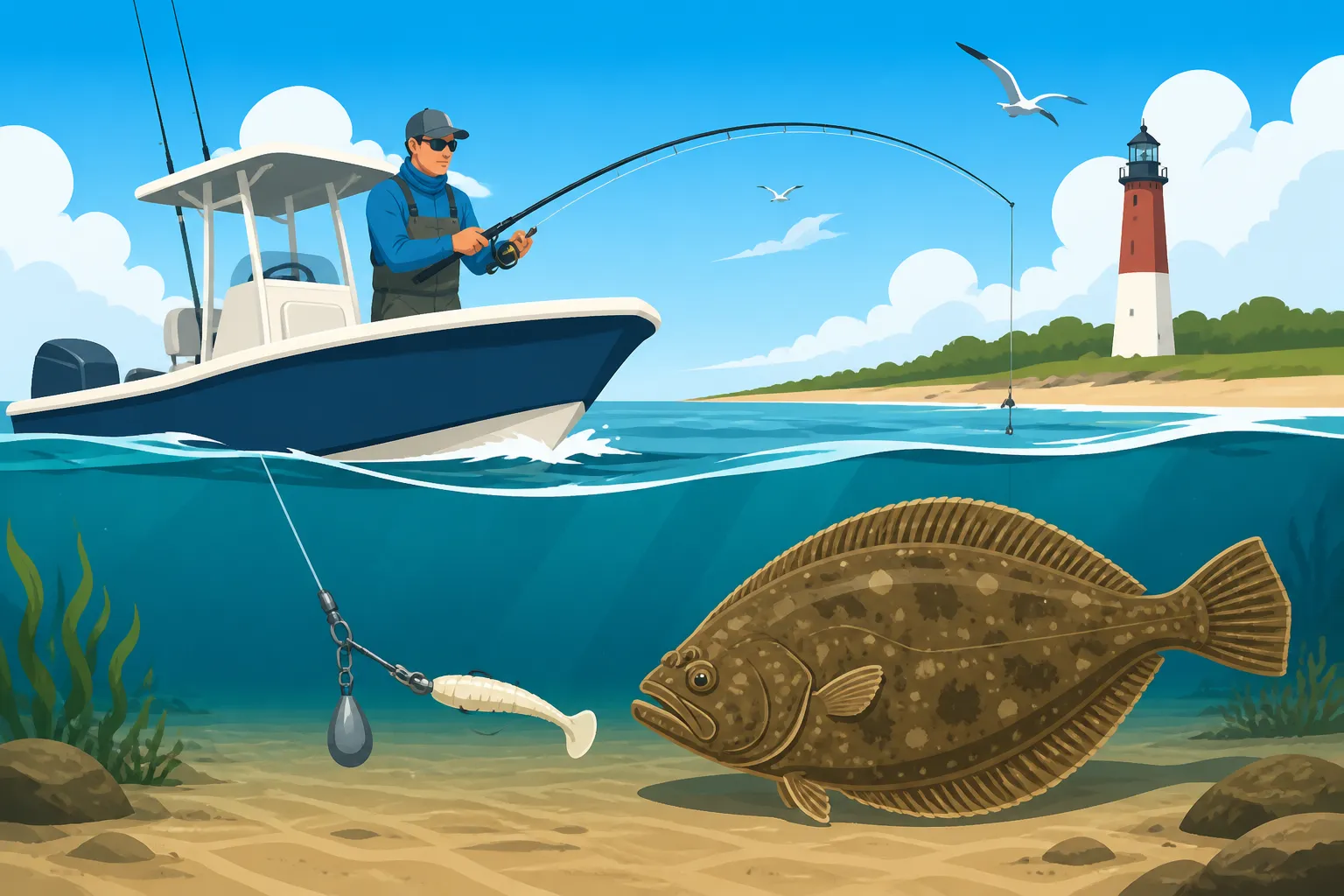
- Bottom Contact is Key: Fluke are bottom dwellers. While they will rise a foot or two to strike, your rig needs to be consistently near the bottom. Your sinker should tap the bottom periodically. This creates puffs of sand or mud, mimicking baitfish rooting around, which attracts fluke.
- The "Lift and Drop" Motion: For bait rigs, once your sinker hits bottom, retrieve a crank or two of your reel to lift it slightly, then let it fall back down. This imparts a natural swimming or fluttering action to your bait. Repeat this motion as you drift.
- Keeping the Line Vertical: Try to keep your line as vertical as possible, especially in strong currents. A slack line makes it difficult to feel bites and less effective at setting the hook. If your line is far out behind the boat, reel in quickly, lift your rod, let it fall back, and repeat. This is where braided line's sensitivity really shines.
- Constant Engagement: This isn't a "set it and forget it" type of fishing. You need to be actively engaged, constantly feeling the bottom, and anticipating a strike. Many anglers make the mistake of just letting their bait drag.
The Art of the Fluke Jig and Bucktail Drift
While bait rigs are effective, actively jigging a bucktail can be incredibly productive and is often the preferred method for many seasoned anglers. It's more engaging and allows for precise control over your presentation.
- Bucktail Selection: Choose a bucktail weight that allows you to maintain bottom contact with a 45-degree line angle in the prevailing current. This could be anything from a 1/2 oz in shallow, slow-moving back bays to 3-4 oz or more in deeper channels or strong ocean currents. Colors like white, chartreuse, pink, or spearing imitation patterns are excellent. Always tip your bucktail with a long strip of Gulp! (4-inch swimming mullet or grub are popular), a strip of squid, or even a live minnow. The scent and added profile are irresistible.
- The Jigging Motion: Cast your bucktail slightly ahead and to the side of your drift path. Let it sink to the bottom. Once it hits, quickly snap your rod tip up about 1-2 feet, then immediately let it fall back down on a semi-slack line. The key is to let the bucktail "parachute" or flutter on the fall – this is often when the strike occurs. Repeat this lift-and-drop motion, reeling in any slack created by your drift.
- Feeling the Bite: Fluke bites on a bucktail can range from a violent strike to a subtle "thump" or even just a feeling of added weight. Set the hook quickly and firmly with a sweep of your rod if you feel anything out of the ordinary. Don't hesitate; fluke are notorious for spitting the hook if you give them too much time.
- Working the Edges: When drifting, pay close attention to areas where you transition from one depth to another, or from a soft bottom to a rocky one. These are prime bucktailing zones, as fluke will often sit on the edge of the structure, waiting to ambush. Drift along these edges repeatedly to maximize your chances.
Navigating New Jersey's Prime Fluke Drifting Grounds
New Jersey offers an incredible variety of environments for fluke, from shallow, muddy back bays to deep, rocky ocean structures. Knowing where to go and adapting your strategy to each location is vital.
Back Bays and Estuaries
Our expansive back bay systems, like Barnegat Bay, Great Bay, and Absecon Bay, are legendary for fluke fishing, especially in the early summer. These areas warm up quickly and hold vast populations of baitfish.
- Strategy: Look for areas with meandering channels, oyster beds, and marsh grass edges. Fluke will often lie on the shallow flats adjacent to deeper channels, ambushing baitfish moving with the tide. A falling tide often pulls baitfish off the shallow flats into deeper water, creating excellent feeding opportunities. Focus on areas with good tidal flow, as this concentrates bait.
- Gear Considerations: Lighter tackle is often appropriate here, with sinkers generally ranging from 1/2 oz to 2 oz. Smaller bucktails (1/2 oz to 1 oz) or a simple high-low rig with Gulp! or spearing are highly effective. Since these waters can be shallower, you might find that Barnegat Bay Fluke Fishing in Summer offers some of the best action.
- Specific Spots: Areas around the "clam beds" or anywhere a creek empties into the main bay system are always worth investigating. These are natural funnels for bait and predators alike.
Ocean Reefs and Wrecks
Once the summer heat sets in and larger fluke move offshore, New Jersey's artificial reefs and natural wrecks become prime targets. These structures hold an incredible amount of life, including baitfish, crabs, and, of course, big fluke.
- Strategy: This is where boat positioning is critical. You're trying to drift directly over or just along the edges of specific pieces of structure. This might require multiple short drifts to dial in your approach. Fluke will stack up around these structures, using them as ambush points. Your fish finder becomes an invaluable tool here, helping you identify the structure and the presence of fish.
- Gear Considerations: You'll generally need heavier sinkers (2 oz to 6 oz, or even more depending on depth and current) and sturdier bucktails to contend with deeper water and stronger currents. Make sure your leader is abrasion-resistant, as you'll be fishing around sharp edges. A good quality braid is essential for feeling the bottom at these depths.
- Specific Spots: Many of our artificial reefs, like the Atlantic City Reef, Axel Carlson Reef, or the Sandy Hook Reef, hold excellent numbers of fluke throughout the summer. Check your nautical charts for specific coordinates or local fishing forums for recent reports.
Inlet and Channel Drifting Strategies
New Jersey's numerous inlets and main channels, such as the Manasquan Inlet, Shark River Inlet, and Cape May Canal, are natural highways for baitfish and offer consistent fluke action due to strong currents and distinct bottom contours.
- Strategy: The key here is to understand the current. Fluke will often position themselves in eddies or behind prominent structure (like bridge pilings or jetty rocks) that break the current. Drift along the edges of these channels or through the slower-moving water, always making sure your bait is presented on the bottom. Focus on the transition zones between shallow and deep water within the inlet.
- Gear Considerations: You'll typically need medium to heavy tackle here, often with 2-4 oz sinkers or bucktails, as currents can be very strong. The ability to quickly get your bait to the bottom and keep it there is paramount.
- Specific Spots: Areas just inside or outside the Barnegat Inlet, the Point Pleasant Canal, and the Manasquan River's main channel are notorious fluke producers. Pay attention to how the current is moving bait and position your boat accordingly. Consider the New Jersey Fluke Season Dates for 2026 and target inlets during their peak migratory movements.
Troubleshooting Common Drift Fishing Challenges
Even with the best preparation and understanding, drift fishing for fluke can present its own set of challenges. Learning to diagnose and adapt to these issues will make you a more versatile and successful angler.
Dealing with Snags and Hang-ups
Snags are an inevitable part of bottom fishing, especially around the tempting structures where fluke love to hide. They can be frustrating, leading to lost tackle and wasted time.
- Prevention is Key:
- Right Weight Sinker: Use just enough weight to maintain bottom contact without digging in excessively. Too much weight will cause your sinker to get wedged in rocks more easily.
- Keep Your Line Vertical: A vertical line reduces the amount of bottom your sinker covers, decreasing the chance of snagging. It also makes it easier to feel when your sinker is nearing an obstruction, allowing you to lift it over.
- Monitor Your Drift: If you're drifting through a particularly rocky area, shorten your drifts or adjust your speed to minimize time spent in the danger zone.
- What to Do When You Snag:
- Don't Pull Hard Immediately: Often, a snagged sinker can be freed with a gentle jiggle of the rod. Try to pull from different angles.
- The "Pop-Off" Method: Point your rod tip directly at the snag, put some slack in the line, and then quickly snap your rod tip up. This sudden jerk can sometimes free the sinker.
- Sacrifice the Sinker: If all else fails, it's often better to break off your sinker than to lose your entire rig, or worse, your main line. Use lighter mono or fluorocarbon for your sinker leader (e.g., 20lb test for a 30lb main leader) so that if it snags, only the sinker breaks off, and you can re-tie a new one. Carrying extra sinkers is non-negotiable!
Adapting to Changing Conditions
The weather and water conditions in New Jersey can change rapidly. What worked perfectly an hour ago might be completely ineffective now. Being able to adapt is a hallmark of a good angler.
- Wind Shifts: A sudden wind shift can drastically change your drift speed and direction. Have your sea anchor ready to deploy or retrieve, or adjust your engine control. Sometimes, a strong wind against a strong current creates a very slow, ideal drift. Other times, it can create a chaotic drift.
- Current Changes: As tides change, so does the current strength and direction. You'll need to adjust your sinker weight accordingly. As the current slows towards slack tide, switch to lighter sinkers. As it picks up, go heavier. Pay attention to the How Tides and Currents Influence Fluke Location section for more insights.
- Water Clarity: Heavy rains can muddy up bay waters. Fluke can still be caught in stained water, but they might rely more on scent. This is when cut bait or Gulp! with its strong scent becomes even more crucial. In clear water, natural presentation and subtle lure actions are more important. Consider adding a small spinner blade to your rig for extra flash in clear water.
- Pressure Changes: Approaching storms or fronts can affect fish behavior. Sometimes, fishing is excellent just before a front, and then it shuts down completely. There's no magic bullet for this, but slowing down your retrieve, using more natural baits, or switching to areas with different depths can sometimes elicit a bite.
The Picky Fluke: When They Won't Bite
You've got the perfect drift, the right bait, and you're hitting all the hotspots, but the fish just aren't cooperating. It happens to everyone, but there are still things you can try.
- Change Up Your Bait: If Gulp! isn't working, switch to fresh squid or a live minnow. If live bait is getting ignored, try a bucktail. Vary your colors. If you're using a white Gulp!, try chartreuse or nuclear chicken.
- Vary Your Retrieve: Are you jigging too fast or too slow? Experiment with different speeds and heights for your lifts. Sometimes a subtle, barely-off-the-bottom drag works wonders, while other times a more aggressive jigging motion is needed.
- Downsize or Upsize: If you're getting short strikes (little taps but no hook-up), try downsizing your bait or hook. Conversely, if you're targeting trophy fluke, sometimes upsizing your bait (e.g., a larger live peanut bunker) can deter smaller fish and entice a "doormat."
- Move to a New Spot: Don't be afraid to change locations entirely. Sometimes the fish just aren't there, or they're shut down in that particular area. Try a different depth, a different type of structure, or even a completely different bay.
- Check the Regulations: While not a "no bite" solution, always make sure your catch adheres to the New Jersey Fluke Size Limit: 18 Inches and other regulations. Knowing the rules means you can fish confidently.
Safety and Regulations While Fluke Drifting in New Jersey
Fishing is meant to be fun and relaxing, but it's paramount to prioritize safety on the water and to adhere to all New Jersey fishing regulations. Ignorance of the law is never an excuse, and a violation can quickly turn a great day into a costly one.
On-Water Safety Tips
When you're out on the water, especially in open bays or the ocean, conditions can change quickly. Always err on the side of caution.
- Wear a Life Vest: This is non-negotiable, especially for children or non-swimmers. Even strong swimmers can be overwhelmed in unexpected situations. Many modern life vests are comfortable enough to wear all day.
- Check the Weather Forecast: Before you leave the dock, get a detailed marine weather forecast. Pay attention to wind speed, wave height, and any advisories for thunderstorms or small craft warnings. If conditions look questionable, it's always better to stay home or fish in a protected area.
- Tell Someone Your Plan: Let a friend or family member know where you're going, your estimated return time, and who is with you. This can be crucial in an emergency.
- Carry Essential Safety Gear: Beyond life vests, ensure you have flares, a whistle or horn, a first-aid kit, a functioning VHF radio (not just a cell phone, which can lose signal), and a fully charged cell phone. If you're on a larger vessel, consult the Coast Guard requirements for additional safety equipment.
- Stay Hydrated and Protected: Long hours on the water, especially in the summer, can lead to dehydration and sunburn. Bring plenty of water, wear sunscreen, a hat, and appropriate clothing.
- Be Aware of Other Boats: New Jersey waters can get crowded, especially on summer weekends. Be mindful of other boats, their drift paths, and always follow navigation rules. Don't cut off other anglers or crowd their spots.
Understanding New Jersey Fluke Regulations
New Jersey's fishing regulations, especially for popular species like fluke, can change annually based on federal and state management decisions. It's your responsibility as an angler to know and follow the current rules.
- Fishing License and Saltwater Registry: Almost everyone needs a valid New Jersey fishing license to fish freshwater. For saltwater, while no general license is required for recreational anglers, you must register with the New Jersey Saltwater Registry Explained program if you are fishing in marine waters or a tidal tributary. This is free and helps the state collect vital data. Make sure you understand the nuances of New Jersey Fishing License Guide for 2026 for any freshwater component of your trip as well.
- Bag and Size Limits: Fluke typically have a minimum size limit and a daily bag limit (number of fish you can keep). These limits can vary based on location (e.g., Delaware Bay Fluke Rules vs the Rest of New Jersey), season, and sometimes even federal mandates. Always consult the most current New Jersey Marine Fish and Wildlife Digest before you head out. This document will detail the New Jersey Fluke Size and Bag Limits Explained for the current year.
- Seasonal Closures: Fluke seasons are also specific. There will be defined start and end dates. Fishing for fluke outside of these dates, even if you're catching and releasing, is generally prohibited. Make sure to check the New Jersey Fluke Season Dates for 2026.
- Proper Fish Handling: If you catch an undersized fluke or a fish you intend to release, handle it with care. Minimize its time out of the water, use a de-hooking tool, and release it gently.
- Conservation Police: New Jersey Conservation Police Officers are out on the water to ensure compliance. They are friendly but firm, and they will check for licenses, registration, and adherence to all regulations. Always cooperate fully if approached.
By understanding fluke behavior, equipping yourself with the right gear, mastering effective drift fishing techniques, and always prioritizing safety and regulations, you'll be well on your way to filling your cooler with delicious New Jersey fluke. Tight lines!
Disclaimer
The information provided in this guide is for general informational purposes only and is not intended as legal advice regarding fishing regulations. Fishing rules and regulations in New Jersey can change frequently. Always consult the official New Jersey Fish and Wildlife Digest or visit the New Jersey Department of Environmental Protection website for the most current and accurate regulations before engaging in any fishing activity. The author and publisher are not responsible for any misuse of the information or any violations of fishing laws.