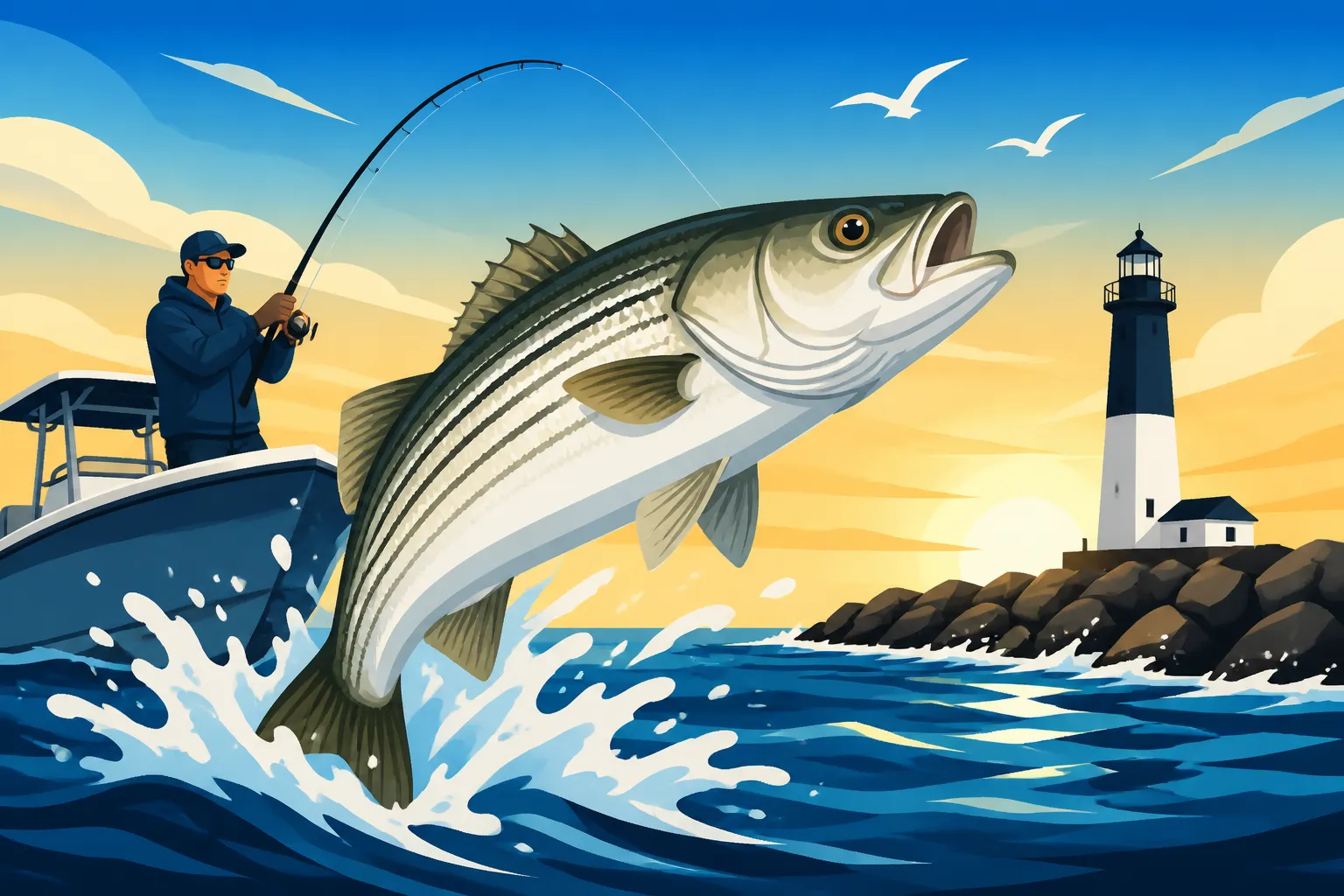
Manasquan Inlet Striped Bass Fishing Guide
Oh, Manasquan Inlet. It's one of those spots that can either be incredibly rewarding or incredibly frustrating, isn't it? You hear the whispers of big striped bass moving through, see the boats working the jetty, and think, "This is it!" only to sometimes find yourself scratching your head. Well, navigating the currents and understanding the nuances of this iconic Jersey Shore location is key to success. This guide is going to break down everything you need to know about targeting striped bass in the Manasquan Inlet, from understanding its unique ecosystem to the best techniques and times to cast your line.
Why Manasquan Inlet is a Prime Striped Bass Hotspot
The Manasquan Inlet isn't just a passage between the Atlantic Ocean and the Manasquan River; it's a dynamic, rich feeding ground and migratory pathway that makes it irresistible to striped bass. Its unique geography, combined with consistent baitfish movements and tidal flows, creates an environment where stripers thrive. Understanding these foundational elements is crucial for any angler hoping to connect with a keeper or a trophy.
Geographic Features and Structure
When you look at the Manasquan Inlet, you're not just seeing water. You're seeing a complex system of rock jetties, deep channels, bridge pilings, and the confluence of the river and the ocean. Each of these features plays a vital role in attracting and holding striped bass. The long, granite jetties on both the north and south sides act as natural current breaks and ambush points. Baitfish, like bunker, mullet, and spearing, get swept along these structures, making them easy targets for hungry stripers. The rocks themselves offer cover, allowing bass to lie in wait, hidden from view.
Beyond the jetties, the inlet funnels into a deeper channel that extends into the Manasquan River and connects to the Point Pleasant Canal, a renowned hotspot in its own right. This channel acts like a highway for migrating fish. Underneath the Manasquan Inlet Bridge, the pilings create eddies and current breaks, which are perfect for stripers seeking refuge from strong flows or ambushing bait that gets disoriented by the turbulence. There's a constant flow of water through here, bringing nutrients and, more importantly, a steady parade of food. The transition zone where the river meets the ocean is particularly active, often a chaotic mix of freshwater and saltwater, attracting a huge variety of forage species and, consequently, their predators.
Abundant Baitfish and Food Sources
One of the biggest draws for striped bass at Manasquan Inlet is the sheer abundance and variety of baitfish. Throughout the year, different species cycle through, providing a continuous buffet for stripers. In the spring and fall, the massive schools of Atlantic menhaden, or bunker, are a primary food source. When these oily baitfish are around, stripers are usually not far behind, often pushing them to the surface in spectacular feeding frenzies known as "blitzes." Watching a school of bunker get annihilated by a group of breaking stripers is one of the most exciting sights in fishing.
But it's not just bunker. Spearing, mullet, sand eels, and even crabs and worms contribute to the varied diet of Manasquan Inlet stripers. Herring and shad also make their seasonal runs, bringing in larger migratory bass. The presence of these baitfish means that stripers don't just pass through; they actively feed and often hold up in the area for extended periods. This rich food chain is what truly makes the inlet a consistent producer. If you're wondering how to find these baitfish, keeping an eye on local reports and online forums, or even looking for birds diving, can give you a real advantage. When you see gulls diving and working, there’s a good chance they’re feasting on bait being pushed up by gamefish below.
Strong Currents and Tidal Flows
The Manasquan Inlet is famous for its powerful currents, and these currents are a double-edged sword: they can make fishing challenging, but they are also precisely why the stripers are there. Striped bass are ambush predators, and strong currents do a lot of the work for them, sweeping baitfish right into their strike zone. The inlet’s design creates a natural funnel, intensifying the incoming and outgoing tides.
Understanding the tide is paramount here. A strong moving tide, whether incoming or outgoing, is often the best time to fish. The moving water disorients bait, washes out crabs and worms from the bottom, and activates the bass. Slack tide, while sometimes offering a brief window of opportunity for different techniques, generally sees less activity from the stripers. Anglers often find success during the last hour or two of an incoming tide and the first hour or two of an outgoing tide, as the current builds momentum and then starts to subside, creating predictable feeding lanes. Being able to read the current and position your bait or lure accordingly can make all the difference between a slow day and a banner one. For more information on reading currents, you might find our guide on How to Fish a Falling Tide or How to Fish a Rising Tide helpful.
Best Times to Target Striped Bass in Manasquan Inlet
Timing is everything when it comes to striped bass fishing in Manasquan Inlet. These fish are highly migratory and influenced by water temperature, bait movements, and tidal conditions. Knowing when to be there, and what to expect during different windows, dramatically increases your chances of success.
Seasonal Peaks for Striped Bass
Manasquan Inlet sees two primary runs of striped bass: a robust spring migration and an epic fall run.
- Spring Run (Late March to June): As water temperatures begin to climb into the low 50s and 60s Fahrenheit, migratory striped bass start moving north along the coast after their wintering grounds. Manasquan Inlet is a major waypoint on this journey. Early in the spring, smaller "schoolie" stripers arrive first, often in March and April, eager to feed after the colder months. These fish are often found closer to shore and around the jetties. As May approaches and water warms further, larger breeding-size bass (often referred to as "cows") join the parade, pushing massive schools of bunker and other baitfish into the inlet and bays. This is prime time for big fish. Many anglers plan their trips months in advance, often checking online platforms like FishingBooker for available charters and their reported catches to gauge the timing.
- Fall Run (September to December): If the spring run is exciting, the fall run is often legendary. As water temperatures start to drop in September and October, stripers begin their southern migration, gorging themselves in preparation for winter. Manasquan Inlet becomes a funnel for these fish, creating explosive feeding opportunities. This is when the famous "blitzes" occur, with massive schools of bunker being chased by hungry bass, sometimes right into the surf or against the jetty rocks. The fall run is characterized by sheer numbers of fish and often some of the largest stripers of the year. This continues well into December, often until ice or extremely cold water pushes the last of the fish further south. Our guide on When Do Striped Bass Migrate Through New Jersey? provides even more detail on this incredible phenomenon.
Daily Rhythms and Tidal Windows
Beyond the seasons, daily rhythms and tidal cycles dictate when striped bass are most active in the inlet.
- Dawn and Dusk: These low-light periods are universally excellent for striped bass. Stripers have excellent vision in dim light, giving them an advantage over their prey. At dawn, they emerge from deeper holding areas to feed actively. At dusk, they do the same, often feeding aggressively through the night, especially during the fall. Fishing the hours just before sunrise and just after sunset can be incredibly productive, particularly for larger, more cautious fish.
- Moving Tides (Incoming and Outgoing): As mentioned, a strong moving current is crucial. The last two hours of an incoming tide and the first two hours of an outgoing tide are often the most productive. The powerful flow pushes bait through the inlet, concentrates them, and makes them easier targets. Stripers will position themselves strategically behind structure—like jetty rocks, bridge pilings, or channel edges—to ambush passing meals. It’s during these periods that you’ll see the most activity. However, don't completely discount the slack tide. Sometimes, as the current briefly slows, fish will spread out, and a well-placed jig or live bait can still elicit a strike, especially in deeper pockets or eddies. Understanding the daily flow is as important as understanding the seasonal migration when you're targeting striped bass in Manasquan Inlet. You can learn more about Best Tide to Fish a New Jersey Inlet to refine your strategy.
Essential Gear and Techniques for Manasquan Inlet Stripers
Fishing Manasquan Inlet for striped bass requires a combination of robust gear and adaptable techniques. The strong currents, varying depths, and presence of both shore and boat anglers mean you need to be prepared for anything. Let's talk about what you'll need and how to use it effectively.
Rods, Reels, and Line
Given the potential for large, powerful striped bass and the challenging conditions of the inlet, your gear needs to be up to the task.
- Rods: For most Manasquan Inlet applications, a medium-heavy to heavy action spinning rod, 7 to 9 feet long, is ideal. This length provides good casting distance from shore or a boat and enough leverage to fight strong fish in current. If you're focusing solely on jetty fishing with heavier lures or bait, a beefier 9 to 11-foot surf rod might be more appropriate for throwing far and handling large fish near rocks.
- Reels: Pair your rod with a durable, saltwater-resistant spinning reel in the 5000 to 8000 size range. Look for reels with a strong drag system and good line capacity. Brands like Shimano, Penn, and Daiwa offer excellent options that can withstand the abuse of saltwater fishing.
- Line: Braid is almost a necessity for inlet fishing due to its strength, sensitivity, and thin diameter, which helps cut through current. Load your reel with 30-50 lb braided line. You'll want to use a fluorocarbon leader of 30-60 lb test, typically 2-4 feet long, connected to your braid with a strong knot like an FG knot or a double uni-knot. The fluorocarbon provides abrasion resistance against rocks and invisibility in clear water, both crucial in the inlet. For more on line choices, consider our article on What Pound Test Line for Surf Fishing which offers valuable insights applicable to inlet fishing.
Baits and Lures That Work Best
Manasquan Inlet stripers are opportunistic feeders, so a variety of baits and lures can be effective.
- Live Bait: If you can get it, live bait is often king. Live Atlantic menhaden (bunker), mullet, or eels are irresistible to larger stripers. Bunker can be caught in local estuaries with a cast net or purchased from bait shops. Rig live bunker on a fish-finder rig with a 6/0 to 9/0 circle hook, or use a treble hook if regulations allow and you intend to immediately release the fish if undersized (always check current regulations). The best time to use live bait is often when bass are keyed in on a specific forage, and the current is strong.
- Cut Bait: Fresh cut bunker, clam, or mackerel can also be very effective, especially fished on the bottom with a fish-finder rig. This is a great option for targeting stripers when they're less active or hugging the bottom in deeper channels.
- Soft Plastics: Large paddletail swimbaits (like those from Berkeley Gulp! or Tsunami) or soft jerk shads rigged on heavy jig heads (1-3 oz, depending on current) are incredibly versatile. They imitate various baitfish and can be fished effectively from shore or boat, bounced along the bottom, or retrieved through the water column. White, chartreuse, and natural baitfish colors are usually a safe bet.
- Plugs and Hard Baits: Topwater plugs (like poppers or walk-the-dog baits) are exhilarating when stripers are actively busting on the surface. Swimmers (like Bomber Long A or Daiwa SP Minnow) are excellent for imitating injured baitfish and can be very effective retrieved slowly or jigged through the current. Lipless crankbaits can also work well when bass are feeding subsurface.
- Jigs: Bucktail jigs are a timeless classic for stripers in strong current. They can be tipped with a strip of pork rind or a soft plastic trailer for added appeal. Jigging vertically from a boat or casting and bouncing a bucktail along the bottom from the jetty can be deadly. Our guide on Bucktail Jigging Techniques for New Jersey Anglers offers detailed advice.
Techniques for Shore and Boat Anglers
Fishing the Manasquan Inlet successfully often depends on where you're fishing from and adapting your technique.
- Shore Fishing (Jetties and Piers):
- Casting and Retrieving: From the jetties, cast lures (plugs, soft plastics, bucktails) parallel to the rocks or out into the current. Work your retrieve to imitate a struggling baitfish. Vary your retrieve speed and depth until you find what the fish want.
- Bottom Fishing with Bait: Use a fish-finder rig with fresh cut bait (bunker, clam) or a live eel. Cast out and let your sinker hold bottom. Stripers often patrol the deeper troughs and eddy lines created by the jetty rocks. Be mindful of boat traffic, especially around the mouth of the inlet.
- Stealth: Especially during low light, try to be quiet and avoid silhouetting yourself on the jetty. Stripers can be surprisingly spooky in shallow water.
- Boat Fishing:
- Drifting: Many boat anglers drift through the inlet, allowing the current to carry their live baits or jigs. This is particularly effective at the mouth of the inlet and near the bridge pilings. Pay close attention to your depth finder to locate structure and bait.
- Trolling: For those fishing just outside the inlet or deeper in the river, trolling tube-and-worm rigs or Mojos can be very productive, especially for larger stripers.
- Anchoring: While challenging due to the strong current and boat traffic, anchoring strategically near structure or known holding areas can allow you to present live or cut bait for extended periods. Always be aware of your surroundings and other boaters if you choose to anchor.
- Electronics: A good fish finder is invaluable for boat anglers, helping to locate bait schools, identify deeper channels, and spot individual stripers holding near structure.
- If you're considering a guided trip to learn the ropes, remember that services like FishingBooker can help you find experienced captains who know the inlet inside and out. They often provide all the necessary gear and local expertise.
No matter your preferred method, always adhere to current New Jersey fishing regulations, including size and bag limits for striped bass. Our guide on the New Jersey Striped Bass Slot Limit Explained is an essential read for every angler.
| Fishing Method | Recommended Bait/Lure | Ideal Conditions | Target Area in Inlet |
|---|---|---|---|
| Live Lining | Live Bunker, Mullet, Eel | Strong current, visible bait schools | Deeper channels, jetty edges, bridge pilings |
| Bucktail Jigging | Bucktail Jig (white, chartreuse) with trailer | Strong current, low light, around structure | Jetty rocks, bridge pilings, channel drop-offs |
| Soft Plastics | Paddletail Swimbaits (white, natural) | Moderate to strong current, calmer water behind structure | Eddies, current breaks, shallower flats |
| Plugging/Casting | Topwater Poppers, Swimming Plugs (e.g., SP Minnow) | Dawn/Dusk, active surface feeds, calmer water | Jetty tips, outside mouth of inlet, tidal rips |
| Bottom Fishing | Fresh Cut Bait (bunker, clam) | Slower current, night, targeting holding fish | Deeper pockets, channel bottom |
Navigating the Manasquan Inlet: Safety and Access
Manasquan Inlet is a busy place, especially during peak fishing seasons. It's a gateway for recreational boats, commercial vessels, and countless anglers, both from shore and boat. Understanding how to safely access and fish this area is just as important as knowing what bait to use.
Shore Fishing Access Points
For those without a boat, Manasquan Inlet offers excellent shore access, primarily from its impressive jetties.
- Northern Jetty (Point Pleasant Beach side): This jetty extends far out into the ocean and is a popular spot for surf fishermen and those targeting stripers. You can often walk quite a distance out, finding various depths and current breaks. Access is typically from the public beaches in Point Pleasant Beach. Be prepared for a long walk and the challenges of navigating uneven, sometimes slippery rocks. Good quality cleats or spike shoes are highly recommended for safety.
- Southern Jetty (Manasquan side): Similar to its northern counterpart, the southern jetty provides excellent access. It's accessible from the Manasquan public beaches. Both jetties offer prime opportunities to cast into the strong current, work lures along the rocks, or set up for bait fishing. Just remember to always be aware of rogue waves, especially during adverse weather or strong tides, and give plenty of space to other anglers and boaters. Parking can be an issue during peak season, so plan to arrive early, especially on weekends.
- Manasquan Inlet Bridge: While direct fishing from the bridge itself is generally not permitted for safety reasons, the areas immediately surrounding it on the shorelines can offer fishing opportunities, particularly where current eddies form near the bridge structure. These spots can be good for live lining or dropping jigs.
- The Best New Jersey Piers and Jetties for Shore Fishing guide provides further insights into prime locations like this.
Boat Ramp and Marina Access
For boat anglers, Manasquan Inlet is a popular launching point to the ocean and the expansive Manasquan River/Barnegat Bay system.
- Public Boat Ramps: The New Jersey State Marina at Point Pleasant Beach offers a public boat ramp that provides direct access to the Manasquan River and, subsequently, the inlet. There are also private marinas in the area that offer launching services, usually for a fee. Check ahead for availability and costs.
- Marina Services: Many marinas in Point Pleasant Beach and Manasquan offer transient slips, fuel, bait and tackle shops, and marine repair services. These can be incredibly convenient for out-of-town anglers or those needing supplies. Before you head out, confirm whether you need a specific boat registration in New Jersey, as covered in New Jersey Boat Registration Requirements for Anglers.
- Charter and Party Boats: If you don't own a boat or want to fish with an experienced captain, Manasquan Inlet is home to several charter and party boats that specifically target striped bass. These vessels typically operate out of marinas in Point Pleasant Beach. Booking a trip through a reputable charter found on platforms like FishingBooker can be an excellent way to experience inlet fishing with expert guidance and all the necessary gear provided. Our New Jersey Party Boat Fishing Guide and New Jersey Charter Fishing Guide offer more details on these options.
Safety Considerations in a Busy Inlet
Fishing in a busy inlet like Manasquan comes with inherent risks that every angler needs to respect.
- Strong Currents: The currents are incredibly powerful and can quickly sweep an unwary angler into dangerous situations. If fishing from shore, always maintain a secure footing. If boating, understand how to navigate in strong currents and be aware of how the tide will affect your boat's position. Always wear a PFD (personal flotation device), especially if fishing from a small boat or kayak in these waters.
- Boat Traffic: Manasquan Inlet is a high-traffic area. Recreational boats, commercial fishing vessels, and even larger ships use this channel. Always be aware of your surroundings. Shore anglers should be mindful of boats passing close to the jetties, and boat anglers should adhere to navigation rules and maintain a safe distance from other vessels and shore fishermen.
- Uneven Terrain: The jetty rocks are often slick with algae, especially after rain, and can be very uneven. Wear appropriate footwear with good grip. A fall on these rocks can lead to serious injury. Consider carrying a small backpack with water, snacks, and a first-aid kit.
- Weather Changes: Conditions can change rapidly at the Jersey Shore. Always check the marine forecast before heading out, whether by boat or shore. Strong winds can make jetty fishing treacherous and create dangerous sea conditions.
- Regulations and Enforcement: New Jersey Conservation Police Officers frequently patrol the inlet, ensuring anglers adhere to all state and federal regulations, including licensing, bag limits, and safety requirements. Make sure you have your New Jersey Fishing License Guide for 2026 on hand and understand all the rules to avoid penalties.
By understanding the unique environment of the Manasquan Inlet and respecting its power and popularity, you can have a safe, enjoyable, and hopefully very productive striped bass fishing experience.
Disclaimer
Please note that fishing regulations, including bag and size limits, seasons, and licensing requirements, are subject to change by the New Jersey Department of Environmental Protection (NJDEP) Division of Fish and Wildlife. Always consult the most current New Jersey Fish and Wildlife Digest or visit the official NJDEP website before planning your fishing trip to ensure compliance. This guide is for informational purposes only and does not constitute legal advice.