Fly Selection for Trout Streams in Spring
When spring finally arrives in New Jersey, there's a collective sigh of relief from anglers who have patiently endured the cold winter. The anticipation of chasing trout in our beautiful streams is palpable, but often, the sheer variety of flies available can feel overwhelming. You stand at the fly shop counter, staring at trays of tiny, feathered creations, wondering which one will actually tempt those finicky trout. This guide is here to cut through that confusion, helping you confidently select the right flies to make your spring trout fishing trips a success in the Garden State.
Understanding Spring Trout Behavior in New Jersey Streams
Spring in New Jersey is a dynamic time for trout, bringing with it ever-changing water conditions and a shift in their feeding patterns. Understanding what motivates these fish is the first step to choosing the perfect fly.
Early Spring Challenges and Opportunities
As the snow melts and winter's chill slowly recedes, New Jersey's trout streams are often running cold and high. In these early spring days, trout, especially the wild ones, can be quite sluggish. Their metabolism is slow, and they're not expending a lot of energy chasing fast-moving prey. Natural insect hatches are typically sparse, limited to hardy species like midges and a few early stoneflies. This doesn't mean fishing is impossible; it just means you need to adjust your strategy.
However, early spring also brings the excitement of the state's generous trout stocking program. Newly stocked trout are often less selective and more opportunistic, having been accustomed to pellet food. They're hungry and willing to strike at a wider variety of offerings, making them a great target for those looking to bend a rod quickly. These fish might hold in slower, deeper pools, seeking refuge from swift currents and conserving energy. Your fly selection during this period should focus on subsurface presentations that are easy for a lethargic fish to intercept. Don't be afraid to experiment with slightly larger or more brightly colored patterns that might grab their attention in murky, high water.
Mid-Spring Transitions and Increasing Activity
As spring progresses into April and May, water temperatures gradually rise, and with that comes a significant increase in insect activity. This is when things really start to get interesting for fly anglers. Trout become more active, moving into faster riffles and runs as their metabolism speeds up. You'll begin to see more consistent hatches of mayflies and caddis, providing abundant food sources. This period is often considered the prime time for trout fishing in New Jersey, offering a wider window for successful dry fly fishing as well as continued subsurface action.
During mid-spring, you'll want to pay close attention to the specific insects present. Trout will often key in on a particular size, shape, and color of emerging or adult insects, a phenomenon known as "matching the hatch." This requires more observant angling, looking for rising fish, insect shucks on the water's surface, or even catching a few naturals to compare. Having a diverse fly box that covers various stages of an insect's life cycle – nymphs, emergers, and adult dry flies – becomes crucial.
Water Conditions: Temperature and Clarity
Water temperature is arguably the most critical factor influencing trout behavior in the spring. Cold water (below 45°F) generally means sluggish fish that prefer nymphs and streamers presented slowly and deep. As the water warms (into the 50s and low 60s), trout become more active and willing to rise for dry flies, especially during peak hatches. This is where a good stream thermometer can be your best friend.
Water clarity also plays a significant role in your fly selection. In early spring, after heavy rains or snowmelt, streams can be high and off-color. In these conditions, brighter, larger, or more contrasty flies are often more effective as they create a bigger profile and are easier for the fish to see. Patterns with flash or hot spots can also be advantageous. Conversely, as waters clear and recede later in spring, trout become more wary and discerning. This calls for smaller, more imitative patterns, finer tippet, and more delicate presentations. Paying attention to these subtle environmental cues can dramatically improve your chances of success.
Essential Fly Categories for New Jersey Spring Trout
When assembling your fly box for New Jersey's spring trout season, it's wise to think in terms of categories. Each type of fly is designed to imitate a different food source or stage of an insect's life cycle, and knowing when to deploy each is key to success.
Nymphs: The Year-Round Staples
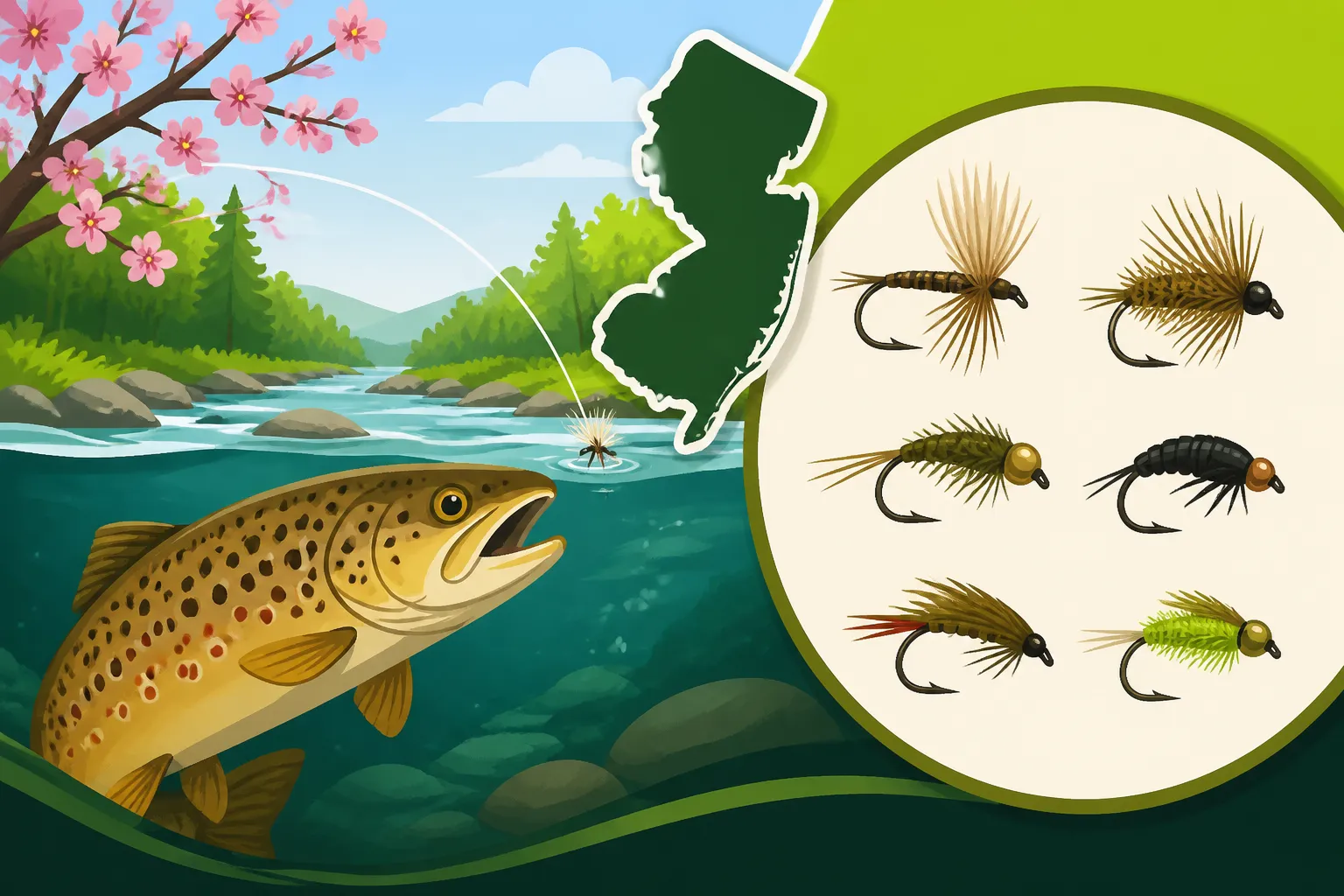
If there's one category of fly you absolutely cannot overlook for spring trout fishing, it's nymphs. Trout spend the vast majority of their feeding time subsurface, feasting on the immature stages of aquatic insects like mayflies, caddisflies, and stoneflies. Even when no surface activity is evident, fish are almost certainly eating nymphs off the bottom or as they drift in the current. In the cold, high waters of early spring, nymphs are often the undisputed champions. They drift slowly, mimicking an easy meal, perfect for lethargic trout. Popular patterns like the Pheasant Tail Nymph, Hare's Ear Nymph, and various Caddis Larva imitations are absolute must-haves. You'll want them in various sizes and weights to match different water depths and current speeds.
When fishing nymphs, presentation is everything. You want your fly to drift naturally with the current, just like a real insect. This often means using a strike indicator to detect subtle bites and adding split shot weight to get your flies down to the fish's feeding zone. Techniques like tight-line nymphing or indicator nymphing, which you can learn more about in resources on Nymphing Techniques for Trout Streams, are invaluable. Remember that trout tend to hold in seams, behind structure, and in deeper pockets, so targeting these areas with a well-drifted nymph will yield the best results.
Streamers: Imitating Forage Fish
While nymphs imitate insects, streamers are designed to mimic baitfish, leeches, or other larger prey items. These flies are fantastic for aggressive trout, especially larger browns or those recently stocked and looking for a substantial meal. In the often off-color and higher waters of early spring, streamers can be incredibly effective because their larger profile and movement help them stand out. Think about targeting undercut banks, deep pools, or the tails of runs where bigger fish might be lurking.
Popular streamer patterns include the venerable Woolly Bugger (a versatile choice in black, olive, or brown), Sculpzilla, and various minnow imitations. When fishing streamers, don't just let them drift. Instead, impart action with short strips, pauses, or even by swinging them across the current. This aggressive presentation can trigger a predatory instinct in trout that might ignore a tiny nymph. Even if you're primarily a dry fly or nymph angler, having a few streamers in your box, perhaps ordered conveniently from Amazon, for those days when the fish are in an attacking mood, is a smart move.
Wet Flies: Subsurface Swings
Often overlooked in modern fly fishing, wet flies are a classic and highly effective category, particularly during the spring. They are designed to imitate emerging insects or drowned terrestrial insects drifting just beneath the surface or swinging through the current. Unlike nymphs which are typically fished dead-drift, wet flies are often fished on a slight swing, sometimes in a team of two or three. This presentation can be deadly when trout are keying in on insects ascending to the surface to hatch.
The soft hackle patterns, like the Partridge and Orange or the Starling and Purple, are iconic wet flies that have stood the test of time. They offer a subtle, pulsating action in the water that can entice strikes even from wary trout. Fishing wet flies is a very engaging way to target spring trout and can be particularly effective in medium-paced currents where insects are emerging. Don't dismiss these old-school patterns; they can often outperform more modern imitations when fished correctly, offering a distinct advantage when other methods fail.
Matching the Hatch (or Lack Thereof) in Spring
The concept of "matching the hatch" is central to fly fishing, especially for wary trout. In spring, this becomes a nuanced game, as hatches can be sporadic in early weeks and then explode into diverse activity later on.
The Importance of Observation
Before you even tie on a fly, take some time to observe the stream. What's happening on the water? Are there any insects flying around? Are there shucks (shed exoskeletons) on the surface, indicating recent hatches? Most importantly, are fish rising, and if so, how are they rising? A gentle sip might indicate a tiny midge or emerger, while a more aggressive splash could mean a larger caddis or even a minnow. This observation is crucial for determining what trout are feeding on.
If you see bugs, try to catch one. What color is it? How big is it? What's its general shape? This real-time scouting is invaluable and will guide your fly selection far better than any general advice. Even if you don't see anything, look under rocks in the stream for nymphs and larva. The more you observe, the better equipped you'll be to make an educated guess, even if there's no obvious hatch occurring. This mindful approach to fishing is what separates truly successful anglers from those who just blindly cast. You can also gain insights by reading up on New Jersey Trout Fishing Techniques which often emphasizes this observational skill.
Common Spring Hatches in New Jersey
New Jersey's trout streams host several important insect hatches during the spring months. Understanding these can significantly narrow down your fly choices.
- Midges: These tiny insects are present year-round, but often comprise the first significant "hatch" in early spring, especially on warmer days. Trout will sip these off the surface. You'll need very small dry flies (sizes 20-24) or midge larva/pupa patterns.
- Blue-Winged Olives (BWO): These small, dark mayflies are hardy and often hatch on overcast or rainy days throughout the spring, especially mid-to-late spring. They can prompt intense feeding frenzies. Carry BWO dry flies, emergers, and nymphs in sizes 18-22.
- Caddisflies: As waters warm, caddis hatches become more prevalent, often starting in mid-spring. Caddis adults are recognized by their tent-shaped wings and skittering flight. Their larva (which live in cases) and pupa (which swim to the surface) are important subsurface food. Popular patterns include Elk Hair Caddis (dry), LaFontaine's Emergent Sparkle Pupa, and various green or tan caddis larva imitations.
- Stoneflies: Some larger stoneflies can hatch in early spring, especially on larger rivers. Their nymphs are often large and dark, making them a substantial meal for trout. Larger stonefly nymph patterns (e.g., Kaufmann's Stone, Prince Nymph) can be effective, especially when dead-drifted in faster, rocky currents.
It's wise to have patterns for each of these in your fly box, ready for when nature dictates the menu. Remember, sometimes the trout are more interested in the emerging stage of an insect (the emerger) than the fully hatched adult.
Terrestrials and Attractors: When Naturals Aren't Enough
Sometimes, despite your best observations, there's no visible hatch, or the trout simply aren't responding to your imitative patterns. This is when attractor patterns and terrestrials can save the day. Attractor patterns are flies that don't precisely imitate any specific insect but are designed to "attract" a fish's attention with their color, flash, or general buggy appearance. Think about a brightly colored Stimulator or a Royal Wulff. These can often provoke a curious or aggressive strike, especially from less selective stocked trout or on days with variable conditions.
Terrestrials, like ants, beetles, or grasshoppers, typically come into play more in late spring and summer, but having a few ant patterns, especially in black or cinnamon, can be surprisingly effective in spring. These might fall into the water from overhanging branches, providing an unexpected meal. They're particularly useful on smaller, brushier streams or on warmer, calmer days. Don't be afraid to break the "match the hatch" rule if it's not working; sometimes, a well-presented, slightly unusual offering is exactly what a finicky trout needs to see. For those days where the trout are being truly stubborn, even considering a bit of traditional bait can provide results, although it's a different approach than fly fishing, as outlined in guides like Best Bait for Opening Day Trout.
Must-Have Flies for Your New Jersey Spring Trout Box
Building a diverse and effective fly box doesn't mean you need hundreds of patterns. It's about having the right tools for the job. Here are some essential patterns for your New Jersey spring trout adventures.
Top Nymph Patterns
Nymphs are the bread and butter of spring trout fishing, especially early in the season and during periods of no visible surface activity. These are some patterns you should definitely have in various sizes (typically 12-20, though smaller for midges):
- Pheasant Tail Nymph: This classic mayfly imitation is incredibly versatile. It's simple, buggy, and effectively mimics a wide range of mayfly species. Get them in both beaded and un-beaded versions, and in sizes 14-20. They are fantastic for dead-drifting in runs and pools.
- Hare's Ear Nymph: Another all-around winner, the Hare's Ear imitates a variety of aquatic insects and often has a shaggy, buggy look that trout can't resist. It can mimic a mayfly, caddis pupa, or even a scud. Carry them in sizes 12-18, both with and without a bead.
- Caddis Larva/Pupa (e.g., Green Weenie, LaFontaine's Emergent Sparkle Pupa): With caddis hatches being so prevalent in mid-to-late spring, having good imitations of their subsurface stages is crucial. The Green Weenie is a simple, effective larva pattern, while LaFontaine's patterns are excellent pupa imitations. Sizes 14-18 are good starting points.
- Prince Nymph: This fly doesn't perfectly imitate any single insect, but its flashy, attractive qualities make it an excellent attractor nymph. It often works when more natural patterns fail. It's also a decent stonefly imitation. Sizes 10-16 are useful.
- Walt's Worm / Squirmy Wormy: While some fly purists might scoff, these patterns are undeniably effective, especially for freshly stocked trout. They imitate small worms or aquatic larva and can be deadly in high or slightly murky water. Keep a few in pink, red, or tan.
Go-To Streamer and Wet Fly Choices
For those times when trout are more aggressive or when insects aren't hatching, these patterns will come in handy:
- Woolly Bugger: Seriously, if you only have one streamer, make it a Woolly Bugger. Black, olive, and brown in sizes 6-12 are essential. Fish them with short strips and pauses, or swing them across currents. You can find excellent multi-packs of these on Amazon.
- Sculpzilla / Sex Dungeon: These patterns are excellent imitations of sculpins, a common forage fish in many New Jersey trout streams. Their articulated design and natural movement can trigger ferocious strikes from larger brown trout. Sizes 2-8 are typical.
- Partridge and Orange (Wet Fly): This classic soft hackle wet fly is simple, elegant, and incredibly effective when swung through the current, especially when caddis or small mayflies are emerging. Sizes 14-18 are perfect.
- Grey Ghost (Streamer): A traditional streamer pattern that can effectively imitate a variety of baitfish. It's particularly effective in clearer water conditions.
Dry Fly Essentials for Emerging Hatches
While nymphs dominate early spring, as the season progresses, dry flies become indispensable.
- Elk Hair Caddis: A buoyant and durable dry fly that is a must-have for caddis hatches. Get them in tan, olive, and natural colors in sizes 12-18.
- Adams Dry Fly: A general-purpose dry fly that imitates a variety of upright-winged mayflies. It's a great "searcher" pattern when you're not sure what's hatching. Sizes 14-20.
- Blue-Winged Olive (BWO) Dry Fly: When BWOs hatch, trout often become very selective. Having specific BWO dry fly patterns in sizes 18-22 is critical for success on these days.
- Parachute Adams / Parachute Midge: Parachute patterns sit lower in the water, offering a realistic profile that trout often prefer. They are also easier to see on the water. Great for midges or small mayflies.
Remember that having a diverse selection that covers different depths and insect life stages is more important than having a huge quantity of a single pattern. A small, well-thought-out fly box, possibly organized with some compact cases you can find on Amazon, will serve you well. For additional details on specific seasonal patterns, check out guides like Best Time to Fly Fish New Jersey's Trout Streams.
Essential Spring Trout Fly Selection Guide
To help you organize your thoughts and your fly box, here's a quick reference table for spring trout fly selection in New Jersey.
| Fly Category | Specific Pattern | Target Imitation | Best Conditions | Sizes (Typical) |
|---|---|---|---|---|
| Nymphs | Pheasant Tail Nymph | Mayfly Nymph | All conditions, especially early spring | 14-20 |
| Hare's Ear Nymph | General Mayfly/Caddis Nymph | All conditions, versatile | 12-18 | |
| Caddis Larva (e.g., Green Weenie) | Caddisfly Larva/Pupa | Mid-spring, when caddis are active | 14-18 | |
| Prince Nymph | Attractor, Stonefly Nymph | Early spring, off-color water | 10-16 | |
| Walt's Worm / Squirmy Wormy | Worm, Aquatic Larva | Stocked trout, high/murky water | 10-16 | |
| Streamers | Woolly Bugger | Baitfish, Leech, Crayfish | All conditions, aggressive fish | 6-12 |
| Sculpzilla | Sculpin | Larger fish, deeper pools | 2-8 | |
| Wet Flies | Partridge and Orange | Emerging Caddis/Mayfly | Mid-spring, subtle takes | 14-18 |
| Dry Flies | Elk Hair Caddis | Adult Caddisfly | Mid-spring caddis hatches | 12-18 |
| Adams Dry Fly | General Mayfly | When general mayflies are present | 14-20 | |
| Blue-Winged Olive (BWO) Dry Fly | Adult BWO Mayfly | Overcast mid-spring BWO hatches | 18-22 | |
| Parachute Adams/Midge | Delicate Mayfly/Midge | Clear water, finicky risers | 18-24 | |
| Attractors | Stimulator | Large stonefly, general attractor | When fish are not selective, searching | 10-16 |
Ultimately, successful spring trout fishing in New Jersey streams comes down to a blend of preparation, observation, and adaptability. Having a good selection of flies covering the main insect categories and stages, along with some attractor patterns, will set you up for success. Pay attention to the water temperature, clarity, and any signs of insect activity. Don't be afraid to experiment, and most importantly, enjoy your time on New Jersey's beautiful trout waters. Whether you're targeting wild browns or freshly stocked rainbows, the spring offers some of the best fishing opportunities of the year.
Disclaimer
This article is for general informational purposes only and does not constitute professional advice. Laws, prices and regulations vary by location and change over time. Consult a qualified professional for guidance on your specific situation.