Full-Grown Size of a New Jersey Blue Claw Crab
It’s a truly rewarding feeling to pull up a crab trap or scoop a tenacious blue claw out of the shallows along the Jersey Shore. But as many of us experienced crabbers know, there's a moment of truth after that initial excitement: "Is this one a keeper?" The struggle to know if your catch is truly a "full-grown" blue claw crab, and more importantly, legal, is a common frustration. This guide is here to shed light on what constitutes a full-grown blue claw crab in New Jersey, delve into their fascinating growth patterns, and help you confidently understand the regulations that protect these beloved crustaceans.
Understanding the Blue Claw Crab's Growth Cycle in New Jersey
Blue claw crabs, scientifically known as Callinectes sapidus, are a vital part of New Jersey's coastal ecosystem and a prized catch for recreational crabbers. Their journey from a tiny larva to a "full-grown" specimen is nothing short of incredible, marked by a series of dramatic transformations. This growth isn't a continuous, steady increase in size like many other animals; instead, it happens in spurts, tied directly to their unique biological process.
When you're out crabbing, whether you're dropping a simple hand line off a dock in Barnegat Bay or setting traps in a quieter creek, understanding this growth cycle can actually make you a more successful and responsible crabber. It helps you anticipate when crabs will be most active, what kind of conditions they prefer, and ultimately, why those size limits are in place to ensure a healthy population for years to come. It’s all interconnected, from the tiny peelers to the largest, juiciest hard-shells.
From Peeler to Hard Shell: The Molting Process
The secret to a blue claw crab's growth lies in its exoskeleton. Unlike us, crabs have their skeletons on the outside, a rigid shell that protects them but doesn't grow. To get bigger, they have to shed this old shell, a process called molting or "ecdysis." It's a vulnerable time for a crab, as they’re soft and defenseless after molting, making them "soft-shell" crabs, also known as "peelers" or "shedders." They absorb water, which helps them swell and burst out of their old shell, and then their new, soft shell rapidly expands before hardening over several days.
During this soft-shell stage, they're typically hiding, extremely susceptible to predators, and not actively feeding in the same way. This is why you rarely catch a truly soft crab; they’re smart enough to stay out of trouble until their new armor hardens. The frequency of molting decreases as the crab ages and gets larger. Younger crabs might molt every few weeks, while a large, mature crab might only molt once or twice a year, if at all. This means that a crab's current size is really just a snapshot of its last successful molt, and the next big one could be just around the corner, provided it can find safety and enough food to fuel its growth.
Factors Influencing a Blue Claw Crab's Size
Several environmental and biological factors play a significant role in determining how large a blue claw crab can get in New Jersey waters. It’s not just a matter of age; a crab’s diet, the water temperature, salinity levels, and even population density all contribute to its potential maximum size. Areas with abundant food sources, like smaller fish, clams, and even carrion, will generally support larger, healthier crabs. Just like any living creature, a good meal makes a big difference!
Water temperature is another critical factor. Crabs are cold-blooded, so warmer waters generally mean faster metabolisms, more frequent feeding, and consequently, quicker growth and molting cycles. This is why you see a peak in crabbing activity and larger crabs in the warmer summer and early fall months along the Jersey Shore. Conversely, cold winter months cause them to become sluggish and bury themselves in the mud, effectively pausing their growth. Salinity levels, or the saltiness of the water, also play a role. Blue claws are quite adaptable and can tolerate a wide range, from nearly fresh to full ocean salinity, but optimal conditions can lead to better growth. Finally, if a crabbing ground is overcrowded, crabs might compete more for food, potentially stunting growth for some individuals. It's a delicate balance that impacts every crab you hope to catch.
What "Full-Grown" Really Means for New Jersey Blue Claws
When we talk about a "full-grown" blue claw crab in New Jersey, it's really a combination of its biological maturity and, crucially, its legal status. While a crab might biologically be mature and able to reproduce at a certain size, the state has specific regulations in place to ensure the sustainability of the fishery. This means that while some crabs might appear quite large to your eye, they might not yet meet the legal threshold for keeping. It's a common point of confusion for new crabbers, and even seasoned folks sometimes forget the exact measurements when they're excited about a big pull from the trap.
The journey to becoming "full-grown" is truly an arduous one for a blue claw. They face countless predators as larvae and juveniles, navigate changing environmental conditions, and must successfully molt numerous times without being eaten or getting stuck in their old shell. So, when you pull up a genuinely large, legal-sized crab, it’s a testament to its resilience and a good sign that the local ecosystem is thriving.
Legal Size Limits and Why They Matter
New Jersey has clear regulations regarding the minimum size for keeping blue claw crabs, and these rules are in place for a very important reason: conservation. The legal size limit isn't just an arbitrary number; it's designed to allow crabs to reach sexual maturity and reproduce at least once, and ideally multiple times, before they're harvested. This ensures that there are always new generations of crabs to populate our bays and estuaries. Without these limits, crab populations could quickly decline, impacting both the ecosystem and the recreational activity we all enjoy. Is It Legal to Keep Female Blue Claw Crabs in New Jersey? is a related question that highlights how different rules apply based on gender for conservation reasons.
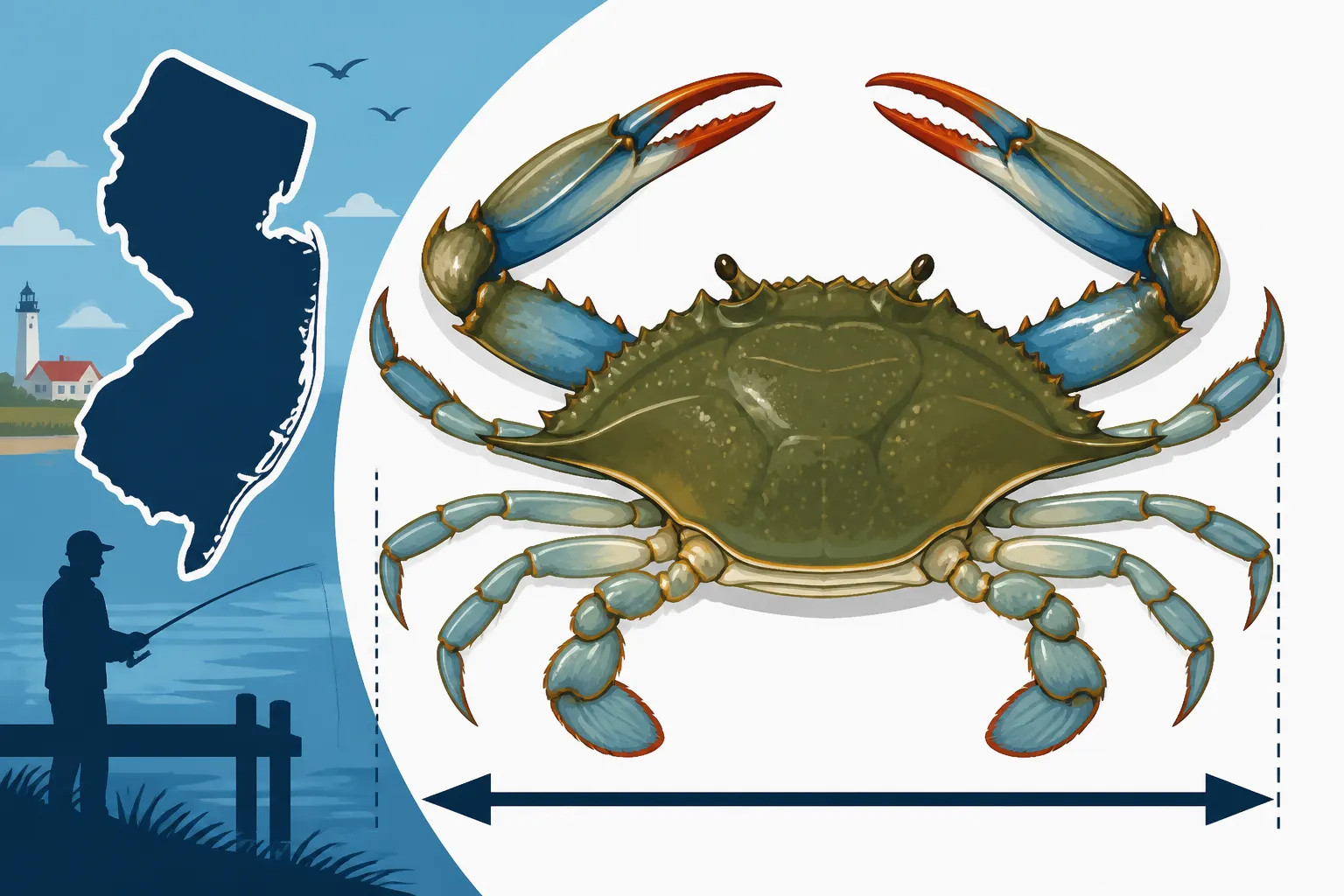
Currently, the minimum size for blue claw crabs in New Jersey is generally measured from tip to tip of the spike (or point) on the widest part of the carapace (shell). You'll find that this measurement is consistent across most areas, but it's always smart to check the latest New Jersey Fish and Wildlife Digest for any updates. Remember, catching a massive crab is exciting, but knowing it's legal and has had a chance to reproduce makes it even better. These regulations are a collective effort to keep our waters healthy and our crabbing fruitful for everyone. If you're wondering What Is the Size Limit for Blue Claw Crabs?, this guide will clarify the current standard.
The Average Size Range You Can Expect to Catch
So, what does "full-grown" actually look like? While the state record for a blue claw crab can be quite impressive, the average full-grown blue claw crab you're likely to encounter and keep in New Jersey waters will typically range from about 5 to 7 inches across the carapace. Crabs in the 7-inch range are considered excellent catches, often referred to as "jimmies" (large male crabs) or "sooks" (large female crabs). Anything larger than 7 inches is definitely a trophy!
Males generally grow larger than females, which is a common characteristic in many crab species. While females are often narrower in the carapace, they can still reach substantial sizes, especially if they are mature and have successfully molted multiple times. It’s not uncommon to catch a mixture of sizes in your traps, from barely legal to those impressive, heavy blue claws that make all the effort worthwhile. Keep in mind that location and time of year can also influence the average size. Certain estuaries might consistently produce larger crabs due to better forage or less pressure. Knowing Best Time to Catch Blue Claw Crabs in New Jersey can really help improve your chances of catching bigger crabs.
Here's a quick look at how crab size categories often break down:
| Crab Size (Carapace Width) | Common Terminology | Notes |
|---|---|---|
| Less than 4.5 inches | Juvenile/Undersized | Must be released immediately. |
| 4.5 to 5 inches | Small Keeper / Peeler* | Legal, but often released for more growth. |
| 5 to 6 inches | Medium Keeper | Good eating size, common catch. |
| 6 to 7 inches | Large Keeper / Jimmy | Excellent size, highly prized. |
| 7+ inches | Jumbo / Trophy Crab | Rare and highly sought after. |
*Note: "Peeler" specifically refers to a crab about to molt, regardless of exact size, but often these are smaller crabs growing quickly. Legal size refers to hard-shell crabs.
Identifying and Measuring Your Catch Legally
The moment of truth arrives when you pull your trap or dip net out of the water. You've got a blue claw crab, vibrant blue claws flashing, maybe a little feisty. Now what? Before you even think about putting it in your cooler, you need to quickly and accurately determine if it's a legal keeper. This involves two critical steps: identifying its gender and then measuring it correctly. Messing this up can lead to penalties, but more importantly, it goes against the spirit of responsible crabbing.
It's a good idea to have a dedicated crab gauge or ruler with you. You can find simple, durable plastic crab gauges on Amazon that are specifically designed for this purpose, often marked with the legal minimum size. Trying to eyeball it or use a regular ruler can lead to errors, especially when a crab is wiggling around! Preparedness is key, whether you're fishing or crabbing. Remember to be gentle and handle crabs with care to avoid injury to yourself or the crab, especially if you need to release it.
How to Accurately Measure a Blue Claw Crab
Measuring a blue claw crab isn't about guessing; it's about precision. The legal measurement is taken from spike to spike, meaning the distance between the outermost points of the shell on each side. It's crucial not to measure the curve of the shell or just the main body; you need to include those pointy tips.
Here’s a simple, step-by-step method to ensure you’re measuring correctly:
- Safety First: Always hold the crab by its rear swimming fin (the paddle-like leg) to avoid its powerful claws. A pair of crab tongs or heavy gloves can also be a wise investment, especially for larger, more aggressive specimens.
- Position the Gauge: Place your crab gauge or ruler across the top of the crab's carapace (its upper shell).
- Align Spikes: Ensure one end of the ruler or gauge is firmly against the tip of one lateral spike.
- Read the Measurement: Read the measurement at the tip of the opposite lateral spike. If the crab’s shell reaches or exceeds the legal minimum mark on your gauge, congratulations, you've got a keeper!
- Double Check: If you're unsure, measure again. It’s better to be safe than sorry.
Practice makes perfect. The more crabs you handle and measure, the more confident you'll become.
Releasing Undersized Crabs and Females Responsibly
What happens when your crab isn't a keeper? It's simple: back into the water it goes, and with care! Releasing undersized crabs and, in many cases, female crabs (especially those carrying eggs, known as "sponge crabs" or "berry crabs"), is absolutely paramount for maintaining healthy populations. In New Jersey, you are usually prohibited from keeping female blue crabs that are "berried" or "sponge crabs" (carrying eggs), and there are often rules about keeping other females as well. Always check the current regulations in the New Jersey Fish and Wildlife Digest to be sure.
When releasing, handle the crab gently. Don't throw it from a height or toss it onto rocks. Lower it back into the water slowly, ideally into an area with some cover, like weeds or submerged structure, where it can quickly find refuge. This minimal stress approach helps the crab recover quickly and get back to its life of growing bigger and reproducing. Being a responsible crabber means understanding that not every catch is meant for the dinner plate, and the future of the fishery depends on our collective respect for these rules.
Beyond Size: Other Important New Jersey Crabbing Regulations
Crabbing in New Jersey is a wonderful activity, but it's not a free-for-all. To ensure that everyone can enjoy it for years to come, and to protect the blue claw crab population, the state has a comprehensive set of regulations that extend beyond just size limits. These rules cover everything from daily catch limits to the type of gear you can use and even where you can crab. It’s not about making things difficult; it’s about sustainability and ensuring a fair chase for both the crabs and the crabbers.
Ignoring these rules, even unknowingly, can lead to fines and penalties. Think of it this way: the rules are there to protect your future crabbing trips! Before you even head out to the docks or marsh, take a few minutes to familiarize yourself with the current regulations. A quick visit to the New Jersey Division of Fish and Wildlife website, or picking up a physical copy of their annual digest, is always a smart move.
Daily Bag Limits and Seasonality
Just like with finfish, blue claw crabs in New Jersey have daily bag limits, which dictate how many crabs you can legally keep in a single day. These limits vary depending on whether you're using a recreational crabbing license or if you're exempt from needing one (which is often the case for simple hand lines or dip nets, but it's crucial to verify). These New Jersey Daily Bag Limits by Species are designed to distribute the harvest fairly among crabbers and prevent over-collection. It's easy to get carried away when the crabbing is hot, but sticking to the limit is essential.
Beyond daily limits, there isn't typically a strict "season" in the same way there is for certain fish. However, crabs are most active and abundant during the warmer months, roughly from May through October. During colder times, they bury themselves in the mud, making them much harder to catch. So, while you technically can crab year-round, the practical "season" for good crabbing in New Jersey aligns with these warmer periods. Always be mindful of any emergency closures or changes that might be announced, especially after severe weather events that could impact crab populations.
Gear Restrictions and Ethical Crabbing Practices
New Jersey also has specific rules about the types of gear you can use for crabbing. For recreational crabbers, gear like hand lines, dip nets, fold-up traps, and trot lines are commonly permitted. However, there are often limitations on the number of traps or lines you can use, and sometimes even specific requirements for the size of the mesh in crab pots to allow smaller crabs to escape. For example, commercial-style crab pots are generally prohibited for recreational use without specific licensing.
It's wise to consider not just the legality but also the ethics of your crabbing practices. Always use bait that is legal and won't attract unwanted species or harm the environment. Chicken necks, bunker, and fish scraps are popular and effective choices. When setting traps or lines, be mindful of boat traffic and other recreational users. Make sure your gear is clearly marked and retrieved promptly. Avoid leaving derelict gear, as it can continue to "ghost fish" and harm marine life. Practicing How to Trap Blue Claw Crabs From a Dock responsibly, using appropriate gear, and understanding Best Bait for Crabbing will make for a more enjoyable and sustainable experience. And remember, before you even think about setting out your gear, you need to understand if Do You Need a License to Crab in New Jersey?. This isn't just a recommendation; it's a legal requirement for certain types of crabbing gear or fishing activities.
Disclaimer
This article is for general informational purposes only and does not constitute professional advice. Laws, prices and regulations vary by location and change over time. Consult a qualified professional for guidance on your specific situation.