Invasive Fish Species Found in New Jersey Waters
It’s a topic that might not be as exciting as landing a trophy striped bass or finding that perfect secret trout spot, but understanding invasive fish species is absolutely critical for anyone who loves fishing in New Jersey. These unwelcome visitors pose a genuine threat to our native fish populations, delicate ecosystems, and ultimately, the future of our beloved pastime. This guide is here to shed light on what these invaders are, why they're such a big deal, and most importantly, how every angler can do their part to protect our precious waters.
What Exactly Are Invasive Fish Species and Why Are They a Problem?
When we talk about invasive species, it's not just about a fish being "from somewhere else." It's a much bigger, more nuanced issue that strikes at the very heart of ecological balance. Imagine a finely tuned machine, where every gear and lever has a specific function. When an unknown, aggressive part is suddenly thrown into the mix, it can throw the whole system into disarray. That's essentially what happens when an invasive fish species establishes itself in a new environment like New Jersey's lakes, rivers, or bays.
Defining "Invasive": Beyond Just Being Non-Native
First, let's clear up the common misconception. A non-native species, sometimes called an exotic or introduced species, is simply one that lives outside its historical native range. Think of the brown trout, for instance. It's not native to North America but has been widely introduced for sport fishing for well over a century. While they compete with native brook trout, they generally don't cause widespread ecological collapse. The key distinction for an invasive species is that it's non-native and its introduction causes, or is likely to cause, economic or environmental harm, or harm to human health.
These aren't just fish that are a little out of place; these are fish that are ecological bulldozers. They reproduce rapidly, outcompete native species for food and habitat, prey on native fish and their young, introduce diseases, and alter the physical environment. They are resilient and often lack natural predators in their new homes, allowing their populations to explode unchecked. This distinction is crucial because it informs how we, as anglers and stewards of the environment, should react to them.
The Ecological and Economic Ripple Effect
The consequences of invasive fish species are far-reaching, hitting both the natural world and our wallets. Ecologically, they can decimate native fish populations by eating their food sources, preying directly on them, or even cross-breeding, which can dilute the genetic purity of native stock. For instance, an invasive species might eat the same insects or smaller fish that native perch or bass rely on, leading to a decline in those populations. They can also alter aquatic vegetation, water quality, and even the structure of the bottom of a lake or river, changing entire food webs.
From an economic standpoint, the impact is significant. Managing invasive species costs millions of dollars annually in control efforts, research, and restoration projects. For anglers, this can translate into fewer desirable fish to catch, which in turn can affect tackle shops, bait sales, and local tourism economies. Imagine a prime fishing lake becoming overrun with an undesirable invasive species, leading to a collapse in the populations of popular sportfish. This isn't just a hypothetical scenario; it's a very real threat that necessitates proactive engagement from everyone who enjoys New Jersey's waterways.
Key Invasive Fish Species Plaguing New Jersey Waters
New Jersey, with its diverse range of freshwater and saltwater habitats, is unfortunately vulnerable to several notorious invasive fish species. While some have been present for years, others are relatively new arrivals causing significant concern. Knowing what to look for and understanding their impact is your first line of defense.
The Northern Snakehead: A Top Predator's Arrival
Perhaps one of the most infamous invaders in recent years is the Northern Snakehead (Channa argus). These fish are native to parts of Asia and have gained a somewhat mythical status due to their aggressive nature and ability to survive out of water for short periods, famously "walking" across land between bodies of water when conditions are right. They are voracious predators, known for consuming just about any fish, amphibian, or invertebrate they can fit into their mouths. Their distinctive elongated body, mottled brown coloration, and large, snake-like head make them relatively easy to identify once you know what to look for. You'll often find them in shallow, weedy areas, patiently waiting to ambush prey.
The concern with Northern Snakeheads in New Jersey is immense because they are top-tier predators that directly compete with and prey upon native sportfish like largemouth bass, pickerel, and panfish. Their rapid reproductive rates and lack of natural predators in our waters mean their populations can explode, leading to a drastic decline in native species that are crucial for a healthy ecosystem and recreational fishing. When you consider the effort put into managing our native bass and pickerel fisheries, the introduction of a super-predator like the snakehead is truly alarming. We even have specific guidance on What Should You Do If You Catch a Snakehead in New Jersey?, which emphasizes the importance of not releasing them.
The Growing Threat of Catfish: Flathead and Blue Catfish
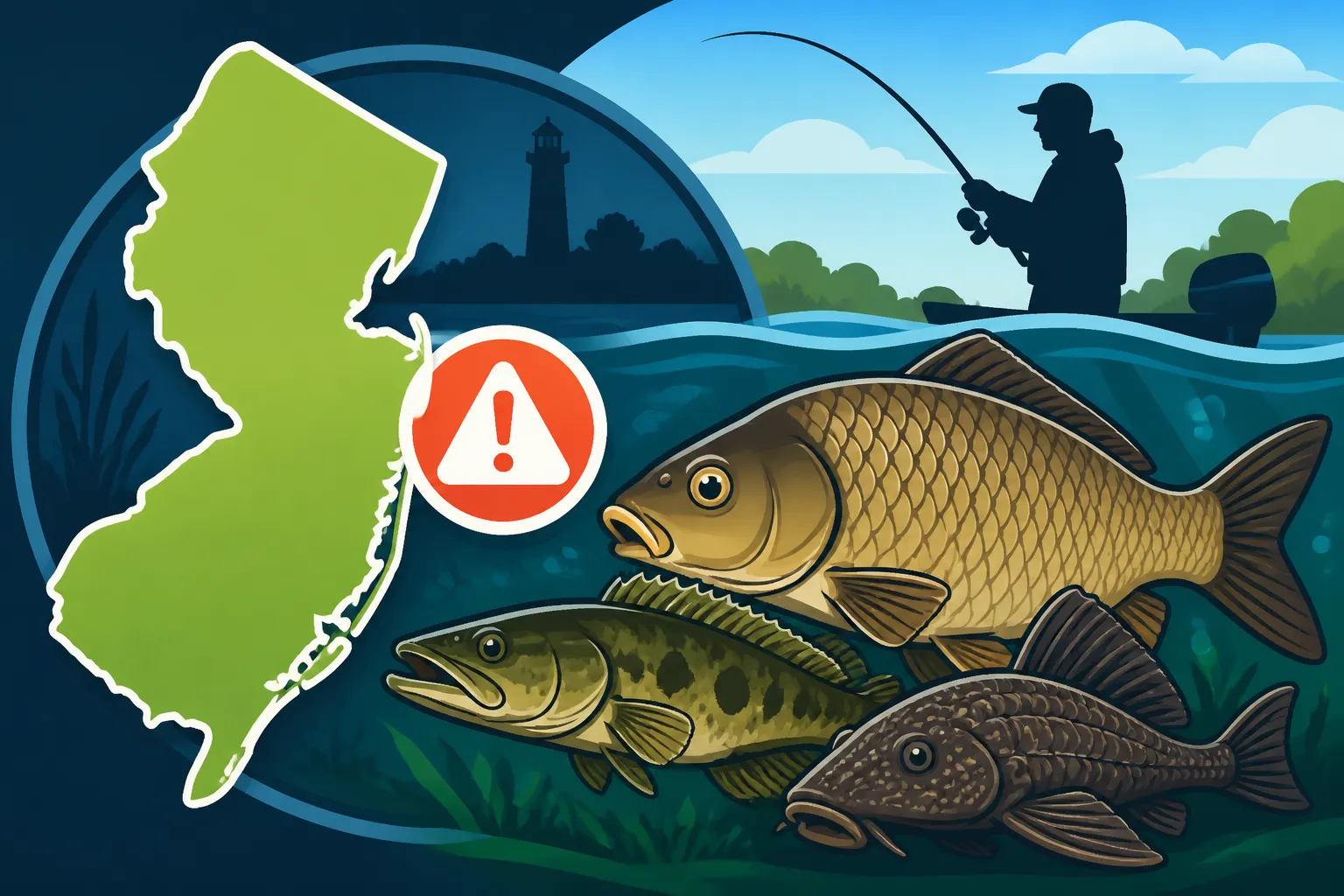
While channel catfish are native to New Jersey, two other large catfish species, the Flathead Catfish (Pylodictis olivaris) and the Blue Catfish (Ictalurus furcatus), are non-native and are quickly becoming serious invasive threats. These fish can grow to immense sizes and are incredibly adaptable, thriving in many different river and reservoir environments. They are generalist predators, meaning they'll eat anything from other fish and crayfish to mussels and even ducks.
The problem with Flathead and Blue Catfish is multi-faceted. They consume large quantities of native fish, including valuable sportfish and forage species, disrupting the food web. Their large size means they can eat even substantial fish, leaving little for other predators. Furthermore, they can alter the habitat by rooting around the bottom while foraging, which can impact spawning grounds for other species. Their sheer biomass can overtake a waterway, dominating the ecosystem. Blue Catfish, in particular, are extremely prolific breeders. Knowing that Are Blue Catfish an Invasive Species in New Jersey? confirms their problematic status, it's crucial for anglers to understand the impact of these formidable whiskers.
Other Troublemakers: European Rudd and Tench
Beyond the more publicized invaders, other species, though perhaps less dramatic, still pose a significant threat. The European Rudd (Scardinius erythrophthalmus) is a type of minnow often mistaken for a golden shiner, but it grows larger and has distinct red fins. It can reproduce quickly and outcompetes native baitfish and panfish for food. They primarily feed on zooplankton and aquatic vegetation, but their sheer numbers can strain the food resources available to native species, ultimately impacting the entire food web.
Tench (Tinca tinca), another European import related to carp, is a bottom-dwelling fish that can reach a decent size. They thrive in vegetated, slow-moving waters and feed on insects, crustaceans, and plant material. While not as overtly predatory as a snakehead or large catfish, their habit of rooting around the bottom can stir up sediment, reduce water clarity, and uproot aquatic plants, thereby degrading habitat for native species. These "stealthier" invaders can often go unnoticed until their populations are well-established, making early detection and prevention all the more vital.
Your Role as an Angler: Prevention and Responsible Practices
As anglers, we have a unique connection to New Jersey's waterways, and with that connection comes a profound responsibility. Every time we launch a boat, cast a line, or even just walk along the shore, we have the potential to either help prevent the spread of invasive species or, inadvertently, contribute to it. The good news is that preventing their spread often comes down to simple, diligent practices.
The "Clean, Drain, Dry" Protocol for All Gear
This mantra is perhaps the most important defense against invasive species, not just fish, but also aquatic plants and invertebrates. Before you leave a boat ramp or fishing spot, take a few minutes to:
- Clean: Inspect your boat, trailer, waders, boots, fishing lines, and tackle. Remove any visible mud, plants, or animal matter. Don't just pick off the big stuff; scrub your gear thoroughly. You can find excellent stiff-bristled brushes and gear cleaning solutions specifically designed for this purpose on Amazon that can help make this process more efficient. Pay close attention to anchor ropes, fishing nets, and the inside of your livewell.
- Drain: Pull your drain plug and completely drain all water from your boat's bilge, livewell, and bait bucket. Even seemingly insignificant puddles can harbor microscopic larvae or plant fragments. If you've been fishing in an area known for invasives, consider a more thorough rinse, perhaps with hot, high-pressure water if available.
- Dry: Allow all your fishing gear to completely dry before using it in another water body. A thorough drying in direct sunlight for at least 48 hours is ideal, as many invasive organisms cannot survive desiccation. This includes drying out wading boots, nets, and even the nooks and crannies of your boat.
Adhering to "Clean, Drain, Dry" isn't just a suggestion; it’s a critical action that directly impacts the health of our fisheries. Imagine unknowingly carrying tiny fragments of an invasive plant on your anchor from one lake to another; those fragments can establish an entirely new colony, disrupting the ecosystem. This simple habit protects our fishing spots for generations to come.
The Dangers of Releasing Bait and Aquarium Pets
This is a big one, and often, it's done with good intentions but disastrous consequences. The "never release" rule applies universally to any organism you bring to a waterway that didn't originate there.
- Live Bait: It's tempting to just dump unused minnows, worms, or other bait into the water at the end of a trip, thinking you're being kind or resourceful. However, live bait, even if bought locally, can carry diseases or parasites that are foreign to the water body you're fishing. Worse, if your bait bucket contains an invasive minnow species (like European rudd or tench), you could be directly introducing a new problem. Always dispose of unused live bait in the trash, far away from the water's edge. This might seem wasteful, but it's a necessary sacrifice for the health of the ecosystem.
- Aquarium Pets: This is how many of the more exotic invasive fish, like the Northern Snakehead, found their way into our waters. Someone bought a cool-looking fish for their home aquarium, it grew too big, or they simply didn't want it anymore, and rather than humanely euthanizing it or rehoming it, they "set it free" in a local pond or river. What seems like a compassionate act is, in reality, an act of environmental vandalism. These pets are often unsuited for the wild, but if they do survive, they can introduce diseases, compete with native species, or become new predators. Never, ever release aquarium fish into local waterways. Period. You can find helpful guides on proper aquarium fish disposal through various aquatic pet resources on Amazon, if rehoming isn't an option.
Remember, even one careless act can lead to a long-term problem that costs considerable resources to manage.
Identifying and Reporting Suspected Sightings
Being able to identify unusual fish in New Jersey waters is a powerful tool in the fight against invasives. Many agencies, including the New Jersey Department of Environmental Protection (NJDEP) Division of Fish and Wildlife, actively track invasive species. If you catch a fish that looks unfamiliar or strongly resembles a known invasive species, don't just throw it back.
- Identification: Take clear photos of the fish from different angles, noting any distinctive features, coloration, fin structure, and size. If possible, try to keep the fish alive in a separate bucket of water for a short time if you can quickly get it to an official, but do not release it back into the water if you suspect it's invasive. You can consult the Reading the New Jersey Fish and Wildlife Digest for current information and identification guides.
- Reporting: Promptly report your sighting to the New Jersey Division of Fish and Wildlife. They will want to know where and when you caught the fish, and any identifying details. The sooner they know, the sooner they can investigate and potentially contain a new infestation. Knowing the contact information for New Jersey Conservation Police Officer Contact Information can be incredibly helpful in these situations. Do not transport the fish alive to another location; if it's confirmed invasive, it will likely need to be humanely euthanized and not released.
Early detection is key to controlling and potentially eradicating invasive populations before they become insurmountable. Your vigilance on the water truly makes a difference.
New Jersey's Efforts to Combat Invasive Fish
New Jersey isn't just sitting back while these unwelcome guests take over. The state's environmental agencies, particularly the Division of Fish and Wildlife, are actively engaged in monitoring, managing, and educating the public about invasive species. These efforts are crucial, but they are most effective when supported by an informed and proactive angling community.
State Regulations and Management Strategies
The New Jersey Department of Environmental Protection (NJDEP) has established specific regulations aimed at preventing the spread and managing existing populations of invasive fish. For certain highly problematic species like the Northern Snakehead, the regulations are very clear: if you catch one, you must euthanize it and not release it back into the water. This isn't just a suggestion; it's a legally binding rule designed to protect our native fisheries. You can find detailed information about species-specific rules and prohibitions in the New Jersey Fishing Regulation Pamphlet: Print vs Online or by checking the state's official Fish and Wildlife digest.
Management strategies go beyond just regulations. The state often conducts surveys and monitoring programs to track the presence and spread of invasive species. This includes electrofishing surveys, netting, and even working with academic institutions on research projects. For example, if a new population of a highly invasive species is detected in a contained water body, the state may implement aggressive removal efforts to prevent its spread to other, more sensitive areas. These efforts are dynamic and can lead to New Jersey Emergency Fishing Rule Changes Explained if a new threat emerges.
Public Awareness and Conservation Programs
Education and public awareness are cornerstones of New Jersey's strategy to combat invasive species. The state invests in outreach programs, workshops, and informational materials to inform anglers, boaters, and the general public about the risks and how to help. These initiatives highlight the "Clean, Drain, Dry" message, discourage the release of bait and aquarium pets, and emphasize the importance of reporting sightings.
The Division of Fish and Wildlife often collaborates with local conservation groups, angling clubs, and community organizations to amplify these messages. They understand that boots on the ground – passionate anglers like us – are their best allies in this fight. Programs might include volunteer days for habitat restoration, invasive species removal events, or simply distributing educational materials at boat shows and fishing events. By fostering a sense of shared responsibility, these programs aim to turn every angler into a guardian of New Jersey's aquatic resources.
Separating Fact from Fiction: Common Misconceptions
In the world of invasive species, there's a lot of information floating around, and not all of it is accurate. It's easy to fall into traps of misinformation, especially when emotions run high about protecting our favorite fishing spots. Let's tackle a couple of common myths and clarify the reality.
Is Catch and Release Always the Right Approach for Invasives?
For most native fish species, especially our prized game fish like striped bass or trout, catch and release is a fantastic conservation tool. It allows fish to grow, reproduce, and maintain healthy populations for future generations of anglers. We diligently practice it for species that need protection or fall outside specific size limits, such as the New Jersey Striped Bass Slot Limit Explained. However, when it comes to invasive species, the "catch and release" principle often takes a sharp turn.
The reality is, for many highly destructive invasive fish, catch and release is precisely what we don't want. If you catch a Northern Snakehead or a Flathead Catfish in New Jersey, the recommendation from the state's Division of Fish and Wildlife is to not release it. In fact, for species like the Northern Snakehead, it's illegal to return them to the water. The goal is to remove them from the ecosystem to prevent further spread and damage. This can feel counterintuitive to anglers who have been taught to cherish and release their catch, but with invasive species, the priority shifts from individual fish conservation to ecosystem protection. Always check the latest New Jersey Fish and Wildlife Digest for specific rules on species you suspect might be invasive.
| Invasive Fish Species | Identification Key Features | Primary Impact | What to Do If Caught |
|---|---|---|---|
| Northern Snakehead | Snake-like head, long dorsal fin, mottled brown, pectoral fins near gills | Voracious predator, outcompetes native gamefish | Do Not Release. Euthanize, report to NJDEP. |
| Flathead Catfish | Large, broad, flattened head; lower jaw protrudes; mottled brown/yellow; small eyes | Predatory, competes with native gamefish & catfish, disrupts food web | Do Not Release. Euthanize, report to NJDEP. |
| Blue Catfish | Deeply forked tail, distinct high dorsal fin, slate blue/gray body, often large | Predatory, prolific breeder, competes with native species | Do Not Release. Euthanize, report to NJDEP. |
| European Rudd | Large scales, reddish fins, golden/silver body, often mistaken for golden shiner | Outcompetes native baitfish & panfish for food, impacts food web | Do Not Release. Euthanize, report to NJDEP. |
| Tench | Olive green body, small red eyes, thick lips, single barbel at mouth corner | Bottom feeder, reduces water clarity, disrupts habitat | Do Not Release. Euthanize, report to NJDEP. |
Note: Always verify current regulations with the New Jersey Division of Fish and Wildlife. "Report to NJDEP" typically means contacting your local Conservation Police Officer or Fish and Wildlife office.
Are All Non-Native Fish Bad?
This is another common area of misunderstanding. Not all non-native species are considered invasive, and some have been successfully integrated into our fisheries for a very long time. As mentioned earlier, brown trout are non-native but are a cherished sportfish in New Jersey, regularly stocked in our rivers and lakes. Carp, while often seen as a nuisance, have been here for over a century and have found their niche, although they can still cause localized habitat disruption. The key difference lies in their impact.
A non-native species becomes "invasive" when it causes significant harm to the environment, economy, or human health. This could be due to aggressive predation, rapid reproduction that overwhelms native species, the introduction of diseases, or severe habitat alteration. So, while we might view a German brown trout differently from a Northern Snakehead, the distinction isn't just about where they came from, but what they do to our ecosystems. The goal isn't to demonize every fish that isn't originally from New Jersey, but to rigorously manage and, where necessary, eradicate those species that actively harm our precious natural heritage.
Being informed means understanding these distinctions and acting accordingly. Our waters are complex, and responsible angling requires us to be knowledgeable participants in their ongoing health and protection.
Disclaimer
This article is for general informational purposes only and does not constitute professional advice. Laws, prices and regulations vary by location and change over time. Consult a qualified professional for guidance on your specific situation.