Why Do Black Sea Bass Change Sex?
It's one of those things that makes you scratch your head when you first hear it, isn't it? You're out on the water, reeling in a beautiful black sea bass, and then someone mentions that these fish can actually change their sex during their lifetime. It sounds like something out of a science fiction novel, but it's completely true, and it plays a huge role in their biology and how we manage our fisheries. This guide is going to dive deep into the fascinating world of black sea bass sex change, exploring the "how" and "why" behind this incredible natural phenomenon.
The Curious Case of Black Sea Bass Biology
When we think about most fish, we imagine them being born one sex and staying that way for their entire lives. That's certainly the norm for many species. But then there are fish like the black sea bass, which throw a fascinating curveball into that expectation. These are truly adaptable creatures, and their ability to change sex is a testament to their evolutionary success.
A Life History of Growth and Change
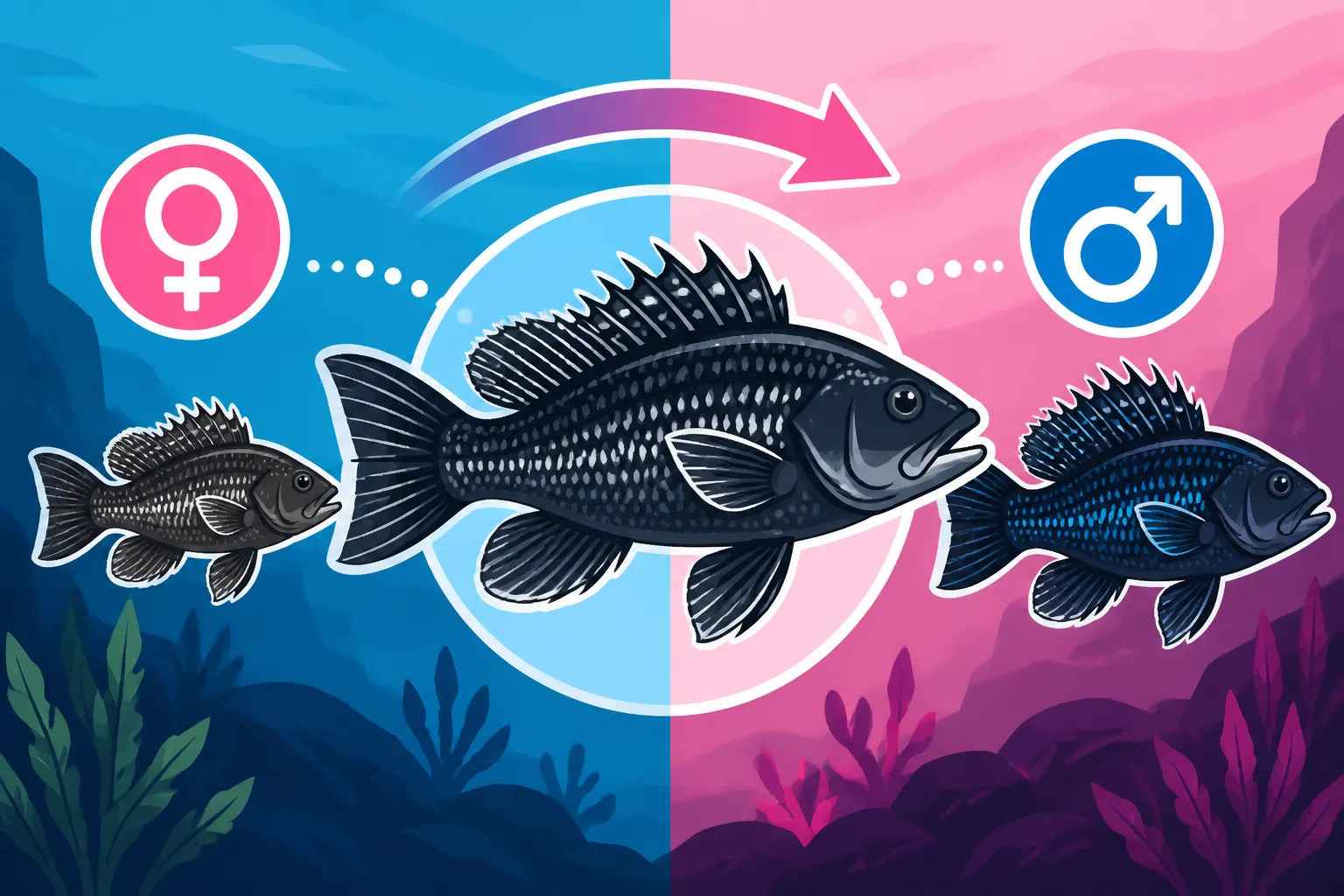
Imagine a tiny black sea bass, barely bigger than your pinky finger, starting its life in the vast Atlantic. For a good portion of its early life, every single black sea bass you encounter is female. They're typically born and function as females, focusing on growing and maturing to contribute to the next generation. These younger, smaller females are crucial for the population, laying eggs that drift in the currents, eventually hatching into new generations.
As they grow older and larger, something truly remarkable happens within their biology. It's not a switch that flips overnight, but rather a gradual transition driven by internal and external factors. You might think of it like a journey: they start at one point, excel in that role, and then, upon reaching certain milestones, they embark on a new phase of their existence. This journey from female to male is an integral part of their survival strategy, deeply rooted in their species' history. New Jersey Black Sea Bass Season and Limits often reflect the importance of managing these populations, acknowledging their unique life cycle.
Not Your Average Fish: What is Protogynous Hermaphroditism?
The scientific term for what black sea bass do is "protogynous hermaphroditism." Let's break that down, because it sounds a lot more complicated than it is once you understand the concept. "Protogynous" essentially means "first female." So, it's a type of hermaphroditism (meaning an organism has both male and female reproductive organs, either simultaneously or sequentially) where the individual starts life as a female and then later transitions into a male.
This isn't some rare, isolated incident; it's the standard life path for these fish. Unlike species where an individual might have both sets of reproductive organs at once (simultaneous hermaphroditism), black sea bass undergo a complete functional sex change. Their female reproductive organs degenerate, and male ones develop and become functional. This transition happens internally, a complex biological dance that allows them to adapt to their environment and ensure the continuation of their species. It's truly one of nature's more ingenious strategies for maximizing reproductive success.
The "Why" Behind the Change: Environmental and Social Cues
So, why would a fish go through such a dramatic change? It's not just for kicks! This strategy isn't unique to black sea bass, many other reef-dwelling fish around the world also exhibit this kind of sexual plasticity. The driving forces are primarily ecological and social, all designed to give the species the best chance of thriving.
Dominance and Resource Allocation
One of the most compelling reasons for protogynous hermaphroditism is related to social structure and dominance. In the world of black sea bass, and many other fish species, there's a strong social hierarchy, particularly among males. Larger, more dominant males often control territories, attract more females, and have greater success in spawning.
Consider a reef where black sea bass live. There might be a limited number of prime spawning sites or food resources. If all fish were born male and female in equal measure, there could be intense competition among males, with many smaller males failing to reproduce. By having most fish start as females, the population ensures that every individual can contribute eggs early in their lives. Then, as the strongest and largest females mature, they have the opportunity to transition into dominant males. This ensures that the most robust individuals become the breeding males, passing on their strong genes. It’s a very efficient system, almost like the fish are naturally selecting their best breeders for the male role. It’s a system designed to work, and if you’re looking for resources on fish behavior, there are some great marine biology guides you can find on Amazon that detail these kinds of social structures.
Population Dynamics and Spawning Success
The sex change also plays a crucial role in maintaining healthy population dynamics and optimizing spawning success. If a large, dominant male is lost from a territory—perhaps to a predator or an angler—a mature female can quickly step up and transition to fill that void. This ensures that there is always a sufficient number of breeding males available to fertilize the eggs of the surrounding females. This flexibility prevents gaps in leadership that could negatively impact overall reproductive output.
Imagine a fishing season where a lot of larger males are caught. In a species with fixed sexes, this could leave a significant imbalance and fewer dominant males to breed, potentially hurting the next generation. But with black sea bass, nature has a built-in resilience. The larger females, which are now prime candidates for sex change, can begin transitioning, restoring the balance of the breeding population relatively quickly. This helps maintain a robust gene pool and ensures that the species can rebound even after environmental pressures or fishing impacts. This incredible adaptability is why species like the black sea bass have survived and thrived for so long. You can learn more about how fishing regulations consider these factors by reading How New Jersey Sets Its Fishing Regulations Each Year.
The Role of Age and Size in Sex Reversal
While dominance and population dynamics are key drivers, the trigger for sex change in black sea bass is primarily tied to an individual's age and size. There isn't a hard and fast rule like "at exactly three years old," but rather a general window. Typically, black sea bass begin their transition from female to male once they reach a certain size and maturity, often around 2-5 years of age and a specific length.
This makes biological sense. Smaller, younger females are efficient egg producers. They can lay many eggs relative to their body size, contributing significantly to the population. As they grow larger, their egg-producing efficiency might plateau or even decline relative to the energy investment. At the same time, a larger body size becomes a huge advantage for a male. A bigger male can defend a territory more effectively, impress more females, and successfully fertilize more eggs. So, the transition from female to male often occurs when the individual has maximized its reproductive potential as a female and is physically mature enough to take on the demanding role of a dominant male. It's a calculated biological decision, ensuring the fish contributes to the species in the most impactful way throughout its life stages.
What This Means for Anglers and Conservation
Understanding protogynous hermaphroditism in black sea bass isn't just a fascinating biological fact; it has real-world implications for how we fish for them and how we conserve their populations. It informs regulatory decisions and helps us be more responsible anglers.
Understanding Black Sea Bass Behavior
Knowing that black sea bass change sex can influence how you approach fishing for them. For instance, when you're targeting larger "knothead" sea bass, you're almost exclusively going after males. These are the fish that have successfully transitioned and established their dominance. They often prefer specific types of structure and behave differently than smaller, younger females. How Deep Do You Need to Fish for Black Sea Bass? often relates to finding these preferred habitats.
If you're fishing a specific wreck or reef and notice a lot of smaller black sea bass, chances are a good portion of them are still females, actively producing eggs. This knowledge can sometimes influence an angler's decision-making regarding catch and release, especially if they are trying to be particularly conservation-minded. Understanding their social structure, where a few dominant males oversee many females, can also help predict where the biggest fish might be lurking. You can find specialized rigs for black sea bass, often involving multiple hooks for catching a few at a time, on sites like Amazon, which also stock tackle boxes to keep everything organized.
Conservation Challenges and Management
The sex-changing nature of black sea bass presents unique challenges for fisheries management. If anglers disproportionately harvest large males, it can skew the sex ratio in an area. While females can transition, a sudden removal of too many large males could temporarily disrupt spawning patterns and overall reproductive success. This is why regulations, such as minimum size limits and bag limits, are so critical. They are designed to protect both the younger, egg-producing females and allow enough males to reach maturity and maintain breeding populations.
When you see changes in New Jersey Daily Bag Limits by Species or specific size requirements, these decisions often stem from deep biological understanding of the species, including their unique reproductive strategies. Scientists conduct surveys, collect data, and use sophisticated models to understand population health. They also look into factors like New Jersey Recreational Fishing Survey: Why You Might Get a Call, gathering data directly from anglers to understand catch rates and population trends. Effective management aims to ensure a healthy balance of all age and sex classes to keep the black sea bass population robust for future generations of anglers.
The Future of Black Sea Bass Fishing
The future of black sea bass fishing in New Jersey largely depends on our continued understanding and responsible management of this species. As anglers, appreciating the complexity of their life cycle, including their sex-changing ability, makes us better stewards of the resource. By following regulations, practicing ethical catch-and-release, and being mindful of our impact, we can contribute to healthy populations.
This isn't just about ensuring we can still catch dinner; it's about respecting the incredible adaptations that allow these fish to thrive. The more we learn about their biology, the better equipped we are to make informed decisions that benefit both the fish and the fishing community. Keep an eye on reports and studies from the New Jersey Division of Fish and Wildlife for the latest insights into black sea bass populations, and always consult the most current New Jersey Fishing License Guide for 2026 and regulations before heading out.
Frequently Asked Questions About Sex Changing Fish
It's natural to have more questions when you encounter such a unique biological trait. Let's tackle a couple of common ones that pop up when discussing fish that change sex.
Are All Sex-Changing Fish the Same?
No, not at all! While the black sea bass exhibits protogynous hermaphroditism (female to male), there are other forms of sex change in the aquatic world. Some fish display "protandrous hermaphroditism," where individuals start life as males and later transition to females. Clownfish are a famous example of this; the largest fish in a group is always the female, and if she's removed, the dominant male changes sex to become the new female.
There are also instances of "bidirectional hermaphroditism," where a fish can change sex multiple times, back and forth, depending on social cues or environmental conditions. While black sea bass stick to their female-to-male path, knowing that there are other variations really highlights the incredible diversity of life strategies in our oceans and freshwater systems. It’s a vast, interconnected web, and if you’re looking to explore more about these fascinating creatures, many excellent books on marine biology are available on Amazon.
Can Humans Influence the Change?
This is a really interesting question, and the answer is complex. Humans don't directly "force" an individual black sea bass to change sex, but our actions can influence the conditions that trigger or inhibit these changes within a population. For example, as we discussed earlier, if overfishing disproportionately removes larger males from a population, it could lead to an accelerated rate of sex change among the remaining larger females, as they attempt to fill the void in the social hierarchy.
Pollution and environmental changes could theoretically also impact the endocrine systems of fish, potentially affecting sexual development and transitions. However, the primary human influence in the context of black sea bass sex change revolves around fishing pressure and how it alters the age and size structure of the population, thereby altering the social cues that drive the natural transition. This is why responsible fishing practices and carefully set regulations are so critical to maintaining healthy, balanced fish populations. Understanding these ecological connections is key to being a truly responsible angler and steward of the environment.
| Black Sea Bass Life Stage | Primary Sex | Key Role | Size/Age Range (General) | Notes |
|---|---|---|---|---|
| Juvenile/Young Adult | Female | Lay eggs | Up to 2-3 years, smaller size | All black sea bass begin as females |
| Transitional Phase | Female to Male | Internal biological shift | 2-5 years, moderate to larger size | Triggered by age, size, social cues |
| Adult/Dominant | Male | Fertilize eggs, defend territory | 4+ years, larger "knothead" size | Largest, most dominant fish are males |
Disclaimer
This article is for general informational purposes only and does not constitute professional advice. Laws, prices and regulations vary by location and change over time. Consult a qualified professional for guidance on your specific situation.