How to Catch Walleye at Night
There's nothing quite as frustrating as spending a beautiful New Jersey day out on the water, casting your heart out for walleye, only to come up empty-handed. Many anglers find these elusive fish incredibly challenging to catch during daylight hours, often leading to disappointment. But what if I told you that the best time to target these toothy predators is actually when most people are heading home? This comprehensive guide is dedicated to helping you unlock the secrets of night fishing for walleye in the Garden State, turning those frustrating days into thrilling nights.
Why Walleye Love the Night Life in New Jersey Waters
Walleye are fascinating fish, and their behavior shifts dramatically once the sun dips below the horizon. Understanding this nocturnal shift is the first step to consistently putting them in your net. It's not just about preference; it's about survival and opportunity.
The Nocturnal Feeding Advantage
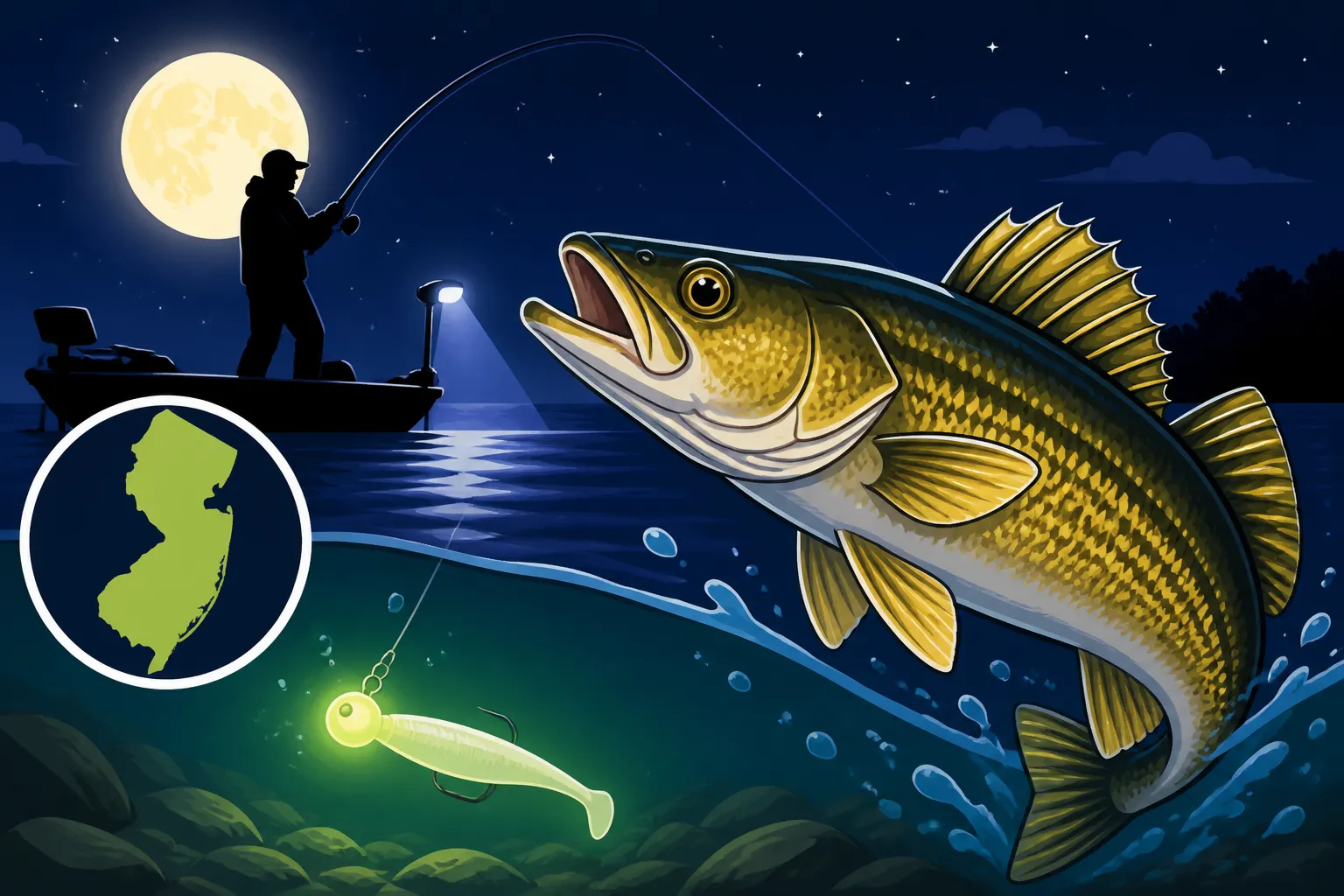
Think about it: who has the advantage in low light? For most baitfish, visibility is key to spotting predators and escaping. Walleye, however, possess superior low-light vision, thanks to a reflective layer in their eyes called the tapetum lucidum. This evolutionary adaptation allows them to see incredibly well in dim conditions, giving them a significant edge over their prey, like perch, shiners, and alewives, which become disoriented and vulnerable in the dark.
At night, walleye emerge from deeper, cooler, often rockier structures where they spend their days conserving energy and avoiding bright light. They move into shallower feeding grounds, patrolling weed lines, sand flats, and submerged points with renewed confidence. They become active, aggressive hunters, using their keen eyesight to ambush unsuspecting baitfish. If you're fishing in places like Lake Hopatcong, Monksville Reservoir, or even parts of Greenwood Lake, you'll find that these fish, which might be deep and lethargic during the day, suddenly become much more accessible and willing to strike at night. It's like flipping a switch; the whole ecosystem changes.
Beating the Heat and the Crowds
Beyond the biological advantage for the fish, night fishing offers some undeniable perks for the angler, especially during the warmer months. Summer days in New Jersey can be scorching, making it uncomfortable to be out on the water for extended periods. The cooler nighttime temperatures provide a much more pleasant fishing experience, often accompanied by a gentle breeze that makes the air crisp and refreshing. You’ll stay more comfortable, focused, and frankly, enjoy the outing a lot more without the relentless sun beating down on you.
Moreover, the vast majority of recreational boaters and anglers pack up and leave when dusk settles in. This dramatically reduces boat traffic, meaning less noise, fewer wakes, and a much calmer environment. You'll find yourself sharing the water with only a handful of dedicated night anglers, creating a serene and almost meditative experience. This lack of pressure often translates into less skittish fish, allowing you to approach prime spots without worrying about spooking a school of walleye with your presence. It's a peaceful solitude that's hard to find during peak daylight hours, offering a unique connection to the water.
Essential Gear for Your New Jersey Night Walleye Expedition
When you're fishing after dark, your gear choices become even more critical. You need equipment that not only performs but also ensures your safety and comfort in low-light conditions. Don't just grab your everyday bass rod; thoughtful preparation here will pay dividends.
Rods, Reels, and Line Choices
For walleye, sensitivity is paramount, especially when fishing at night when bites can be incredibly subtle. A medium-light to medium-heavy spinning or baitcasting rod, typically 6'6" to 7'6" in length, will provide the perfect balance of sensitivity to detect those faint taps and enough backbone to set the hook and fight a strong fish. Look for rods with fast actions, meaning they bend mostly at the tip, which helps with quick hook sets.
Pair your rod with a reliable spinning or baitcasting reel spooled with quality line. Many anglers prefer a low-stretch braided line for its superior sensitivity, allowing you to feel every bump and tick on the bottom, even in complete darkness. However, braid is visible, so it's crucial to tie on a fluorocarbon leader of 8-12 lb test. Fluorocarbon is nearly invisible underwater and offers excellent abrasion resistance, which is vital when fishing around rocky structures where walleye often lurk. You can find a fantastic selection of these rods, reels, and lines on platforms like Amazon, making it easy to get exactly what you need delivered right to your door before your next trip.
Lures and Baits That Shine After Dark
This is where night fishing truly distinguishes itself. While daytime walleye might be pickier, the low light conditions at night often make them less discerning about lure color and more about profile, vibration, and sometimes, glow.
- Jigs: Dark-colored jigs (black, blue, purple) dressed with soft plastics or tipped with live bait like shiners or nightcrawlers are deadly. Consider glow-in-the-dark jigs, which can be charged with a flashlight and emit a subtle light signature underwater.
- Crankbaits and Stickbaits: These lures are excellent for covering water. Look for models with rattles to create sound attraction. Again, dark patterns or those with glow features can be highly effective. The vibration of a crankbait moving through the water helps walleye locate it using their lateral line, even if they can't see it clearly.
- Live Bait: Shiners, fathead minnows, or leeches presented on a slip bobber rig or a bottom-bouncing rig are often irresistible to hungry walleye. The natural movement and scent of live bait are powerful attractors, especially when fish are actively feeding. You'll want to learn How to Store Live Bait Overnight if you plan on bringing a good supply.
- Spinnerbaits and Blade Baits: These offer flash and vibration, which can be enticing. Again, focus on darker colors or those that have some glow potential.
Here's a quick comparison of some popular night walleye presentations:
| Lure/Bait Type | Best Presentation | Key Attraction | Ideal Depth | Notes |
|---|---|---|---|---|
| Dark Jigs | Vertical jigging, slow retrieve near bottom | Profile, vibration, scent | Shallow to Mid | Tip with soft plastic or live bait for best results |
| Glow Jigs | Vertical jigging, slow retrieve near bottom | Subtle light, profile | Shallow to Mid | Charge with flashlight before each cast/drop |
| Rattling Crankbaits | Slow troll, steady retrieve near structure | Sound, vibration, profile | Shallow to Mid | Effective for covering water and locating active fish |
| Stickbaits | Twitch and pause, slow retrieve | Profile, erratic action | Shallow | Often mimic wounded baitfish near the surface |
| Live Minnows | Slip bobber, bottom rig, slow retrieve | Natural scent, movement | Any | Unbeatable natural appeal, especially with shiners/leeches |
| Blade Baits | Lift and fall (vibrating retrieve) | Vibration, flash, sound | Mid to Deep | Aggressive presentation for active fish |
Lighting, Safety, and Comfort Gear
Fishing in the dark requires careful attention to safety and comfort. A quality headlamp is absolutely non-negotiable. Look for models with a red light setting, as red light preserves your night vision better than white light, which can temporarily blind you to the subtleties of the dark. A lantern or area light can be useful for setting up gear or processing fish, but be mindful of how much light you're emitting to avoid spooking fish or disturbing other anglers.
If you're fishing from a boat, ensure all your navigation lights are fully functional and in compliance with New Jersey boating regulations. Always wear a PFD (Personal Flotation Device), even if you're a strong swimmer; accidents can happen fast in the dark. A well-stocked first-aid kit is essential, as are insect repellents, especially during the summer. Beyond safety, bring warm clothing layers, even on mild nights, as temperatures can drop significantly. A thermos with a hot beverage can be a real game-changer. You'll find all these crucial safety and comfort items available on Amazon, ready to equip you for a safe and successful night out.
Mastering Night Fishing Techniques for New Jersey Walleye
Catching walleye at night isn't just about showing up in the dark; it requires a refinement of your techniques and a deep understanding of their nocturnal habits. It's often a game of patience and subtle presentations.
Slow and Low Presentation is Key
During the day, walleye might chase down a fast-moving lure, but at night, their hunting strategy often shifts to ambush. This means your presentation needs to be slower and more deliberate. Think about lures that stay in the strike zone longer.
- Bottom Bouncing & Jigging: For boat anglers, slowly drifting or trolling with a bottom bouncer rig (often with a crawler harness or live bait) is incredibly effective. This keeps your bait directly in the walleye's feeding lane. Shore anglers can achieve a similar effect by casting jigs or live bait rigs and slowly retrieving them, allowing them to gently bounce along the bottom. The key is to maintain bottom contact and feel for those subtle pickups.
- Slow Trolling: If you're covering larger areas by boat, slow trolling crankbaits or spinnerbaits at speeds between 1-2 mph can be highly productive. The idea is to mimic a slowly swimming baitfish. Experiment with different depths until you find where the fish are holding.
- Slip Bobber Fishing: This is a fantastic technique for both boat and shore anglers, especially when you've identified a specific depth or piece of structure. Set your slip bobber to suspend a live minnow or worm just above the bottom or in the middle of a school of fish you've marked. The natural movement of the live bait will often entice a walleye without requiring aggressive retrieves. This method works wonders in places like Merrill Creek Reservoir where walleye can be found near drop-offs.
Target the Right Structure and Depth
While walleye often hold deep during the day, they frequently move shallower at night to feed. They'll follow contours, points, and weed lines into water as shallow as 5-10 feet, especially if there's good cover or baitfish present.
- Shallow Transition Zones: Focus your efforts on the edges of deep water where it transitions into shallower flats or points. These are natural ambush points for walleye. Rocky shorelines, submerged humps, and the outer edges of weed beds are prime targets. If you're familiar with the lake during the day, pay attention to these areas.
- Using Electronics (Carefully): While you won't be actively scanning with a bright screen at night, you can use your fish finder during the day to mark potential nighttime feeding zones. Look for submerged structures, sudden depth changes, and schools of baitfish. Knowing these spots beforehand will give you a huge advantage when you return in the dark. Learning How to Read a Fish Finder for Beginners during the day will greatly enhance your night fishing success. Many top-of-the-line fish finders even come with night mode or dimmer settings to help with this.
- Current and Wind: Walleye often position themselves facing into a subtle current or wind-blown shorelines, waiting for baitfish to be swept past them. Pay attention to these factors, as they can concentrate fish in predictable locations.
The Importance of Scent and Sound
In the darkness, visual cues are diminished, making scent and sound even more powerful tools in your walleye arsenal.
- Scent Attractants: Don't underestimate the power of smell. Applying a walleye-specific scent attractant (like those from Pro-Cure or Berkley Gulp! Alive!) to your jigs, soft plastics, or even live bait can make a significant difference. Walleye have an excellent sense of smell, and a persistent scent trail can draw them in from a distance and encourage them to hold onto your bait longer, giving you more time to set the hook.
- Rattling Lures: Many crankbaits, jigs, and even some soft plastics incorporate rattles designed to create sound vibrations that mimic struggling baitfish. These sounds travel well underwater and can attract walleye, allowing them to home in on your lure even if they can't see it clearly. When fishing for species like muskie, rattling lures are also key, as discussed in Best Lures for Muskie Fishing, and the principle applies to walleye.
- Be Quiet: Conversely, while you want your lure to make noise, you should be as quiet as possible. Noise carries incredibly well across the water at night. Avoid loud talking, banging tackle boxes, or stomping around the boat. Walleye are sensitive to vibrations and sudden noises, and an unnecessarily loud presence can easily spook them, sending them back to the deeper, safer confines. Keep your movements slow and deliberate, mimicking the serene quiet of the night.
Night Fishing Safety and Best Practices in New Jersey
Night fishing is a truly rewarding experience, but it comes with its own set of challenges and safety considerations. Being prepared and respectful is key to a successful and enjoyable outing.
Navigating in the Dark
Navigating unfamiliar waters in the dark can be extremely dangerous. Before you even think about heading out, thoroughly scout the area during daylight hours. Pay close attention to potential hazards like submerged rocks, shallow bars, stumps, and dock pilings. If you're on a boat, ensure your GPS and charts are up-to-date and fully charged. Never rely solely on your memory.
Always use appropriate navigation lights on your boat, as required by law. These lights make you visible to other (hopefully few) boaters and prevent collisions. It's always a good idea to fish with a buddy at night. Not only does it make the experience more enjoyable, but it also means there's someone there to help in case of an emergency. Share your float plan with someone on shore, letting them know where you're going and when you expect to return. This simple step could be a lifesaver.
Respecting the Environment and Fellow Anglers
One of the greatest joys of night fishing is the peace and quiet, and it's our responsibility to preserve that for everyone. Always practice "leave no trace" principles. Pack out everything you pack in, including fishing line, bait containers, and any other trash. Leaving debris behind not only pollutes the environment but also degrades the experience for others.
Minimize light pollution. While a headlamp is necessary, avoid shining bright white lights directly into the water for extended periods or towards other anglers. Use your red light setting whenever possible. When handling fish, do so carefully, especially in low light. If you're planning to release a fish, ensure you're doing it quickly and gently to maximize its survival chances. Be familiar with Catch and Release Rules in New Jersey and handle fish accordingly. A responsible angler respects the resource and fellow enthusiasts.
Regulatory Awareness
Finally, always, always, always check the latest New Jersey fishing regulations before heading out, especially for walleye. Regulations can change, and ignorance is no excuse. These rules cover everything from size and bag limits to season dates for different species and even specific restrictions for certain water bodies. You'll want to review the New Jersey Freshwater Fishing Regulations Every Angler Should Know before each season.
Make sure your New Jersey Fishing License Guide for 2026 is current and readily available. Even at night, conservation police officers may be out on patrol, and you need to be able to present your license upon request. Some state parks or wildlife management areas might have specific night fishing hours or require special permits, so it's vital to check those details for your chosen fishing spot. A little homework before you go can save you from a costly fine and ensure your night fishing adventure is enjoyable and compliant.
Disclaimer
Please note that fishing regulations, conditions, and best practices can change. Always consult the latest New Jersey Department of Environmental Protection (NJDEP) Division of Fish and Wildlife publications or website for the most current rules and advisories before planning your fishing trip. This guide is for informational purposes only and should not be considered a substitute for official regulations or professional safety advice.