How to Fish Around Bridge Pilings
There’s a special kind of frustration when you look at a bridge piling. You know the fish are there, hugging that structure, waiting for an easy meal. You’ve heard the tales of monster striped bass or trophy tautog pulled from beneath those concrete giants. But then you cast, and it’s nothing but snags, lost tackle, and the feeling that you’re just feeding the crabs. Trust me, we’ve all been there! This guide is going to strip away the mystery and show you exactly how to approach, target, and successfully fish around bridge pilings in New Jersey, turning those snags into strikes.
Why Bridge Pilings Are Fish Magnets in New Jersey
Bridge pilings aren't just concrete supports; they are bustling underwater ecosystems, natural fish-attracting devices that offer shelter, food, and ambush points for a wide array of New Jersey's most sought-after species. Understanding why fish gather here is the first step to unlocking their secrets.
The Structure Attracts Baitfish
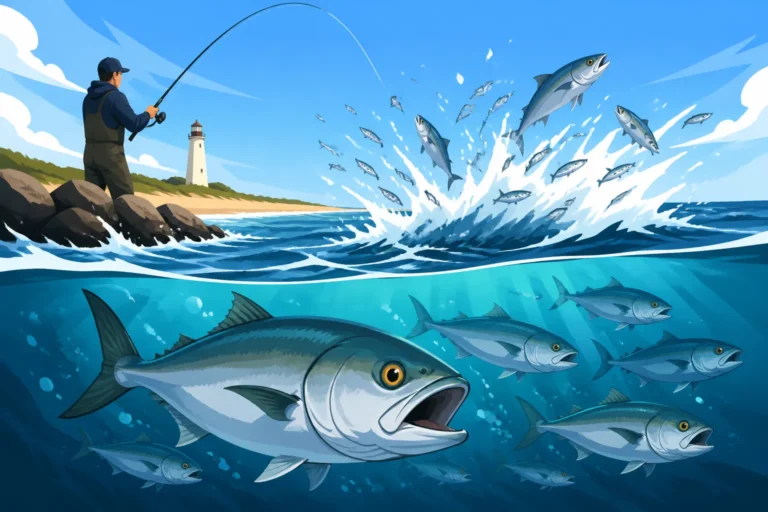
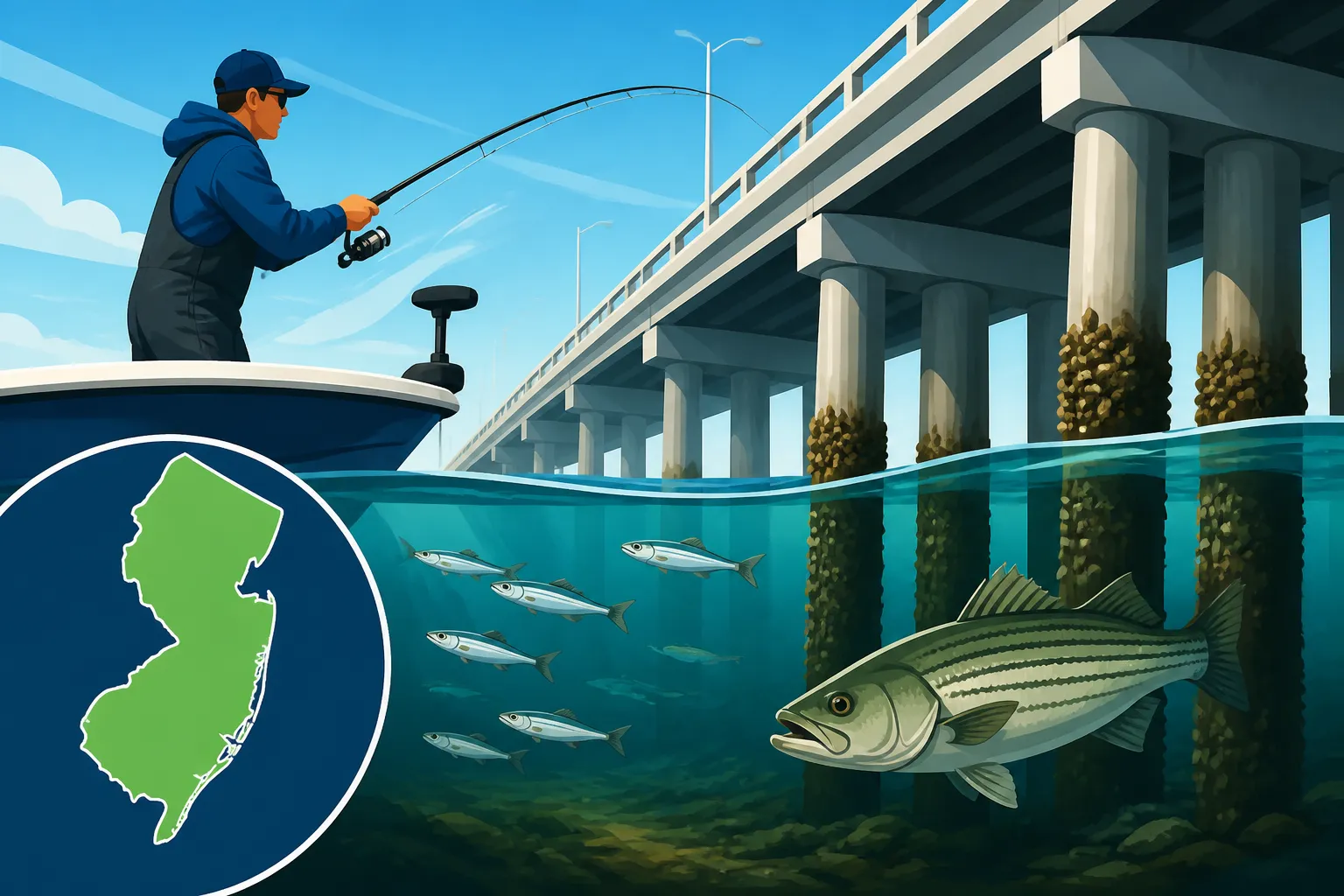
Think about it: a bridge piling is like a giant underwater tree in a wide-open field. As the tide flows, it creates eddies, current breaks, and areas of slack water directly behind and sometimes in front of the pilings. These calmer zones are absolute havens for smaller baitfish like spearing, anchovies, and even juvenile bunker. They gather there to rest, feed on microorganisms that cling to the structure, and escape the main force of the current.
Beyond the current breaks, pilings often grow barnacles, mussels, and various forms of algae, which provide a constant food source for smaller crustaceans and invertebrates. These tiny critters, in turn, become meals for the smaller baitfish. It’s a classic food chain in action, concentrated in one spot. When you see gulls diving or baitfish flickering on the surface near a piling, that’s your first big clue – the buffet is open, and the predators aren't far behind.
A Haven for Predator Species
With an endless supply of baitfish and crustaceans, it’s no wonder that larger predator species make bridge pilings their primary hunting grounds. They instinctively know that these structures offer prime ambush points. A striped bass, for instance, can lie in wait in the slower water behind a piling, perfectly camouflaged in the shadows, waiting for a hapless school of bait to drift by in the main current. A quick dart, and dinner is served.
In New Jersey's brackish and saltwater estuaries, you'll find a veritable who's who of game fish holding tight to these structures. Striped bass are perhaps the most famous residents, particularly during their migrations, but resident fish will hang around all season. Fluke (summer flounder) often flatten themselves against the bottom near the pilings, waiting to ambush anything that swims or drifts past. Tautog, or "blackfish," absolutely adore pilings because they feed on the mussels, barnacles, and crabs that encrust the concrete. Even sheepshead, with their peculiar human-like teeth, can be found picking off crustaceans directly from the pilings. In freshwater settings, imagine largemouth and smallmouth bass doing the same thing around bridge footings. It’s a vibrant, sometimes brutal, world under there, and you’re trying to become part of the action.
Essential Gear for Targeting Bridge Pilings
Fishing around bridge pilings isn’t for the faint of heart, or for flimsy tackle. These are often high-current, snag-ridden environments where big, strong fish live. You need gear that can take a beating and still haul in a trophy. Don’t cut corners here; good quality tackle is an investment that pays off in fewer lost fish and less frustration.
Rod, Reel, and Line Selection
When it comes to your setup, think robust. For most saltwater bridge piling applications in New Jersey, you'll want a medium-heavy to heavy action spinning or baitcasting rod, typically between 7 and 8 feet long. This length gives you the leverage to cast accurately and control a strong fish near structure, while also providing the backbone to pull against heavy currents and potential snags. A moderate-fast action is often ideal, giving you enough tip sensitivity for subtle bites but plenty of power in the mid-section for fighting.
Pair that rod with a durable reel. For spinning, look for a 4000-6000 size that has a smooth drag system and is sealed for saltwater use. If you prefer baitcasting, a medium-heavy conventional reel with a strong retrieve is key. The drag is crucial here; when a big striped bass decides to run for the piling, you need to be able to apply serious pressure without breaking your line.
Now for the line: braided line is almost non-negotiable for piling fishing. Its thin diameter, incredible strength, and zero stretch make it perfect for feeling subtle bites and setting hooks hard, even in deep water or strong current. Spool up with 30-50 lb test braid. Crucially, you’ll need a fluorocarbon leader attached to your braid. Fluorocarbon is nearly invisible underwater, but more importantly, it's highly abrasion-resistant. Those pilings are rough, and ordinary mono will fray and snap quickly. A 3-6 foot leader of 40-80 lb test fluorocarbon, depending on your target species and the size of the pilings, is a good starting point. You can find excellent quality braided line and fluorocarbon leader material on sites like Amazon, which often have competitive pricing. Don’t forget to brush up on your knots – a strong connection between your braid and leader is vital, such as an FG knot or a double uni knot. Best Knots for Saltwater Fishing can offer more guidance.
Lures and Bait for Bridge Pilings
The beauty of bridge pilings is that you can often catch fish on both artificial lures and natural bait.
For artificials, jigs are king. Bucktail jigs, especially in white, chartreuse, or natural baitfish colors (like olive over white), are incredibly effective for striped bass and fluke. Varying weights from 1/2 oz to 3 oz or even heavier might be needed depending on current strength. Tip them with a soft plastic grub or a strip of Gulp! for added appeal. Soft plastic paddle tail swimbaits, rigged on jig heads, are also excellent for imitating baitfish. When fishing for species like tautog or sheepshead, you'll need something more specific – typically a lead-head jig tipped with crab.
Natural bait often outperforms lures, especially for finicky fish or in high-pressure areas. Here’s a quick rundown:
- Striped Bass: Fresh clam, bloodworms (especially in Raritan Bay), chunked bunker, or live eels. Drifting these naturally with the current close to the pilings is often deadly.
- Fluke: Live killifish, spearing, or strips of squid/belly baits. Drift these on a traditional fluke rig or a bucktail jig.
- Tautog & Sheepshead: Hands down, green crabs or fiddler crabs are the go-to baits. Tog will also readily take clams or mussels. Fiddler crabs are like candy to sheepshead.
Always match your bait size to the expected fish and the hook you're using. Presentation is everything, so make sure your bait looks as natural as possible drifting in the current.
Terminal Tackle You Can't Forget
Beyond your main setup, the right terminal tackle makes all the difference. This is where you’ll be losing a lot of gear, so having plenty of spares is essential.
- Hooks: For bait fishing, a variety of strong, sharp hooks are needed. Circle hooks are excellent for striped bass and other species, promoting lip hooks and easier release, while stout J-hooks are often preferred for tautog to get through their tough mouths. For fluke, snelled hooks in sizes 2/0-4/0 are standard.
- Sinkers: You'll need an assortment of sinkers to combat varying current strengths. Pyramid sinkers are good for holding bottom in strong current, while bank sinkers or egg sinkers can be used for drifting baits. Have weights from 1 oz up to 6 oz or more on hand.
- Swivels: High-quality barrel or ball-bearing swivels are important to prevent line twist, especially when drifting or jigging. Use strong ones that match your leader strength.
- Leader Material: We covered fluorocarbon leader, but it's worth reiterating its importance. Carry extra spools of 40-80 lb test. You might even want to try a very heavy mono leader, like 100-150 lb test, for sheer abrasion resistance if you're really getting hung up consistently, though it sacrifices invisibility.
- Pliers/Cutters: A good pair of saltwater-resistant pliers with built-in line cutters is invaluable for unhooking fish, cutting tough leader material, and dealing with snags. You can find some great options for all your fishing tools, including specific split ring pliers for tackle, on Amazon.
| Species | Preferred Bait/Lure | Ideal Conditions for Pilings | Key Gear Considerations |
|---|---|---|---|
| Striped Bass | Live eels, chunk bunker, clams, bucktails, soft plastics | Strong moving tides, dawn/dusk, low light | Heavy rod/reel, 50-80lb fluoro leader, strong hooks |
| Fluke | Live killies, spearing, squid strips, bucktails, Gulp! | Moving tide, slack water eddies, deeper areas | Medium rod, 30-40lb fluoro leader, lighter jig heads |
| Tautog (Blackfish) | Green crabs, fiddler crabs, clams | Slack tide, around structure, clear water | Stiff rod, stout hooks, heavy sinkers for bottom contact |
| Sheepshead | Fiddler crabs, barnacles | Clear water, slower tides, warmer months | Sensitive rod tip, smaller stout hooks, precise presentations |
Techniques for Effective Bridge Piling Fishing
Now that you're armed with the right gear, let's talk about the how-to. Fishing pilings effectively is less about brute force and more about precision, understanding the environment, and knowing how to present your offering.
Understanding Tides and Current
The tide is your best friend and worst enemy when fishing bridge pilings. It dictates everything: where the fish are holding, how your bait drifts, and how challenging it will be to avoid snags. Bridge pilings are prime examples of current funnels. As water squeezes through the spans, it accelerates, creating faster flows.
Fish will position themselves strategically to conserve energy and ambush prey. Typically, they'll hold on the downcurrent side of the pilings, tucked out of the main flow, waiting for bait to be swept towards them. However, during strong tides, some fish might also be found on the upcurrent side, using the piling as a break to rest before darting out for a meal.
Your job is to get your bait or lure to them in a natural way. This often means casting upstream of the piling and allowing the current to carry your offering naturally past the structure. You want it to look like a piece of dislodged baitfish or a crab that just lost its footing. Pay close attention to how the current is moving. Sometimes, the fish are right in the swirling eddies; other times, they're tight against the concrete in the slowest water possible. How to Read Tide Charts for Better Fishing in New Jersey is essential reading if you want to consistently find fish around these structures.
Vertical Jigging and Dropping Bait
For deeper pilings, especially from a boat or kayak, vertical presentations are incredibly effective.
Vertical Jigging: This technique involves dropping a jig (like a bucktail or a metal jig) directly down next to the piling. Let it sink to the bottom, or just above where you expect the fish to be. Then, "jig" it by sharply lifting your rod tip a foot or two and letting it fall back down on a semi-slack line. The idea is to imitate a wounded baitfish. The strike often comes on the fall. The key is to stay as vertical as possible, minimizing the scope of your line in the current to maintain contact with your jig and quickly detect bites. This method is fantastic for striped bass and black sea bass, and can even pick up fluke.
Dropping Bait: When using natural bait, the goal is often to let it drift naturally with the current, hugging the piling. If you're targeting tautog with crabs, for instance, you'll drop your rig (typically a single hook snelled to a leader with a sinker at the bottom, or a short jig setup) straight down, letting the sinker tap the bottom right at the base of the piling. Allow the current to gently move your bait, feeling for the distinct "tap-tap-bang!" of a tautog bite. For striped bass with chunked bait or live eels, you might use a three-way swivel rig, allowing the bait to float just off the bottom as the current carries it along the structure. The challenge is getting it close enough without getting instantly snagged.
Casting and Retrieval Strategies
If you’re fishing from shore, a dock, or casting from a boat, your casting and retrieval game needs to be on point.
Casting Parallel to Pilings: One of the most effective strategies is to cast your lure or bait parallel to the pilings, allowing it to swim or drift along the length of the structure. This keeps your offering in the strike zone for longer. Cast upstream and slightly away from the piling, letting the current bring your offering in close as it sinks.
Working Lures: When retrieving artificials like soft plastics or bucktails, vary your retrieve speed and depth. A slow, steady retrieve can work, but often a retrieve with short twitches, pauses, or even bouncing the jig off the bottom (if you dare!) can trigger strikes. The key is to constantly feel for the bottom and for the pilings themselves, learning how to "dance" your lure through the structure without getting hung up. For example, when fishing bucktails, a lift-and-drop retrieve, staying in contact with the bottom near the pilings, is a classic approach for fluke and stripers.
Quick Retrieval to Avoid Snags: This is huge. Once your lure or bait has cleared the productive zone around the pilings, or if you feel it's getting too deep and snaggy, retrieve it quickly. Don't dawdle near the bottom or in heavy current after you've worked the prime area. Every second your lure is drifting idly in a snag-prone zone increases your chances of losing it. It's a fine balance between working the strike zone and getting your tackle back safely.
Dealing with Snags and Break-offs
Let's be realistic: if you're fishing bridge pilings effectively, you will get snagged. It's an unavoidable part of the game. That doesn't mean you can't minimize the frustration.
Minimizing Snags:
- Use weedless or snag-resistant rigs: For soft plastics, consider Texas rigging them. For bucktails, be mindful of where you're bouncing them.
- Stay above the heaviest structure: Often, the fish are not necessarily right on the bottom, but suspended a few feet up, or at the base of the piling itself. Try to fish just above the nastiest snags.
- Use the lightest possible weight: Just enough to get down and stay in the strike zone, but not so heavy that it sinks immediately into the abyss of lost tackle.
- Feel the bottom: Develop a keen sense of touch. If you feel your sinker or jig dragging on rough bottom or bumping into something solid, lift and reposition immediately.
- Adjust your position: If you're repeatedly getting snagged from one angle, try moving your boat or casting from a different spot on shore. The current dynamics might be different, or there might be less hidden debris.
What to Do When You Get Snagged:
First, resist the urge to just yank hard. Sometimes, a gentle but firm pull from a different angle can free your line. Try letting out a little slack, then reeling up tight and plucking your line like a guitar string; the vibration can sometimes dislodge a hook. If you're in a boat, moving directly over the snag and pulling straight up can sometimes work. Unfortunately, often the only solution is to break off. This is where those strong braided lines come in handy – they allow you to break off cleanly at your leader knot, saving your main line. Always carry extra leader, hooks, and sinkers. It's part of the tuition for fishing these productive, yet challenging, spots.
Safety and Etiquette Around Bridge Structures
Fishing around bridges, especially busy ones, comes with its own set of rules and considerations. It's not just about catching fish; it's about being safe, respectful, and compliant with local regulations.
Navigating Boat Traffic and Channels
If you're fishing from a boat, navigating around bridge pilings requires extreme caution. Bridges often span major navigational channels, which means you'll share the water with everything from recreational boaters to commercial vessels like ferries, barges, and fishing trawlers. These larger boats have the right of way and cannot maneuver quickly.
Always maintain a safe distance from active navigation channels and give way to oncoming traffic. Be aware of your wake and how it might affect other anglers or smaller boats. If fishing at dawn, dusk, or at night (which can be incredibly productive for striped bass), ensure your boat's navigation lights are fully functional and visible. Staying alert to your surroundings, using your eyes and ears, is paramount. Never anchor in a navigation channel or block fair passage through a bridge span.
Respecting Private Property and Other Anglers
Many bridges, particularly their abutments and shorelines, can be on private property. Always double-check access rules before you set up shop. Trespassing can lead to fines or worse, and it gives anglers a bad name. Stick to public access points, parks, or designated fishing areas.
When sharing a piling or a bridge span with other anglers, courtesy goes a long way. Give people their space. Don't cast over another person's line, and be mindful of your backcast if you're shore fishing. If you hook a fish and need to maneuver, politely communicate with those around you. And please, for the sake of our beautiful New Jersey waterways, pack out everything you pack in. That includes all your lost line, bait containers, and any other trash. Leave no trace. New Jersey Conservation Police and License Checks are a real thing, and they'll be looking at more than just your license.
Understanding Local Regulations
Bridge areas can be complex when it comes to regulations. While your general New Jersey Freshwater Fishing Regulations Every Angler Should Know or New Jersey Saltwater Registry Explained applies, specific bridges or waterways might have additional rules.
For instance, certain bridge spans might be designated as "no anchoring" zones to prevent interference with navigation or submarine cables. There might be specific local ordinances regarding bait collection or even hours of operation for fishing access. Always consult the latest New Jersey Fish and Wildlife Digest or local signage. Furthermore, if you're fishing a tidal river or estuary, the regulations for a species like striped bass might change from freshwater to saltwater sections, or different size and bag limits might apply depending on the specific zone. New Jersey Striped Bass Slot Limit Explained and New Jersey Fluke Size and Bag Limits Explained are crucial to know. It’s your responsibility as an angler to know and follow these rules. It protects the resource and ensures everyone can enjoy fishing these fantastic spots for years to come.
Disclaimer
This article is for general informational purposes only and does not constitute professional advice. Laws, prices and regulations vary by location and change over time. Consult a qualified professional for guidance on your specific situation.