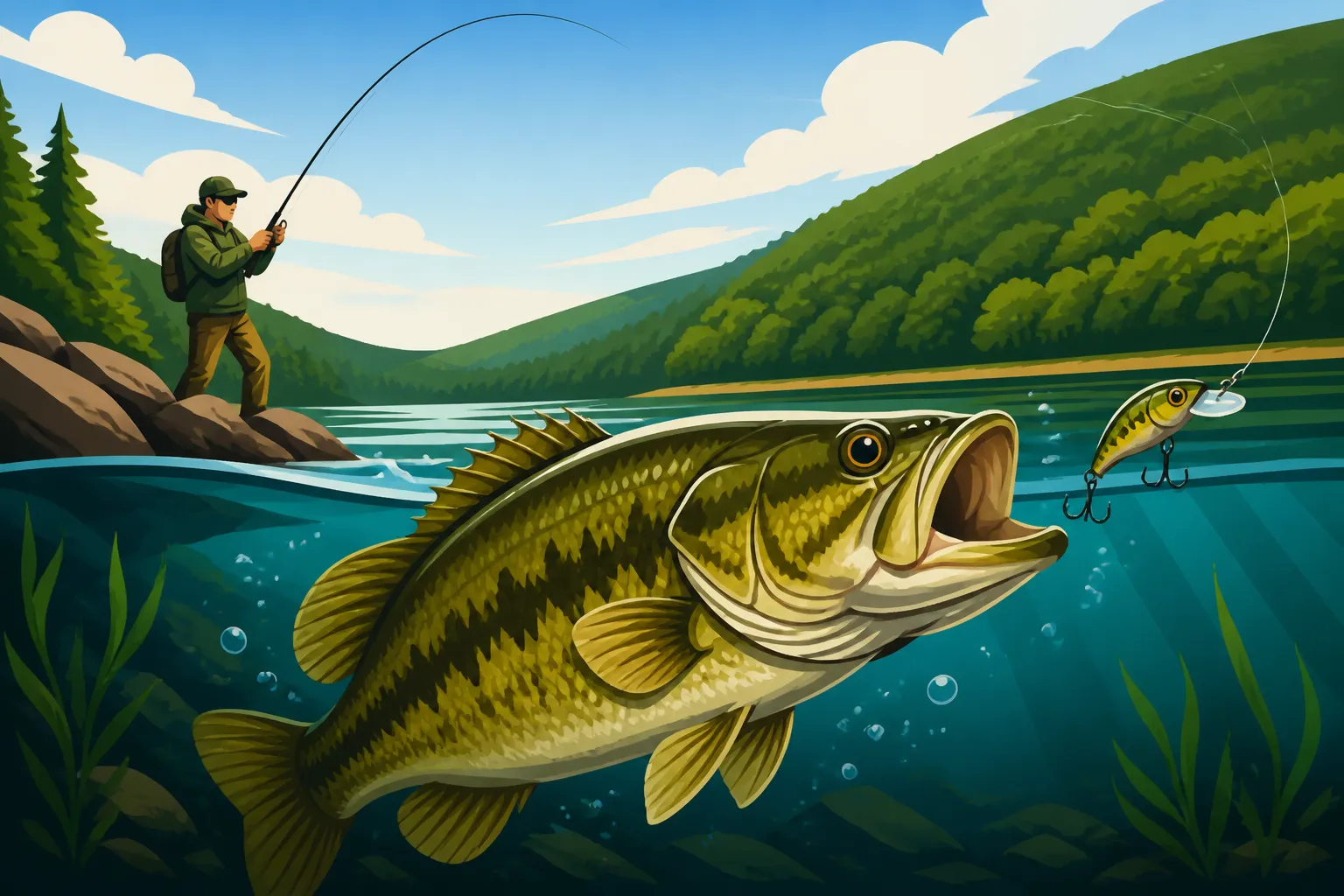
Monksville Reservoir Smallmouth Bass Fishing
Finding a fantastic smallmouth bass fishery in New Jersey can sometimes feel like chasing a ghost, especially when you're looking for that perfect blend of challenging fishing and beautiful scenery. Anglers often struggle to locate consistent smallmouth action, but thankfully, Monksville Reservoir offers an incredible opportunity. This guide will dive deep into everything you need to know to successfully target smallmouth bass in this productive North Jersey gem, from the best spots to the right techniques.
Why Monksville Reservoir is a Smallmouth Bass Haven
Monksville Reservoir, nestled in the picturesque Wanaque Valley in Passaic County, isn't just another pretty face in the New Jersey landscape. It's a prime destination for smallmouth bass anglers, and for good reason. Its unique characteristics create an ideal environment for these feisty fighters, setting it apart from many other local bodies of water. Understanding why Monksville shines for smallmouth is the first step to unlocking its full potential.
The Reservoir's Unique Structure and Habitat
What makes Monksville truly special for smallmouth bass is its distinctive underwater topography and water quality. Unlike many other reservoirs or lakes that might be muddy or featureless, Monksville boasts exceptionally clear, cool waters and an abundance of rock, rubble, and submerged timber. This crystal-clear water is a smallmouth magnet, as these fish are highly visual predators that thrive in environments where they can ambush prey. The clarity also means you'll often need to adapt your lure colors and presentation, as fish can be pickier.
The reservoir is also quite deep in many areas, reaching depths of over 100 feet in its northern basin. This depth provides critical thermal refuge for smallmouth during the warmer summer months, allowing them to retreat to cooler, more oxygenated waters. The rocky bottom, coupled with old foundations, roadbeds, and vast fields of submerged timber from when the valley was flooded, creates an incredible mosaic of structure. Smallmouth bass are notorious for relating to hard structure, and Monksville delivers this in spades, offering countless ambush points and hiding spots. The interplay of deep water, clear conditions, and abundant structure provides a consistent, healthy habitat that supports a thriving smallmouth population year-round.
Prime Seasons for Smallmouth Action
Knowing when to hit Monksville Reservoir can significantly impact your success. Smallmouth bass activity fluctuates with water temperature and their spawning cycles, making certain times of the year particularly productive. Each season presents its own challenges and rewards, and anglers who understand these patterns are often the ones consistently landing fish.
Spring is arguably the most anticipated season for smallmouth fishing at Monksville. As water temperatures begin to climb into the 40s and 50s Fahrenheit, smallmouth start to move out of their deep winter haunts and into shallower areas, especially rocky points and coves, preparing for the spawn. This pre-spawn period is characterized by aggressive feeding as they bulk up. Once water temperatures hit the mid-50s to low 60s, the smallmouth spawn begins. During this time, they become very territorial and protective of their nests, often making them easier to target, though responsible angling practices (like catch and release) are paramount. Post-spawn, the fish can be a bit lethargic for a week or two, but they quickly resume feeding aggressively to recover.
Summer fishing requires a different approach. With warmer surface temperatures, smallmouth often retreat to deeper, cooler water, congregating around submerged structures, deep points, and humps. Early morning and late evening, when the sun is less intense, often provide the best bites, as fish may move shallower to feed under low light conditions. Techniques like drop-shotting, deep-diving crankbaits, and even jigging spoons become highly effective as you work to present baits in their deeper holding areas. The clarity of Monksville's water can make these fish spooky, so long casts and stealth are often key.
Fall is another fantastic time to target Monksville smallmouth. As water temperatures drop, these fish go on a serious feeding frenzy, trying to pack on calories for the approaching winter. They become incredibly active, often chasing baitfish in open water or along rocky shorelines. This is when topwater lures can shine again, particularly on overcast days, and jerkbaits become incredibly effective as fish are willing to chase. The cooler weather and stunning autumn foliage also make for a truly enjoyable fishing experience. While winter can be challenging with ice cover, dedicated ice anglers can find smallmouth in deeper basin areas, often using small jigs or blade baits.
Essential Techniques and Tackle for Monksville Smallmouth
Successfully catching smallmouth bass at Monksville Reservoir isn't just about showing up; it's about understanding the specific techniques and tackle that these wary fish respond to in its clear, deep waters. Smallmouth are known for their strong fights and acrobatic jumps, and using the right gear can make all the difference between a frustrating day and a memorable one.
Lures and Baits That Get Bites
Monksville's clear water often means that finesse techniques and natural-looking baits are highly effective. However, aggressive power fishing can also pay off, especially during active feeding periods. A versatile tackle box is your best friend here. For crankbaits, consider medium-diving options in natural baitfish patterns like shad, perch, or crawfish. Smallmouth can be incredibly particular, so having a range of sizes and dive depths is wise. Squarebill crankbaits can be great for working shallower, rocky areas, deflecting off cover and triggering reaction strikes.
Jerkbaits are phenomenal for Monksville smallmouth, especially in cooler water or when fish are suspended. Brands like Rapala, Lucky Craft, and Megabass make excellent jerkbaits that suspend perfectly, allowing you to twitch them aggressively and then pause, letting the fish react. Again, natural baitfish colors tend to produce best. Soft plastics are a must-have for finesse presentations. Tube baits, rigged on internal jig heads, are classic smallmouth killers, mimicking crawfish or gobies. Creature baits, drop-shotted worms, and grub tails on small jig heads also excel, particularly when working deep structure or when the bite is tough. Don't overlook jigs; a football jig or a casting jig with a craw trailer worked slowly along the bottom can entice sluggish smallmouth. For those thrilling topwater explosions, poppers, walking baits, and even prop baits can be deadly during low light conditions or when fish are actively feeding on the surface, especially in the mornings and evenings.
Rods, Reels, and Lines for Success
Matching your tackle to your techniques is crucial for Monksville's demanding smallmouth. You'll generally want a versatile setup that can handle long casts, detect subtle bites, and provide enough backbone to fight strong fish. For finesse presentations like drop-shotting, Ned rigs, or small jigs, a medium-light to medium power spinning rod, around 6'8" to 7'2" in length, with a fast action tip is ideal. This combination allows for accurate casting of lighter baits and excellent sensitivity. Pair this with a 2500 or 3000 series spinning reel, spooled with 8-10 lb braided line, and a 6-8 lb fluorocarbon leader. The braid offers superior casting distance and sensitivity, while the fluorocarbon leader provides invisibility in the clear water and abrasion resistance against Monksville's rocky bottom and submerged timber.
For power fishing techniques, such as casting crankbaits, jerkbaits, or larger jigs, a baitcasting setup is often preferred. A medium-heavy power rod, 6'10" to 7'6" in length, with a fast action, will give you the necessary leverage and casting accuracy. For crankbaits, some anglers prefer a moderate action rod to help absorb the shock of hard-fighting fish and prevent hooks from pulling. A high-quality baitcasting reel with a smooth drag and a gear ratio appropriate for your chosen lure (e.g., faster for topwater, slower for deep crankbaits) is essential. Spool your baitcaster with 10-15 lb fluorocarbon for most applications, as its low stretch and abrasion resistance are excellent for clear water and heavy cover. If you're really delving into Monksville's depths or targeting specific structures, a local guide booked through services like FishingBooker can offer invaluable insights into their preferred setups and recent patterns. Remember, carrying proof of your New Jersey Fishing License Guide for 2026 is always required, no matter what gear you're using!
Navigating Monksville Reservoir for Optimal Smallmouth Fishing
Monksville Reservoir is a substantial body of water, covering about 505 acres with over 10 miles of shoreline. Simply launching a boat and hoping for the best isn't the most effective strategy. To consistently find smallmouth bass, you need to understand its key fishing spots and how best to access them, whether by boat or from the shore. This navigational knowledge, combined with an understanding of smallmouth behavior, will significantly improve your chances of success.
Key Fishing Spots and Structures
Smallmouth bass are structure-oriented fish, and Monksville Reservoir is a treasure trove of prime smallmouth real estate. The clear water here means that fish will often relate to the most prominent structures available, using them for ambush, shelter, and comfort. Start by looking for main lake points that extend out into deeper water. These are natural gathering spots, especially during spring and fall migrations. The slopes of these points can hold fish at various depths, depending on the time of day and water temperature. Submerged humps and islands are also smallmouth magnets. These underwater features often create current breaks or provide isolated cover in otherwise open water, attracting baitfish and, consequently, smallmouth.
The northern basin of Monksville, with its deeper sections and numerous rock piles, is often a hotbed for larger smallmouth. Conversely, the southern basin, while shallower, also holds fish, especially around its rocky shorelines and coves. Pay close attention to any areas marked on your contour maps as having sudden depth changes or significant underwater structure. FishingBooker guides often highlight these specific contours when discussing their tactics. The reservoir also has remnants of old farmsteads and roadbeds that were submerged when it was created. These subtle changes in bottom composition and elevation can be incredibly productive, as they offer unique holding areas for bass. Finally, don't ignore the abundant submerged timber. While a hassle to fish, the wood provides excellent cover, and flipping jigs or soft plastics into these areas can produce some of the biggest fish. Mastering How to Jig for Striped Bass techniques can also translate surprisingly well to working jigs for smallmouth around structure, though with different sizes and presentations.
Boat Access and Shoreline Opportunities
Accessing Monksville Reservoir for fishing is relatively straightforward, but there are important regulations to follow. The reservoir has two public boat launches managed by the North Jersey District Water Supply Commission: the North Boat Launch and the South Boat Launch. Both offer ample parking and launch facilities, though there might be a small fee or permit requirement, so it's always best to check current regulations before you go. Importantly, Monksville Reservoir has specific rules regarding boat motors. Only electric motors are permitted, and gasoline motors must be tilted out of the water. This regulation helps maintain the pristine water quality and contributes to a quieter, more peaceful fishing experience, which smallmouth often prefer. Using an electric motor also allows for stealthier approaches to key fishing spots, which is crucial in clear water.
For those without a boat, Monksville also offers decent shoreline fishing opportunities, though these are more limited than boat access. The areas around the boat launches and along some of the accessible public banks can be productive, especially during the spring and fall when smallmouth move shallower. Casting from shore to rocky points, drop-offs near the bank, or areas with visible submerged structure can yield good results. Kayak fishing is an exceptionally popular and effective way to fish Monksville. Kayaks allow anglers to quietly navigate shallow coves, access tight spots that larger boats can't reach, and cover a lot of water while still being able to hold position over prime structure with a trolling motor or anchor. Whether you're in a bass boat, kayak, or on foot, being aware of New Jersey Freshwater Fishing Regulations Every Angler Should Know and showing your Carrying Proof of Your New Jersey Fishing License are non-negotiable requirements for all anglers.
Important Regulations and Conservation Tips
Fishing at Monksville Reservoir, like anywhere in New Jersey, comes with rules designed to protect our natural resources and ensure sustainable fishing for generations to come. Being a responsible angler means not only knowing these regulations but actively participating in conservation efforts. Smallmouth bass are a valuable sportfish, and their populations benefit greatly from thoughtful practices.
Understanding New Jersey Smallmouth Regulations
Before you even make your first cast at Monksville, it's absolutely vital to be familiar with the most current New Jersey fishing regulations. These rules can change from year to year, so always check the latest New Jersey Fish and Wildlife Digest. For smallmouth bass, there are typically specific size and bag limits that apply statewide, but sometimes special regulations are in effect for particular bodies of water. For general information, you can always consult a resource like How Bag and Size Limits Work in New Jersey.
As of recent regulations, the statewide limit for smallmouth bass in New Jersey usually dictates a minimum size of 12 inches and a daily creel limit of 5 fish. However, this is a general guideline, and specific waters might have slot limits or other restrictions. Always verify the rules for Monksville Reservoir directly from the NJDEP Fish and Wildlife website or their annual digest. Remember, these regulations are in place for a reason: to manage the fishery and ensure healthy populations of smallmouth for everyone to enjoy. It's also worth noting that anyone 16 years of age or older needs a valid New Jersey freshwater fishing license to fish Monksville Reservoir, and if you have a charter booked through FishingBooker, make sure you understand who is responsible for providing licenses or if you need to secure your own.
Practicing Catch and Release
While New Jersey regulations often allow for keeping a certain number of smallmouth bass, many dedicated smallmouth anglers at Monksville Reservoir choose to practice catch and release, especially for larger, trophy-sized fish. This is a fantastic conservation practice that helps to sustain and improve the quality of the fishery, ensuring that these impressive fighters continue to reproduce and thrive. Larger smallmouth, particularly the females, are crucial to the breeding stock, and releasing them allows them to spawn again and contribute to future generations of bass.
If you choose to release your catch, doing so properly is paramount to the fish's survival. Here are some quick tips for effective catch and release:
- Minimize Handling: Try to keep the fish in the water as much as possible. If you must handle it, do so gently with wet hands to protect its slime coat, which is vital for disease prevention.
- Use Appropriate Tackle: Barbless hooks can significantly reduce damage and make hook removal easier. Consider using circle hooks if bait fishing, as they often result in a hook-up in the corner of the mouth, avoiding deep hooking. You might also want to explore New Jersey Circle Hook Requirements for Bait Fishing for other species, as the principles are similar.
- Quick Hook Removal: Have pliers or a de-hooking tool readily available to remove hooks quickly and efficiently. If a fish is deeply hooked, it's often best to cut the line as close to the hook as possible rather than tearing internal organs trying to remove it.
- Revive Gently: If a fish seems sluggish or disoriented, hold it gently in the water, facing into the current, until it regains its strength and can swim away on its own. Never just toss a tired fish back.
By adhering to regulations and embracing responsible angling practices like catch and release, we can all contribute to keeping Monksville Reservoir a premier smallmouth bass destination for years to come.
| Season | Primary Smallmouth Locations | Recommended Lures/Baits | Key Techniques |
|---|---|---|---|
| Spring | Rocky points, shallow coves, spawning flats | Jerkbaits, tubes, swimbaits, small crankbaits | Slow retrieve, twitch-pause, pitching, sight fishing |
| Summer | Deep humps, main lake points, submerged timber | Drop shots, deep-diving crankbaits, jigs, spoons | Vertical jigging, slow dragging, deep cranking |
| Fall | Main lake points, rocky banks, open water | Jerkbaits, topwater, crankbaits, soft plastics | Fast retrieve, erratic retrieves, searching |
| Winter | Deep basins, main lake channel edges | Small jigs, blade baits, spoons | Ice fishing (jigging), slow vertical presentations |
Disclaimer
Please note that fishing regulations, including bag and size limits, can change. Always consult the official New Jersey Department of Environmental Protection (NJDEP) Fish and Wildlife website or the current year's New Jersey Fish and Wildlife Digest before heading out to fish. This guide is for informational purposes only and should not be considered a substitute for official regulations.