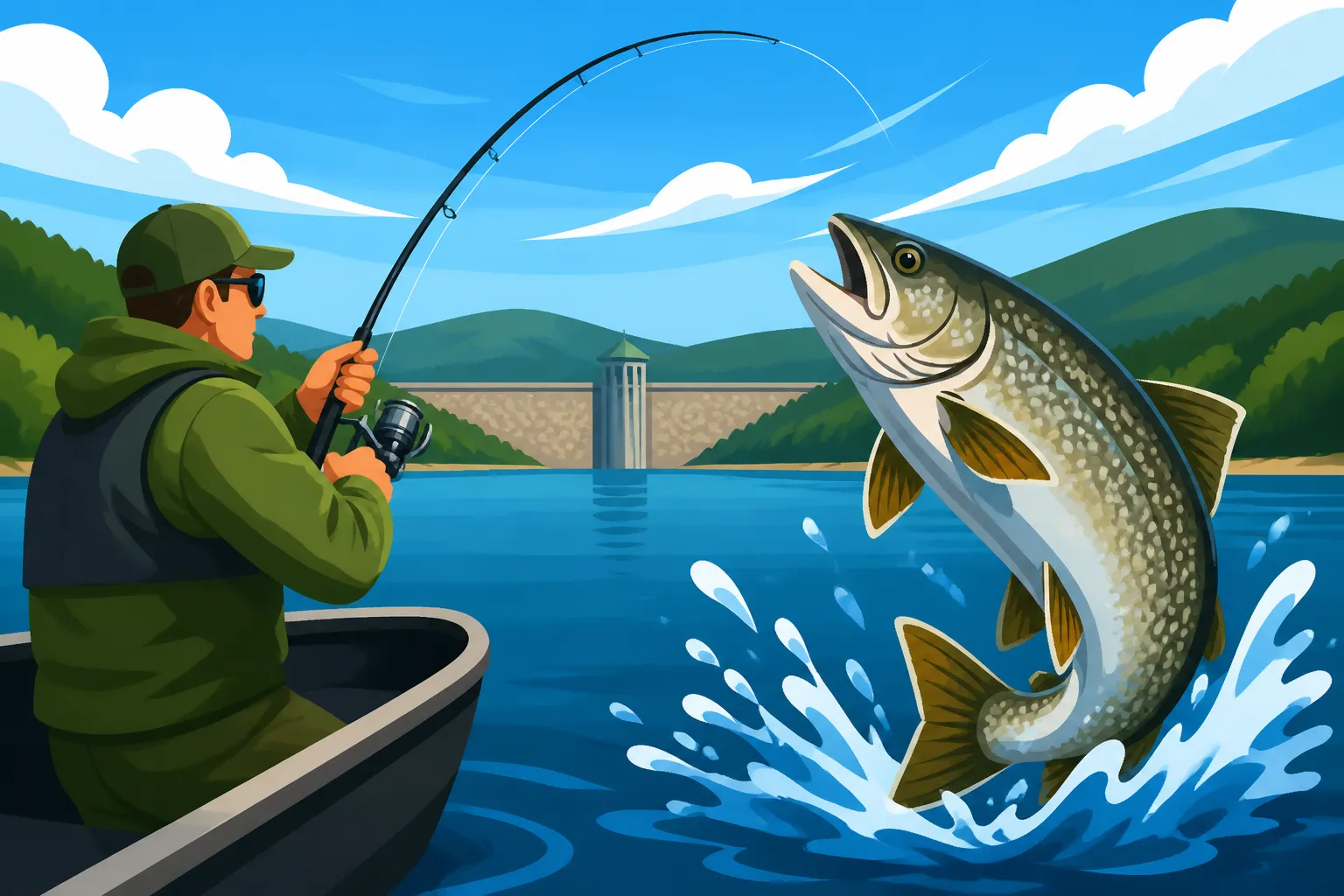
Round Valley Reservoir Lake Trout Fishing
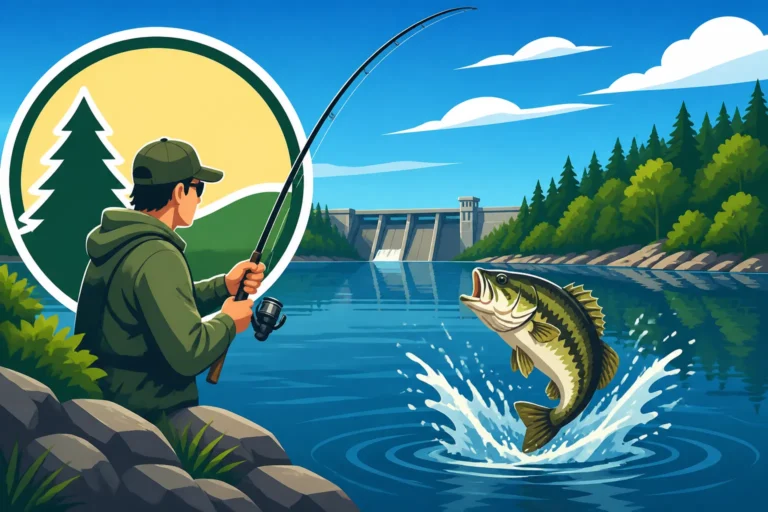
Round Valley Reservoir in New Jersey is a truly unique freshwater gem, but it presents a distinct challenge for anglers, especially those hoping to target its elusive Lake Trout population. Many folks arrive with standard gear, only to find themselves baffled by the sheer depth and crystal-clear waters that make these cold-water predators so hard to pin down. This comprehensive guide is here to demystify the art and science of catching Lake Trout in Round Valley, equipping you with the knowledge, techniques, and insights needed to increase your chances of success in this exceptional fishery.
Understanding Round Valley Reservoir's Unique Challenge
Round Valley Reservoir isn't just another lake; it's a massive, deep, and remarkably clear body of water that was created as a water supply for central New Jersey. Its unique characteristics are precisely what make it an ideal, albeit challenging, habitat for Lake Trout. If you've ever felt like you're fishing in an alien landscape here, you're not wrong – it really is that different from typical New Jersey lakes.
The Depth and Clarity Factor
Imagine trying to find a needle in a haystack, but the haystack is 180 feet deep in places, and the water is so clear you can see your lure disappear for what feels like forever. That's essentially the task at hand when you're targeting Lake Trout in Round Valley. With an average depth exceeding 100 feet and maximum depths pushing past 180 feet, this reservoir is unlike most other freshwater bodies in the state. The profound depth means that during much of the year, especially in summer, Lake Trout retreat to the cooler, oxygen-rich thermocline, often found far below the surface. This isn't your typical shallow-water bass fishing scenario; you're dealing with a vast, three-dimensional environment where fish can be anywhere from 30 to 100 feet down, sometimes even deeper.
The clarity of the water, a double-edged sword, adds another layer of complexity. While it allows for incredible visibility, it also makes Lake Trout incredibly wary. These fish aren't accustomed to heavy cover or murky water, meaning they rely heavily on their eyesight. Bright sunny days can push them even deeper or make them more skittish, requiring longer leaders, lighter lines, and more natural presentations. Fishing in such clear water means your line choice, terminal tackle, and even the smallest details of your lure presentation become critically important. For those curious about the specifics of this impressive body of water, you can dive deeper into How Deep Is Round Valley Reservoir?.
Lake Trout Behavior in Reservoir Environments
Lake Trout in Round Valley behave differently than their counterparts in, say, the Great Lakes or some Canadian shield lakes. Here, they are largely a stocked fishery, meaning they don't have the extensive natural reproduction seen in some other regions. This can influence their feeding patterns and schooling behavior. They are primarily cold-water fish, preferring temperatures in the 40-55°F range. This preference dictates their movements throughout the year.
In spring, as the ice melts and the surface water begins to warm, Lake Trout will often move shallower, sometimes into depths of 20-40 feet, to feed on baitfish. This is a prime time for anglers as they are more accessible. However, as summer heat sets in, the thermocline forms, and the Lake Trout will seek out that sweet spot where the water is cool enough and oxygen is abundant. This often means suspending over deep water or hugging subtle underwater structures like humps, ledges, or the old creek channels that run through the reservoir basin. Understanding where they might be holding is crucial, and a great resource for this is exploring Where Do Lake Trout Hold at Round Valley Reservoir?. In the fall, as the water cools again, they'll become more active and might move shallower once more, making for another excellent fishing window before winter sets in.
Essential Gear for Round Valley Lake Trout
Tackling Round Valley's Lake Trout requires a specific arsenal. You can't just show up with your bass rod and expect consistent success, at least not for the deeper fish. This is a fishery that truly rewards preparation and specialized equipment.
Rods, Reels, and Line Selection
For Lake Trout in Round Valley, especially when targeting them deep, you'll want to lean towards medium-heavy to heavy power rods, typically 7 to 8 feet long. These longer rods provide better line control, casting distance when needed, and leverage for fighting strong fish from considerable depths. A fast action tip is beneficial for detecting subtle bites and setting the hook quickly. For trolling, specialized downrigger rods or longer, softer-tipped trolling rods are ideal as they absorb the shock of the strike and the continuous pull of the lure.
Matching your rod with a reliable reel is paramount. High-capacity spinning reels (size 4000-5000) or baitcasting reels (like a low-profile reel with good line capacity or a round baitcaster) are excellent choices. You'll need enough line to reach those deep zones and still have plenty left for a strong fight. A smooth drag system is non-negotiable, as these fish can make powerful runs.
Line choice is critical. Braided line in the 20-30 lb test range is a popular main line for its strength, lack of stretch, and thin diameter, which helps cut through the water and reduces scope when fishing deep. However, due to the water clarity and the Lake Trout's keen eyesight, you'll absolutely need a fluorocarbon leader. A 10-20 lb test fluorocarbon leader, anywhere from 10 to 30 feet long, is often recommended. Fluorocarbon is nearly invisible underwater and has excellent abrasion resistance. The length of the leader can be adjusted based on water clarity and fish activity – longer leaders for super clear water or finicky fish. Remember that New Jersey has specific rules regarding how many rods you can actively use, so make sure to check How Many Fishing Rods Can You Use at Once in New Jersey?.
Lures, Baits, and Electronics
When it comes to lures for Round Valley Lake Trout, think big, flashy, and deep-diving. Spoons are perennial favorites, with classic options like Krocodile spoons, Thomas Buoyant spoons, or even larger trolling spoons in silver, blue, green, or chartreuse patterns. Jigs, particularly heavy bucktail jigs or blade baits, are also excellent for vertical jigging over schools of bait or marked fish. Colors that mimic local baitfish, like alewives or trout, are usually a good bet.
Live bait can also be incredibly effective, especially large shiners, herring, or alewives if legally obtained. These are typically fished on a three-way swivel rig or a slip sinker rig, lowered to the desired depth. For those looking for specific recommendations, exploring Best Bait for Round Valley Reservoir Trout in Spring can provide seasonal insights.
However, perhaps the most critical piece of "gear" for consistent success on Round Valley is good electronics. A quality fish finder with DownScan and SideScan capabilities can be a game-changer. These units allow you to mark fish, identify schools of bait, and pinpoint subtle underwater structures that hold Lake Trout. Understanding your electronics is paramount to locating these deep-water dwelling fish. Learning How to Read a Fish Finder for Beginners is an excellent starting point, as this technology will be your eyes underwater in the vast depths of Round Valley. Without it, you're truly fishing blind.
Prime Seasons and Times for Lake Trout
Knowing when to target Lake Trout in Round Valley can significantly impact your success. Their movements are highly dictated by water temperature, making certain seasons more productive than others.
Spring and Fall Opportunities
Spring at Round Valley, right after ice-out, is arguably one of the best times to target Lake Trout. As the surface waters begin to warm up from the winter chill, the entire water column is often a uniform temperature, allowing Lake Trout to roam more freely and often shallower than they will in the summer. You might find them in depths of 20 to 50 feet, chasing baitfish that are also moving into these zones. Trolling crankbaits, spoons, or even large shiners in these shallower depths can be incredibly effective. The cooler water temperatures mean the fish are more active and willing to chase. This early season bite typically lasts until the reservoir begins to stratify, usually by late May or early June.
Similarly, the fall offers another fantastic window. As the air temperatures drop and the reservoir's surface water cools, the thermocline breaks down, and the water begins to "turn over," mixing oxygen throughout the water column. Lake Trout once again become more active and can be found at shallower depths, sometimes as shallow as 30 feet. They're often feeding aggressively to put on weight for the upcoming winter. Trolling and casting spoons or large swimbaits can work well, especially during overcast days or low-light conditions. These seasonal shifts provide prime opportunities for anglers who understand the fish's thermal preferences.
Summer Deepwater Tactics
Summer fishing for Lake Trout in Round Valley is a completely different ballgame. Once the water temperature on the surface rises into the 70s and 80s, the Lake Trout retreat to the cold, dark depths where temperatures remain in their preferred 40-55°F range. This often means suspending over the deepest parts of the reservoir, sometimes 80-120 feet down, or hugging submerged structures at those depths. This is where specialized gear like downriggers become almost essential.
Without a downrigger, you'll need extremely heavy jigging spoons or blade baits to reach these depths consistently. Trolling without a downrigger is possible with lead core line or weighted line systems, but it's much harder to control your depth precisely. The key to summer success is finding that deep, cool water where the fish are holding, and presenting your lure right in their strike zone. This requires patience, good electronics, and a willingness to fish very deep. For those interested in the broader picture of trout fishing in the state, consider reading Trout Fishing in New Jersey.
Top Techniques for Round Valley Lake Trout
Catching Lake Trout in Round Valley is less about luck and more about applying proven techniques that account for their deep-water habits and the reservoir's clear conditions.
Trolling for Success
Trolling is perhaps the most widely used and effective method for covering water and finding Lake Trout in Round Valley. Given the size and depth of the reservoir, it's often the best way to present your lure to fish that are spread out over a vast area.
The fundamental idea behind trolling is to drag your lure at a controlled depth and speed, mimicking a swimming baitfish. For Lake Trout, slow to moderate speeds are typically most effective. Varying your speed with subtle accelerations and decelerations can often trigger a strike. Lure selection is crucial here – deep-diving crankbaits, large trolling spoons (like Dreamweaver or Stinger spoons), or even live bait rigs can all be deadly.
However, simply dragging a lure isn't enough; you need to control its depth. This is where tools like downriggers, lead core line, or Dipsy Divers come into play. Downriggers are clips that attach to a heavy cannonball weight, allowing you to deploy your lure to a precise depth, often 50-100 feet or more, and then release it when a fish strikes. Lead core line, a braided line with a lead core, sinks at a predictable rate per color (usually 10 yards per color), allowing you to estimate your depth by the number of colors you've let out. Each method has its learning curve, but mastering them is key to consistently reaching the Lake Trout. Detailed instruction on this technique can be found in Trolling Techniques for New Jersey Lake Trout.
When trolling, pay close attention to your fish finder. Look for schools of baitfish, temperature breaks, and, of course, the distinctive arches of Lake Trout. Once you get a strike, mark the spot on your GPS and try to replicate your pass, as Lake Trout often school together. You might even consider doing a u-turn and trolling back over the same area.
Vertical Jigging Strategies
When you've located schools of Lake Trout or individual fish holding tight to structure on your fish finder, vertical jigging can be incredibly effective. This technique involves positioning your boat directly over the fish and dropping a heavy jig straight down to their depth.
The most common lures for vertical jigging are heavy jigging spoons (often 1-3 ounces), blade baits, or bucktail jigs. The retrieve is critical: a sharp, aggressive lift of the rod tip, followed by a controlled fall. Many strikes occur on the fall, so feeling for slack line or a sudden tap is important. Experiment with the height of your jigging stroke and the speed of your retrieve. Sometimes a fast, erratic action triggers a bite, while other times a subtle quiver is all it takes.
Because you're fishing straight down, vertical jigging allows for precise lure placement. If you see fish at 70 feet, you can drop your jig exactly to 70 feet. This precision, combined with the often aggressive nature of a jigging presentation, can be deadly, especially when Lake Trout are schooled up on a deep point or humps.
Downriggers and Lead Core Lines
As mentioned, downriggers are specialized tools that allow anglers to precisely control the depth of their lures. They consist of a heavy cannonball weight (typically 8-12 lbs) attached to a cable, which is lowered by a winch system. Your fishing line, with its lure, is clipped to the downrigger cable via a release clip. When a fish strikes, the line pops out of the clip, and you fight the fish directly on your rod. This is invaluable in Round Valley's deep, clear waters, ensuring your lure is presented consistently at the exact depth where Lake Trout are feeding or suspending.
Lead core line offers a more budget-friendly alternative for depth control. It's a specialized line that sinks at a predictable rate – typically around 5-7 feet per color (10 yards). By deploying a certain number of "colors," you can estimate your lure's depth. For example, if your lure runs 10 feet deep on its own, and you put out 5 colors of lead core, you might be fishing around 35-45 feet deep, depending on your trolling speed. The main drawback is the lack of stretch and the need for a long fluorocarbon leader. Both methods require practice to master, but they are crucial for reaching the depths where Round Valley's Lake Trout spend most of their time. For those looking to explore different avenues for finding good fishing opportunities or even guides for other species, platforms like FishingBooker can offer a wide range of options and help connect you with local experts who know the nuances of different water bodies and target species, complementing your growing knowledge of specific fisheries like Round Valley.
Navigating Access and Regulations
Fishing Round Valley Reservoir, while rewarding, comes with its own set of rules and access considerations that every angler needs to be aware of. Neglecting these can lead to fines or frustration.
Boat Launch and Shore Access Considerations
Round Valley Reservoir is managed by the New Jersey Division of Parks and Forestry, and access is somewhat restricted to protect its status as a drinking water supply. This means no gas-powered motors are allowed; only electric trolling motors are permitted on boats. This rule is in place to prevent pollution and maintain the water quality. The main boat launch is located on the west side of the reservoir, offering ample parking and launching facilities for trailered boats. It's usually well-maintained, but be prepared for busy days, especially on weekends during prime fishing seasons.
For those without a boat, shore access is available, though it's much more limited due to the reservoir's steep banks and deep drop-offs. The park offers some designated areas for shore fishing, but reaching the depths where Lake Trout often reside from shore can be extremely challenging, if not impossible, for most of the year. Shore anglers usually have better luck targeting trout and other species in shallower coves or during the spring and fall when Lake Trout briefly move closer to the banks. Always check the park's official website for current access points and any specific rules. You can find more specific details on available entry points by checking Round Valley Reservoir Shore Access Points.
Understanding Lake Trout Regulations
Like all fishing in New Jersey, targeting Lake Trout in Round Valley Reservoir is subject to specific regulations set by the New Jersey Department of Environmental Protection (NJDEP) Division of Fish and Wildlife. These regulations are designed to manage fish populations and ensure sustainable fishing for everyone.
First and foremost, you will need a valid New Jersey freshwater fishing license. This is non-negotiable for anyone over the age of 16. You can find comprehensive details about obtaining your license in New Jersey Fishing License Guide for 2026. It’s also crucial to understand the statewide New Jersey Freshwater Fishing Regulations Every Angler Should Know, as these can change annually.
Specific to Lake Trout in Round Valley, there will be bag limits (how many fish you can keep) and minimum size limits (how large a fish must be to be legally kept). These numbers can vary, so it is absolutely imperative to consult the current year's New Jersey Fish and Wildlife Digest before you head out. This digest is the official source for all regulations, including season dates, bag limits, and size limits for all species, including Lake Trout in specific waters like Round Valley. For instance, sometimes there might be specific regulations regarding the use of bait or certain tackle types in designated trout waters, though Round Valley’s main Lake Trout fishery typically allows for standard methods. Always double-check, as regulations are subject to change.
Round Valley Reservoir Lake Trout Fishing – Seasonal Techniques at a Glance
| Season | Preferred Depth (Approx.) | Recommended Techniques | Key Lures/Bait | Essential Gear | Notes |
|---|---|---|---|---|---|
| Spring | 20-50 feet | Trolling, Casting | Spoons, Crankbaits, Live Shiners | Medium-heavy rod, High-capacity reel, Fish Finder | Fish are active, more accessible. Ideal for boaters and possibly limited shore access. |
| Summer | 60-120+ feet | Trolling (Downriggers), Vertical Jigging | Heavy Spoons, Blade Baits, Live Bait Rigs | Downriggers, Heavy jigging rod, Advanced Fish Finder | Fish seek cold water; precision depth control is crucial. Challenging without specialized gear. |
| Fall | 30-70 feet | Trolling, Casting | Spoons, Swimbait, Live Shiners | Medium-heavy rod, High-capacity reel, Fish Finder | Water cools, fish become active again. Good for covering water before winter. |
| Winter | Deep (similar to Summer), potential Ice Fishing | Ice Jigging, Tip-ups | Small Spoons, Jigging Raps, Live Minnows | Ice fishing gear, Flasher/Sonar for ice fishing | Check ice conditions carefully. Access might be limited or restricted due to safety. |
Fishing for Lake Trout in Round Valley Reservoir is a journey into the deep, clear waters of one of New Jersey's most challenging and rewarding fisheries. It demands respect, preparation, and a willingness to adapt your techniques. While it might seem daunting, the thrill of hooking into a powerful Lake Trout in this pristine environment is an experience every dedicated angler should chase. Whether you're carefully deploying downriggers or meticulously jigging over deep structure, the satisfaction of landing one of these cold-water giants is truly unparalleled.
Disclaimer
The information provided in this guide is for general informational purposes only and is not intended as legal or professional advice. Fishing regulations, licensing requirements, and access rules for Round Valley Reservoir and all New Jersey waters are subject to change by the New Jersey Department of Environmental Protection (NJDEP) Division of Fish and Wildlife. Always consult the most current official New Jersey Fish and Wildlife Digest or the NJDEP website before engaging in any fishing activities to ensure compliance with all applicable laws and regulations. Fishing involves inherent risks; always prioritize safety on the water.