Typical Size of a Chain Pickerel
There's nothing quite like the excitement of feeling a strong tug on your line in one of New Jersey's many freshwater lakes or rivers. Sometimes, that feisty fight comes from a chain pickerel, a sleek and aggressive predator that can really put a bend in your rod. But when you finally get a glimpse of it, you might find yourself wondering, "Is this a big one? What's the typical size for these fish in our New Jersey waters?" This guide is here to unravel that mystery, giving you a clear picture of what to expect when you encounter a chain pickerel, from the average catch to those rare, impressive specimens.
Introducing the Chain Pickerel: A Slender Predator of New Jersey's Waters
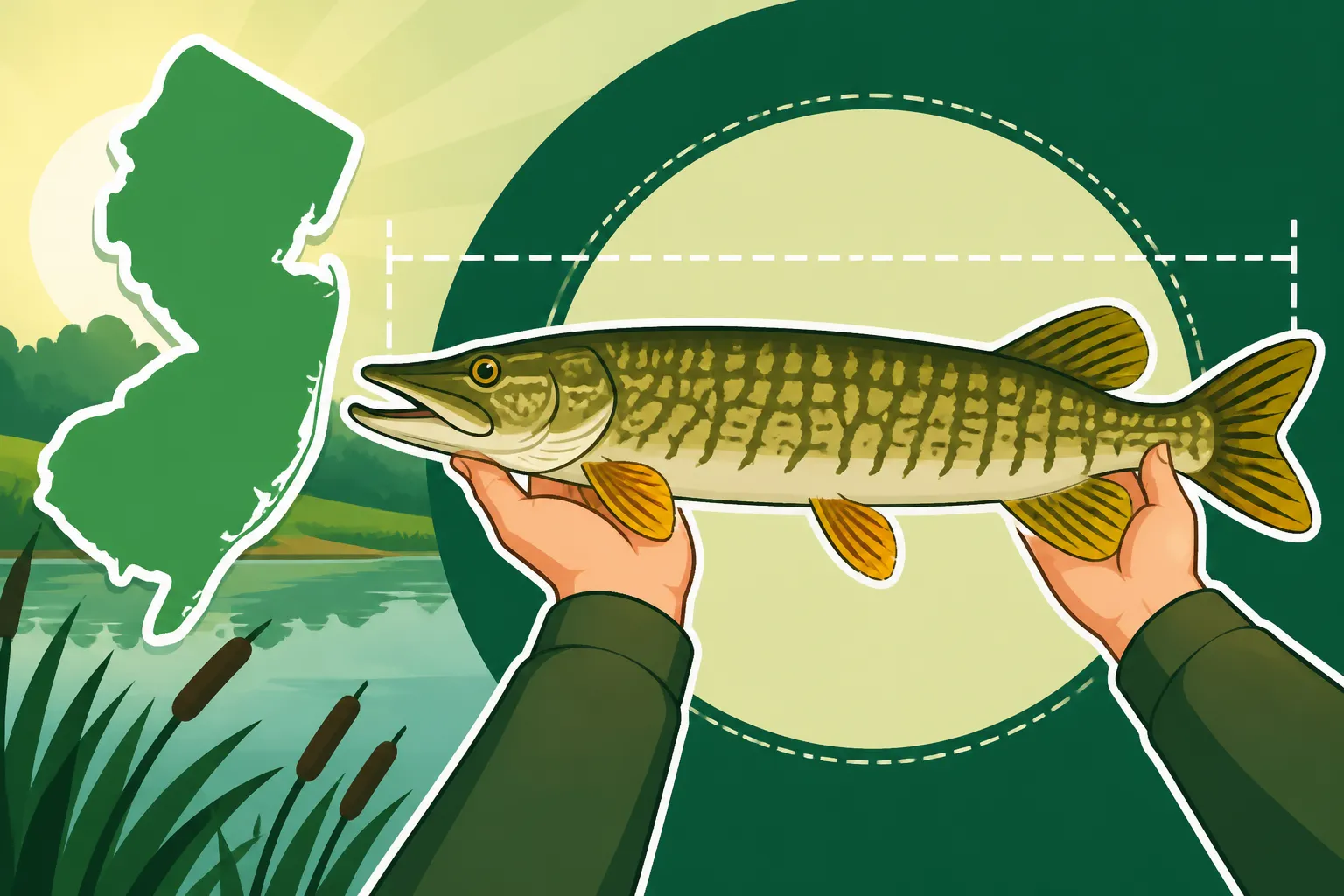
The chain pickerel is a fascinating fish that often gets overshadowed by its larger cousins, the northern pike and muskellunge. However, it's a vital part of our freshwater ecosystems here in New Jersey, and a thrilling catch for anglers of all skill levels. They're characterized by their distinctive chain-like pattern on their sides, which is where they get their name, and their elongated, torpedo-shaped bodies. When you're fishing in a lily-pad-laden cove or a weedy section of a lake, there's a good chance a pickerel is lurking, ready to ambush unsuspecting prey.
What Sets a Chain Pickerel Apart?
First off, let's clear up any potential confusion. While pickerel are members of the Esox family, just like pike and muskellunge, they have some distinct features. Their bodies are generally more slender than a pike's, and the chain-like markings are a dead giveaway. They also have a fully scaled operculum (gill cover) and cheek, unlike northern pike which have scales only on the upper half of the operculum, or muskellunge which have scales only on the upper half of both. This might sound like a lot of detail, but when you're holding one in your hand, these small differences become much clearer. They’re often mistaken for young pike, but once you know what to look for, their unique characteristics stand out. If you've ever wondered about similar species, you might be interested in our guide on Difference Between Perch and Pickerel or even What Is the Difference Between a Muskie and a Pike?.
Chain pickerel are visual predators with sharp teeth, and they tend to hide in vegetation, waiting for a meal to swim by. Their duck-bill-shaped snout, packed with those needle-sharp teeth, is perfectly designed for grabbing and holding onto prey. When you pull one out of the water, you'll immediately notice that mean-looking grin!
Where You'll Find These Voracious Eaters
In New Jersey, chain pickerel are quite widespread in our freshwater systems. They absolutely love calm, weedy, shallow water, which provides them with excellent cover for their ambush hunting style. Think about those areas in lakes and ponds with extensive lily pads, submerged aquatic vegetation, or even fallen trees and brush piles—that's prime pickerel territory. You'll often find them cruising the edges of these structures.
Some of the most popular spots to target chain pickerel include Lake Hopatcong, the numerous smaller ponds throughout the Pine Barrens, and many of the reservoirs and state park lakes across the state. They’re also found in slow-moving sections of rivers. These fish are resilient and adaptable, which is why they thrive in such a variety of environments throughout the Garden State. Anywhere there's good cover and a healthy population of baitfish, you're likely to find pickerel. For more detailed information on specific locations, check out our New Jersey Pickerel Fishing Guide.
Unpacking the Typical Dimensions: What to Expect from a New Jersey Chain Pickerel
When most anglers talk about catching a chain pickerel in New Jersey, they're usually referring to fish that fall within a pretty consistent size range. While there are always exceptions that make for great fishing stories, understanding the typical dimensions will give you a good benchmark.
The Common Lengths and Weights of the Average Catch
For most New Jersey anglers, a typical chain pickerel will measure anywhere from 16 to 24 inches in length. These are the fish you'll consistently encounter when you're out targeting them or even just bass fishing in pickerel-heavy waters. In terms of weight, these average-sized pickerel usually fall between 1 to 3 pounds.
Think about it this way: when you're reeling in a pickerel and it feels like a solid, respectable fish, it's probably right in that 18 to 22-inch sweet spot. They're not massive heavyweights like some of the larger saltwater species, but their slender build and aggressive nature mean they put up a surprisingly strong fight for their size. It's that initial explosive strike and powerful runs that make them such a fun catch.
Here's a quick look at the typical size ranges:
| Dimension | Common Range (New Jersey) |
|---|---|
| Length | 16 to 24 inches |
| Weight | 1 to 3 pounds |
Now, don't get me wrong, you absolutely can hook into smaller pickerel, sometimes as short as 10-12 inches, especially if you're fishing a pond with a very high population density. And on the flip side, those bigger, less common catches are always a thrill. But for the bulk of your experiences, this common range is a good expectation.
Beyond the Average: Factors That Influence a Pickerel's Growth
Several elements play a crucial role in how large a chain pickerel can grow in New Jersey. It's not just random; these factors dictate the health and size of the entire fish population in a given water body.
- Food Availability: This is perhaps the most critical factor. Pickerel are predatory fish, and their growth is directly tied to how much forage fish they have access to. If a lake or pond has an abundant supply of baitfish like shiners, minnows, or even smaller panfish, pickerel will have the fuel they need to grow larger and faster. Conversely, in waters with scarce food, even older pickerel might remain stunted. It’s a classic case of “you are what you eat” in the aquatic world.
- Water Quality and Habitat: Clean, well-oxygenated water with plenty of suitable cover (like those lily pads and weed beds we talked about) provides an ideal environment for pickerel to thrive. Poor water quality, pollution, or a lack of proper habitat can stress fish, impacting their growth rates and overall health. A healthy ecosystem equals healthy fish.
- Population Density: If a body of water is overpopulated with pickerel, there's more competition for food, and resources become stretched thin. This can lead to a higher number of smaller, stunted fish. Conversely, a balanced population allows individual fish to grow to their full potential. Sometimes, what seems like a great fishing day with lots of bites can actually indicate an overpopulation of smaller fish.
- Genetics: Just like in humans, genetics play a role. Some pickerel are simply predisposed to grow larger than others, even under similar environmental conditions. It's the luck of the draw sometimes!
- Age: Naturally, older pickerel have had more time to grow. The biggest pickerel you encounter will almost certainly be the oldest. However, their lifespan isn't as long as some other freshwater species; they typically live for about 5 to 7 years in the wild, though some may push it to 8 or 9 in ideal conditions.
Understanding these factors helps you appreciate why certain lakes might consistently produce larger pickerel, while others yield more numerous but smaller catches.
From Average to Exceptional: Pursuing Larger Chain Pickerel in the Garden State
While the average pickerel provides plenty of fun, every angler secretly dreams of hooking into a truly impressive specimen. New Jersey certainly has the potential for those trophy-sized chain pickerel, and knowing what constitutes a "big one" can add to the thrill of the chase.
When a Pickerel Might Surprise You
You might be surprised by a larger pickerel in a few key scenarios or locations. Often, the biggest pickerel come from waters that have excellent forage bases, good depth variations, and perhaps less fishing pressure. Lakes or reservoirs that are managed for larger predator fish, or those with strong populations of larger baitfish, can produce bigger pickerel.
Consider deeper, clearer lakes where the pickerel might have access to a wider variety of prey and less competition than in a shallow, weedy pond packed with smaller pickerel. Sometimes, these larger fish are solitary, holding to distinct pieces of structure like a submerged timber pile or a rock outcropping on the edge of a deep drop-off, rather than congregating in dense weed beds. These bigger pickerel often require a different approach, moving away from simple cast-and-retrieve methods to more deliberate presentations in specific ambush points.
Another scenario is during specific times of the year, such as early spring or late fall, when these fish are most actively feeding to bulk up for spawning or winter. Their metabolic rates are high, and they are aggressively looking for substantial meals. An angler who understands these seasonal patterns and targets the right kind of water at the right time significantly increases their odds of landing a larger fish.
The Elusive Trophy: New Jersey's State Record and Beyond
While a 2-pound pickerel is a solid catch, anything over 4 pounds is generally considered a trophy in New Jersey. These are the fish that truly stand out, often measuring well over 26 inches. Imagine the thrill of reeling in a pickerel that pushes towards the 30-inch mark!
The New Jersey state record for chain pickerel is a testament to the potential for truly massive fish in our waters. That record stands at an incredible 9 pounds, 3 ounces. This leviathan was caught decades ago from Lower Aetna Lake, a reminder that while rare, these giants do exist. It's those kinds of records that keep anglers coming back, hoping to be the next one to rewrite the history books.
Catching a state record is, of course, a once-in-a-lifetime achievement, but knowing it's out there adds to the magic. It tells us that our New Jersey waters are capable of producing truly exceptional fish, even for species that might seem "average" on a typical outing. So, while most of your pickerel will be in the 1-3 pound range, always fish with the mindset that a true monster could be lurking beneath the surface. You never know when that next cast could connect you with a personal best, or even a fish that makes the record books!
Gear Up and Cast Out: Practical Tips for Targeting Chain Pickerel
To consistently catch pickerel, regardless of their size, having the right gear and understanding their habits is key. You don't need highly specialized equipment, but a few considerations can greatly improve your success.
Essential Tackle for Pickerel Success
When it comes to pickerel fishing, you'll want a setup that's versatile enough to cast a variety of lures and baits, but also strong enough to handle those sharp teeth.
- Rods and Reels: A medium-light to medium power spinning rod, around 6 to 7 feet in length, paired with a matching spinning reel, is a fantastic all-around choice. This setup gives you enough backbone to fight a decent fish while still being sensitive enough to detect subtle bites. If you're just getting started, many combo kits available on Amazon or at local sporting goods stores offer excellent value. For more general advice on beginner setups, you might find our guide on Best Beginner Rod and Reel Combo for Saltwater Fishing helpful, as many principles apply to freshwater as well.
- Line: Pickerel have incredibly sharp teeth, so a monofilament or fluorocarbon leader is absolutely crucial to prevent bite-offs. Using a main line of 8 to 12-pound test monofilament or braided line is usually sufficient. Some anglers even opt for a small, thin wire leader, especially if they're consistently losing lures to those toothy grins.
- Lures: Pickerel are aggressive and react well to flashy, erratic movements.
- Spinnerbaits: These are a pickerel magnet! The flash and vibration drive them wild, especially in weedy areas.
- Spoons: Classic metal spoons, wobbling and flashing through the water, are irresistible to pickerel.
- Inline Spinners: Another highly effective choice, particularly smaller ones for average-sized fish.
- Jerkbaits and Plugs: These can imitate injured baitfish, triggering a predatory strike.
- Soft Plastics: Paddle-tail swimbaits or fluke-style baits can also be deadly when rigged weedless.
- Baits: Live bait, particularly shiners or minnows, fished under a bobber or slowly retrieved, is incredibly effective. Pickerel are opportunists and rarely turn down an easy meal.
- Tools: Don't forget long-nosed pliers or a fish gripper! Those teeth are no joke, and you want to protect your fingers when unhooking a pickerel. A small fishing tackle box from Amazon is perfect for keeping everything organized.
Investing in quality, affordable gear, easily found on platforms like Amazon, can make a huge difference in your fishing experience. You don't need to break the bank, but having reliable equipment is key. If you are wondering about the initial cost, consider checking out Basic Fishing Setup Cost.
Techniques for a Successful Pickerel Outing
Pickerel fishing can be incredibly rewarding, and a few techniques can help you maximize your catch rate.
- Target the Edges: Focus your efforts on the edges of weed lines, lily pad fields, and submerged structures. Pickerel love to dart out from cover to ambush prey. Cast your lure right up to the edge and retrieve it along the boundary.
- Vary Your Retrieve: Don't just cast and reel in at a constant speed. Experiment with different retrieve speeds, adding pauses, jerks, and twitches. Mimicking an injured baitfish often triggers a strike. Sometimes, a super-fast retrieve can work, as pickerel will chase down quickly moving prey.
- Use Weedless Lures: Since pickerel love heavy cover, weedless hooks and lures can save you a lot of frustration from getting snagged. Texas-rigged soft plastics or spinnerbaits with weed guards are excellent choices.
- Cover Water: Pickerel can be spread out, so make numerous casts in a fan pattern to cover as much area as possible. If you don't get a bite in one spot, move on to the next likely looking cover.
- Be Prepared for a Strike: Pickerel strikes can be vicious! Hold onto your rod firmly and be ready to set the hook quickly. Their initial run can be powerful, so be prepared to let them take some line.
- Handle With Care: Because of their sharp teeth, always use pliers to remove hooks. If you plan on releasing the fish, handle it gently and quickly get it back into the water. Minimize air exposure, especially for larger specimens, to ensure their survival.
By understanding the typical size of chain pickerel in New Jersey and employing these practical tips, you'll be well on your way to enjoying some fantastic fishing experiences with these exciting freshwater predators. Happy fishing!
Disclaimer
This article is for general informational purposes only and does not constitute professional advice. Laws, prices and regulations vary by location and change over time. Consult a qualified professional for guidance on your specific situation.