What Is the Difference Between Rainbow and Brown Trout?
For many New Jersey anglers, especially those new to the vibrant world of freshwater fishing, the sight of a beautiful trout can be exhilarating. But once you've landed one, a common question often pops up: "Was that a rainbow or a brown?" It's a perfectly valid confusion, as both species thrive in our state's waterways, but they have distinct characteristics, behaviors, and even preferred fishing methods. This guide will help you confidently tell the difference and understand how those variations impact your fishing strategy right here in the Garden State.
The Distinctive Look: Rainbow vs. Brown Trout Identification
Telling the difference between a rainbow trout and a brown trout isn't just about showing off your fish ID skills; it's genuinely helpful for understanding their behavior and even ensuring you're following specific regulations. While they might both share that classic torpedo shape of a trout, their colors, patterns, and even fin characteristics offer clear clues.
Visual Cues: Spotting the Rainbow
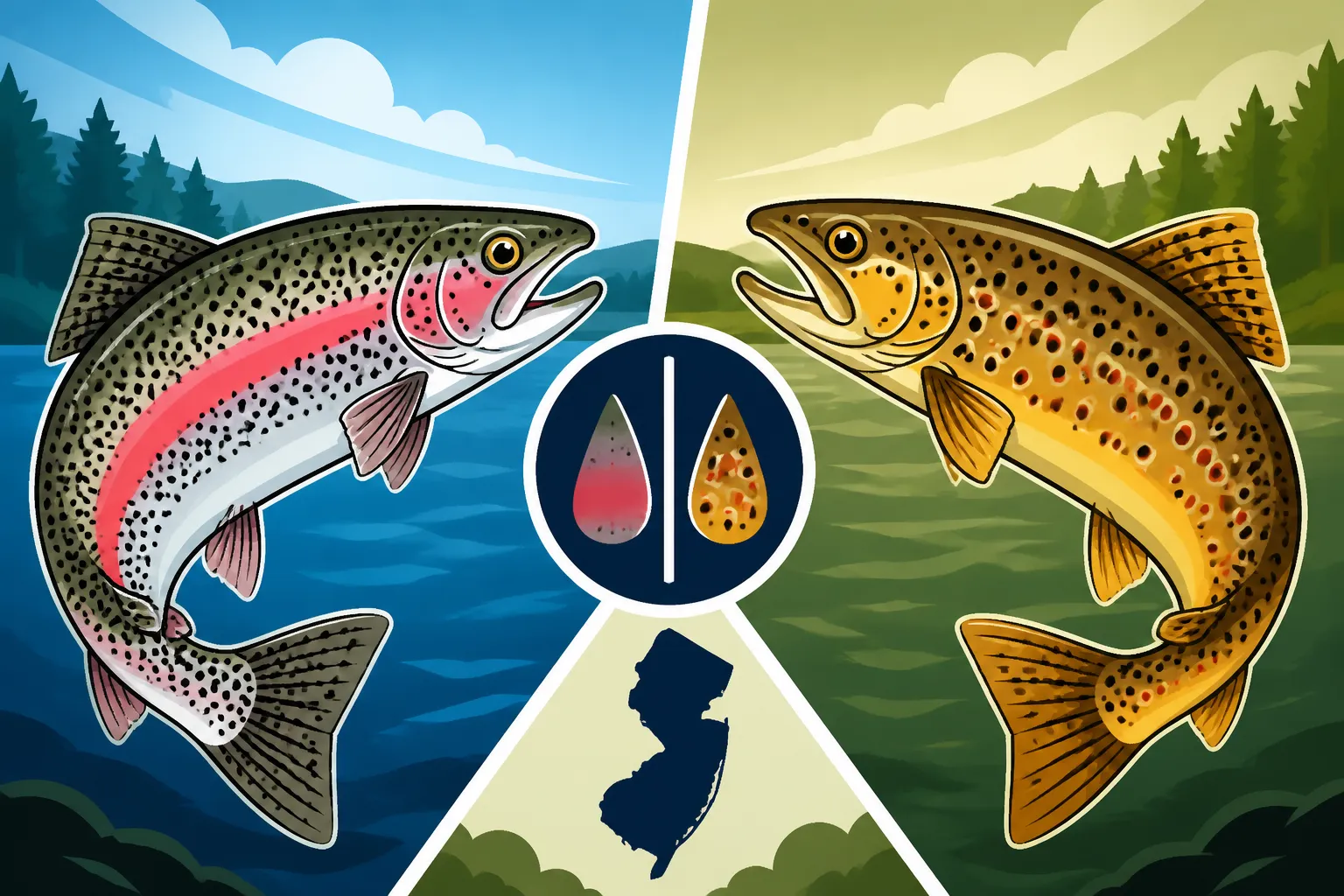
Rainbow trout, as their name suggests, are known for their vibrant, often iridescent coloring. The most iconic feature is typically a broad, reddish-pink stripe running horizontally along their sides, from gill plate to tail. This stripe can be quite vivid, especially on mature fish during spawning season. Their bodies are usually a silvery-green or bronze on top, fading to silver or white on the belly. What really sets them apart, though, are the small, dark spots. These spots are usually found abundantly on their back, sides, and notably, on their caudal fin (tail) and dorsal fin. If you catch a trout with a heavily spotted tail, almost to the very edge, chances are it's a rainbow. They also tend to have a somewhat shallower body profile compared to some of the bulkier brown trout you might encounter.
When these fish are freshly stocked, as they often are in many of New Jersey's rivers and lakes, their colors can be incredibly bright and unmistakable. You might see them shimmering under the water near a fresh stocking point, making their presence known. For those just getting into trout fishing, spotting that distinctive stripe and heavily spotted tail can be your first reliable identifier.
Visual Cues: Unmasking the Brown Trout
Brown trout, on the other hand, have a more subdued, earthy palette, which often helps them blend into their surroundings—a key to their more elusive nature. Their coloration typically ranges from a golden brown to an olive green on their backs, fading to a creamy white or yellowish belly. The most defining feature of a brown trout is its spots. Unlike the rainbow's uniform dark spots, brown trout typically have fewer, larger spots that are often dark brown or black, surrounded by a lighter halo. Crucially, these spots also include reddish-orange spots, often with a light halo, scattered along their sides. Another key identifier is their tail fin, which usually has very few, if any, spots. If the tail is mostly clear or only has a sparse peppering of spots, you're likely holding a brown. They also often have a more robust, sometimes almost chunky, body shape, especially the older, larger specimens.
Think of brown trout as the camouflaged warriors of our streams and lakes. Their coloring allows them to disappear amongst rocks and submerged logs, perfectly adapted for their often solitary and predatory lifestyle. Identifying them correctly allows you to better appreciate their cunning and often challenging fight, as many seasoned anglers will attest to their wary nature. For anyone stocking up on tackle, whether from a local shop or browsing options on Amazon, understanding these visual differences helps inform your bait and lure choices.
Key Physical Differences at a Glance
To make it even easier to keep these two beauties straight, here's a quick comparison:
| Feature | Rainbow Trout | Brown Trout |
|---|---|---|
| Lateral Stripe | Prominent pink or red stripe along the side | Absent or very faint |
| Body Color | Silvery-green to bronze, iridescent | Golden brown to olive green, often duller |
| Spots | Numerous small black spots on body and tail | Fewer, larger dark spots (often with light halo), some red/orange spots |
| Tail Fin | Heavily spotted, sometimes to the very edge | Few to no spots |
| Body Shape | Generally more streamlined | Often stockier, more robust |
This table provides a great snapshot. Remember, these are general guidelines, and individual fish can vary based on diet, age, and environment. But these are the most reliable indicators you'll find when fishing New Jersey's waters. When you’re trying to decide what kind of fly or lure might attract a particular fish, this visual guide can be invaluable.
Where They Roam: Habitat Preferences in New Jersey
Understanding where rainbow and brown trout prefer to hang out in New Jersey's diverse aquatic environments is fundamental to successful fishing. While both can be found in many of the same waters, their underlying preferences often dictate how you approach a particular stream or lake.
Rainbow Trout's Preferred Haunts
Rainbow trout are incredibly adaptable and, in New Jersey, are primarily a stocked species. This means you'll find them in a wide variety of freshwater bodies that are part of the state's extensive stocking program. They generally prefer cooler, well-oxygenated water, but they can tolerate a slightly wider range of water temperatures than some other trout species. You'll often encounter them in:
- Heavily Stocked Rivers and Streams: Places like the Musconetcong River, Pequest River, and portions of the Raritan River are prime spots. These waters receive regular stockings, especially in spring and fall. Rainbows tend to spread out but will often hold in slower pools, eddies behind rocks, or around submerged cover.
- Lakes and Reservoirs: Many New Jersey lakes are also stocked with rainbows, particularly during the cooler months. Spots like Lake Hopatcong, Round Valley Reservoir, and even smaller state park ponds will hold rainbows. In lakes, they'll often cruise open water or congregate near inlets and outlets where fresh, cool water enters.
- Trout Conservation Areas: Some designated areas have specific regulations geared towards sustaining trout populations, and rainbows thrive here.
Because they are stocked so frequently, rainbow trout are often the first trout species that beginners encounter. They're usually less wary right after stocking, making them a great target for those learning the ropes. When planning your next outing, check out New Jersey Trout Season: Spring vs Fall to see when these active feeders are most abundant in our local waters.
Brown Trout's Domain: The Wild and Wary
Brown trout, while also stocked in New Jersey, have a much stronger propensity to become wild and reproduce naturally in our colder, cleaner streams. This is where their reputation for being elusive and cunning truly comes into play. They are far more temperature-sensitive and demand higher water quality. Their preferred habitats include:
- Cold, Clean Freestone Streams: Rivers with plenty of oxygen, abundant natural cover like undercut banks, fallen trees, and large rocks are brown trout heaven. The upper reaches of the Pequest, Musconetcong, and Paulins Kill rivers, as well as smaller, lesser-known tributaries, hold impressive wild brown trout populations. They are masters of hiding, using structure to ambush prey and escape predators.
- Larger, Deeper Rivers and Reservoirs: While preferring streams, larger browns can also be found in deeper sections of rivers and even in big reservoirs like Round Valley, where they can find thermal refuge in the colder depths during summer. Here, they become apex predators, preying on baitfish and even smaller trout.
- Areas with Abundant Insect Life and Forage: Brown trout are opportunistic feeders. Streams rich in aquatic insects, crayfish, and smaller baitfish are ideal. Their ability to adapt their diet is a major reason they can survive and thrive in a wild setting.
Fishing for wild brown trout requires a different approach. They are often more challenging to catch, demanding stealth, precise presentations, and a deep understanding of their hiding spots. They are less about hitting the fresh stock truck and more about understanding the nuances of a specific piece of water. For anglers interested in the long-term health of our trout populations, understanding New Jersey Stocked Trout vs Wild Trout Streams is incredibly important.
How They Fight and Feed: Angling for Each Species
The differences between rainbow and brown trout extend far beyond their looks and preferred hangouts; they also dictate how these fish behave on the line and what kind of meals they're looking for. This is where your angling strategy really comes into play.
Luring in Rainbow Trout
Rainbow trout are generally more aggressive and less wary feeders, especially when recently stocked. This makes them a fantastic target for a wide array of techniques and baits. Their fighting style is often characterized by energetic runs and thrilling aerial acrobatics, making them a favorite for many anglers.
- Bait Fishing: For freshly stocked rainbows, classic baits like powerbait, corn, worms (especially mealworms or wax worms), and even marshmallows are incredibly effective. Present these on a small hook with a light sinker, letting them drift naturally or sitting on the bottom in pools. You can find a good selection of these baits at most local tackle shops, and specialized powerbait varieties are readily available on Amazon.
- Spin Fishing: Small spinners (like Panther Martins or Mepps), spoons (such as Kastmasters or Little Cleos), and miniature jerkbaits are excellent choices. Rainbows are attracted to flash and erratic movement. Cast upstream and retrieve with the current, or cast across and let the current swing your lure downstream, giving it an enticing wobble.
- Fly Fishing: While wild rainbows can be picky, stocked rainbows will often hit standard nymph patterns (like Prince Nymphs or Pheasant Tails), wet flies, and even dry flies if there's a hatch. Streamers can also trigger aggressive strikes, especially for larger fish. For those just getting into fly fishing, it's a great way to hone your skills.
- Fighting Style: Expect headshakes and powerful, drag-peeling runs, often followed by spectacular jumps out of the water. They'll use the current to their advantage, so be ready to apply steady pressure and lead them away from snags. If you're wondering how to maximize your chances on opening day, checking out Best Bait for Opening Day Trout can provide valuable insights.
Outsmarting Brown Trout
Brown trout, especially the wild or "holdover" fish that have adapted to their environment, are notoriously wily and cautious. They've earned their reputation as trophy fish precisely because they are challenging to catch. Their fight is typically less flashy than a rainbow's but incredibly powerful, characterized by deep, stubborn runs and attempts to dive into cover.
- Bait Fishing: While they will take worms, brown trout are often more enticed by live baitfish (where legal) or scented baits that mimic their natural prey. Shiners, small creek chubs, or even large minnows can be deadly for bigger browns. Nightcrawlers, fished near cover, can also be effective.
- Spin Fishing: Brown trout respond well to natural-looking lures. Stickbaits and minnow imitations (like Rapalas or Yo-Zuris) that mimic baitfish are top producers. Smaller, subtle spoons and spinners can also work, especially in clearer water. The key is often a more natural presentation, less flash, and more precise placement near structure.
- Fly Fishing: This is often considered the purest way to target browns. Dry flies during specific hatches, realistic nymph patterns fished with a delicate drift, and especially large streamers that imitate baitfish or sculpins, are fantastic. Fishing streamers in low light conditions or at night can be incredibly productive for truly large brown trout, as they are often more aggressive under the cover of darkness.
- Fighting Style: Don't expect many jumps. Brown trout fight dirty. They'll hug the bottom, try to wrap your line around rocks or submerged logs, and make powerful, relentless runs. You need to be ready to put the brakes on their dives and steer them away from structure. A solid net is crucial for landing these powerful fish, and a reliable headlamp from Amazon can be a lifesaver for those dusk or dawn fishing adventures.
Making Your Choice: Which Trout to Target?
Ultimately, the decision of whether to target rainbow or brown trout in New Jersey comes down to your personal fishing style, what kind of experience you're seeking, and what's available in your chosen fishing spot. Both offer unique challenges and rewards.
Targeting Stocked Rainbows: The Action-Packed Choice
If you're after consistent action, a vibrant fight, and the joy of catching multiple fish, especially when introducing someone new to fishing, then focusing on stocked rainbow trout is an excellent choice. Our state's New Jersey Spring Trout Stocking Start Date marks the beginning of prime rainbow fishing, with countless opportunities in easily accessible waters.
- Great for Beginners: Their aggressive nature and willingness to strike a variety of baits make them perfect for learning casting, retrieving, and fighting fish.
- High Catch Rates: Especially right after stocking, you can often find schools of rainbows, leading to a productive day on the water.
- Family-Friendly: Many stocked waters are in state parks or areas with good access, making it easy to bring the whole family for a fun outing.
- Variety of Methods: You can experiment with different baits, lures, and even basic fly-fishing techniques, providing a versatile learning experience.
- Seasonal Availability: Rainbows are stocked heavily in spring and also in the fall, offering two distinct seasons of opportunity. New Jersey Fall Trout Stocking Dates is another crucial time to target these fish.
Remember that while stocked, these fish still contribute to the ecosystem and provide fantastic recreational opportunities. Carrying your New Jersey Trout Stamp Requirements Explained ensures you're legally ready for the day.
Pursuing Wild Brown Trout: The Challenge and the Reward
For the angler seeking a greater challenge, a more strategic hunt, and the immense satisfaction of outsmarting a truly cunning fish, the pursuit of wild brown trout is incredibly rewarding. This path often leads to more secluded, pristine waters and demands a higher level of skill and patience.
- The Thrill of the Hunt: Wild browns are elusive. Finding them, interpreting their habitat, and presenting your offering perfectly is a puzzle that keeps anglers coming back.
- Trophy Potential: Brown trout grow large and become incredibly powerful. Landing a substantial wild brown is often considered a pinnacle achievement in freshwater angling.
- Connecting with Nature: Fishing for wild browns often takes you to quieter, more untouched areas of New Jersey, offering a deeper connection with the natural environment.
- Refining Your Skills: The need for stealth, precise casting, and understanding fish behavior will significantly sharpen your angling abilities.
- Conservation Ethic: Many anglers who pursue wild browns develop a strong catch-and-release ethic to preserve these precious populations, appreciating their resilience and natural beauty.
Whether you're after the vibrant, energetic fight of a rainbow or the cunning, powerful challenge of a brown, New Jersey offers incredible trout fishing experiences for everyone. Just be sure to always consult the current New Jersey Freshwater Fishing Regulations Every Angler Should Know before heading out, to ensure you're fishing responsibly and legally.
Disclaimer
This article is for general informational purposes only and does not constitute professional advice. Laws, prices and regulations vary by location and change over time. Consult a qualified professional for guidance on your specific situation.