Black Sea Bass Fishing in New Jersey
It's incredibly frustrating when you head out to fish New Jersey's prolific waters, convinced you're on a hot spot for black sea bass, only to come back with a few undersized "shorts" or, worse, an empty cooler. This elusive yet abundant species can be tricky to consistently find and tempt. This comprehensive guide will pull back the curtain on black sea bass fishing in the Garden State, from understanding their habits to mastering the techniques and navigating the ever-changing regulations, ensuring your next trip is more successful and satisfying.
Understanding New Jersey's Black Sea Bass
Black sea bass are one of New Jersey's most sought-after bottom dwellers, prized not only for their delicious, flaky white meat but also for their feisty fight. They might not be the biggest fish in the sea, but they certainly pack a punch, especially when caught on lighter tackle. To successfully target them, it's crucial to understand who they are, where they live, and what makes them tick.
Distinctive Features and Identification
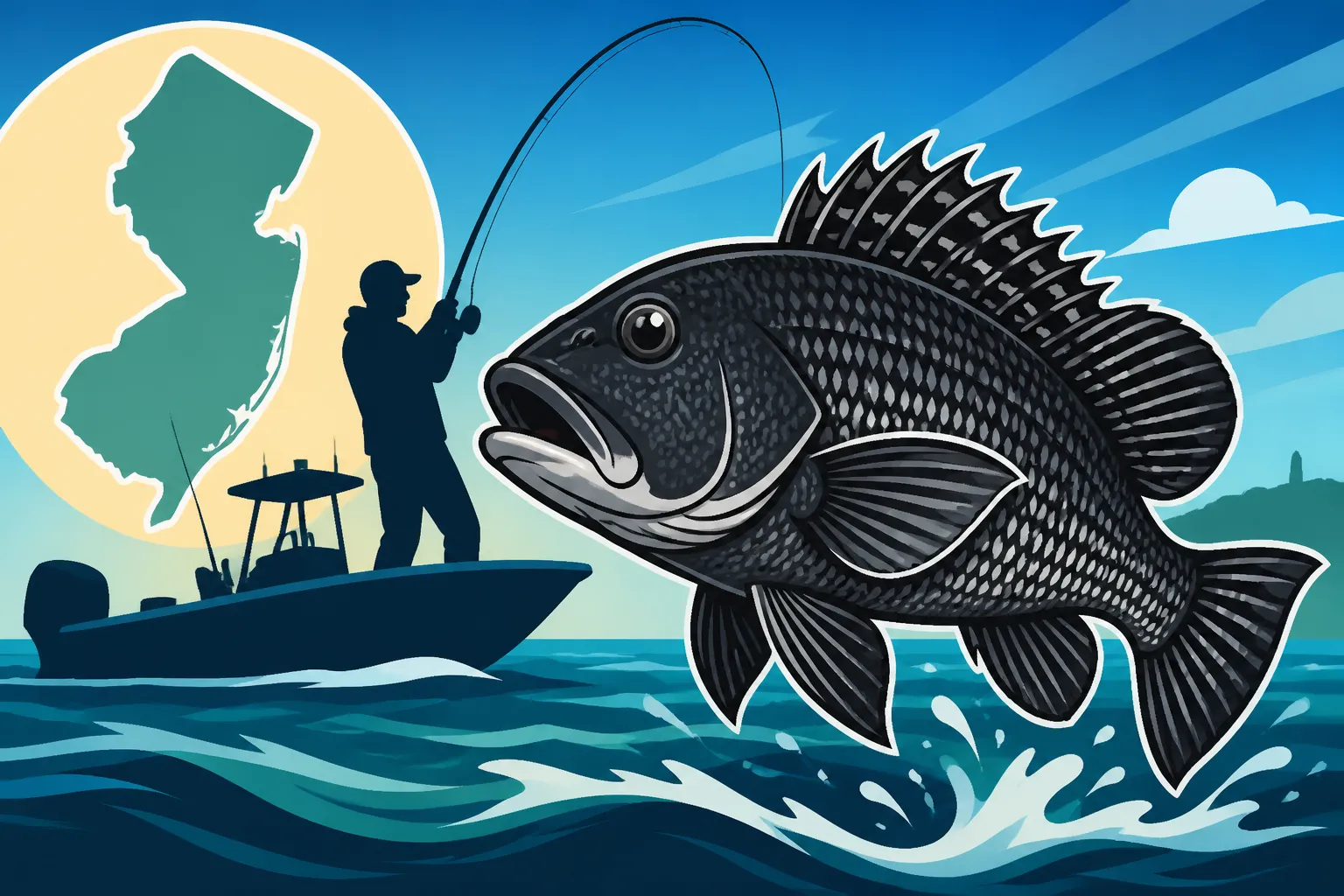
Black sea bass (scientific name: Centropristis striata) are easily recognizable once you know what to look for. They typically have a stout, somewhat compressed body, often dark brown or black in coloration, which can shift to a mottled pattern with lighter patches, especially when they're hiding among rocks or in different moods. One of their most striking features is their large mouth and a spiny dorsal fin that runs almost the entire length of their back. The tips of the dorsal fin rays often have fleshy streamers, a unique characteristic.
Males, particularly during spawning season, develop a noticeable fleshy hump on their head, becoming quite vibrant with blue and iridescent markings. This "nuchal hump" is a dead giveaway for a mature male. Females, while lacking the prominent hump, still display the characteristic dark body and spiny fins. Identifying a legal-sized black sea bass quickly is vital, as regulations are strict, and you don't want to accidentally keep a "short." Familiarize yourself with their appearance, especially how their body shape and fin structure differ from other common bottom fish you might encounter, like scup (porgy) or even small tautog. Incorrect identification can lead to fines, so a quick visual check against official guides is always a good idea if you're unsure.
Habitat and Behavior
Black sea bass are true structure-loving fish. You won't typically find them swimming around in wide-open, sandy expanses. Instead, they gravitate towards any kind of hard-bottom structure that offers shelter, ambush points, and a buffet of their favorite foods. This includes natural rock piles, mussel beds, coral formations (though less common in NJ), and shipwrecks, as well as man-made structures like artificial reefs, bridge pilings, jetties, and even debris on the seafloor. They are masters of their domain, often establishing territories within these structures.
They are demersal, meaning they live and feed on or near the bottom. You'll often find them schooling around these structures, especially the larger, more dominant males. Their behavior is often tied to the currents and tides, which bring food right to their doorstep. Understanding their preference for structure is the cornerstone of successful black sea bass fishing; if you're not over structure, you're likely not where the fish are. They can be incredibly aggressive when feeding, darting out from cover to ambush prey, but also surprisingly subtle in their bite, sometimes feeling like a gentle tap or just added weight.
What Do Black Sea Bass Eat?
Black sea bass are opportunistic feeders with a varied diet, which is great news for anglers because it means they'll hit a wide range of baits and lures. Their primary diet consists of crustaceans and smaller fish, making them efficient predators in their rocky domain. Crabs, shrimp, and other small shellfish are high on their menu, which is why a well-presented green crab or fiddler crab can be so effective.
They also gobble up small baitfish like sand eels, spearing, and juvenile herring. Squid, a universally popular bait in saltwater, is another favorite, offering both scent and visual appeal. Even small clams are fair game, especially when presented on the bottom. The key takeaway here is to "match the hatch" when possible, using baits that mimic what's naturally available in their environment. However, their opportunistic nature also means they'll readily strike artificial lures that imitate these food sources, especially jigs and scented soft plastics. Understanding their diet helps you select the most effective bait, increasing your chances of a successful hook-up.
Prime Locations for Black Sea Bass Fishing in New Jersey
New Jersey's coastline, from the bays and inlets to the offshore waters, is rich with the kind of bottom structure that black sea bass absolutely adore. Knowing where to drop your line is often half the battle, especially for these structure-oriented fish. They aren't just swimming aimlessly; they are concentrated around specific underwater features.
Natural Wrecks and Reefs
The waters off the New Jersey coast are home to countless natural wrecks and reef formations, remnants of maritime history and geological features. These natural structures provide perfect habitat for black sea bass, offering shelter from currents and predators, as well as ample feeding opportunities. Imagine an old wooden schooner, long collapsed and covered in barnacles and mussels, lying on the seabed – that's a black sea bass condominium! These spots often hold larger, more mature fish that have established themselves in these prime territories.
Locating these natural wrecks and reefs requires good navigational charts, a reliable fish finder, and often, a little bit of local knowledge passed down through generations of anglers. Many of these spots are well-known, but countless smaller pieces of structure go unfished or are only known to a select few. Pay attention to changes in bottom contour on your sonar, as even a small rise or patch of rubble can hold a concentration of fish. Fishing these spots effectively often means precise anchoring or drifting to stay directly over the structure, as even a few feet off to the side can mean the difference between a full cooler and a slow pick.
New Jersey's Artificial Reef Program
One of the greatest assets for black sea bass anglers in New Jersey is the state's extensive Artificial Reef Program. Over the years, the New Jersey Department of Environmental Protection (NJDEP) and its partners have deployed thousands of tons of materials onto the seabed, creating thriving underwater ecosystems. These materials range from old subway cars, army tanks, and concrete rubble to tire units and purpose-built reef balls. These artificial reefs, strategically placed, rapidly become encrusted with marine life, attracting baitfish, crabs, and, of course, hordes of black sea bass.
These reef sites are incredibly popular, and for good reason—they hold fish! They are essentially ready-made habitats where fish congregate, making them prime targets. Many of these sites are charted and publicly available, meaning you can plug in the coordinates and head straight there. Fishing artificial reefs can be a social affair, with many boats often clustered around the most productive spots. Just remember to be courteous to other anglers and maintain a safe distance. The consistent stocking and expansion of these reefs continue to enhance black sea bass populations and provide fantastic fishing opportunities for anglers across the state. You can learn more about these fascinating underwater habitats and how they contribute to our fisheries in our New Jersey Artificial Reef Fishing Guide.
Fishing Inlets, Jetties, and Nearshore Structure
You don't always need to venture miles offshore to find black sea bass. Many nearshore areas, inlets, and jetties along the Jersey Shore offer excellent opportunities, especially for those fishing from smaller boats or even from shore. These areas are characterized by strong tidal currents and plenty of rock piles, bridge pilings, and other hard bottom that sea bass love. Think about the jetties at Manasquan Inlet, Barnegat Inlet, or even the rock formations inside some of the larger bays—these are all potential hotspots.
Fishing these areas often means targeting depths from 15 to 40 feet, depending on the specific location and tide. The current funneling through inlets often concentrates baitfish, creating perfect ambush points for sea bass lurking in the rocks below. While you might encounter more "shorts" in these accessible areas, persistent anglers can still find plenty of keeper-sized fish. For shore anglers, walking out onto a jetty and dropping a bait or jig down into the rock piles can be surprisingly productive. Just be mindful of slippery rocks and strong waves. Look for areas where the main current washes over rocky structure, creating eddies and slack water where fish can hold and feed.
Optimal Timing for New Jersey Black Sea Bass
Knowing when to fish for black sea bass is just as important as knowing where. Their presence in New Jersey waters, their feeding activity, and the regulatory seasons are all influenced by factors like migration, tides, and even daily weather patterns. Ignoring these elements can lead to a long, fishless day on the water.
Seasonal Migration Patterns
Black sea bass in New Jersey exhibit distinct seasonal migration patterns that dictate when and where you'll find them. In the colder winter months, they typically move offshore into deeper, warmer waters, becoming largely inaccessible to recreational anglers. As spring approaches and water temperatures begin to rise, they make their journey back inshore. This spring migration often brings them into shallower coastal waters and bays to spawn, usually from late spring into early summer. This is a fantastic time to target them, as they are actively feeding and concentrated.
Throughout the summer, black sea bass remain inshore, holding around the artificial reefs, natural wrecks, and rocky bottoms. They are readily available during this period, offering consistent action. As fall sets in and water temperatures start to drop again, they begin their offshore migration once more, heading towards their deeper wintering grounds. This fall run can also provide excellent fishing, with fish actively feeding to fatten up for the cold months ahead. Regulators closely monitor these migration patterns to set appropriate New Jersey Fishing Season Dates and Closures to ensure the sustainability of the fishery, so always check the current rules.
Tides and Currents
Like many saltwater species, black sea bass are heavily influenced by the tides and currents. Moving water is almost always better than slack tide for these fish. The currents sweep baitfish and crustaceans off the structure, making them easy targets for sea bass lurking in ambush positions. While some anglers swear by the incoming tide and others by the outgoing, the key is usually just a good, steady flow of water.
During periods of strong current, black sea bass will often tuck into the lee side of structure, using less energy while waiting for food to be delivered. This is where precise boat positioning becomes crucial. Fishing during slack tide can sometimes be productive, especially if you're in a heavily concentrated area, but the bite often slows significantly. Learning to How to Read Tide Charts for Better Fishing in New Jersey is an invaluable skill, allowing you to plan your trips around the most productive windows. Ideally, you want to time your fishing trip to coincide with the beginning or end of a strong tidal movement, as these transition periods often trigger the most aggressive feeding.
Best Time of Day and Weather Considerations
Beyond seasons and tides, the time of day and prevailing weather conditions also play a role in black sea bass activity. Generally, early mornings and late afternoons, when the sun is lower, tend to be the most productive times. The changing light often coincides with increased bait activity, which in turn stimulates predators like sea bass. However, on deep-water wrecks and reefs, the exact time of day might be less critical than the current.
Overcast days can sometimes offer better fishing than bright, sunny days, as the diffused light might make fish less wary. However, safety should always be your top priority. While a little chop can be good for stirring up the bottom and disorienting bait, rough seas can make it dangerous and uncomfortable to fish, especially on smaller boats. Always check the marine forecast before heading out, and never push the limits of your vessel or your comfort level. A calm, outgoing or incoming tide in the morning hours after a few days of stable weather often provides ideal conditions for a successful black sea bass trip.
Essential Gear and Bait for Black Sea Bass
Getting the right gear for black sea bass isn't about having the fanciest setup, but rather having tackle that's appropriate for the species, the depth, and the conditions you'll be fishing in. These are not dainty fish, and they live in rugged environments, so your equipment needs to be up to the task of pulling them away from snags and fighting the current.
Rod, Reel, and Line Setup
For black sea bass, you'll want a setup that offers a good balance of power and sensitivity. A medium-heavy to heavy action spinning or conventional rod, typically 6 to 7 feet long with a fast tip, is ideal. The fast tip allows you to feel those subtle bites, while the robust backbone provides the leverage needed to pull a strong fish away from structure. A sensitive graphite rod can make a huge difference in detecting the sometimes-light taps of a sea bass.
Pair your rod with a reliable reel. For spinning setups, a 3000 to 5000 series reel with a smooth, strong drag system is perfect. If you prefer conventional gear, a reel in the 15-20 lb class will do the trick. The drag is crucial because black sea bass will fight hard and try to dive back into the rocks. Spool your reel with 20 to 30-pound braided line. Braid offers superior sensitivity (you'll feel every bump and bite!), has very little stretch for solid hooksets, and its thinner diameter allows you to use lighter sinkers. Always tie on a 3 to 6-foot leader of 30 to 50-pound fluorocarbon. Fluorocarbon is nearly invisible underwater, more abrasion-resistant against rocky structure, and provides a little shock absorption. You can find a wide range of suitable rods, reels, and lines on Amazon to fit any budget. For more general advice, check out our guide on New Jersey Fishing Gear for Beginners.
Terminal Tackle and Rigs
Your terminal tackle is where the magic happens, or where the frustration begins if you're constantly losing gear to snags. The most common and effective rig for black sea bass is a simple high-low rig, also known as a top-and-bottom rig or a dropper loop rig. This consists of a main leader with two dropper loops spaced about 12-18 inches apart, where you'll attach your hooks, and a heavier loop at the bottom for your sinker. This rig allows you to present two baits at different levels in the water column.
For hooks, sizes 1/0 to 3/0 are typically appropriate. Octopus hooks or Kahle hooks are popular choices because their shape often results in good hook-ups in the corner of the fish's mouth. When it comes to sinkers, you'll need a variety of weights, from 3 to 8 ounces, depending on the depth and current. Pyramid, bank, or cannonball sinkers are all commonly used. Pyramid sinkers tend to hold the bottom well in currents, while bank sinkers are less prone to snagging in rocky terrain. Always have a good supply of extra rigs and sinkers on hand because fishing structure means you will get snagged and lose tackle.
Top Baits and Lure Choices
Black sea bass are not overly picky eaters, but some baits definitely outperform others. Fresh bait is always king!
For natural bait, here are the top choices:
- Clam: Without a doubt, clam is one of the most consistently effective baits for black sea bass. The scent trail it puts out drives them wild. Use a whole clam, or cut it into strips, making sure to thread it onto the hook so it stays on.
- Squid: Strips of fresh or frozen squid are incredibly durable, stay on the hook well, and are universally appealing to bottom fish. They also add a visual component that can entice a bite.
- Crabs: Small green crabs, fiddler crabs, or pieces of larger crabs are fantastic, especially for bigger sea bass. Green crabs can be cut in half or quarters, depending on their size.
- Cut Bunker/Mackerel: While not as common, strips of oily fish like bunker or mackerel can also attract aggressive bites, especially if there's a strong scent trail.
Artificial lures are also highly effective, particularly when jigging:
- Bucktail Jigs: These are a classic for a reason. Bucktails in white, chartreuse, or pink, often tipped with a Gulp! Swimming Mullet or a strip of squid, are deadly. Weights from 1 to 4 ounces are common.
- Soft Plastics: Scented soft plastics, especially the Amazon Gulp! brand, are game-changers. The Gulp! Swimming Mullet, Shrimp, or Grub in white, chartreuse, or pink can be fished on a jig head or a dropper loop rig and are incredibly effective.
- Metal Jigs: Diamond jigs or other slender metal jigs can also work, especially when fish are aggressively feeding on baitfish.
Experiment with different baits and lures until you find what the fish are keying in on that day. For more insights on popular baits that often crossover to sea bass, check out our guide on Best Bait for Fluke Fishing.
Mastering Black Sea Bass Fishing Techniques
Catching black sea bass isn't just about dropping a line and hoping for the best. It requires an understanding of presentation, boat control, and how to effectively work the structure where these fish reside. Employing the right techniques will significantly increase your hook-up ratio.
Effective Jigging Methods
Jigging is an incredibly active and rewarding way to target black sea bass, allowing you to cover ground and often entice more aggressive strikes, sometimes from larger fish. The most common method is vertical jigging, where you drop a bucktail jig or a weighted soft plastic lure directly down to the bottom and work it with a series of lifts and drops.
The key is to keep your lure in the "strike zone," which is usually within a few feet of the bottom, right over the structure. Drop your jig to the bottom, then lift your rod tip sharply about 1 to 3 feet, letting the jig fall back down on a semi-slack line. The bite often occurs as the jig is falling. Experiment with the cadence – sometimes a slow, deliberate lift and drop works, while other times a quick, erratic snap and fall is more effective. Tipping your bucktail jig with a strip of squid or a piece of Gulp! can add extra scent and appeal, making it irresistible to hungry sea bass. Pay close attention to your line; even a slight pause or twitch might indicate a bite, especially if the fish are being subtle.
Bait Fishing Strategies
While jigging is exciting, bait fishing remains a highly productive method for black sea bass, especially when the bite is slow or fish are less aggressive. The high-low rig, as discussed earlier, is your bread and butter here. The goal is to present your fresh bait directly on or very near the bottom, where the sea bass are waiting.
When bait fishing, it's essential to keep your sinker in contact with the bottom. This might mean adjusting your sinker weight as currents change. If you're anchoring, cast your rig out a short distance from the boat and let it settle, then slowly reel in any slack. If you're drifting, simply drop your rig straight down and let the boat's movement carry your bait over the structure. Be patient, as sea bass bites can range from a gentle "tap-tap" to a solid thud. Don't set the hook too hard on the first tap; let the fish commit to the bait, then lean into it with a firm, sweeping motion to set the hook. Remember to regularly check your bait; sea bass are notorious bait stealers, and an empty hook catches nothing.
Finding and Staying on the Structure
This is perhaps the most critical aspect of black sea bass fishing: you must be on the structure. A few feet off a wreck or reef can mean the difference between constant action and dead water. This is where modern electronics, particularly a good fish finder and GPS, become invaluable.
When approaching a known spot, use your fish finder to locate the structure and ideally, the fish themselves. Look for arches or blobs on the screen that indicate fish holding near the bottom. Once you've found a promising area, you have two primary options for boat control: anchoring or drifting.
- Anchoring: If fish are concentrated in a very small area, anchoring precisely is key. You'll need to calculate for wind and current to "set" your anchor so your boat settles directly over the target. An anchor ball system can make retrieving your anchor from rocky bottoms much easier.
- Drifting: Often, drifting is more effective, allowing you to cover a wider area of structure, especially on larger reefs or expansive rock piles. Pay attention to how the wind and current are moving your boat, and make adjustments using your engine to stay on track. If you get a bite or catch a fish while drifting, mark the spot on your GPS immediately so you can make another pass over the productive zone. This constant vigilance and adjustment are what separate consistent black sea bass anglers from those who struggle.
Navigating New Jersey Black Sea Bass Regulations
Fishing regulations for black sea bass in New Jersey can be complex and change frequently, often requiring anglers to stay very much up-to-date. These rules are put in place to manage the fishery and ensure sustainable populations for future generations. Ignoring them isn't just irresponsible; it can lead to hefty fines and penalties.
Understanding Size and Bag Limits
The most crucial aspects of black sea bass regulations are the size and bag limits. The size limit dictates the minimum length a fish must be to be legally kept, while the bag limit specifies the maximum number of fish an individual angler can keep in a single day. These limits are not arbitrary; they are determined by state and federal fisheries managers based on scientific stock assessments, aiming to protect spawning fish and ensure enough fish grow to maturity.
It's vital to remember that black sea bass regulations are often set by federal authorities (the Mid-Atlantic Fishery Management Council) and then implemented by states, so they can be subject to change mid-season. Always check the very latest regulations before heading out. Having a measuring device on your boat or person is essential to ensure you are compliant. Throwing back an undersized fish ("short") might be common, but getting caught with one in your cooler is a serious offense. For a general overview of how these limits function, consult our guides on New Jersey Daily Bag Limits by Species and How Bag and Size Limits Work in New Jersey.
Open Seasons and Closures
Black sea bass fishing in New Jersey is typically structured around specific open seasons with set start and end dates. These seasons often have different segments throughout the year (e.g., a spring season, a summer season, and a fall season), each with its own specific size and bag limits. There might also be periods when the season is completely closed to recreational harvest. These closures are critical for conservation, often timed to protect spawning aggregations or allow fish stocks to recover.
These seasonal windows are designed to balance fishing opportunities with the health of the fish population. For instance, the spring season often coincides with inshore spawning migrations. Missing a season's opening day due to not checking the dates can be a real bummer, so make sure you're always informed. The official source for all current regulations is the New Jersey Department of Environmental Protection (NJDEP) Division of Fish and Wildlife. You can find their annual digest, which contains all the current rules, both online and at bait and tackle shops. Familiarize yourself with Reading the New Jersey Fish and Wildlife Digest to stay compliant.
Licensing and Registry Requirements
When it comes to saltwater fishing for species like black sea bass in New Jersey, you generally do not need to purchase a specific recreational saltwater fishing license in the same way you might for freshwater. However, what you do need is to register for the New Jersey Saltwater Registry Program. This program is free, quick, and mandatory for most recreational saltwater anglers over the age of 16.
The registry collects vital data on recreational fishing effort, which is used by fisheries managers to estimate total harvest and inform management decisions. It replaced a federal registry system, making it more tailored to New Jersey's needs. If you're fishing from a licensed charter or party boat, you are generally covered by the vessel's registration, but it's always a good idea to confirm with the captain. For any personal recreational saltwater fishing activity, though, assume you need to be registered. You can learn more about this essential requirement in our detailed guide, New Jersey Saltwater Registry Explained, and find out How to Register for New Jersey's Saltwater Registry Program with ease.
Sustainable Practices and Responsible Angling
As anglers, we have a responsibility to not only enjoy the resource but also to protect it for future generations. Black sea bass populations have seen their ups and downs, making sustainable practices and responsible angling more important than ever. It's about more than just following the rules; it's about being a good steward of the environment.
Best Practices for Catch and Release
Even if you're keeping a limit of legal-sized fish, you'll inevitably catch many undersized black sea bass or "shorts." How you handle these fish drastically impacts their survival rate. The goal with catch and release is to minimize stress and physical harm to the fish so it can swim away healthy and continue to grow.
Here are some key practices:
- Minimize Handling: Touch the fish as little as possible. If you must handle it, use wet hands to avoid removing its protective slime coat.
- Quick Release: Have your de-hooking tool ready. Get the hook out as quickly and gently as possible while the fish is still in the water, if possible. Avoid bringing it onto hot, dry surfaces.
- Avoid Excessive Air Exposure: Fish cannot breathe air. Even a short time out of water can be detrimental. Get a photo quickly if you must, but prioritize its return to the water.
- Proper Holding: If you need to hold the fish for de-hooking, support its body horizontally. Never hold it vertically by the jaw or gills, as this can damage its internal organs.
- Revival: If a fish seems sluggish upon release, gently hold it upright in the water, facing into the current, until it regains its strength and swims away on its own.
These simple steps can make a huge difference in the survival of released fish. For a deeper dive into these concepts, check out our article on Catch and Release Rules in New Jersey.
Avoiding Barotrauma for Deep-Caught Fish
One of the significant challenges when releasing black sea bass caught in deeper water (typically 40 feet or more) is barotrauma. This occurs when fish are brought up rapidly from high-pressure depths to lower-pressure surface waters, causing their swim bladder to expand. Symptoms include bulging eyes, a distended stomach, and the inability to swim back down. These fish are unlikely to survive if simply released.
To combat barotrauma, anglers have two primary tools:
- Venting Tools: These are hollow needles used to carefully puncture the swim bladder through the fish's side, releasing the trapped gas. This must be done correctly to avoid damaging organs.
- Descending Devices: These are weighted clips that attach to the fish's jaw and are used to quickly lower the fish back to the depth from which it was caught. Once at depth, the device releases the fish, allowing it to decompress naturally.
While more gear to carry, these tools are invaluable for increasing the survival rate of deep-caught fish, demonstrating a true commitment to conservation. Knowing when and how to use them is a mark of a responsible angler.
Respecting the Environment and Other Anglers
Beyond direct fish handling, responsible angling also extends to your overall conduct on and off the water. The principle of "leave no trace" is paramount. This means taking all your trash with you, including discarded fishing line, bait containers, and food wrappers. Fishing line, in particular, can be incredibly damaging to wildlife if left in the environment.
Respecting other anglers is also key. When at a boat ramp, launch and retrieve your boat efficiently to avoid holding up others. On the water, give other boats ample space, especially if they appear to be anchored or working a specific spot. Don't crowd them or run directly over their fishing lines. Share the resource responsibly. By adhering to these ethical guidelines, we not only ensure pleasant experiences for everyone but also contribute to a healthier, more respected fishing community and environment in New Jersey.
Common Challenges and Troubleshooting
Even with the best gear, prime locations, and perfect timing, fishing for black sea bass (or any species!) isn't always smooth sailing. Challenges are a part of the game, but understanding how to troubleshoot and adapt can turn a frustrating day into a successful one.
Dealing with Snags and Lost Tackle
If you're fishing for black sea bass, you're fishing structure, and if you're fishing structure, you're going to get snagged. It's an inevitable reality that can be incredibly frustrating and expensive. The sound of your line snapping as your favorite bucktail disappears into the abyss is a sound every bottom fisherman knows too well.
To minimize snags:
- Use appropriate sinker weight: Use just enough weight to hold bottom, but not so much that it buries itself in the rocks. Lighter sinkers tend to lift more easily over obstructions.
- Maintain feel for the bottom: Don't let too much slack line out. Keep a slight bend in your rod tip so you can feel when your sinker touches down and lift it slightly to "walk" it over obstacles.
- Consider a float: Sometimes, using a small float on your dropper rig, positioned just above the bottom hook, can lift your bait slightly off the really gnarly stuff.
- Bring plenty of spares: This is non-negotiable. Always have extra rigs, hooks, and sinkers. You can often buy terminal tackle in bulk on Amazon, which helps mitigate the cost of frequent losses. Don't let a few snags end your fishing trip prematurely.
The "Short Fish" Problem
One of the most common frustrations when black sea bass fishing, especially in more accessible areas or during certain times of the year, is catching an endless stream of undersized fish. You're getting bites, you're reeling them in, but almost every one is a "short," meaning it's below the legal minimum size limit. This can be deflating, even if the action is constant.
To increase your chances of catching keepers:
- Go bigger with bait/lures: Sometimes, using a slightly larger piece of bait or a bigger jig can help weed out the smaller fish, as only larger sea bass can comfortably engulf it.
- Target deeper, more remote structure: Generally, the larger, older fish tend to dominate the deeper, more complex, and often less-fished structures. If you're consistently catching shorts inshore, venturing further out to offshore wrecks and reefs might yield bigger fish.
- Change your location: If a spot is producing nothing but shorts, don't be afraid to move. Even a quarter-mile away to a different piece of structure can sometimes make a difference.
- Patience: Sometimes, you just have to work through the shorts to find the keepers. They often school together, but larger fish can also be present.
Weathering Bad Weather and Poor Bites
Not every day on the water is going to be perfect, and not every trip will be a banner day. Sometimes, the weather turns unexpectedly, or the fish just aren't biting, no matter what you try. It's crucial to know when to adapt and when to call it a day.
- Safety First: If the wind picks up, the seas get rough, or a storm rolls in, prioritize safety. No fish is worth risking your life or the lives of your crew. Always check marine forecasts and be prepared to head in if conditions deteriorate.
- Adapt Your Approach: If the bite is slow, don't keep doing the same thing. Change your bait, switch from bait to jigs, try different colors, or move to a new spot. Sometimes, a subtle change can trigger a bite.
- Manage Expectations: Understand that fishing is called fishing, not catching, for a reason. There will be tough days. Embrace the experience of being on the water, the beauty of the New Jersey coast, and the camaraderie of fishing with friends. The anticipation and the challenge are part of the fun.
- Learn from Experience: Every trip, good or bad, offers a learning opportunity. Pay attention to what worked and what didn't, the conditions, and the locations. This knowledge builds up over time, making you a more skilled and successful angler in the long run. Even on a slow day, you're gathering valuable intel for your next black sea bass adventure.
Disclaimer
This article is for general informational purposes only and does not constitute professional advice. Laws, prices and regulations vary by location and change over time. Consult a qualified professional for guidance on your specific situation.