New Jersey Yellow Perch Fishing Guide
One of the most common frustrations for anglers, especially those looking to introduce new folks to the sport or just enjoy a relaxing day on the water, is finding a fish species that's both abundant, eager to bite, and doesn't require a boatload of specialized gear. If you've ever felt that pull towards accessible, engaging freshwater fishing, then you're in for a treat with yellow perch. This comprehensive guide will walk you through everything you need to know about targeting these striped beauties right here in New Jersey, making your next outing a memorable one.
Understanding New Jersey Yellow Perch
Yellow perch are a true staple of freshwater fishing in New Jersey, offering a fantastic opportunity for anglers of all skill levels. They're often overlooked by those chasing flashier gamefish, but ask any seasoned freshwater enthusiast, and they'll tell you that a stringer of yellow perch is a prize worth bragging about, especially when it comes to the dinner table.
What Makes Yellow Perch So Special for Anglers?
What really sets yellow perch apart for anglers is their sheer availability and predictable behavior. These fish thrive in many of New Jersey's lakes, ponds, and slow-moving rivers, often congregating in large schools. This schooling instinct means that once you find one yellow perch, you're very likely to find a whole lot more, leading to some incredibly fast-paced and exciting fishing action. It's not uncommon to pull up fish after fish from the same spot, making them an ideal target for families, beginners, or anyone who simply loves the thrill of constant bites.
Beyond the action, yellow perch are widely considered to be some of the best-tasting freshwater fish out there. Their firm, flaky white meat has a delicate, sweet flavor that's perfect for frying, baking, or grilling. Many anglers specifically target perch not just for sport, but for a delicious meal, which adds another layer of satisfaction to the catch. This combination of easy access, consistent action, and culinary appeal makes them a truly special fish in the Garden State's waters.
Identifying Yellow Perch
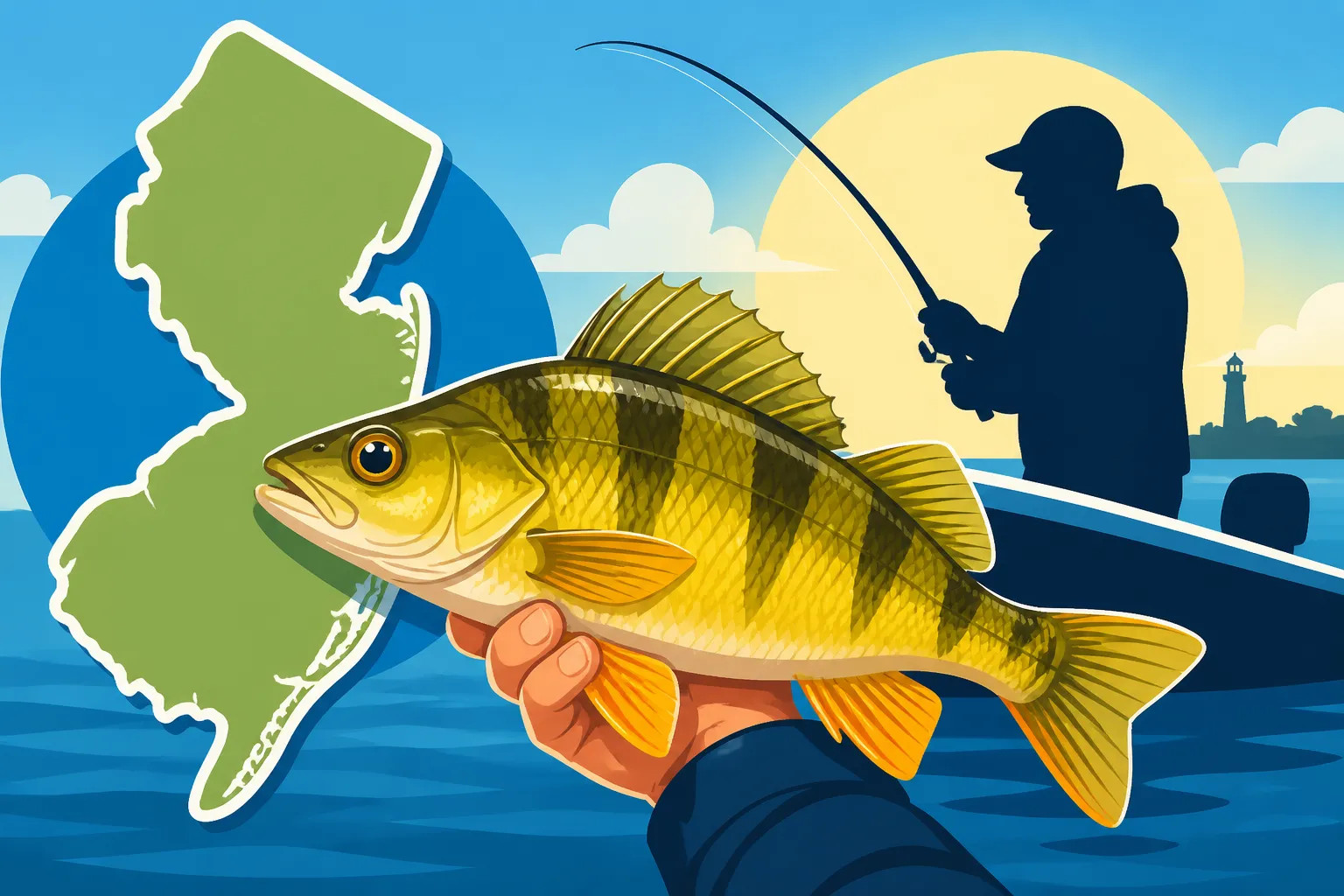
Identifying a yellow perch is usually pretty straightforward, thanks to their distinctive markings. They typically have a golden-yellow to brassy-green body, marked with six to eight prominent dark, vertical bars that extend from their back down their sides. These bars are a key identifier, making them stand out from other panfish. Their fins, particularly the pectoral and pelvic fins, often have a bright orange or reddish hue, adding to their vibrant appearance.
Their body shape is somewhat elongated but also robust, with two distinct dorsal fins – the first spiny and the second soft-rayed. While they don't grow to massive sizes, a typical New Jersey yellow perch might range from 6 to 12 inches, with larger "jumbo" perch sometimes reaching 14-15 inches. It's important to be able to tell them apart from other species you might encounter, like the similar-looking, though less vibrantly colored, white perch, which lacks the distinct vertical bars and has a more silvery appearance.
Yellow Perch Habitat Preferences in New Jersey
Yellow perch are incredibly adaptable, which is why you can find them in such a wide variety of New Jersey's freshwater environments. They prefer cool to moderately warm waters, making them perfectly suited for many of our state's lakes, ponds, reservoirs, and slower stretches of rivers and streams. They absolutely love structure and cover. Think about areas with submerged logs, rock piles, weed beds, docks, bridge pilings, or even subtle changes in bottom contour. These features provide ambush points for feeding and protection from larger predators.
During different seasons, their depth preferences will shift. In spring and fall, you'll often find them in shallower waters, especially near weed lines or drop-offs. As summer progresses and water temperatures rise, they tend to move to deeper, cooler sections of lakes and ponds, often suspending over thermoclines or congregating around deep structure. Understanding these habitat preferences is key to consistently finding and catching yellow perch throughout the year.
Prime Yellow Perch Fishing Seasons in New Jersey
One of the great things about yellow perch is that they offer excellent fishing opportunities almost year-round in New Jersey. Each season presents unique challenges and rewards, and understanding their seasonal movements and feeding patterns will significantly boost your success rate.
Spring: Post-Spawn Feasting
Spring is a fantastic time to target yellow perch in New Jersey. After the ice melts and water temperatures begin to rise, perch move into shallower waters to spawn, usually when temperatures hit the mid-40s to low-50s Fahrenheit. Once spawning is complete, typically by mid-spring, these fish are hungry and incredibly aggressive as they look to replenish their energy reserves.
You'll find them congregating in shallow bays, coves, and along shorelines where sunlight penetrates and warms the water quickly. Look for them around emerging weed beds, submerged brush, and any structure that offers cover and warmth. Small minnows, worms, and tiny jigs are deadly effective during this period. It's a prime time for shore anglers, as the fish are often within casting distance, offering some of the best and most accessible action of the year. This is also a wonderful time to take kids out, as the frequent bites keep them engaged. Best New Jersey State Park Ponds for Family Fishing are often stocked and ideal during these periods.
Summer: Deep Water and Early Mornings
As New Jersey's summer heat sets in and water temperatures climb, yellow perch will generally move out of the very shallow water and into deeper, cooler sections of lakes and ponds. Don't worry, they're still catchable, but your tactics will need to adapt. Look for them in areas where there's a thermocline – that invisible layer of water where the temperature changes rapidly – or around deep underwater humps, points, and ledges. They'll often suspend at certain depths, so a fish finder can be invaluable here.
The best times to fish for perch in summer are typically early mornings, late evenings, or even overcast days when the light is less intense. During these periods, they might venture a bit shallower to feed. Small jigs, grubs, or live bait like fathead minnows or red worms fished slowly near the bottom or at the depth where you're marking fish are highly effective. Patience and precision in presenting your bait at the correct depth are key to summer success.
Fall: Pre-Winter Binge
Fall fishing for yellow perch in New Jersey can be absolutely phenomenal. As water temperatures begin to drop in late September and October, perch start an aggressive pre-winter feeding binge. They're trying to pack on as much fat as possible to survive the colder months, and this makes them incredibly active and willing to bite. You'll often find them schooling up even tighter than usual, moving around actively to chase baitfish.
They'll often return to shallower to mid-depth areas that still hold good cover and forage, though they might be a bit deeper than their spring haunts. Look for schools over gravel flats, along drop-offs, and near any remaining green weed beds. This is an excellent time for vertical jigging with small spoons or blade baits, as well as using live minnows under a float. The fall bite can be some of the most consistent and productive fishing for larger "jumbo" perch.
Winter: Ice Fishing Opportunities
When the lakes and ponds of northern New Jersey freeze over, yellow perch become one of the most popular targets for ice anglers. Their schooling behavior makes them perfectly suited for ice fishing; once you locate a school through an ice hole, you can often catch dozens of fish without moving. Ice fishing for perch is a truly unique and enjoyable experience, offering a quiet solitude punctuated by bursts of intense action.
They'll often be found in relatively deep water during winter, but will still relate to structure like humps, points, and deep weed lines. Small jigging spoons tipped with a piece of grub, a maggot, or a small minnow are incredibly effective. Ultra-light ice fishing rods and sensitive bobbers or spring indicators are essential to detect their often subtle bites. Always prioritize safety when ice fishing, ensuring the ice is thick enough, and being aware of changing conditions. You can read more about New Jersey Fishing Season Dates and Closures to ensure you're fishing legally.
Essential Gear and Techniques for New Jersey Yellow Perch
You don't need a massive investment in gear to get started with yellow perch fishing in New Jersey, which is another reason they're such a popular target. However, having the right setup and understanding a few key techniques can make a huge difference in your success and enjoyment.
Rods, Reels, and Line
For yellow perch, the name of the game is light tackle. These fish aren't usually big fighters, but a sensitive rod will allow you to feel their often subtle bites and truly enjoy the experience.
- Rods: An ultra-light or light action spinning rod, typically 5 to 6.5 feet long, is perfect. The light tip will transmit even the smallest nibbles, and the flexible blank will handle the fight of a feisty perch. You can find excellent, affordable options for this type of rod on platforms like Amazon.
- Reels: Pair your rod with a small spinning reel (e.g., a 1000 or 2000 size). It should be lightweight and have a smooth drag system.
- Line: Stick with light monofilament or fluorocarbon line, usually in the 2 to 6-pound test range. Lighter line is less visible to the fish and allows for a more natural presentation of small baits and lures. Some anglers prefer braided line for its sensitivity, but a fluorocarbon leader is almost always recommended if you go that route.
Best Baits and Lures
Yellow perch are not particularly picky eaters, which is great news for anglers. You have a wide array of choices when it comes to bait and lures, depending on the season and your preference.
- Live Bait: This is often the most effective choice.
- Minnows: Small shiner or fathead minnows (1-2 inches) are irresistible to perch, especially larger ones. Hook them lightly through the lip or just behind the dorsal fin.
- Worms: Red worms, earthworms, or small pieces of nightcrawler are classic perch baits. They're easy to get and always effective.
- Maggots/Grubs: Especially deadly for ice fishing or when perch are finicky.
- Artificial Lures:
- Small Jigs: Tiny soft plastic jigs (1/32 to 1/8 ounce) in white, chartreuse, or motor oil colors are fantastic. Tip them with a small piece of worm or a maggot for added appeal. Jigging spoons like Kastmasters or Swedish Pimples are also excellent, particularly for ice fishing.
- Spinners: Small inline spinners (e.g., size 0 or 1 Mepps or Rooster Tail) can be very effective when retrieved slowly near structure. Their flash and vibration attract curious perch.
- Blade Baits: For deeper water or ice fishing, small blade baits can call in fish from a distance.
Rigging Strategies for Yellow Perch
The way you present your bait is almost as important as the bait itself. Here are a few reliable rigging strategies:
- Bobber Rig: This is perhaps the simplest and most common setup, especially for beginners or those fishing from shore or a dock. Attach a small bobber (slip bobbers work best for deeper water), a small sinker (split shot is ideal) about 6-12 inches above your hook, and a small hook (size 6-10) baited with a worm or minnow. The bobber keeps your bait suspended at a desired depth and visually signals a bite.
- Bottom Rig/Drop Shot: When perch are holding tight to the bottom in deeper water, a simple bottom rig can be effective. Use a small bell sinker at the very end of your line, and then tie one or two dropper loops (or snell hooks directly to the main line) a foot or so above the sinker. This keeps your bait near the bottom where the fish are. For a more modern approach, a drop shot rig can be incredibly sensitive and effective, suspending your bait just off the bottom.
- Jigging: Whether from a boat or through the ice, vertical jigging is a productive technique. Tie a small jig, spoon, or blade bait directly to your main line (or a fluorocarbon leader). Drop it to the desired depth and impart subtle rod tip movements to make the lure dance. Small twitches, pauses, and lifts are often all it takes to entice a strike.
Finding Yellow Perch in Various Waters
Finding yellow perch consistently is about understanding their behavior and adapting to the conditions of the water you're fishing.
- Reading the Water: Look for signs of life. Are there baitfish flickering on the surface? Do you see any disturbances in the water? If fishing from shore, pay attention to visible structure like fallen trees, docks, or rocky outcroppings.
- Structure is Key: As mentioned, perch are drawn to structure. In lakes, think about drop-offs, points, submerged humps, weed lines, and brush piles. In rivers, look for slower eddies, deeper pools, and areas with submerged timber or rock gardens.
- Depth Finders: If you have access to a boat with a fish finder, it's a game-changer. Yellow perch often show up as dense schools. When you mark fish, note the depth and try to present your bait at that level. This is particularly useful in summer when they're in deeper water.
- Trial and Error: Don't be afraid to move around. If a spot isn't producing after 15-20 minutes, try another. Experiment with different depths and presentations until you find what the fish are responding to. Remember that yellow perch are schooling fish, so once you find one, others are usually close by!
Top New Jersey Spots for Yellow Perch Fishing
New Jersey is blessed with an abundance of freshwater bodies, many of which hold thriving populations of yellow perch. From the pristine lakes of the Highlands to the quieter ponds of South Jersey, there's likely a great perch spot near you. Remember, specific conditions and fish populations can change, so always check local reports and the New Jersey Fish and Wildlife Digest: Where to Find the Current Rules for the most current information.
Northern New Jersey Lakes
The northern part of the state, with its glacial lakes and reservoirs, offers some fantastic yellow perch fishing opportunities. These waters often have good depth and plenty of structure that perch love.
- Lake Hopatcong: New Jersey's largest freshwater lake is a prime spot for perch. You'll find them in the deeper sections, especially around submerged humps and rock piles. Early spring and late fall can be excellent in shallower bays. For more details on the lake, check out Fishing Lake Hopatcong: New Jersey's Largest Lake.
- Lake Wawayanda: Located in Wawayanda State Park, this lake is known for its clear waters and good panfish populations, including healthy perch. Look for them along the edges of the numerous weed beds.
- Greenwood Lake: Straddling the New York border, Greenwood Lake offers extensive perch fishing. Focus on areas with submerged timber and gradual drop-offs.
- Spruce Run Reservoir: This large reservoir in Hunterdon County offers good populations, especially around its many points and submerged structure.
Central and Southern New Jersey Ponds and Rivers
Moving south, while the lakes might not be as deep, there are still countless ponds, smaller lakes, and slow-moving rivers that hold excellent numbers of yellow perch.
- Manasquan Reservoir: A popular spot in Monmouth County, this reservoir is well-managed and offers consistent perch fishing. Target them along the submerged creek channels and around the standing timber.
- Mercer Lake (Mercer County Park): This lake is known for its accessible fishing and healthy panfish populations. Perch are often found around the docks and deeper weed lines.
- Farrington Lake: Another excellent Middlesex County option, Farrington Lake has good numbers of perch, often relating to the abundant lily pad fields and deeper water channels.
- Delaware River (Slower Sections): While often thought of for smallmouth bass, the slower, wider sections of the non-tidal Delaware River can hold good populations of yellow perch, especially in backwaters and calmer eddies.
- Assunpink Lake: Part of the Assunpink Wildlife Management Area, this lake in Monmouth County is a great spot for various panfish, including perch, especially near submerged cover.
Public Access and Family-Friendly Locations
For many, the appeal of yellow perch fishing lies in its accessibility and suitability for a family outing. New Jersey has many public parks and wildlife management areas that provide excellent bank access and stocked waters.
Many of the state and county park lakes and ponds mentioned above offer ample shore access, fishing piers, and amenities that make them ideal for a day out with the family. These locations are often regularly stocked and managed to ensure good fishing opportunities. Places like the various State Park Ponds mentioned in Best New Jersey State Park Ponds for Family Fishing are perfect examples. Look for designated fishing areas, and don't hesitate to contact the park offices for specific advice on where perch are biting. The key is to find waters that aren't overly pressured and offer a variety of habitat features that perch prefer.
| Best Seasons for Yellow Perch in New Jersey | Depth Preference | Key Locations | Recommended Baits/Lures |
|---|---|---|---|
| Spring (Post-Spawn) | Shallow bays, coves, shorelines (2-10 feet) | Weed lines, submerged brush, docks | Small minnows, red worms, tiny jigs (1/32 oz) |
| Summer (Warm Water) | Deeper sections, thermoclines (10-30+ feet) | Underwater humps, points, ledges, deep structure | Minnows, grubs, small jigs/spoons (1/16-1/8 oz) |
| Fall (Pre-Winter Binge) | Mid-depths, moving shallower to feed (5-20 feet) | Gravel flats, drop-offs, remaining weed beds | Minnows, worms, jigging spoons, blade baits |
| Winter (Ice Fishing) | Deeper water near structure (15-40+ feet) | Humps, points, deep weed lines | Jigging spoons, maggots, wax worms, small minnows |
Regulations and Conservation for Yellow Perch in New Jersey
Fishing responsibly and understanding the rules isn't just about avoiding penalties; it's about protecting the resource for everyone, now and in the future. Yellow perch populations in New Jersey are generally healthy, but good stewardship ensures they stay that way.
Understanding Bag and Size Limits
Like most gamefish in New Jersey, yellow perch are subject to specific regulations designed to manage their populations. These regulations can include daily bag limits (the maximum number of fish you can keep in a single day) and sometimes size limits (a minimum length a fish must be to be kept). For yellow perch, these limits are generally quite generous, reflecting their abundance.
It's absolutely crucial to consult the most current New Jersey Fish and Wildlife Digest before you head out. Regulations can change annually based on biological assessments and management goals. You can usually find the digest online on the state's official Fish and Wildlife website, or pick up a physical copy at most bait and tackle shops. Be aware of the rules outlined in How Bag and Size Limits Work in New Jersey to ensure you're compliant. Ignorance of the law is never an excuse, and conservation police officers do check.
Fishing Licenses and Registry
If you're planning to fish for yellow perch in New Jersey's freshwater lakes, ponds, or rivers, you will almost certainly need a valid New Jersey freshwater fishing license. This applies to both residents and non-residents, with specific age exemptions for very young children and often for very senior anglers.
- Freshwater License: Make sure your license is current and that you carry proof of it with you while fishing, whether it's a physical copy or a digital one on your phone. You can purchase these online, at designated license agents, or even at some larger sporting goods stores. Our comprehensive guide New Jersey Fishing License Guide for 2026 can answer many of your questions about purchasing and requirements.
- Saltwater Registry: While yellow perch are a freshwater species, if you happen to venture into tidal rivers or estuaries that might connect to saltwater, or decide to fish for other species in the same trip, it's good to be aware of the New Jersey Saltwater Recreational Registry Program. This is a separate registration that's free but required for most saltwater anglers. You can learn more about this in New Jersey Saltwater Registry Explained.
- Kids and Seniors: It's important to know the rules for all anglers in your group. For example, Do Kids Need a Fishing License in New Jersey? can help clarify requirements for younger enthusiasts, and there are often specific exemptions or reduced fees for seniors. New Jersey Youth Fishing Programs and License Waivers might also offer opportunities for young anglers.
Responsible Angling Practices
Beyond just following the legal regulations, practicing responsible angling helps preserve the fishing experience for everyone.
- Catch and Release: If you're not planning to eat your catch or have already filled your bag limit, practice careful catch and release. Handle fish minimally, use wet hands, and release them quickly. This ensures fish can survive to be caught another day or contribute to the breeding population.
- Respect Private Property and Public Access: Always be mindful of property lines. Most public access points are clearly marked. If fishing near private land, always obtain permission first. Keep areas clean by packing out all trash, including discarded fishing line and bait containers.
- Protect Habitat: Avoid damaging aquatic vegetation, and be mindful of your impact on the shoreline. Healthy habitats mean healthy fish populations.
- Don't Introduce Species: Never release baitfish from one body of water into another, as this can introduce invasive species or diseases that can devastate native populations. This includes bait purchased from shops. If you buy minnows from Amazon, for instance, make sure they are legal bait and dispose of any unused ones properly.
By following these guidelines, we can all contribute to the thriving future of yellow perch fishing in New Jersey.
Disclaimer
This article is for general informational purposes only and does not constitute professional advice. Laws, prices and regulations vary by location and change over time. Consult a qualified professional for guidance on your specific situation.