What Is the New Jersey Bluefish State Record?
There's nothing quite like the raw, unbridled power of a bluefish on the end of your line, especially when you feel that tell-tale head shake and surge that signals you've hooked into something truly substantial. For many New Jersey anglers, the dream isn't just to catch a bluefish, but to land a real "chopper" – one so big it might just rewrite the record books. It’s a thrilling thought, wondering if that next cast could put you in the annals of New Jersey fishing history. This guide will take you through the details of the elusive New Jersey state record for bluefish, exploring not just its impressive statistics, but also the techniques, gear, and mindset you'll need if you ever hope to challenge it yourself.
The New Jersey Bluefish State Record Revealed
For those who dream of seeing their name in the record books, knowing the benchmark is the first step. The New Jersey state record for bluefish is a testament to the incredible size these toothy predators can attain in our waters. It's a record that has stood for a significant amount of time, inspiring generations of anglers to cast their lines with the hope of catching a fish just a little bit bigger.
The Official Weight and History
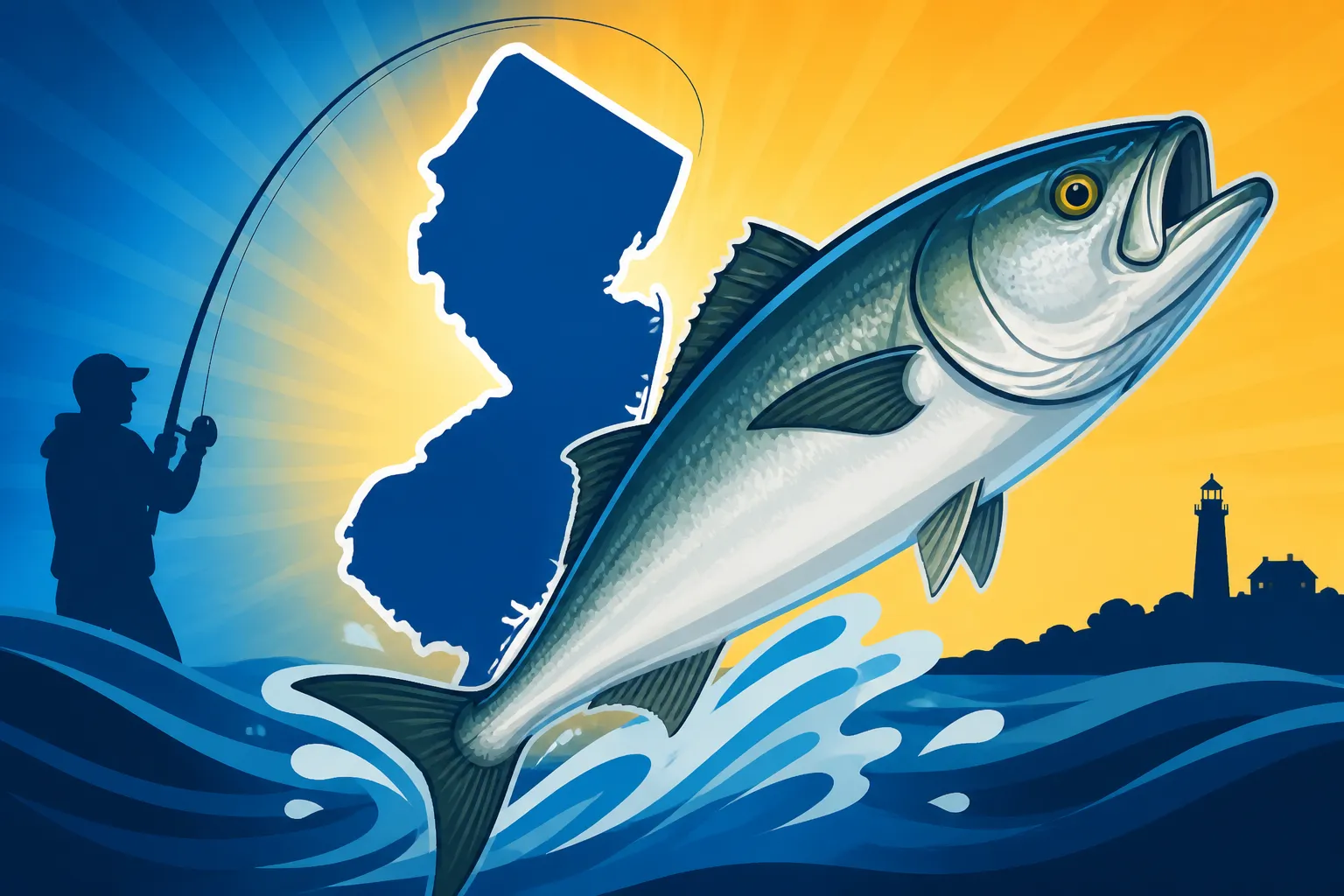
The current New Jersey state record bluefish weighed in at a whopping 27 pounds, 1 ounce. This colossal bluefish was caught by angler Robert G. Fata in 1989 while fishing off the coast of Cape May. Just think about that for a moment – over 27 pounds of pure muscle and aggression. It's a truly formidable fish, and a testament to the rich marine environment we have here in New Jersey. Catching a bluefish of that magnitude isn't just luck; it requires skill, perseverance, and often, being in the right place at the right time with the right tackle. Many seasoned anglers spend their entire lives chasing that one truly monumental catch, and for Mr. Fata, that dream became a reality decades ago. The long-standing nature of this record only amplifies its legendary status among the angling community, making it a highly respected target for anyone serious about their bluefishing.
Why This Record Matters to Anglers
Why do we care so much about these records? It's more than just bragging rights, though those are certainly a sweet bonus! State records like the 27-pound, 1-ounce bluefish represent the pinnacle of what's possible within a fishery. They set a goal, a challenge that pushes anglers to refine their techniques, understand fish behavior better, and continually seek out new spots and strategies. It fuels a healthy competition and fosters a deep respect for the species. Knowing such a giant roams our waters keeps us coming back, enduring early mornings, late nights, and the occasional skunking, all for that chance at a personal best or, dare to dream, a state record. It's a benchmark that tells us about the health and potential of our ocean, indicating that conditions are (or at least were at the time of the catch) favorable for these fish to grow to such impressive sizes. The quest for a record-breaking fish connects us to the history of fishing in New Jersey and to the anglers who came before us.
Understanding Bluefish: The "Chopper" of the Atlantic
To truly chase a record, you need to understand your quarry. Bluefish, often affectionately (or perhaps cautiously) called "choppers," are one of the most exciting and aggressive fish you can encounter in New Jersey waters. Their sheer ferocity and powerful runs make them a favorite target for many, but it's their potential for massive size that truly captures the imagination of record hunters.
Characteristics of a Trophy Bluefish
What sets a "trophy" bluefish apart from your average snapper or cocktail blue? It’s not just about length, though they certainly can grow long. It's also about girth – a truly enormous bluefish will have a thick, muscular body, indicative of its age and how well it's fed throughout its life. These are the fish that have survived countless challenges, outsmarted predators, and gorged themselves on abundant baitfish. Their powerful, torpedo-shaped bodies are built for speed and aggression, and their mouths are armed with razor-sharp teeth designed to tear through anything in their path. A trophy bluefish will hit a lure or bait like a freight train, offering an unforgettable fight. They are not subtle eaters; they strike with intent, often creating violent surface explosions when feeding, particularly during the famed Bluefish Blitzes Along the Jersey Shore. These larger fish often behave differently from smaller ones, sometimes being more solitary or lurking in deeper, more structured environments, making them a greater challenge to locate and entice.
Where Big Bluefish Roam in New Jersey
New Jersey's diverse coastline and inshore waters offer plenty of opportunities to encounter large bluefish. While the record was caught off Cape May, big blues can be found virtually anywhere baitfish congregate, from the back bays to several miles offshore. Key areas include major inlets like Barnegat Inlet, Manasquan Inlet, and Shark River Inlet, where strong currents funnel baitfish in and out with the tides. Deep channels within bays like Barnegat Bay and Raritan Bay can also hold substantial schools. Offshore, you'll find them around wrecks, reefs, and areas with significant structure, often mingling with other species. During their migrations, particularly in the spring and fall, large schools can be found just beyond the surf line. Anglers targeting these giants often focus on spots where deep water is accessible close to shore or where submerged structures provide ambush points. While it's easy to get caught up in chasing them during peak activity, sometimes the largest bluefish are caught when the general bite is slower, as they might be more isolated. Knowing the general New Jersey Fishing Season Dates and Closures for the migratory runs can certainly help you plan your search for these formidable fish.
Strategies for Chasing a Record Bluefish
Catching a bluefish of any size is a blast, but if you're seriously thinking about the state record, you'll need to elevate your game. This means strategic planning, the right equipment, and an understanding of when and where to deploy your efforts. It's about combining knowledge with perseverance, because records aren't broken by accident.
Tackle and Gear for Giant Blues
When targeting a potential record bluefish, "heavy duty" is the name of the game. Forget light tackle; you need gear that can withstand immense pressure and the violent, head-shaking runs of a 20+ pound fish. A stout conventional or spinning rod, ideally 7 to 8 feet long with a medium-heavy to heavy action, is a good starting point. Pair this with a robust reel capable of holding a substantial amount of 50-65 lb braided line. Braided line offers superior sensitivity and strength for its diameter, but you absolutely, positively need a heavy monofilament or fluorocarbon leader – at least 80-100 lb test, and a foot or two long – to prevent the bluefish’s razor-sharp teeth from cutting your mainline.
For lures, think big and tough. Large metal spoons, heavy-duty poppers, and durable swimming plugs are excellent choices. When using bait, large chunks of fresh bunker, mackerel, or mullet, fished on equally strong hooks and wire leaders (many anglers prefer single-strand wire leaders for choppers), are often irresistible to big blues. Consider looking for these high-quality components on reputable online retailers like Amazon, where you can find a wide selection of robust gear specifically designed for targeting large, aggressive saltwater species. While this article focuses on bluefish, some of the principles for robust tackle overlap with what you might consider when looking at Best New Jersey Fishing Gear for Beginners and then scaling up significantly. Remember, a cheap snap swivel or weak hook is often the weakest link that allows a trophy fish to escape.
Best Times and Conditions for Trophy Hunters
Timing is everything when it comes to trophy bluefish. The largest blues in New Jersey typically show up during their seasonal migrations. The spring run, usually from April into June, brings the first wave of larger fish moving north along the coast. The fall run, from September through November, is often considered the prime time for truly enormous bluefish as they feed heavily before heading south for winter. During these times, fish are actively feeding to build up their reserves, making them more aggressive and prone to biting. You can get more details on the general timings through guides like New Jersey Bluefish Season Peak Timing.
Beyond seasonality, pay close attention to tides and weather. Strong tidal movements, particularly around inlets, concentrate baitfish and create ambush points that big blues exploit. Learning How to Read Tide Charts for Better Fishing in New Jersey is not just a recommendation; it's a necessity. Overcast days, choppy seas, and even periods just before a storm can often trigger intense feeding frenzies. Many veteran anglers will tell you that the toughest conditions sometimes produce the biggest fish, as the rough water disorients bait and offers cover for large predators. Early mornings and late evenings, or even night fishing, can also be particularly productive for larger, more wary bluefish.
| Factor | Best for Record Bluefish | Less Ideal |
|---|---|---|
| Season | Late Spring (May-June), Fall (Sept-Nov) | Mid-Summer (July-Aug) – smaller fish more common |
| Tide | Strong moving tides, especially outgoing around inlets | Slack tide, minimal current |
| Weather | Overcast, choppy seas, pre-storm, slight drizzle | Bright sun, calm, flat seas |
| Time of Day | Dawn, dusk, night | Mid-day in bright sun |
| Baitfish | Abundant schools of bunker, mackerel, herring | Sparse bait |
| Water Temp | 58-70°F (often aligns with migratory periods) | Too cold or too hot |
Techniques to Land a Monster
Hooking a record bluefish is only half the battle; landing it is where your skill and preparation truly come into play. When a big blue hits, the initial run will be incredibly powerful. It’s crucial to set the hook firmly and then let the fish run against a properly set drag. Do not try to horse it in. Your drag setting should allow line to peel off smoothly but still apply significant pressure. Bluefish are known for their violent head shakes, especially when they get close to the boat or shore. Keep your rod tip up and absorb these shocks.
If you're fishing from a boat, be ready to follow the fish. If from shore, particularly if you're surf fishing, be prepared for a long fight and use the waves to your advantage. New Jersey Surf Fishing Techniques often involve specialized casting and retrieval methods that are effective for these powerful fish. When the fish is nearing exhaustion, be extra cautious. This is when they often make one last desperate run or violent shake, and if your leader isn't up to snuff, you'll be left with just a memory. Use a sturdy net or a gaff if necessary, but remember that bluefish are incredibly strong and can thrash even in a net. For bait fishing, resembling what you'd do for other predatory species, you might find some useful rigging concepts in How to Rig Live Bait for Striped Bass, adapting them for the bluefish’s aggressive bite and sharp teeth. Many anglers use a short length of thin, flexible wire leader just above the hook to prevent bite-offs from those formidable choppers. Look for pre-made wire leaders or components on Amazon if you're not comfortable tying your own.
Reporting Your Potential Record Catch
So, you've landed what you believe might be a state record bluefish. Congratulations! But the battle isn't over yet. There's a specific protocol you must follow to ensure your catch is officially recognized. Skipping any of these steps could mean your once-in-a-lifetime fish goes unrecognized.
The Rules of the Game: What You Need to Do
The first and most critical step is to keep the fish fresh and intact. Do not clean or gut the fish. Get it to an official, certified scale as quickly as possible. This usually means a scale found at a tackle shop, marina, or other commercial establishment that has been certified for accuracy. The New Jersey Division of Fish and Wildlife will have a list of requirements, which typically include:
- Official Weighing: The fish must be weighed on a state-certified scale by a reputable weighmaster.
- Witnesses: You'll likely need at least one, if not two, witnesses to verify the catch and weighing process.
- Photographic Evidence: Clear, high-quality photos of the fish, yourself, the weighing process, and the scale reading are essential.
- Species Identification: A New Jersey Fish and Wildlife biologist or designated expert will need to confirm the species. This ensures there's no confusion with other similar-looking fish.
- Application Form: You'll need to fill out an official application form provided by the state, detailing all aspects of the catch, including date, time, location, tackle used, and witnesses.
It's a process designed to maintain the integrity of the state record system, and it's something every serious angler should be aware of, just in case that dream fish comes along. This meticulous process helps maintain the credibility of records and ensures that all potential record holders are held to the same high standards. For context on how such regulations are put in place, you might find interest in How New Jersey Sets Its Fishing Regulations Each Year.
The Satisfaction of the Catch
Even if your trophy bluefish doesn't quite tip the scales to break the state record, the experience of catching such a powerful, majestic creature is a reward in itself. The thrill of the strike, the powerful fight, and the sheer accomplishment of bringing in a massive bluefish are memories that will last a lifetime. It's a reminder of the incredible marine life that thrives in our New Jersey waters and the unique challenges and joys that fishing provides. Whether it's the state record or a new personal best, the satisfaction comes from the pursuit, the patience, and the battle waged between angler and fish. These are the moments that truly define our passion for fishing and keep us eagerly anticipating our next trip out onto the water, perhaps with a new lure or a tougher rod found on Amazon, ready for whatever New Jersey's diverse fishery throws our way.
Disclaimer
This article is for general informational purposes only and does not constitute professional advice. Laws, prices and regulations vary by location and change over time. Consult a qualified professional for guidance on your specific situation.