What Is the Size Limit for Blue Claw Crabs?
One of the most common questions I get from folks eager to try their hand at crabbing in New Jersey is about the rules – specifically, how big does a blue claw crab need to be before you can take it home? It's a completely fair question, and honestly, getting it wrong can lead to some real headaches with the conservation police. This guide will walk you through the essential size limits and other vital regulations you need to know to ensure your crabbing adventures are both fun and fully compliant with New Jersey law.
Understanding New Jersey's Blue Claw Crab Regulations
Crabbing is a beloved pastime here in New Jersey. There’s nothing quite like the thrill of pulling up a trap to find a feisty blue claw crab eyeing you back, or the delicious reward of a fresh crab feast. But with all that excitement comes responsibility. New Jersey's waters are a delicate ecosystem, and the rules around crabbing are put in place to protect those resources, ensuring that generations to come can enjoy the same experiences we do today.
The Importance of Size Limits for Blue Claw Crabs
You might wonder why there's a specific size limit. It's not just to make things difficult for crabbers, I promise! The size limit for blue claw crabs is a cornerstone of sustainable management. Crabs, like most shellfish, need to reach a certain size to mature and reproduce. By only allowing the harvest of larger crabs, we're giving the younger ones a chance to grow up, mate, and contribute to the next generation of crabs.
Think of it this way: if everyone kept every crab they caught, no matter how small, the population would quickly dwindle. Those smaller crabs are the future. They haven't had a chance to reproduce yet, and if they're removed from the ecosystem too early, it can have a significant impact on the overall health and abundance of the blue claw crab stock. It's a long-term investment in our crabbing future.
Who Sets These Rules? The Role of the NJDEP
So, who's the mastermind behind these regulations? It's the New Jersey Department of Environmental Protection (NJDEP), specifically their Division of Fish and Wildlife. They're the ones tasked with monitoring fish and wildlife populations, conducting research, and then setting the rules that help maintain healthy stocks. This isn't just a random guess; it's based on scientific data, population surveys, and a deep understanding of the life cycle of species like the blue claw crab.
The NJDEP works tirelessly to balance recreational opportunities with conservation needs. They constantly review data, consider environmental factors, and even take into account feedback from commercial and recreational crabbers. It’s a complex job, but it’s absolutely vital for ensuring that our bays and estuaries remain vibrant homes for these amazing crustaceans. How New Jersey Sets Its Fishing Regulations Each Year covers a lot of the process that goes into these decisions, and crabbing rules follow a similar scientific approach.
The Official Blue Claw Crab Size Limit in New Jersey
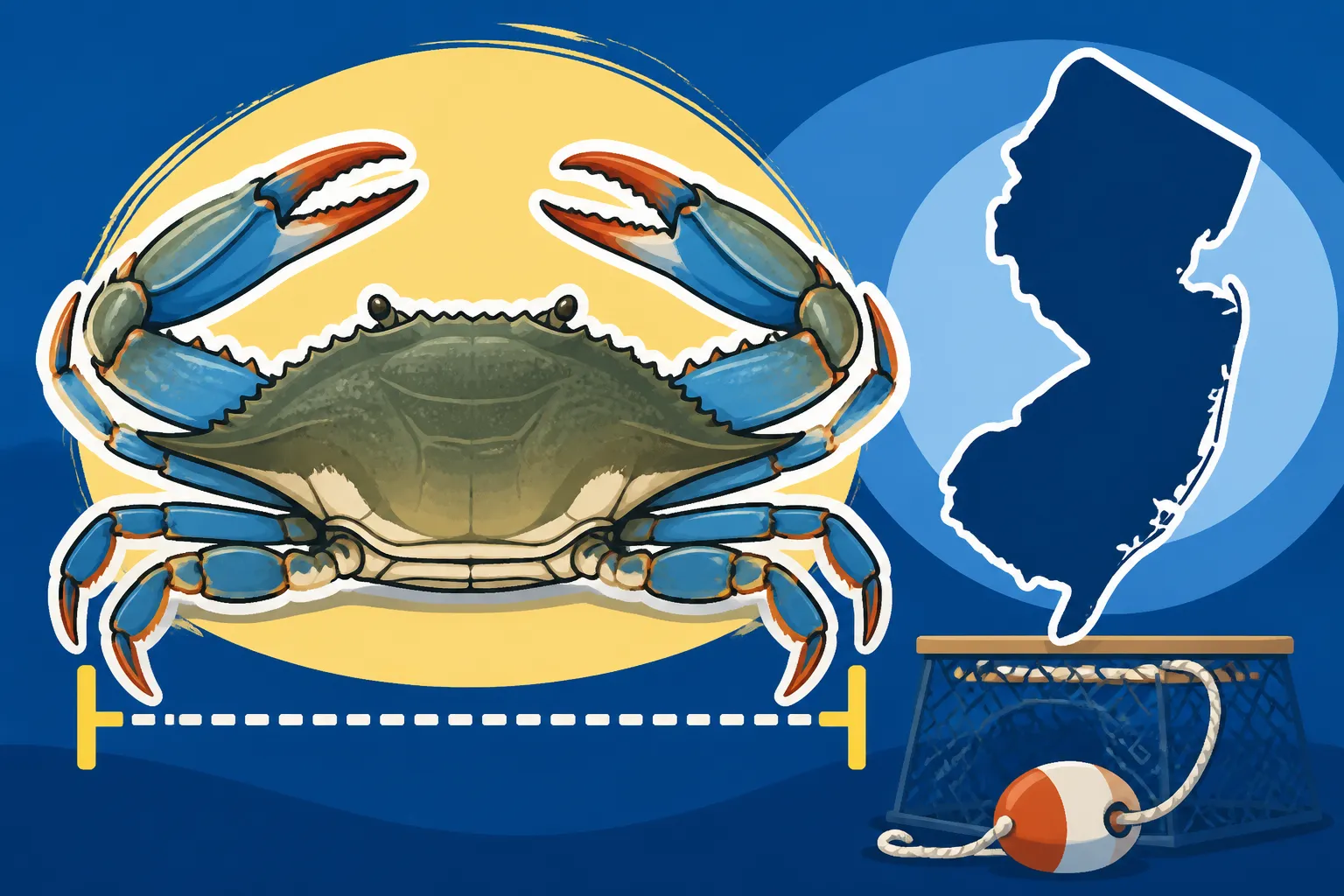
Alright, let's get down to brass tacks: what's the magic number? For blue claw crabs in New Jersey, the minimum size limit for harvesting is 4.5 inches. This measurement isn't taken from leg to leg, or from the front to the back of the shell. It's a specific measurement that you need to get right to avoid any issues.
This 4.5-inch rule applies to recreational crabbers using trot lines, hand lines, dip nets, and crab pots. If you’re ever unsure, always err on the side of caution. A crab that’s just shy of the limit might tempt you, but it’s not worth the potential fine or the negative impact on the crab population. Remember, these rules are for the good of everyone who loves crabbing, including yourself!
Measuring Your Crabs Correctly
Accuracy is key when it comes to measuring blue claw crabs. You don’t want to guess, and you definitely don’t want to eyeball it. The 4.5-inch measurement is taken from point to point of the carapace, which is the hard, upper shell of the crab. You'll measure across the widest part of the shell, from one side-point to the other.
To do this properly, you'll need a reliable measuring device. A simple ruler or a tape measure works, but many crabbers prefer a dedicated crab gauge. These are often made of durable plastic or metal and have a fixed measurement of 4.5 inches, making it super easy to check if your crab makes the cut. You can find these at most tackle shops, or even online through retailers like Amazon, where there's a wide selection of crabbing gear available. Just lay the crab on its back, place the gauge or ruler across the widest part of its shell (the points!), and if it fits within or exceeds the 4.5 inches, you're good to go.
Here's a quick reference for recreational crabbing regulations:
| Regulation Type | Specific Rule for Blue Claw Crabs (Recreational) | Notes |
|---|---|---|
| Minimum Size | 4.5 inches (point to point of carapace) | Must be measured across the widest part of the upper shell. |
| "Sponge" Crabs | Must be immediately returned to the water | Females carrying eggs (visible orange/black mass under abdomen). |
| Daily Pot Limit | Up to 2 crab pots per person (recreational) | Must be clearly marked with name/address and retrieval rope/buoy. |
| Daily Bag Limit | No specific daily limit (as of current rules) | Catch-and-possession limits may apply to commercial crabbers. |
| License Required | No license needed for recreational crabbing | Unlike fin fishing, crabbing does not require a state license. |
Disclaimer: Regulations can change. Always consult the latest New Jersey Fish and Wildlife Digest for the most up-to-date information.
How to Release Undersized Crabs Safely
Catching an undersized crab isn't a failure; it's actually a sign that the population is healthy enough to support future harvests! The key is to release these smaller crabs quickly and gently, giving them the best chance of survival. You don't want to just toss them overboard from a height.
When you've measured a crab and determined it's too small, gently place it back into the water, right where you caught it if possible. Avoid throwing it. Hold it by the back of the shell (away from those claws!) and slowly lower it into the water. If you're crabbing from a dock or a boat, a dip net can be helpful for a gentle release, or simply leaning over and placing it directly into the water. Minimize handling time, especially during warmer months, as prolonged exposure to air can stress the crab. You want that little guy to swim off strong and healthy, ready to grow up and make some baby crabs!
Beyond Size: Other Key Crabbing Regulations to Know
While the size limit is crucial, it’s just one piece of the puzzle. New Jersey has other important rules in place to protect blue claw crabs, and ignoring them can lead to problems just as easily as keeping an undersized crab. These regulations are designed to ensure that the breeding population remains robust and that crabbing methods are sustainable. For a broader overview of how all these rules fit together, consider reading New Jersey Crabbing License Requirements, even though recreational crabbing doesn't typically require a license, it explains the broader regulatory landscape.
Female Crabs: Sponge Crabs and the Egg Rule
This is a big one, and it's absolutely vital for the future of crabbing. It is illegal to keep any female blue claw crab that is carrying eggs, often referred to as a "sponge crab" or "berried crab." You'll know them by the distinct orange or black spongy mass visible on their abdomen, tucked underneath their tail flap. This mass contains thousands, sometimes millions, of eggs.
These females are literally the future of the species. Removing them from the water before they've had a chance to release their eggs is detrimental to the crab population. If you catch a sponge crab, you must immediately return it to the water, no questions asked. Even if it's over the 4.5-inch size limit, it must go back. This rule is non-negotiable and strictly enforced because it directly impacts the ability of the crab population to replenish itself. It's a strong reminder that conservation sometimes means letting go of a potential meal for the greater good.
Daily Bag Limits and Gear Restrictions
Interestingly, for recreational crabbers in New Jersey, there generally isn't a specific daily bag limit on the number of blue claw crabs you can keep, provided they meet the size and sex requirements. This is different from fin fish, where daily bag limits are very common, like with New Jersey Fluke Bag Limit Explained or New Jersey Daily Bag Limits by Species. However, this doesn't mean you can just fill your boat to the brim with crabs until you run out of cooler space! Responsible crabbing still means taking only what you need and can realistically consume.
When it comes to gear, recreational crabbers are allowed to use various methods:
- Hand lines: Simple lines with bait tied on.
- Dip nets: Great for scooping crabs near docks or shore.
- Trot lines: Longer lines with multiple baits, typically used from a boat.
- Crab pots or traps: These are wire cages that crabs enter but find difficult to exit. Recreational crabbers are usually limited to a certain number of pots – typically no more than two crab pots or traps per person, and these must be clearly marked with the owner's name and address. They also need a buoy attached to the retrieval rope, visible on the surface.
Always check the current New Jersey Fish and Wildlife Digest for precise rules on gear, as these can sometimes be updated. Also, be mindful of where you place your pots; obstructing navigation channels or private property is a no-go. For more on safe and legal methods, How Many Fishing Rods Can You Use at Once in New Jersey? might provide some context on other gear regulations that impact anglers.
Why Crabbing Regulations Matter for Everyone
Sometimes, when you're out there, and the crabs aren't biting, or you're struggling to fill a bushel, these regulations can feel like an extra hurdle. But truly, every rule, every limit, every season closure is designed with one overarching goal: to protect our natural resources for the long haul. Crabbing is more than just a hobby for many; it's a connection to the Jersey Shore's culture and environment.
Preserving the Blue Claw Crab Population for Future Generations
Imagine a New Jersey without blue claw crabs. It's almost unthinkable, right? These regulations are the protective measures that prevent such a scenario. By adhering to size limits, releasing sponge crabs, and respecting gear restrictions, every individual crabber contributes to the sustainability of the blue claw crab population. It's a collective effort. Your actions today directly impact the abundance of crabs available for your kids and grandkids to catch tomorrow.
This isn't just about ensuring there are crabs to catch, but also about the ecological role blue crabs play. They are an integral part of the food web in our estuaries and bays, acting as both predator and prey. A healthy crab population signals a healthy ecosystem overall. Supporting these regulations means supporting the entire aquatic environment of New Jersey.
Common Mistakes and How to Avoid Them
It’s easy to make a mistake, especially if you’re new to crabbing or haven’t checked the regulations in a while. Here are a few common pitfalls and how to steer clear of them:
- Guessing the Size: This is probably the most frequent error. Don't rely on your eye! Always carry a measuring device and use it for every single crab you intend to keep. Pick up an inexpensive crab gauge from a local bait shop or add one to your cart on Amazon when you're buying other fishing essentials.
- Keeping Sponge Crabs: Sometimes, the egg mass isn't immediately obvious, especially if it's small or covered in mud. Take a moment to inspect the underside of every female crab. If you see any sign of eggs, release her.
- Unmarked Pots: Forgetting to label your crab pots, or having a label that's faded and illegible, can lead to your gear being confiscated. Double-check your markings before you set out, and ensure your buoy is clearly visible.
- Improper Release: Tossing a small crab onto a hot dock or flinging it from a boat can injure or kill it. Take the extra few seconds to gently lower it back into the water.
- Not Checking Current Regulations: Regulations can sometimes change based on population assessments or environmental factors. Before your first crabbing trip of the season, take a few minutes to quickly skim the current New Jersey Fish and Wildlife Digest. You can find this online, and it's often available in print at bait and tackle shops. This ensures you're always operating with the most up-to-date information. If you're planning a trip around specific dates, you might want to look up New Jersey Fishing Season Dates and Closures or New Jersey Fishing Regulation Changes for 2026 for broader context, although crabbing dates are usually more consistent.
By being mindful of these rules and practices, you're not just avoiding a potential penalty; you're becoming a more responsible and effective crabber. Happy crabbing out there, and I hope you catch some legal keepers!
Disclaimer
This article is for general informational purposes only and does not constitute professional advice. Laws, prices and regulations vary by location and change over time. Consult a qualified professional for guidance on your specific situation.