New Jersey Striped Bass Slot Limit Explained
It can be incredibly frustrating to hit the water, reel in a beautiful striped bass, and then stand there scratching your head, trying to remember if it's a keeper or if you have to send it back. New Jersey's fishing regulations, especially for popular species like striped bass, often involve complex rules like slot limits, which can leave even seasoned anglers feeling confused. This comprehensive guide is here to untangle the intricacies of the New Jersey striped bass slot limit, explaining what it means, why it exists, and how to confidently comply with the rules every time you cast a line.
Understanding the New Jersey Striped Bass Slot Limit
For many of us who grew up fishing, the idea of a "minimum size" was pretty straightforward: if the fish was bigger than X inches, you could keep it. But then came the "slot limit," and suddenly, things felt a lot more complicated. It’s not just about minimums anymore; there’s a maximum size too, and understanding this nuanced approach is key to responsible and legal striped bass fishing in New Jersey.
What Exactly is a Slot Limit?
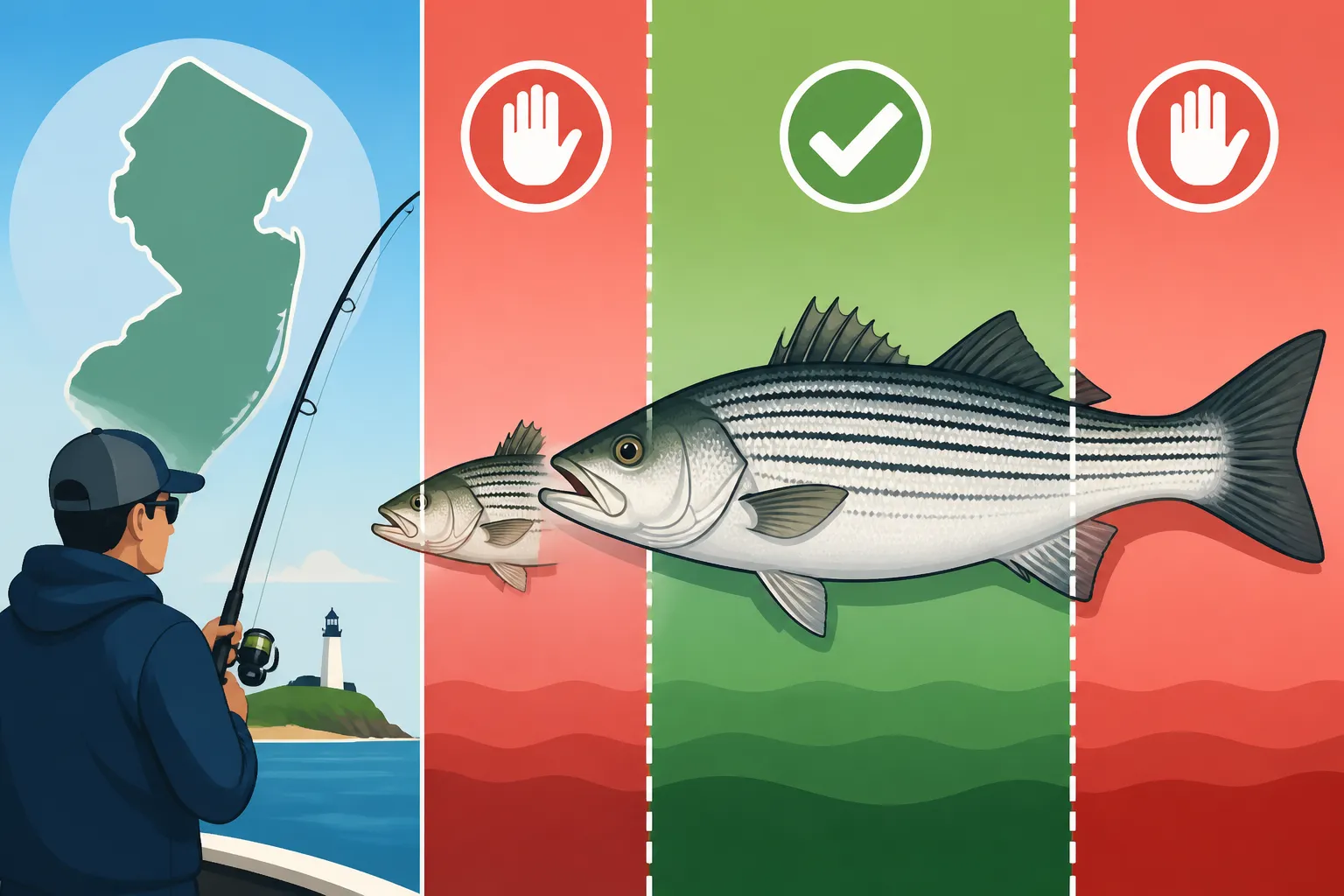
A slot limit, in simple terms, isn't just a minimum length your fish needs to be. Instead, it's a specific range of lengths, a "slot," within which a fish must fall to be legally kept. If a fish is shorter than the minimum or longer than the maximum length specified by the slot, it must be immediately released. This approach might seem counterintuitive at first – why would you release a really big fish? – but it's a powerful conservation tool designed to protect the future of the fishery.
The primary purpose of a slot limit is to protect certain segments of the fish population. Typically, the smaller fish are allowed to grow and mature, contributing to the overall population health. Crucially, the larger fish, often referred to as trophy fish, are also protected. These bigger fish are typically the most prolific spawners, producing a disproportionately large number of eggs or milt, which is vital for the sustainability of the species. By protecting both the juvenile and the mature, breeding stock, a slot limit helps ensure a healthy, reproducing population for years to come, allowing anglers to target the middle-aged, abundant fish.
The Current New Jersey Striped Bass Slot Dimensions
New Jersey's striped bass regulations have seen their share of adjustments over the years, reflecting the ongoing efforts to manage this iconic species responsibly. Currently, for most recreational anglers fishing in New Jersey's coastal waters, bays, and tributaries (excluding the Delaware River and its tributaries, which have a slightly different season), the striped bass slot limit allows anglers to keep one fish per person, provided it measures between 28 inches and less than 31 inches total length. This means if your striper is exactly 28 inches, it's a keeper. If it's 30.99 inches, it's a keeper. But if it's 27.99 inches or 31 inches exactly, it must be released.
It's a precise measurement, and there's no room for error. This specific range is a direct outcome of scientific assessments and management decisions aimed at balancing recreational fishing opportunities with the need for long-term conservation. Always remember, the regulations are subject to change, sometimes even mid-season, so always double-check the latest rules before heading out. For a deeper dive into how these limits affect various species, check out our guide on How Bag and Size Limits Work in New Jersey.
Bag Limits and Season for Striped Bass
Beyond the slot limit, anglers must also adhere to bag limits and specific seasons when fishing for striped bass in New Jersey. The bag limit, as mentioned, is generally one fish per person per day within the legal slot size for coastal waters. This means that even if you catch ten fish within the slot, you can only keep one. The intent is to spread the harvest across more anglers and to prevent overfishing by individuals.
The fishing season for striped bass in New Jersey's coastal waters also has specific dates. While these dates can sometimes shift based on scientific data and management needs, traditionally, the season generally runs for a good portion of the year, often with a spring and fall component. For example, there might be a period in early spring, a summer closure, and then a fall season. It's crucial to consult the most current New Jersey Fish and Wildlife Digest or their official website, especially if you plan to fish near the start or end of a traditional season. The combination of the slot limit, the one-fish bag limit, and the defined season works together to provide a comprehensive management strategy for striped bass.
The Why Behind New Jersey's Striped Bass Regulations
It’s easy to get caught up in the specifics of inches and dates, but understanding why these regulations are in place can make them feel less like arbitrary rules and more like essential steps in protecting a beloved resource. The history of striped bass fishing is one of boom and bust, and the current management strategies are built on lessons learned from past struggles.
Protecting the Spawning Stock of Striped Bass
One of the most critical reasons for the slot limit, particularly the upper end that protects larger fish, is to safeguard the spawning stock of striped bass. You see, those really big striped bass, the ones that make for incredible bragging rights and photos, are often the most productive breeders. A large, mature female striped bass can lay millions of eggs, contributing significantly more to the next generation than a smaller, younger fish. If anglers were allowed to continually harvest these "trophy" fish, it would severely deplete the reproductive potential of the entire population.
By releasing these larger, older fish, we ensure they continue their vital role in spawning runs, often migrating to freshwater rivers like the Delaware or Hudson to lay their eggs. This protection allows them to reproduce multiple times throughout their long lifespans, helping to rebuild and maintain healthy striped bass numbers for the future. It’s a long-term investment in the fishery, ensuring that the magic of a striped bass blitz isn't just a memory for future generations.
Interstate and Federal Management of Striped Bass
Striped bass are not homebodies; they are highly migratory, traveling extensively along the Atlantic coast from North Carolina all the way up to Maine. This migratory behavior means that no single state can manage the species effectively on its own. Imagine if New Jersey had very strict rules, but a neighboring state had lax ones – the fish would simply be caught elsewhere. This is why striped bass management is a cooperative effort coordinated by the Atlantic States Marine Fisheries Commission (ASMFC).
The ASMFC, a body made up of representatives from each coastal state, develops Fishery Management Plans (FMPs) for species like striped bass. These FMPs set regional conservation goals and establish baseline regulations that states must then implement. So, when New Jersey changes its striped bass slot limit or season, it's often a direct response to mandates or recommendations from the ASMFC, aimed at ensuring the health of the entire East Coast population. This means the regulations you follow in New Jersey are part of a much larger, coordinated effort to protect this magnificent species across its entire range.
Historical Context of Striped Bass Regulations in New Jersey
New Jersey’s striped bass regulations haven’t always been as structured as they are today. There was a time in the late 1970s and early 1980s when striped bass populations were in serious decline, leading to widespread concern among anglers and scientists. This alarming trend prompted an emergency response, culminating in a complete moratorium on striped bass fishing in New Jersey and other states for several years. It was a tough period for anglers, but a necessary one to allow the species to recover.
After the moratorium, regulations were gradually reintroduced, initially with strict minimum sizes and then evolving into the slot limits we see today. Each change, whether it was the adoption of circle hooks, adjustments to the slot, or changes in season dates, has been a data-driven decision, influenced by stock assessments, scientific research, and angler input. These regulations are a testament to the ongoing commitment to learn from the past and adapt to ensure the long-term health of the striped bass fishery in our waters. Understanding this history helps us appreciate the importance of current regulations, even when they seem complicated.
Practical Application: Measuring and Handling Your Catch
So, you’ve hooked into a striper – congratulations! Now comes the critical part: determining if it’s a keeper and, if not, ensuring it swims away healthy. Proper measuring and handling are not just about following the rules; they’re about being a responsible steward of the resource, making sure that released fish have the best chance of survival.
Accurate Measuring Techniques for Striped Bass
Measuring a striped bass correctly is non-negotiable. The rule of thumb for New Jersey fishing regulations is to measure the fish from the tip of its snout (mouth closed) to the farthest tip of its tail (tail pinched). This "total length" measurement is standard for most species. Here’s a quick rundown on how to do it right:
- Lay it Flat: Gently lay the fish on a flat, stable surface. A measuring board or a soft, foldable measuring tape (which you can easily find on Amazon) that can be laid flat next to the fish works best.
- Mouth Closed: Ensure the fish's mouth is completely closed against the starting point of your measurement device. This is crucial for an accurate snout-to-tail measurement.
- Pinch the Tail: Gently squeeze the tail fin lobes together so that they form a single point, extending as far back as possible. This ensures you’re getting the maximum possible length.
- Read Clearly: Note the measurement precisely. Even a quarter-inch can make a difference between a legal fish and one that needs to be released.
Avoid measuring fish on uneven surfaces or by holding them vertically, as this can lead to inaccurate readings. Remember, it's your responsibility to ensure the fish meets the legal slot. Any doubt should lead to release.
Best Practices for Catch and Release of Undersized or Oversized Fish
Releasing a fish outside the slot isn’t just a legal requirement; it’s a crucial act of conservation. How you handle that fish directly impacts its survival. Here are some best practices to maximize the chances of a healthy release:
- Minimize Air Time: Keep the fish in the water as much as possible. If you must remove it for a quick measurement or photo, do so quickly and efficiently. Even a minute out of water can be detrimental, especially in warm weather.
- Wet Hands Only: Always wet your hands before touching the fish. Dry hands can remove the fish’s protective slime coat, making it vulnerable to infection and disease.
- Support the Fish: When lifting, support the fish horizontally, especially larger ones, to avoid damaging internal organs or the jaw. Avoid hanging fish vertically by the jaw.
- Use the Right Tools: Carry a dehooking tool or needle-nose pliers to remove hooks quickly and cleanly. Consider using circle hooks, which are often required or highly recommended for bait fishing striped bass in New Jersey, as they typically hook in the corner of the mouth, reducing gut hooking and making release much easier. You can find excellent quality circle hooks and dehookers on Amazon, often bundled with other essential fishing gear. Our guide on New Jersey Catch and Release Striped Bass Handling Rules offers even more detailed advice.
- Revive If Necessary: If a fish seems sluggish after being fought or handled, gently hold it in the water, facing into the current, until it regains its strength and swims away on its own.
What to Do If You Catch a Striped Bass Outside the Slot
The rule is absolute: if a striped bass falls outside the legal slot limit – whether it’s too small or too large – it must be immediately released back into the water where it was caught. There are no exceptions, no "just this once." Trying to sneak an illegal fish into your cooler is not only unethical but carries serious consequences.
New Jersey Conservation Police Officers are out there, and they are vigilant about enforcing these regulations. Getting caught with an undersized or oversized striped bass can result in hefty fines, confiscation of your gear, and even the loss of your fishing privileges. It's simply not worth the risk. Always err on the side of caution. If you're unsure about the measurement, or if the fish looks like it's right on the edge, the safest and most responsible action is always to release it. Understanding the potential penalties is vital, as detailed in our article, What Happens If You Get Caught Fishing Without a License in New Jersey?.
Navigating Common Striped Bass Fishing Scenarios
New Jersey is a diverse fishing state, from the northern bays to the expansive southern coast, and even into its shared river systems. While the core slot limit applies broadly, specific locations and situations can sometimes have unique considerations. Knowing these nuances can save you a headache and ensure you’re always fishing legally.
Striped Bass Fishing in the Delaware Bay and River
While the standard New Jersey coastal striped bass regulations (28 to less than 31 inches, one fish) apply to most of the state's saltwater areas, the Delaware River and its tributaries, which form a border with Pennsylvania and Delaware, often operate under slightly different rules. For the portion of the Delaware River that borders New Jersey, the slot limit for striped bass is typically also 28 inches to less than 31 inches, one fish per person. However, the season dates for the Delaware River can differ significantly from the coastal migratory striped bass season. This is largely because the Delaware River fish are often considered a separate, resident population or an early migratory group.
Anglers need to be extra diligent when fishing this particular area, especially if they are accustomed to coastal regulations. Always check the New Jersey Fish and Wildlife Digest for the precise dates applicable to the Delaware River. Additionally, if you plan to fish from the Pennsylvania side or cross into Pennsylvania waters, you might need a Pennsylvania fishing license and would be subject to their specific regulations, even if they sometimes mirror New Jersey's. This highlights the importance of checking reciprocal agreements, which can sometimes be complex.
Resident vs. Migratory Striped Bass and Regulations
It’s easy to think of all striped bass as one big, traveling school, but in reality, New Jersey is home to both migratory and "resident" striped bass populations. Migratory striped bass are the ones that travel up and down the Atlantic coast, following baitfish and water temperatures. These are the fish targeted during the bustling spring and fall runs. Resident striped bass, on the other hand, spend a significant portion, or even all, of their lives in specific bays, estuaries, or tidal rivers, such as parts of the Raritan Bay or Barnegat Bay.
The slot limit, as currently set, generally applies to both migratory and resident fish within the designated areas. However, understanding the distinction can inform your fishing strategy. For example, resident bass in a specific estuary might be more prevalent during times when migratory fish have moved on. The regulations are designed to manage the overall population health, regardless of whether a fish is passing through or calling a particular bay home. Knowing When Do Striped Bass Migrate Through New Jersey? can help you anticipate the best times to target these traveling schools.
How Regulations Can Change and Staying Informed
Perhaps the most important thing to remember about New Jersey fishing regulations, particularly for a highly managed species like striped bass, is that they are not static. They are dynamic and subject to change, sometimes annually, and occasionally even mid-season, based on new scientific data, stock assessments, or federal mandates from bodies like the ASMFC. This can be incredibly frustrating for anglers who just want consistent rules to follow, but it's a necessary part of adaptive fisheries management.
To avoid any unwelcome surprises, it is absolutely essential to stay informed. Don't rely solely on what you heard last year or from a buddy on the dock. The most authoritative source for current New Jersey fishing regulations is the New Jersey Fish and Wildlife Digest. This digest is published annually and outlines all the rules for freshwater and saltwater fishing, including bag and size limits, seasons, and special regulations. You can typically pick up a physical copy at bait and tackle shops, or, more conveniently, find the most up-to-date version online on the New Jersey Department of Environmental Protection (NJDEP) Fish and Wildlife website. Our article, Reading the New Jersey Fish and Wildlife Digest, provides excellent tips on how to navigate this important document. It's your responsibility as an angler to know and follow the current rules, and regularly checking the digest is the best way to do just that.
The Future of Striped Bass Fishing in New Jersey
The future of striped bass fishing in New Jersey is a topic of constant discussion among anglers, conservationists, and fisheries managers. While the slot limit and other regulations are in place to ensure sustainability, the journey to a truly robust and resilient striped bass population is ongoing, requiring continued vigilance and adaptation.
Ongoing Conservation Efforts and Population Health
Despite the current regulations, the overall health of the striped bass population continues to be a concern, particularly for the coast-wide migratory stock. Recent stock assessments have indicated that the population is still overfished, meaning there are not enough breeding-age fish to sustain the population at optimal levels. This has led to the implementation of more conservative management measures, including the current slot limit, to reduce fishing mortality.
Conservation efforts go beyond just limits. Habitat protection, water quality initiatives, and efforts to understand and manage baitfish populations (which striped bass rely on heavily) are all critical components. Anglers play a vital role in these efforts too, not just by adhering to regulations, but by practicing careful catch and release, reporting violations, and participating in citizen science programs like the New Jersey Recreational Fishing Survey: Why You Might Get a Call which provides valuable data to biologists. Every fish released healthy, and every regulation followed, contributes to the bigger picture of conservation.
Public Input and How Regulations Are Set
Ever wonder how these regulations are actually decided? It's not just a few people in a room making arbitrary choices. New Jersey's fishing regulations, including those for striped bass, are developed through a comprehensive process that involves scientific assessment, stakeholder input, and state and interstate management bodies. The New Jersey Marine Fisheries Council, for example, plays a key role, advising the Commissioner of the NJDEP on marine fisheries management issues. This council includes representatives from various fishing interests, including recreational anglers, commercial fishermen, and environmental groups.
Public hearings are often held when significant changes to regulations are being considered, providing an opportunity for anglers like you to voice your opinions and concerns. This democratic process ensures that decisions are not made in a vacuum, but rather with input from those most directly affected. Staying engaged, attending meetings (or submitting comments online), and understanding How New Jersey Sets Its Fishing Regulations Each Year are crucial ways for anglers to influence the future of their sport. Your voice matters, and active participation in these processes helps shape regulations that are both effective and fair.
Striped Bass Slot Limit and Bag Limit Summary
To help keep everything clear, here's a quick summary of the current recreational striped bass regulations for most of New Jersey's coastal waters. Always remember to consult the latest official sources for any last-minute changes!
| Category | Regulation | Notes |
|---|---|---|
| Slot Limit | 28 inches to less than 31 inches total length | Fish shorter or longer than this range must be released. |
| Bag Limit | One (1) fish per person per day | No more than one legal-sized striped bass per angler per day. |
| Season | Varies by year; check current Digest | Subject to change; typically open for most of the year. |
| Delaware R. | Same slot, potentially different season | Always verify specific Delaware River and tributary regulations. |
| Circle Hooks | Required for bait fishing for striped bass | Helps reduce gut hooking, improving survival rates of released fish. |
Disclaimer:
The information provided in this guide is for general informational purposes only and is based on regulations at the time of writing. Fishing regulations in New Jersey are subject to change by the New Jersey Department of Environmental Protection (NJDEP) Division of Fish and Wildlife. It is the angler's responsibility to consult the most current official New Jersey Fish and Wildlife Digest or visit the NJDEP Fish and Wildlife website before fishing to ensure compliance with all applicable rules and regulations.