How to Report a Fishing Violation in New Jersey
It’s a frustrating situation we've all encountered: you're out enjoying a peaceful day on the water or along the shore, only to witness someone blatantly disregarding the rules. Whether it's keeping undersized fish, fishing without a license, or exceeding bag limits, these actions not only harm our precious New Jersey fisheries but also diminish the experience for everyone else. This guide is here to walk you through exactly how to report a fishing violation in New Jersey effectively, ensuring your concerns are heard and proper action can be taken.
Why Reporting Fishing Violations Matters So Much
When you see a fishing violation, it's easy to feel a pang of frustration and then wonder if reporting it will even make a difference. But trust me, it absolutely does. Every angler who follows the rules is invested in the health and sustainability of New Jersey's fish populations. Violations, even seemingly small ones, chip away at those efforts, impacting everything from fish stocks to the integrity of our beloved angling traditions. Reporting isn't about being a "tattletale"; it's about being a responsible steward of our natural resources and protecting the future of fishing for generations to come.
Protecting Our Fisheries and Ecosystems
Imagine a scenario where a few individuals consistently keep striped bass well outside the legal slot limit, or perhaps they're taking more fluke than allowed. Over time, these actions can severely deplete specific age classes or entire populations of fish. Our regulations, like the New Jersey Striped Bass Slot Limit Explained or the specifics around How Bag and Size Limits Work in New Jersey, are carefully crafted by biologists and wildlife managers based on scientific data to ensure sustainable harvesting. When these rules are ignored, it can undermine years of conservation efforts. By reporting, you're directly contributing to maintaining healthy fish stocks, balanced ecosystems, and the overall biodiversity of our beautiful state. It's a vital step in ensuring there are plenty of fish for everyone, now and in the future.
Ensuring Fair Play and Upholding Regulations
Let's be honest, it's disheartening to put in the time, effort, and money to follow all the rules—getting your New Jersey Fishing License Guide for 2026, checking the current New Jersey Daily Bag Limits by Species, and even understanding specific nuances like the New Jersey Saltwater Registry Explained—only to see someone openly flouting them. This isn't just a matter of fairness; it’s about upholding the legal framework designed to manage a shared public resource. Law-abiding anglers pay for licenses and stamps, which directly fund conservation programs. When others cheat, they're not only stealing from the resource but also from the collective effort of the angling community. Your report helps level the playing field and sends a clear message that illegal activities won't be tolerated, encouraging a culture of respect for the rules among all who enjoy our waterways.
Understanding What Constitutes a Fishing Violation in New Jersey
Before you pick up the phone or send an email, it’s really helpful to know what actually qualifies as a reportable offense. Sometimes, what looks suspicious might actually be legal under a specific, less common regulation. Other times, what seems minor could be a serious breach. Knowing the difference helps ensure you're providing useful, actionable information to the authorities. The New Jersey Division of Fish and Wildlife (NJDFW) Conservation Police Officers (CPOs) are the primary enforcers, and they rely on accurate reports to do their job effectively.
Common Freshwater Fishing Violations
In the world of freshwater fishing, there's a whole host of regulations designed to protect our lakes, rivers, and streams. A common violation, and one that often irritates ethical anglers the most, is fishing without the appropriate license or a required stamp, like the New Jersey Trout Stamp Requirements Explained, especially if someone is targeting trout in a designated trout water. Bag and size limits are also frequently overlooked or intentionally disregarded. For instance, keeping more than the daily limit of bass, crappie, or trout, or retaining fish that are too small (or, in rare cases, too large, though less common in freshwater than saltwater slot limits) are all violations.
Another issue can be fishing in closed waters or during closed seasons, such as during the New Jersey Trout Season Preseason Closure Explained on certain streams. Using illegal bait, like certain live fish species, or prohibited methods, such as too many rods at once (though How Many Fishing Rods Can You Use at Once in New Jersey outlines current rules), can also be a violation. Always refer to the most current New Jersey Freshwater Fishing Regulations Every Angler Should Know or the Reading the New Jersey Fish and Wildlife Digest to be absolutely sure. Observing someone ignoring these fundamental rules is a clear reason to make a report.
Common Saltwater Fishing Violations
Out on the salt, whether you're surf fishing, bay fishing, or heading offshore, violations primarily revolve around similar themes: licensing, bag limits, and size restrictions. The most frequent issues often involve species like fluke, striped bass, and black sea bass. Anglers might be caught with fluke below the New Jersey Fluke Size Limit: 18 Inches or exceeding the New Jersey Fluke Bag Limit Explained. For striped bass, the New Jersey Striped Bass Slot Limit: 28 to 38 Inches is a critical regulation, and keeping fish outside this specific range is a serious offense. Remember, you can't just keep a 40-inch striped bass in New Jersey.
Beyond size and bag limits, not being registered with the free New Jersey Saltwater Registry Program Requirements (for those fishing in marine waters) is a violation. Using prohibited gear, like snagging hooks for migratory fish in certain areas, or failing to use required gear, such as circle hooks when bait fishing for striped bass (see New Jersey Circle Hook Requirements for Bait Fishing), are also common infractions. Pollution—like discarding trash, lines, or bait containers into the ocean or bays—is also a significant environmental violation. If you see someone doing any of these things along the coast or from a boat, it’s definitely something to report to the authorities.
How to Actually Report a Fishing Violation
So, you've witnessed a violation and you know it needs to be reported. What's the best way to do it? It's not as complicated as you might think, but providing the right information in a timely manner is key. The goal is to give the New Jersey Conservation Police Officers (CPOs) everything they need to investigate and, hopefully, apprehend the violator.
Gathering Key Information for Your Report
When you're reporting a violation, details are your best friend. The more specific and accurate you can be, the better chance the CPOs have of responding effectively. Think of yourself as a keen observer, noting down facts as if you were writing a police report yourself.
Here's a breakdown of what to focus on:
- Date and Time of Observation: Be as precise as possible. "Yesterday afternoon" isn't as helpful as "Wednesday, June 12th, at approximately 3:45 PM."
- Exact Location: This is critical. "Near Barnegat Light" isn't enough. Can you provide street names, specific landmarks, GPS coordinates if you have them, or even a unique feature like "the fishing pier at Island Beach State Park, about 50 yards south of the main entrance"? If it's on a boat, what body of water? "The mouth of the Manasquan Inlet on the northern jetty" is a good example.
- Description of the Violator(s):
- Number of people: How many were involved?
- Gender, approximate age, height, weight: Do your best, don't guess if you're unsure.
- Clothing: What were they wearing? "Blue hoodie, dark pants, red hat."
- Distinctive features: Tattoos, scars, glasses, unique hair color?
- Description of the Violation: What exactly did you see? "They were putting striped bass that looked clearly under 28 inches into a cooler." or "An individual was reeling in a black sea bass and immediately throwing it into a bucket, then continuing to fish after already having several."
- Vehicle Information (if applicable):
- License plate number: This is a golden nugget if you can get it safely.
- Make, model, and color of the vehicle: "White Ford F-150 pickup truck."
- Distinguishing features: Bumper stickers, dents, specific racks on top.
- Boat Information (if applicable):
- Boat registration number (NJ numbers): Crucial for identifying vessels.
- Name of the boat: If it has one.
- Make, model, and color of the boat: "20-foot center console, white hull with a blue stripe."
- Number of engines/outboards.
- Evidence: Did you take photos or videos? Did anyone else witness it with you? Mention this. Remember, capturing evidence safely and without escalating the situation is important. A small, waterproof camera, many affordable options on Amazon, can be invaluable for photographic evidence without drawing attention. Or a good pair of binoculars, readily available on Amazon, can help you get details from a safe distance.
It can be really helpful to have a small, waterproof notebook, easily found on Amazon, and a pencil handy when you're fishing. That way, if you see something, you can quickly and discreetly jot down these details.
Here's a quick reference table for reporting information:
| Information Type | Specific Details to Collect |
|---|---|
| When? | Date, exact time (e.g., June 12, 3:45 PM) |
| Where? | Precise location, landmarks, GPS coordinates, water body |
| Who? | Number of people, description (age, height, clothing, features) |
| What? | Exact violation witnessed (e.g., undersized fish, over limits) |
| Vehicle/Boat? | License plate/registration, make, model, color, distinguishing marks |
| Evidence? | Photos, videos, other witnesses (note if available) |
Contacting the New Jersey Conservation Police
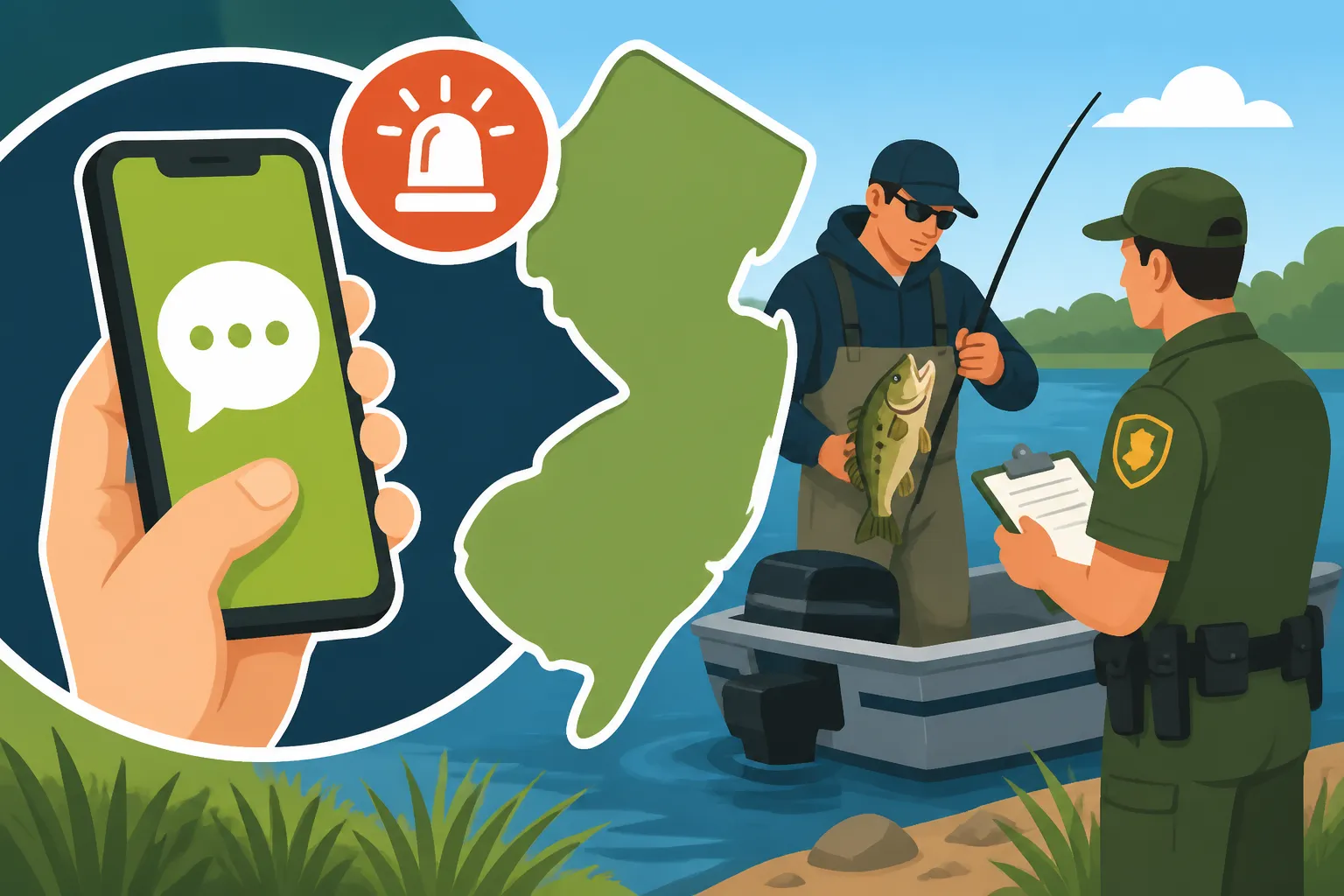
The New Jersey Division of Fish and Wildlife's Conservation Police are the folks you need to talk to. They are dedicated law enforcement officers who specialize in environmental and wildlife laws, including fishing regulations. There are a few ways to reach them, depending on the urgency of the situation.
For Immediate or In-Progress Violations:
If you are witnessing a violation right now and you believe CPOs could respond quickly enough to intervene, the absolute best thing to do is call their dispatch directly.
- Operation Game Thief (24/7 Hotline): 1-855-OGT-TIPS (1-855-648-8477). This is a dedicated, anonymous hotline for reporting fish and wildlife violations. Use this number when time is of the essence. Be prepared to provide all the detailed information you gathered. Even though it's anonymous, providing your name and number can sometimes be helpful if CPOs need to follow up for more clarification, though it's never required.
For Non-Emergency Reports or Information:
If the violation has already occurred and there's no immediate chance of intervention, or if you simply want to provide information, you can contact the appropriate regional office during business hours.
- NJ Fish & Wildlife Main Office: (609) 292-2922 (general inquiries, they can direct you)
- Regional Law Enforcement Offices:
- Northern Region: (908) 735-8240 (covers counties like Sussex, Morris, Hunterdon, Warren)
- Central Region: (609) 259-2120 (covers counties like Middlesex, Monmouth, Ocean, Mercer)
- Southern Region: (856) 629-0555 (covers counties like Burlington, Atlantic, Cape May, Salem)
While email isn't typically recommended for time-sensitive reports, if you have photos or videos and it's a non-emergency situation, you could follow up a phone call with an email to their general law enforcement inbox (check the official NJDFW website for the most current email contact). Always call first if it's potentially an in-progress violation.
It’s important to remember that CPOs might be patrolling vast areas, and they can't be everywhere at once. Your detailed report drastically increases their chances of catching violators. Don't be discouraged if you don't see immediate action. Your report contributes to a larger enforcement picture. Knowing about New Jersey Conservation Police and License Checks will give you an idea of the kind of proactive work they already do, and your report complements that.
What Happens After You Report a Violation?
You've made the call, provided all the information, and now you might be wondering, "What happens next?" It's a valid question, and understanding the process can help manage expectations. While you might not always see an immediate patrol car or a direct outcome, rest assured that your report is taken seriously.
The Investigation Process
Once you've submitted a report, especially through the Operation Game Thief hotline, the information is relayed to the appropriate Conservation Police Officers in the area. They will assess the urgency and details you've provided. If it's an in-progress situation with sufficient detail (like a license plate or boat registration), they will attempt to respond. However, as mentioned, New Jersey is a big state with many waterways, and CPOs might be handling other incidents or patrolling remote areas. An immediate response isn't always possible.
If it's a non-emergency report, or if a direct intervention isn't feasible, the information still becomes part of their intelligence gathering. CPOs will often use this data to identify hotspots for violations, schedule future patrols, or even conduct targeted investigations. For example, if multiple reports come in about consistent netting in a certain bay area or over-harvesting of specific species near a particular jetty, they might increase surveillance or plan an undercover operation. They are constantly monitoring patterns and adjusting their enforcement strategies based on information received, including reports from concerned anglers like yourself.
Potential Outcomes for Violators
When a violator is apprehended, the outcomes can vary significantly depending on the severity and nature of the offense. For minor infractions, such as a first-time offense for fishing without a license (which you can learn more about in Penalties for Fishing Without a License in New Jersey), an officer might issue a warning, a civil summons, or a fine. These fines can range from modest amounts to several hundred dollars. For more serious or repeat offenses, especially those involving significant over-limits, illegal methods, or commercial poaching, the consequences can be much more severe.
These can include:
- Significant Fines: Potentially thousands of dollars.
- Seizure of Equipment: Boats, fishing gear, and even vehicles used in the commission of the crime can be confiscated.
- Loss of Privileges: Revocation of fishing licenses and hunting privileges for a period of time, or even permanently.
- Criminal Charges: In extreme cases, especially with commercial poaching or environmental crimes, violators can face criminal charges, leading to probation or even jail time.
The specific penalties are outlined in state statutes and can be quite stiff, demonstrating how seriously New Jersey takes the protection of its natural resources. The New Jersey Fishing Regulation Changes for 2026 and subsequent years often include adjustments to these penalties to ensure they remain effective deterrents. Your report directly contributes to these enforcement actions, helping to ensure that those who break the rules are held accountable.
Conclusion: Be a Steward of New Jersey's Waters
The bottom line is this: if you see something, say something. Reporting a fishing violation in New Jersey isn't just a civic duty; it's an act of stewardship for our precious aquatic environments and the diverse fish species that call them home. It’s an essential way to protect the future of fishing for everyone who loves casting a line in the Garden State. By being observant, gathering accurate information, and knowing how to contact the Conservation Police, you become an invaluable partner in maintaining the health and integrity of New Jersey's fisheries. Your efforts ensure that everyone, including future generations, can enjoy the thrill of a bending rod and the beauty of our waterways.
Disclaimer
This guide is for informational purposes only and should not be considered legal advice. Always refer to the official New Jersey Division of Fish and Wildlife regulations and contact law enforcement directly for specific questions or to report violations. Fishing regulations are subject to change, so always ensure you have the most current information before heading out on the water.