New Jersey Trout Stamp Refund If Season Is Cancelled
It’s a real bummer when you've got your heart set on hitting the streams for trout, only to wonder if something unforeseen could derail the whole season. That anxious thought of investing in a New Jersey trout stamp and then having the season potentially cancelled can be frustrating, making you question your preparation and the state's policies. This guide is here to shed light on the likelihood of such a scenario and, more importantly, what the official word is on refunds for your trout stamp in New Jersey.
Understanding New Jersey Trout Stamp Basics Before We Talk Refunds
Before we dive into the deep end of refunds, it’s crucial to understand exactly what a New Jersey trout stamp is and why it’s a separate purchase from your general fishing license. Many anglers, especially those new to trout fishing in the Garden State, sometimes get these two mixed up, or don't realize the trout stamp is an additional requirement.
What Exactly is a New Jersey Trout Stamp?
A New Jersey trout stamp isn't just a fancy piece of paper; it's a dedicated permit that grants you the legal right to fish for, and retain, trout in the state's public freshwaters. It's an extra layer of regulation on top of your standard New Jersey fishing license. Think of it like this: your general fishing license is your entry ticket to fish for most species, but the trout stamp is your special VIP pass for the trout fishing experience. Without it, even if you have a valid fishing license, keeping a trout you catch could lead to a fine. You can find detailed information about the specific requirements in our guide on the New Jersey Trout Stamp: Who Needs One.
The funds generated from trout stamp sales are directly earmarked for trout-related programs. This includes the massive effort by the New Jersey Division of Fish and Wildlife to raise and stock hundreds of thousands of trout in rivers, streams, and lakes across the state each year. These programs ensure that anglers have a healthy population of fish to target, making those early spring mornings or crisp fall days on the water truly special. Without these stamps, the incredible stocking program that makes New Jersey a premier trout fishing destination simply wouldn't be possible.
Why a Separate Trout Stamp is Required
The primary reason for a separate trout stamp is financial. As mentioned, the revenue it generates directly supports the state's extensive trout propagation and stocking efforts. New Jersey takes its trout program seriously, and it's a significant undertaking. The costs associated with running hatcheries, transporting fish, and managing habitat are substantial. By having a dedicated stamp, the state ensures a consistent funding source that cannot be diverted to other programs.
This separate funding also allows the Division of Fish and Wildlife to implement specific management strategies tailored just for trout, like the New Jersey Trout Season Preseason Closure Explained which protects freshly stocked fish before opening day. It helps maintain the quality and quantity of trout fishing opportunities. When you purchase a trout stamp, you're not just buying a piece of paper; you're directly contributing to the conservation and enhancement of New Jersey's trout fisheries. It's an investment in future fishing adventures for yourself and for generations to come. Many anglers purchase their necessary gear, from quality reels to specialty fly lines, often through online retailers like Amazon, months in advance, so knowing their investment in the stamp contributes to the resource is important.
The Reality of a New Jersey Trout Season Cancellation
The idea of an entire trout season being cancelled in New Jersey is a pretty dramatic one, and thankfully, it's exceedingly rare. While specific closures or delays can and do happen, a complete shutdown of an entire season is almost unheard of.
How Likely is a Full Season Cancellation?
Let's be realistic: a full-blown cancellation of the New Jersey trout season is an incredibly low probability event. The state's Division of Fish and Wildlife is deeply committed to providing fishing opportunities, and cancelling a major season like trout would have massive implications for anglers, local businesses, and the state's conservation efforts. For such an event to occur, you would likely be looking at an unprecedented statewide emergency – something akin to a catastrophic natural disaster that renders all waterways unsafe or inaccessible, or a widespread, severe public health crisis that mandates extreme social distancing for months on end. Even during significant events like the recent global pandemic, fishing was often deemed an essential outdoor activity, albeit with some modified guidelines.
Historically, the state has gone to great lengths to ensure fishing remains accessible. They understand the immense value it holds for recreation, mental well-being, and the local economy. So, while we can never say "never," the odds of a full season being entirely scrapped are incredibly slim. It would take something truly extraordinary and unprecedented to trigger such a decision. You could probably purchase a new trout fishing vest on Amazon with more certainty than anticipating a season cancellation!
More Common Disruptions: Closures and Delays
While a full cancellation is unlikely, it’s far more common to experience localized or temporary disruptions. These usually fall into a few categories:
- Extreme Weather Events: Heavy flooding, prolonged drought, or severe storms can temporarily close specific sections of rivers or lakes, or delay stocking operations. For instance, if a major hurricane causes widespread damage to infrastructure and makes certain areas dangerous, those specific waterways might be closed until deemed safe. Similarly, if water temperatures become dangerously high for trout in certain streams during a hot summer, regulations might shift to catch-and-release only or even temporary closures to protect the fish. This is often covered in official updates, which is why it's vital to be Reading the New Jersey Fish and Wildlife Digest regularly.
- Localized Contamination or Environmental Issues: In rare cases, a specific body of water might experience an unexpected contamination event or an outbreak of fish disease. In such situations, the state might issue a localized closure or consumption advisory to protect both fish and public health. These are generally isolated incidents and wouldn't impact the entire state's trout season.
- Regulatory Adjustments: Sometimes, based on scientific data or regional management needs, the Division of Fish and Wildlife might make adjustments to season dates, bag limits, or size limits. These are usually communicated well in advance, but can sometimes happen mid-season in response to rapidly changing conditions. Our guide on New Jersey Fishing Season Dates and Closures often covers these types of changes. For example, if trout survival rates are unexpectedly low in certain areas, they might adjust daily bag limits by species to help the population recover. Even in these scenarios, the season typically continues, just with modified rules.
In most cases of disruption, the state aims for precision, closing only what is necessary and for the shortest possible duration, rather than implementing a blanket cancellation. Anglers who plan ahead and have various spots in mind, perhaps even researching different areas using maps found on Amazon, are often able to adapt.
New Jersey's Official Stance on Fishing License and Stamp Refunds
This is where the rubber meets the road. While it's natural to wonder about getting your money back if a season doesn't go as planned, New Jersey's official policy is quite clear on the matter of refunds for fishing licenses and stamps.
The General Rule: Non-Refundable Nature of Licenses
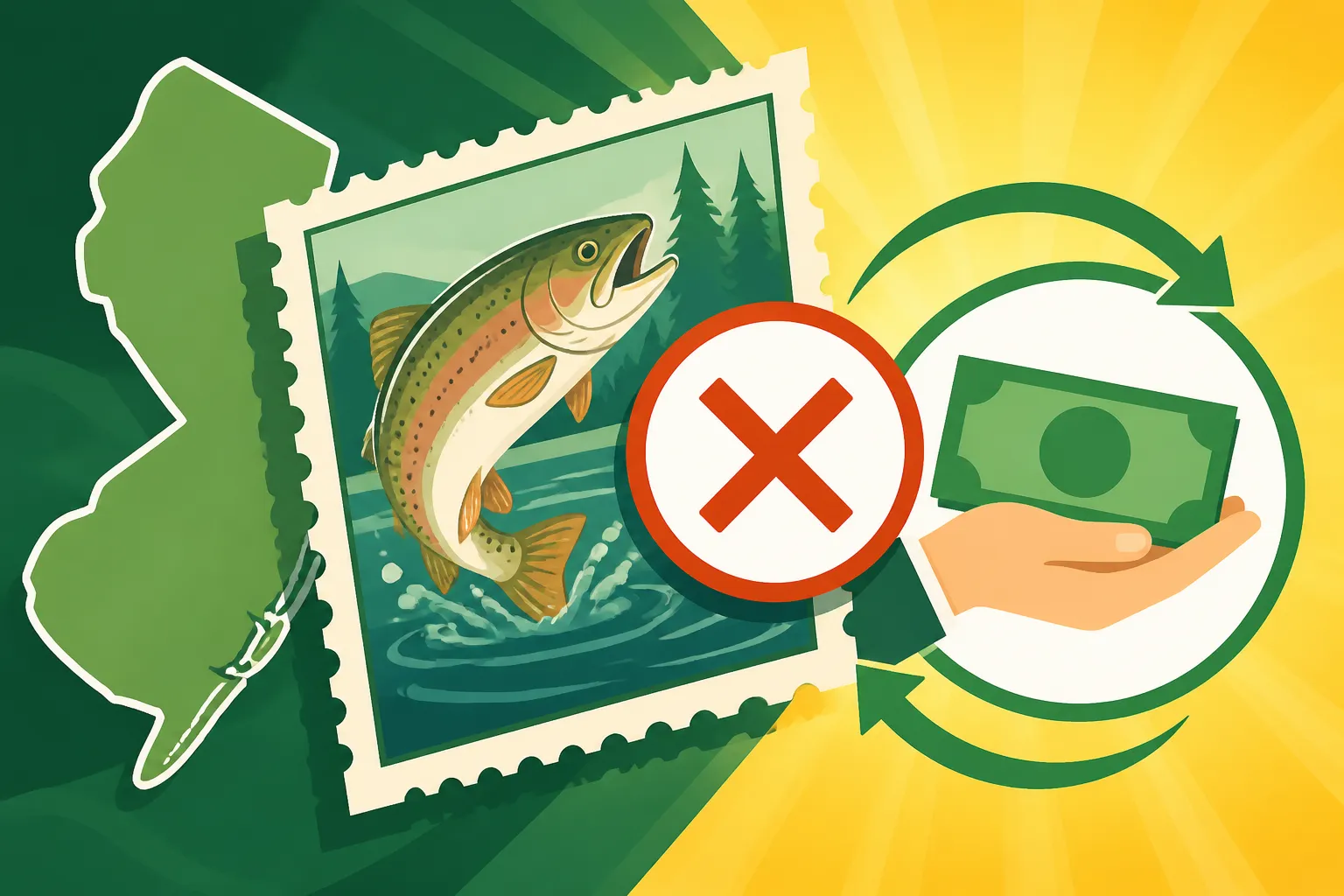
Here’s the plain truth: New Jersey fishing licenses and stamps are generally non-refundable. This policy is clearly stated by the New Jersey Division of Fish and Wildlife. When you purchase your New Jersey Trout Stamp Requirements Explained or your general fishing license, you are essentially buying a permit for a specific period, usually a calendar year, regardless of how much you actually use it or if external factors prevent you from fishing as much as you planned. This applies to your annual general fishing license, your trout stamp, and any other special permits you might acquire.
The rationale behind this policy is practical. The funds from license and stamp sales are immediately put to use to support fish stocking, habitat management, law enforcement, and other crucial conservation programs that run year-round. These are not funds held in escrow waiting for you to go fishing; they are actively working to maintain the state's natural resources. If the state were to issue refunds for every disruption, minor or major, it would create an administrative nightmare and severely cripple essential conservation funding. It's a bit like buying a season pass to a theme park – if you don't go on every ride, or if a few rides are closed for maintenance, you generally don't get a partial refund. The value is in the access and the contribution to the overall operation. This is also covered in more detail in the general New Jersey Fishing License Refund Policy.
What Happens in Extreme, Unforeseen Circumstances?
While the official stance is non-refundable, it's worth considering truly extreme, unprecedented scenarios. In the event of a statewide catastrophic emergency or a decision by the governor to completely shut down all recreational fishing for an extended period, the state might consider extraordinary measures. However, even in such highly improbable circumstances, there is no guarantee of a refund. Any decision of that magnitude would likely come from the highest levels of state government, potentially requiring legislative action, and would be an exception to standard policy, not the norm.
Such a situation would be driven by public safety or severe environmental protection concerns, far beyond typical fishing management. Anglers should manage their expectations accordingly. It's best to view your purchase as a contribution to conservation and access, rather than a refundable product tied to guaranteed fishing days. Knowing that the What Happens to Unused New Jersey Fishing License Fees? goes directly back into the resource can provide some comfort, even if your personal fishing plans hit a snag.
Practical Steps and Considerations for Anglers
Given the low probability of a refund for a cancelled season, proactive measures and staying informed are your best bets as a New Jersey trout angler.
Staying Informed About Regulation Changes
The absolute best thing you can do as an angler in New Jersey is to stay current with official information. Do not rely on rumors or social media chatter. Here’s how you can keep yourself in the loop:
- Official New Jersey Division of Fish and Wildlife Website: This is your primary, most reliable source for all regulations, alerts, and news. Bookmark it and check it regularly, especially as the When Does New Jersey Trout Season Open in 2026? approaches. They post emergency regulation changes, stocking schedules, and any advisories.
- The New Jersey Fish and Wildlife Digest: This comprehensive guide is published annually and contains all the rules and regulations for freshwater and saltwater fishing. You can usually find a digital copy on the state's website, or pick up a physical copy at license agents and tackle shops. Our guide, Reading the New Jersey Fish and Wildlife Digest, can help you navigate it.
- Email Alerts and Social Media: Sign up for email newsletters from the Division of Fish and Wildlife if available, and follow their official social media channels. While social media should not be your only source, it can provide quick alerts and direct you to official announcements.
- Local Tackle Shops: These are goldmines of local information. Shop owners and staff are often passionate anglers themselves and are usually very aware of local conditions, stocking updates, and any recent changes. They can offer advice on everything from New Jersey Freshwater Fishing Regulations Every Angler Should Know to the best bait for the day.
By making it a habit to check these resources, you’ll be among the first to know if any changes, closures, or delays are announced, allowing you to adjust your plans accordingly.
Planning Your Trout Fishing Season Wisely
Since refunds for a trout stamp are not standard, smart planning can help mitigate any potential disappointment or perceived loss if a disruption occurs.
- Diversify Your Fishing Plans: Don’t put all your eggs in one basket. Instead of planning only for the spring trout opener on one specific stream, consider expanding your horizons. New Jersey offers incredible variety: warmwater species like largemouth and smallmouth bass, panfish, and even saltwater opportunities. If your trout plans get momentarily derailed, you can always shift to another target. Our article on [New Jersey Trout Stocked Lakes Stay Open During New Jersey's Preseason Closure|New Jersey Trout Stocked Lakes Stay Open During New Jersey's Preseason Closure] highlights options for different times of year.
- Consider Multiple Locations: Instead of focusing on just one or two trout streams, research several different waters across the state. If one river is experiencing high water or a temporary closure, another might be perfectly fishable. The Division of Fish and Wildlife stocks How Many Trout Are Stocked Each Year in New Jersey? across numerous locations. This flexibility can save a planned fishing trip. You might even find some useful maps or guides on Amazon to help you discover new spots.
- Embrace Catch-and-Release: If regulations shift to catch-and-release only due to environmental factors, see it as an opportunity to hone your skills and enjoy the pure act of fishing. Sometimes the greatest joy comes from the challenge and the connection with nature, regardless of whether you take fish home for dinner. Practicing safe catch-and-release methods also contributes to the health of the fishery.
- View Your Stamp as a Contribution: Ultimately, your trout stamp is a vital contribution to the conservation of New Jersey's trout resources. Even if you miss a few days on the water or experience a minor disruption, know that your money is helping to sustain a fantastic natural resource for everyone. This includes funding efforts for New Jersey Trout Conservation Stamp Explained to ensure healthy populations continue.
By staying informed and maintaining a flexible approach to your fishing plans, you can minimize the impact of any unforeseen circumstances and continue to enjoy all the incredible fishing opportunities New Jersey has to offer, trout or otherwise.
Disclaimer
Please remember that fishing regulations, including those pertaining to licenses, stamps, and potential refunds, can change. Always consult the most current official New Jersey Fish and Wildlife Digest or their official website for the most accurate and up-to-date information before planning your fishing trips. This guide provides general information and understanding based on current policies.