Best Lures for Striped Bass Fishing
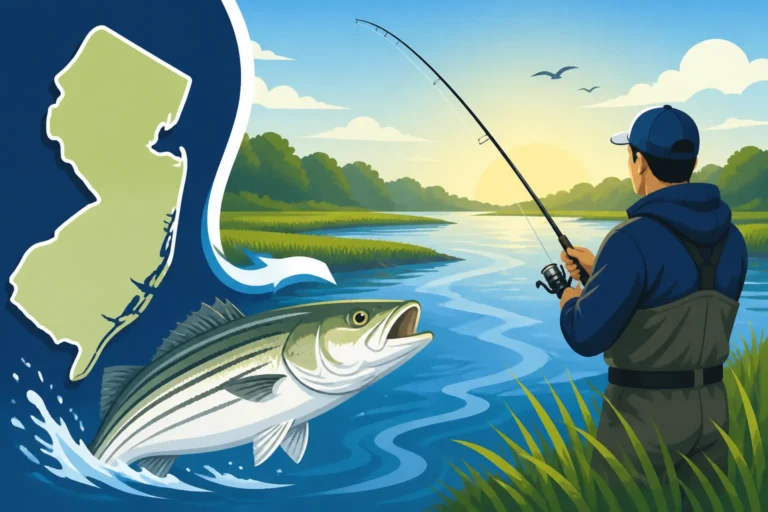
There's nothing quite like the anticipation of a striper bite, is there? You're out there, maybe on a chilly spring morning or a calm autumn evening, casting into the waves or drifting over a deep channel, and the big question always looms: "Am I throwing the right thing?" It's a frustration every New Jersey angler knows, trying to figure out what those striped bass are keying in on. This guide is here to cut through the confusion and help you select the absolute best lures to entice those powerful, hard-fighting striped bass in our New Jersey waters.
The Timeless Appeal of Plugs: Topwater and Diving
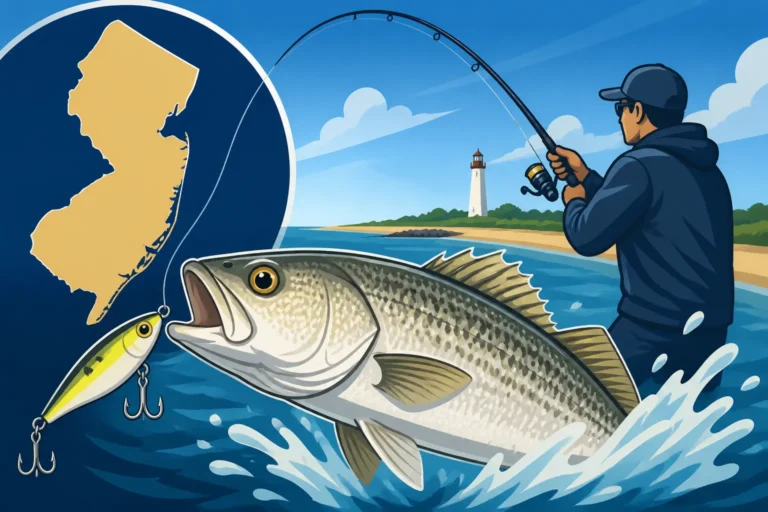
Plugs are often considered the glamour lures of striped bass fishing, especially when you witness an explosive topwater strike. These lures are designed to imitate various baitfish and can be incredibly effective in a range of conditions, from calm back bays to turbulent ocean fronts. The key is understanding when and where to deploy different types of plugs to maximize your chances.
Poppers and Walk-the-Dog Lures
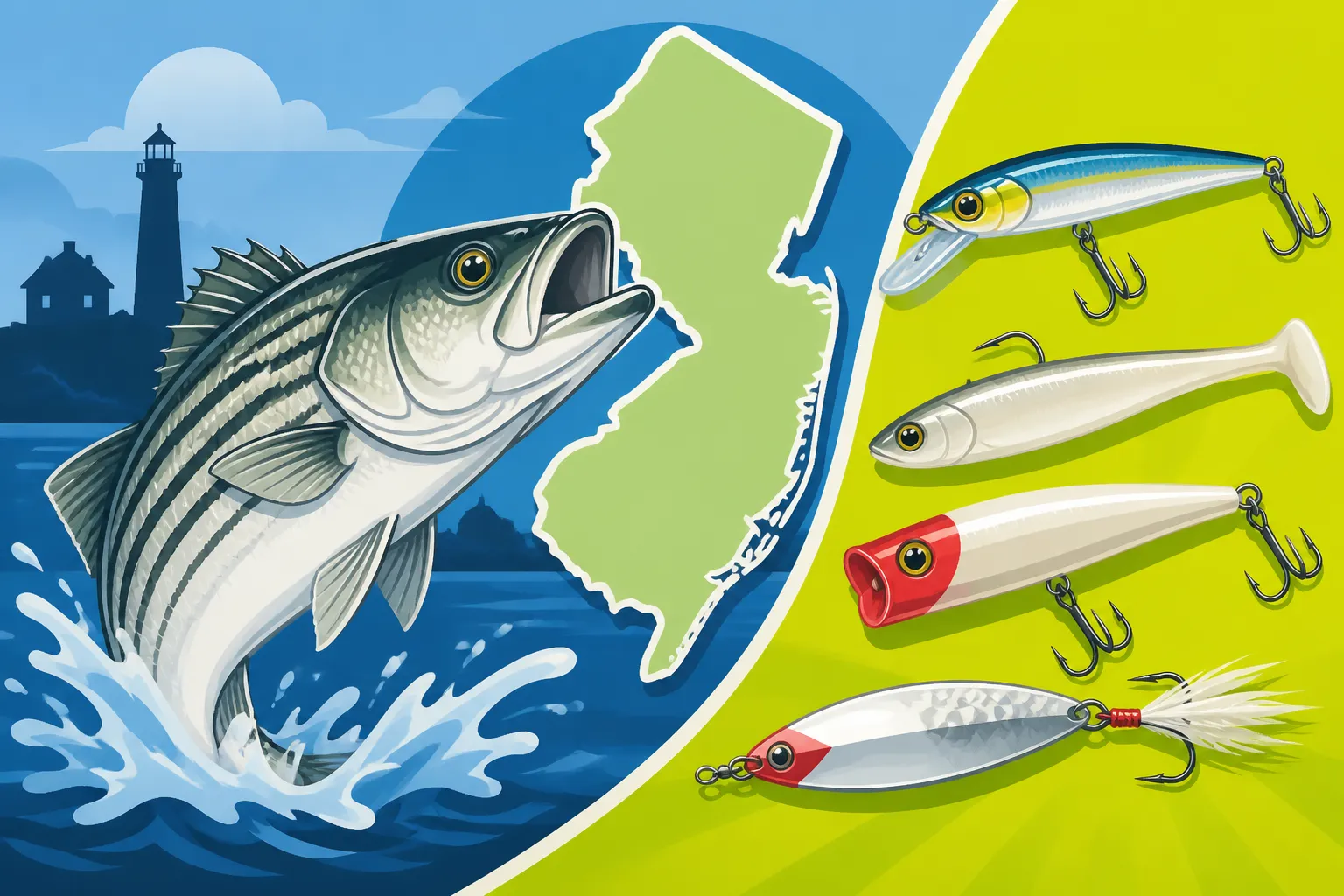
For sheer excitement, nothing beats a topwater strike. Poppers, with their cupped faces, create a loud splash and disturbance on the surface, mimicking a distressed baitfish struggling on the surface. They're fantastic when stripers are actively feeding on the surface, especially during low light conditions at dawn or dusk, or when you see baitfish scattering. Imagine a crisp morning on Raritan Bay; a well-placed popper can draw strikes from aggressive bass that are herding bunker near the surface. The commotion can often call fish in from a distance, making them an excellent choice when you suspect stripers are in the area but not actively showing themselves.
Walk-the-dog lures, on the other hand, are designed to glide side-to-side across the surface with a rhythmic retrieve, imitating a baitfish that's slightly stunned or trying to escape. Brands like Heddon's Super Spook or the venerable Zara Spook have been catching stripers for decades with this action. These are more subtle than poppers but can be deadly effective in calm water, particularly when the bass are a bit shy or pressured. Learning the cadence to "walk the dog" takes a little practice, but once you master it, you'll have an incredibly productive tool in your arsenal for drawing big blow-ups. You can find many effective variations of these on Amazon, often with different rattle patterns or finishes.
Minnow Plugs and Swimmers
Moving slightly beneath the surface, minnow plugs and swimmers are designed to imitate common baitfish like herring, spearing, or slender bunker. These plugs typically have a diving lip that forces them to swim at a specific depth when retrieved. Their tight, wiggling action is incredibly lifelike and can be irresistible to stripers, particularly in areas with moderate current or when bass are holding a few feet under the surface. Whether you're casting from a jetty at Manasquan Inlet or trolling in the deeper parts of Barnegat Bay, a good minnow plug can be a game-changer.
Many of these plugs are "suspending" or "floating" models. Floating models are great for fishing over shallow rocky areas, as they'll float up when you pause the retrieve, helping you avoid snags. Suspending models, meanwhile, will hold their depth when paused, which can be fantastic for enticing hesitant fish during a retrieve pause-and-go. Colors often mimic natural bait, like silver sides with a dark back, or vibrant patterns for stained water. When you're trying to figure out How to Fish for Striped Bass in New Jersey from a boat or pier, a trusty minnow plug is always a smart first choice.
Darters and Bottle Plugs
Darters and bottle plugs are a specialized category of subsurface plugs, particularly beloved by surfcasters and those fishing in strong currents. Darters are often designed to "dart" erratically from side to side when retrieved, especially when worked against a current. They don't have a traditional diving lip; rather, their unique shape creates the action. This erratic movement perfectly mimics a disoriented baitfish being tossed around by the waves or current, triggering an aggressive reaction strike from striped bass. They are fantastic for piercing the wind and getting out to distant sandbars or rips.
Bottle plugs, on the other hand, are heavy, robust plugs designed for punching through strong winds and currents. Their weight allows for incredible casting distance, a major advantage when you're trying to reach fish beyond the breakers or in a fast-moving inlet. They tend to wobble and dive slightly, offering a more subtle, yet powerful, presentation that can attract larger stripers holding in deeper, turbulent water. When you're trying to reach the outer bars during New Jersey's Fall Run, these heavy plugs can make all the difference, helping you cover more water effectively from shore.
The Unbeatable Versatility of Soft Plastics
Soft plastics have revolutionized striped bass fishing, offering an incredible array of shapes, sizes, and actions that can imitate almost any forage fish. Their versatility, combined with their affordability, makes them a must-have in any striper angler's tackle box. From subtle presentations to aggressive retrieves, soft plastics can do it all.
Paddle Tail Swimbaits for Every Scenario
If there's one soft plastic lure that stands out for striped bass, it's the paddle tail swimbait. These lures, often made from durable soft plastic, feature a paddle-shaped tail that kicks and vibrates intensely when retrieved, creating a swimming action that looks incredibly realistic. They come in various sizes, from small 4-inch versions perfect for schoolie bass to large 9-inch or 10-inch models for trophy fish. What makes them so versatile is their ability to be rigged in multiple ways. You can rig them on a simple lead head jig for a steady retrieve, or use a weighted swimbait hook for fishing shallower water or over weed beds.
Paddle tails are effective in nearly all conditions, from calm estuarial waters to open surf. The pulsating tail, combined with the undulating body, mimics a wide variety of baitfish, from peanut bunker to shad. Anglers often keep a range of colors, from natural baitfish patterns like pearl white or olive green, to brighter colors like chartreuse for stained water or low light. When the stripers are feeding on specific forage, like herring during their runs, matching the hatch with a similarly sized and colored paddle tail can be incredibly effective. You can find excellent multi-packs of these popular lures, such as those from reputable brands like Z-Man or Bass Kandy Delight, readily available online.
Jighead and Grub Combos
Sometimes, simplicity is key, and the jighead and grub combo is a prime example of effective simplicity. This setup consists of a plain lead head jig paired with a soft plastic grub, typically with a curly tail. While seemingly basic, the curly tail creates a subtle yet enticing action as it spirals through the water. This combination is particularly effective for tempting less aggressive fish or when you want a slower presentation closer to the bottom. It's also an excellent choice for fishing around structure like mussel beds, rocky outcrops, or bridge pilings where stripers might be hunkering down.
The beauty of the jighead and grub is its adaptability. You can vary the weight of the jighead to control your depth and rate of fall, and swap out grub colors and sizes to match conditions. For instance, a lighter jighead allows for a slower descent, which can be deadly when fish are suspended, while a heavier one gets you down quickly in current. This setup is fantastic for working the edges of channels in places like the Mullica River or deeper sections of the Delaware River, where stripers might be feeding on smaller baitfish or invertebrates near the bottom. It's a reliable option to consider when you're trying to figure out What Forage Fish Do Saltwater Gamefish Feed On? in a particular area.
Soft Plastic Eels and Worms
When stripers are focused on a specific type of elongated forage, like sand eels, bloodworms, or even lampreys, soft plastic eel and worm imitations can be incredibly effective. These lures, often long and slender, can be rigged weightless or on a light jighead, allowing them to swim with a sinuous, lifelike motion. They excel in scenarios where a subtle, natural presentation is required, particularly in clear water or when the fish are finicky.
For example, when sand eels are abundant along the beaches, a long, slender soft plastic eel (like those from the Hogy Pro Tail series) retrieved slowly just above the bottom can be absolutely deadly. Similarly, soft plastic worm imitations, often scented, can be effective in brackish or freshwater environments where real worms or leeches are part of the striper's diet. These lures are often best fished with a slow, steady retrieve, occasionally twitching the rod tip to impart a more erratic action. Their ability to closely mimic natural prey makes them an indispensable tool, especially during specific times of year when these forage species are prevalent.
Jigs: From Bucktails to Leadheads
Jigs are arguably the most versatile and historically effective lures for striped bass in New Jersey. They can be fished at virtually any depth, retrieved in countless ways, and accurately mimic a wide range of prey. Every serious striper angler has a collection of jigs, and for good reason.
The Classic Bucktail Jig
The bucktail jig is a New Jersey institution, and for good reason. This simple yet incredibly effective lure consists of a lead head molded onto a hook, dressed with deer hair (bucktail). Its design allows it to cut through water and sink quickly, making it ideal for deep water, strong currents, and reaching fish holding near the bottom. When you're fishing the Point Pleasant Canal or trying to get a lure down quickly in the surf against a strong rip current, the bucktail is your best friend. The natural fibers of the bucktail pulsate and breathe in the water, creating a lifelike action that stripers simply can't resist.
Bucktails are often tipped with a soft plastic trailer, like a Gulp! Swimming Mullet or a curly tail grub, to add extra bulk, scent, and action. The color and weight of the bucktail should be chosen based on water depth, current, and clarity, as well as the forage present. White, chartreuse, and olive are perennial favorites. Learning Bucktail Jigging Techniques for New Jersey Anglers is a rite of passage, whether you're bouncing it off the bottom, swimming it mid-water, or tipping it with a soft plastic. This foundational lure is a must-have for any angler serious about striped bass, especially when targeting those bigger fish holding deeper.
Leadhead Jigs with Trailers
While bucktails are a specific type of jig, the broader category of leadhead jigs combined with soft plastic trailers offers incredible adaptability. These jigs are essentially weighted heads designed to accept various soft plastic bodies. This allows for endless customization. You can pair a heavy, streamlined leadhead with a slender soft plastic for a fast-sinking presentation in deep water, or a lighter, mushroom-shaped head with a bulky paddle tail swimbait for a slower, wider swimming action in shallower areas.
This flexibility means you can imitate everything from a fleeing baitfish to a struggling crab or even a squid. Many anglers will carry a range of jighead weights and hook sizes, along with a variety of soft plastic trailers, so they can quickly adapt to changing conditions or what the stripers are feeding on. For example, if you're fishing for striped bass in the back channels of Great Bay and they're feeding on small crabs, a leadhead jig with a small, dark colored soft plastic creature bait could be incredibly effective. Don't forget to explore brands like Z-Man and Berkley Gulp! for excellent soft plastic options available on platforms like Amazon.
Metal Lures for Distance and Depth
Metal lures might seem old-fashioned to some, but their effectiveness, especially for covering vast amounts of water and reaching distant fish, is undeniable. These heavy, compact lures are incredibly aerodynamic and sink quickly, making them perfect for specific situations.
Casting Spoons for Covering Water
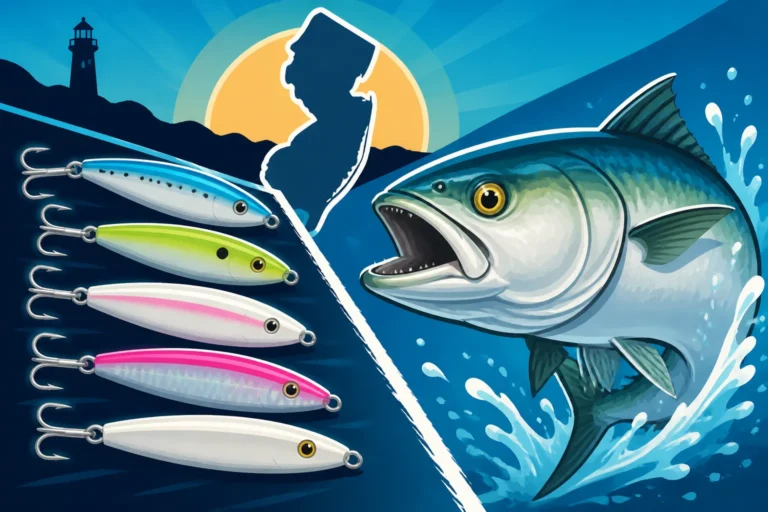
Casting spoons, also known as "tin" lures, are solid pieces of metal, often chrome or painted, designed for exceptional casting distance. Their weight and profile allow them to slice through the air, reaching distant schools of bait and the stripers that are chasing them. Once in the water, their wobbling, flashing action perfectly imitates a fleeing baitfish. They are particularly effective when striped bass are busting bait on the surface at a distance that other lures can't reach, or when you need to cover a lot of ground quickly from a beach or open boat.
Imagine standing on Island Beach State Park, and you see a blitz of bluefish and stripers boiling on the surface a hundred yards out. A well-weighted casting spoon, like a Kastmaster or a Hopkins Shorty, can get you right into the action. The flash and vibration can draw strikes from aggressive fish, and their durability means they can withstand multiple encounters with toothy bluefish often mixed in with the stripers. While they are often associated with blitzing fish, they can also be retrieved slowly to tempt less active stripers holding deeper.
Jigging Metals for Deeper Structure
Jigging metals are designed to be fished vertically, dropping quickly to the desired depth and then worked with an up-and-down motion. These lures are often heavier and more streamlined than casting spoons, built to get into the strike zone fast. They are incredibly effective for targeting stripers holding near deep structure such as wrecks, reefs, or artificial oyster beds. When fish are marked on a fish finder in deeper water, a jigging metal is often the best way to present a lure directly to them.
The erratic, fluttering fall of a jigging metal mimics a dying or injured baitfish, making it an easy target for opportunistic stripers. The retrieve typically involves a series of sharp lifts and drops, allowing the lure to dart and flutter through the water column. This technique is particularly popular on party boats fishing deeper offshore reefs for black sea bass or even bigger stripers. The flash and vibration created by the metal in motion can draw strikes even when visibility is low. You can find a good selection of various weights and colors of these on Amazon, ready for your next deep-water adventure.
Choosing the Right Lure: Matching the Hatch and Conditions
Selecting the perfect lure isn't just about having a variety; it's about understanding when and where to deploy each one. Striped bass are opportunistic predators, but they can also be incredibly finicky, especially if they're focused on a particular bait source. "Matching the hatch" is a phrase you'll hear often, and it means selecting a lure that closely imitates the size, shape, and color of the prevalent forage.
Considering Water Conditions and Time of Day
Water conditions play a huge role in lure selection. In clear, calm water, a more natural presentation might be required. This is where subtle soft plastic eels or walk-the-dog lures excel. If the water is murky or stained, brighter colors like chartreuse or highly vibrating lures that create more commotion, such as a noisy popper or a paddle tail swimbait, can be more effective. Strong currents might demand heavier jigs or darters that can cut through the flow and maintain their action, whereas in slack water, lighter lures with a more natural drift might be better. Don't forget to also consider the wind; on windy days, a heavy metal lure or bottle plug will cast much better than a light soft plastic.
The time of day is another crucial factor. Low light conditions – dawn, dusk, and night – are prime times for striped bass, especially for larger fish. During these periods, topwater plugs can be explosive. At night, dark colored lures or those with a strong silhouette against the moonlit sky (like black or purple) are often very effective, as bass rely more on vibration and outline. During bright daylight, stripers often retreat to deeper, cooler water or tight against structure, making jigs and diving plugs more effective. When you're considering Best Time of Year to Fish for Striped Bass in New Jersey, remember that these daily conditions will significantly influence your lure choice.
Seasonal Preferences and Forage
Striped bass are migratory creatures, and their diet changes throughout the year as they follow baitfish up and down the coast. In the spring, when the herring and bunker runs begin, larger plugs, paddle tails, and bucktails mimicking these larger baitfish become incredibly effective. As the summer progresses, smaller baitfish like spearing and sand eels become more prevalent, and smaller soft plastics or slender minnow plugs might be the ticket. During When Do Striped Bass Migrate Through New Jersey? in the fall, the "fall run" can see stripers feeding voraciously on large schools of bunker, making big plugs and bucktails with large trailers excellent choices.
Keeping an eye on what bait is in the water is paramount. If you see peanut bunker everywhere, a soft plastic paddle tail in the 4-6 inch range that mimics that profile will likely outperform a large eel imitation. Conversely, if you notice larger bunker flips on the surface, don't be afraid to throw a substantial topwater plug or a heavier bucktail. Pay attention to local fishing reports and observe the water for signs of baitfish and feeding activity. Having a diverse selection of lures that can imitate various forage at different depths and sizes will ensure you're always ready, no matter what the stripers are dining on. And remember, understanding the New Jersey Striped Bass Slot Limit and Season is vital for responsible angling!
Lure Comparison Table
To help visualize some of the pros and cons of these popular lure types, here's a quick overview:
| Lure Type | Best Use Case | Pros | Cons | Key Imitations | Ideal Conditions |
|---|---|---|---|---|---|
| Poppers | Surface feeding, low light, calling fish | Exciting strikes, high visibility, loud splash | Less effective in rough water, can be tiring to work | Distressed baitfish | Calm to moderate chop, dawn/dusk |
| Walk-the-Dog | Calm surface, subtle presentation | Realistic wounded baitfish action, good for finicky fish | Requires practice, less visible in rough water | Wounded baitfish | Calm water, low light |
| Minnow Plugs | Subsurface search, specific depths | Versatile depths, realistic swimming action, good casting | Can get snagged easily in shallow areas, less erratic than jigs | Spearing, herring | Moderate currents, open water |
| Darters | Strong currents, long casts | Excellent casting distance, erratic action in current, good profile | Less versatile retrieve, can be specialized for current | Disoriented baitfish | Strong current, surf |
| Bottle Plugs | Extreme distance, heavy wind/current | Cuts wind, reaches distant fish, deep penetration | Heavy, less subtle action, can require specific retrieve | Larger baitfish | Heavy current, long cast needs |
| Paddle Tail Swim. | All-around versatility, lifelike action | Highly realistic, adaptable rigging, good vibration | Can be prone to snags on bottom, may get chewed up by bluefish | Bunker, shad, eels | All conditions, varied depths |
| Bucktail Jigs | Deep water, strong current, bottom fishing | Incredibly versatile, effective for big fish, good casting | Can snag easily, requires good feel for bottom, small sizes can tangle | Squid, baitfish, crabs | Strong current, deep water, surf |
| Jigging Metals | Deep structure, vertical jigging, distance | Fast sinking, high flash, excellent casting | Less effective on slow retrieve, can spook shallow fish | Mackerel, spearing | Deep water, fast retrieve |
| Casting Spoons | Blitzing fish, long casts, covering water | Exceptional casting, high flash, durable | Less depth control, can get chewed up by bluefish if not rigged right | Shiny baitfish | Open water, blitzes |
Hopefully, this table gives you a clear picture of when each lure type shines. Getting out there and experimenting is key to finding your personal favorites. You might even find that one particular jig or plug works wonders in your local honey hole where others fail!
Disclaimer
The information provided in this guide is for general informational purposes only. Fishing regulations, seasons, and licensing requirements in New Jersey can change frequently. Always consult the most current New Jersey Fish and Wildlife Digest or visit their official website before heading out to fish. Adhering to all local, state, and federal regulations is the angler's responsibility.