Spinning Reel vs Baitcasting Reel for Bass Fishing
Choosing the right fishing reel can feel like trying to solve a complicated puzzle, especially when you're just starting out or looking to upgrade your gear for bass fishing here in New Jersey. Many anglers get hung up between the popular spinning reel and the seemingly more advanced baitcasting reel, wondering which one will truly help them land that lunker largemouth or feisty smallmouth. This guide is going to break down the ins and outs of both types, helping you understand their strengths and weaknesses so you can confidently pick the perfect tool for your next Garden State bass adventure.
What's the Big Deal Anyway? Understanding the Basics of Reels
Before we dive into the nitty-gritty of which reel is best for what situation, let's take a moment to really understand what sets a spinning reel apart from a baitcasting reel. They both hold line and retrieve it, sure, but the way they achieve that is fundamentally different, and those differences profoundly impact how you fish. It’s not just about aesthetics; it’s about mechanics and performance on the water.
The Spinning Reel: Your Trusty Workhorse
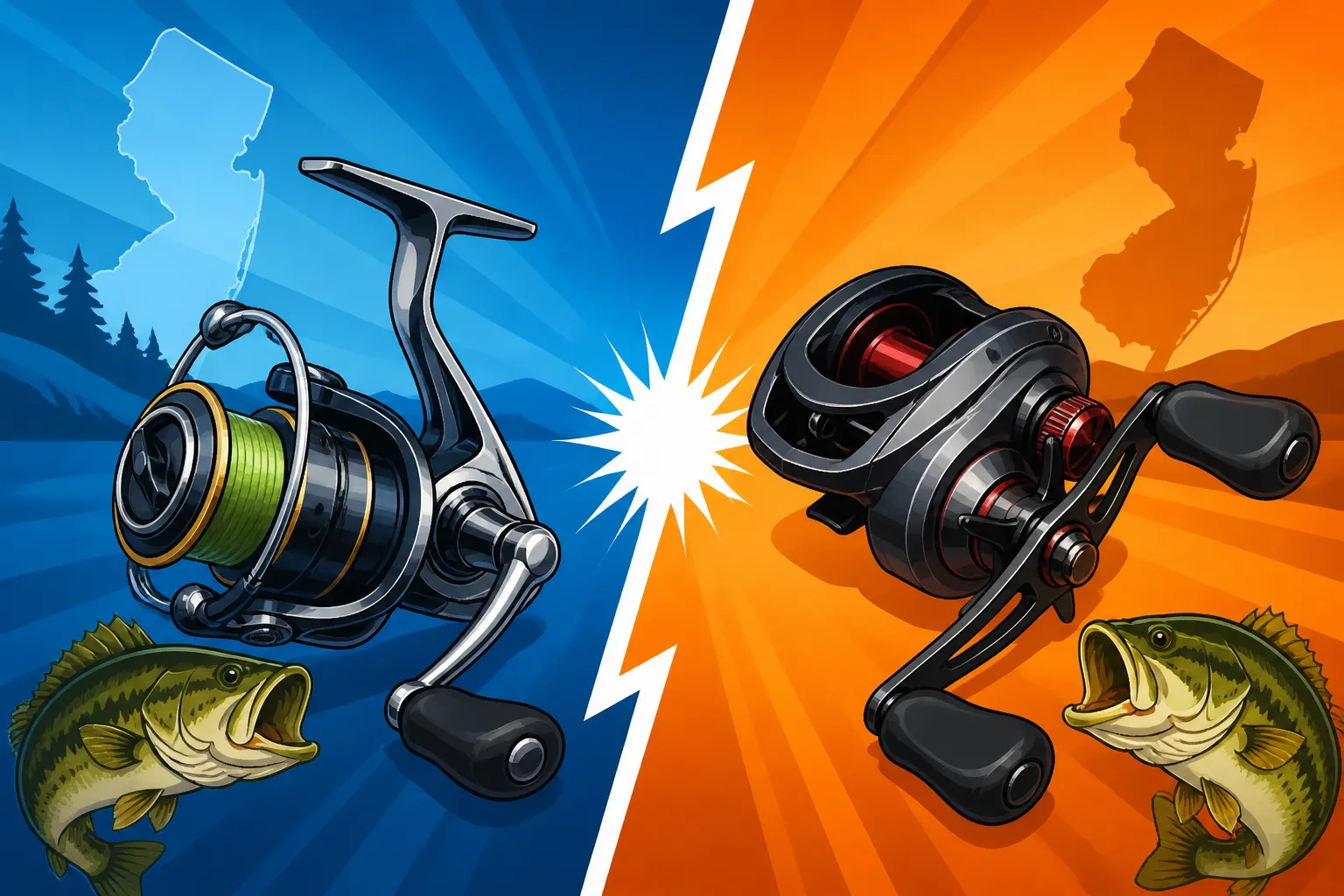
Spinning reels are probably what comes to mind for most people when they think about fishing. They're incredibly common and for good reason: they're intuitive, forgiving, and versatile. With a spinning reel, the spool remains stationary during the cast. When you cast, the line simply uncoils off the end of the spool. This design is what makes them so easy to use, especially for beginners.
You'll typically find the reel mounted underneath the rod, with the bail arm swinging around to guide the line onto the spool during retrieval. This setup helps prevent line twist and makes it relatively simple to manage lighter lines and smaller lures. Whether you're targeting panfish in a local pond or chasing bass in one of New Jersey's many lakes, a spinning reel is often the go-to choice for its user-friendliness. For more general guidance, you might find our article on Best Beginner Rod and Reel Combo for Saltwater Fishing helpful, as many of the principles for choosing a combo apply to freshwater setups too.
The Baitcasting Reel: The Powerhouse Performer
Baitcasting reels are a different beast entirely. Instead of a stationary spool, the spool on a baitcaster actually rotates as the line comes off it during a cast and as you retrieve. This direct rotation offers incredible control and power, but it also introduces a steeper learning curve. The reel sits on top of the rod, and you'll typically use your thumb to control the line coming off the spool, especially during the cast.
The design of a baitcaster allows for much heavier lines and lures, making them ideal for tackling larger, more aggressive fish or fishing in dense cover. They offer superior accuracy and cranking power, which can be a game-changer when you're trying to pull a chunky largemouth out of heavy lily pads at Lake Hopatcong. However, that rotating spool also means they are prone to backlashes – those frustrating tangles that look like a bird's nest and can ruin a good fishing day if you're not careful.
Digging Deeper: When to Choose Which for New Jersey Bass
Now that we understand the basic mechanics, let's talk about how these differences translate to practical bass fishing scenarios here in the Garden State. New Jersey offers such a diverse range of freshwater environments, from small, clear ponds to large, snag-filled reservoirs, and each type of reel excels in different situations.
When a Spinning Reel Shines (and Why It's Great for Jersey Waters)
Spinning reels are incredibly versatile and are often the best choice for a wide array of bass fishing techniques, particularly for those who are still honing their skills.
-
Light Lures and Finesse Tactics: If you're using lightweight lures like small shaky heads, wacky-rigged worms, or tiny swimbaits to entice finicky bass, a spinning reel is your best friend. Its design allows for effortless casting of these lighter presentations, which can be crucial when bass are pressured or feeding subtly. Think about those clear, calm mornings on Round Valley Reservoir where a subtle approach is key. For finesse fishing, the line peels off smoothly, preventing frustrating snags and allowing for delicate presentations that can make all the difference. This is also where techniques like drop-shotting, discussed in articles like How to Drop Shot for Smallmouth Bass, really shine, and spinning gear handles them beautifully.
-
Beginner-Friendly: Let’s be honest, everyone starts somewhere. The learning curve for a spinning reel is much flatter than a baitcaster. You'll spend less time untangling frustrating backlashes and more time actually fishing. This means more enjoyment and less frustration, especially for younger anglers or those new to the sport. If you're just getting into Largemouth Bass Fishing in New Jersey, starting with a spinning reel will allow you to focus on casting technique and lure presentation without the added complexity of thumb control. Many excellent and affordable spinning combos can be found on sites like Amazon, making it easy to get started.
-
Open Water and Sparse Cover: When you're fishing areas with less dense vegetation or structure, like open points, docks, or along relatively clear shorelines, a spinning reel provides ample power and control. You don't need the brute force often associated with baitcasters to pull fish out of thick weeds if the weeds aren't there. It's fantastic for casting to visible targets or working a shoreline where snags are minimal.
-
Winter and Early Spring Fishing: In colder months, when bass are sluggish and often require slower presentations and lighter lines, spinning reels excel. During times like How to Catch Largemouth Bass in Cold Water, the delicate feel and precise control of a spinning setup allow anglers to present baits slowly and subtly, which is often what it takes to get a bite when water temperatures are low.
When a Baitcasting Reel Takes the Crown (and When to Level Up)
Baitcasting reels, despite their initial challenge, offer significant advantages that make them indispensable for serious bass anglers, especially when dealing with specific techniques and conditions common in New Jersey.
-
Heavy Cover and Power Fishing: This is where baitcasters truly dominate. If you're flipping jigs into dense lily pads, punching heavy mats of vegetation, or cranking big deep-diving lures through submerged brush piles, you need the backbone and raw power a baitcaster provides. The heavier line capacities and stronger drag systems allow you to confidently pull big bass out of places where a spinning reel might struggle or even break. When you’re trying to land a trophy-sized bass that could challenge the New Jersey Largemouth Bass State Record, you'll want the robust performance of a baitcaster.
-
Accuracy and Control: Once you've mastered the thumb control, a baitcasting reel offers unparalleled accuracy. You can feather your casts, stopping the spool precisely where you want the lure to land, which is critical for pitching into tight spots or skipping baits under docks. This precision casting is invaluable on many of New Jersey's smaller, more intricate ponds and reservoirs where placing a lure in just the right spot can be the difference between a bite and no bite. This level of control is also highly beneficial for specific techniques like those discussed in How to Fish Topwater Lures for Largemouth Bass, where precise placement is key to triggering explosive strikes.
-
Heavy Lures and Large Baits: From big swimbaits and oversized crankbaits to hefty spinnerbaits and bladed jigs, baitcasters are designed to handle the weight and retrieve resistance of larger lures. Trying to cast a 1-ounce jig with a light spinning setup can be awkward and limit your distance. A baitcaster, however, can launch these heavier offerings with ease and efficiency, making it perfect for covering water quickly or targeting aggressive bass.
-
Fatigue Reduction: While it might seem counterintuitive due to the skill required, for specific power fishing techniques, baitcasters can actually be less fatiguing over a long day. The ergonomics of a baitcaster and the way it balances on the rod can make repetitive casting and retrieving heavy lures more comfortable than doing the same with a spinning reel, which can feel off-balance with heavy gear. You'll notice many of the pros utilizing baitcasters for their tournaments, and you can often find competitive baitcasting setups on Amazon.
The Learning Curve and Mastering Your Gear
Deciding between a spinning reel and a baitcasting reel often comes down to your willingness to learn and adapt. While spinning reels are generally easier to pick up, mastering a baitcaster takes patience, practice, and a good sense of humor (especially when you're battling a backlash!).
Taming the Baitcaster: The Dreaded Backlash
Ah, the backlash. The bane of every new baitcaster user's existence. It happens when the spool spins faster than the line is going out, creating a tangled mess. But don't let this discourage you! Every experienced baitcaster angler has been there, done that, and probably still gets one now and then.
- Start with Heavier Lures: When you're first learning, use heavier lures (like a 1/2 ounce spinnerbait or a stout jig). These lures carry more momentum, pulling line off the spool more consistently and reducing the chance of a bird's nest. Lighter lures require much more finesse and can lead to immediate tangles.
- Adjust Your Settings: Baitcasting reels have multiple adjustment points: the spool tension knob, the centrifugal brakes, and the magnetic brakes. The spool tension knob (usually on the side opposite the handle) controls how freely the spool spins. Start by tightening it so that your lure falls slowly to the ground when you press the freespool button. Then, gradually loosen it as you get more comfortable. The brakes (either external magnetic dials or internal centrifugal pins) control the spool's speed during the cast. Start with higher brake settings and reduce them as your technique improves.
- Practice, Practice, Practice: The best place to start isn't on the water when the fish are biting. Head to a local park or your backyard. Practice casting to specific targets. Learn to feather the spool with your thumb during the cast, applying slight pressure as the lure splashes down. This thumb control is key to preventing overruns and achieving accuracy. Once you're comfortable, you'll find that for targeting specific structures or fishing dense cover, the baitcaster offers unmatched precision.
Refining Your Spinning Reel Skills
While spinning reels are easier to use, there's still plenty you can do to refine your skills and maximize their effectiveness, especially for bass fishing in New Jersey.
- Line Management: Pay attention to your line. Spinning reels can introduce line twist, especially with certain lures that spin during retrieval. Periodically let out all your line behind a moving boat or in a current to let it untwist. Using good quality fluorocarbon or monofilament leaders with braid can also help. Make sure you spool your line correctly – if you put it on backwards, you'll have twist from day one.
- Smooth Casting: Focus on a smooth, fluid casting motion. Jerky casts can lead to tangles and reduce your distance and accuracy. Let the rod do the work. This is particularly important when you're trying to reach those far-off weed lines or submerged humps in lakes like Lake Hopatcong. Understanding the nuances of Best Time of Day for Bass Fishing often means being able to present your lure accurately and quietly, which a refined spinning cast can achieve.
- Drag Settings: Learn to properly set your drag. It should be tight enough to set the hook but loose enough to allow line to peel off when a strong fish runs, preventing your line from breaking or your hook from straightening. This is crucial for landing bigger bass without undue stress on your gear.
Making Your Decision for New Jersey Bass Adventures
Ultimately, the choice between a spinning reel and a baitcasting reel isn't about one being inherently "better" than the other. It's about choosing the right tool for the job, your personal comfort, and your fishing goals. Many serious New Jersey bass anglers eventually own both, using them interchangeably depending on the technique or conditions.
Consider Your Experience Level and Budget
If you're just starting your bass fishing journey, especially in New Jersey, a spinning reel is almost always the recommended starting point. It’s more forgiving, generally less expensive for a good quality beginner setup, and allows you to learn fundamental casting and retrieving techniques without the added frustration of backlashes. You can find excellent Basic Fishing Setup Cost options that include a decent spinning reel and rod combo.
For those with a bit more experience, or if you're specifically looking to get into power fishing techniques like flipping and pitching heavy jigs into dense cover, then investing in a baitcaster might be the next logical step. Remember, a good quality baitcaster can be a bit more of an investment, and cheap ones can be a nightmare to learn on. It’s often better to save up for a mid-range model that offers better braking systems and smoother operation. Check reviews and options on Amazon, they often have customer feedback that can guide your choice.
Matching Your Reel to Your Fishing Style
Think about how you like to fish for bass.
-
Finesse Angler: If you prefer light lines, small baits, and a subtle approach, especially for pressured fish in clear water, a spinning reel will serve you best. This is perfect for targeting spooky smallmouth bass in the Delaware River or cautious largemouth in heavily fished ponds.
-
Power Angler: If you enjoy throwing big lures, pitching into heavy cover, or wrestling larger bass out of thick vegetation, a baitcasting reel is going to be your powerhouse. This style is often used when trying to land that trophy fish that might make it into our New Jersey Largemouth Bass State Record books.
-
Versatile Angler: If you want to do a bit of everything, you'll likely find yourself needing both. It's common to have a spinning rod rigged for finesse applications and a baitcasting rod rigged for heavy cover or big baits. This allows you to quickly adapt to changing conditions and fish behavior, optimizing your chances for a successful outing whether you're joining New Jersey Bass Tournament Guide Services or just enjoying a quiet day on the water.
Ultimately, the best reel is the one that feels comfortable in your hands, suits your fishing style, and helps you enjoy your time on the water chasing those incredible New Jersey bass. Don't be afraid to try both and see what clicks for you!
Disclaimer
This article is for general informational purposes only and does not constitute professional advice. Laws, prices and regulations vary by location and change over time. Consult a qualified professional for guidance on your specific situation.