How Barometric Pressure Affects Fishing
Have you ever headed out for a day on the water, conditions looking perfect, only to find the fish completely shut down? Or, conversely, stumbled into a hot bite on a day that seemed less than ideal? It's a common, frustrating experience for many New Jersey anglers, and often, the unseen culprit is something we rarely think about: barometric pressure. This guide will dive deep into understanding how atmospheric changes influence fish behavior in our diverse New Jersey waters and equip you with strategies to adapt your fishing game accordingly.
What Exactly Is Barometric Pressure and Why Does It Matter for Fishing?
Let's cut through the scientific jargon and get right to what you need to know. Barometric pressure, also known as atmospheric pressure, is simply the weight of the air pressing down on everything, including our lakes, rivers, and the vast Atlantic Ocean. Imagine a column of air stretching miles up into the sky; the pressure is how heavy that column is at any given moment. This invisible force is constantly changing, driven by weather patterns, and these shifts have a profound impact on the underwater world where our finned friends reside.
The Invisible Force: Understanding Atmospheric Pressure
Think of fish as living in a giant, fluid-filled balloon. When the external pressure changes, it's like someone is subtly squeezing or releasing that balloon. These changes, even small ones, are keenly felt by fish for a few key reasons. First, they have air bladders (swim bladders) that help them maintain buoyancy and depth. Just like a diver needs to adjust their gear as they ascend or descend, fish have to work harder to equalize the pressure in their swim bladders when the external barometric pressure shifts. This can be energetically taxing. Second, pressure changes can affect the overall oxygen content and water clarity, altering their environment and comfort levels. For instance, a sudden drop in pressure often signals an approaching storm, which can churn up water and change light conditions.
How Fish Sense Pressure Changes (and Why It Matters)
Fish don't have barometers, but they are incredibly sensitive to their environment. Their lateral line system, a sensory organ running along their sides, is particularly adept at detecting changes in water pressure and vibrations. When atmospheric pressure changes, it affects the pressure within the water column itself, and fish can literally feel this difference. For example, many species might feel a rising pressure as a clear, stable condition, encouraging them to move into shallower, more active feeding zones. Conversely, a rapidly falling pressure might signal an impending storm, prompting them to seek deeper, more stable water or to feed aggressively before conditions worsen. This innate sensitivity means that knowing whether the barometer is high, low, rising, or falling can give you a significant edge in predicting their mood and movements.
Decoding the Barometer: High Pressure vs. Low Pressure Fishing in New Jersey
Understanding the current barometric trend is like getting a peek into the fish's mind. It helps you anticipate their behavior, allowing you to choose the right location, bait, and technique. Let's explore what different pressure systems mean for fishing in New Jersey.
High Pressure Systems: Calm, Clear, and Challenging
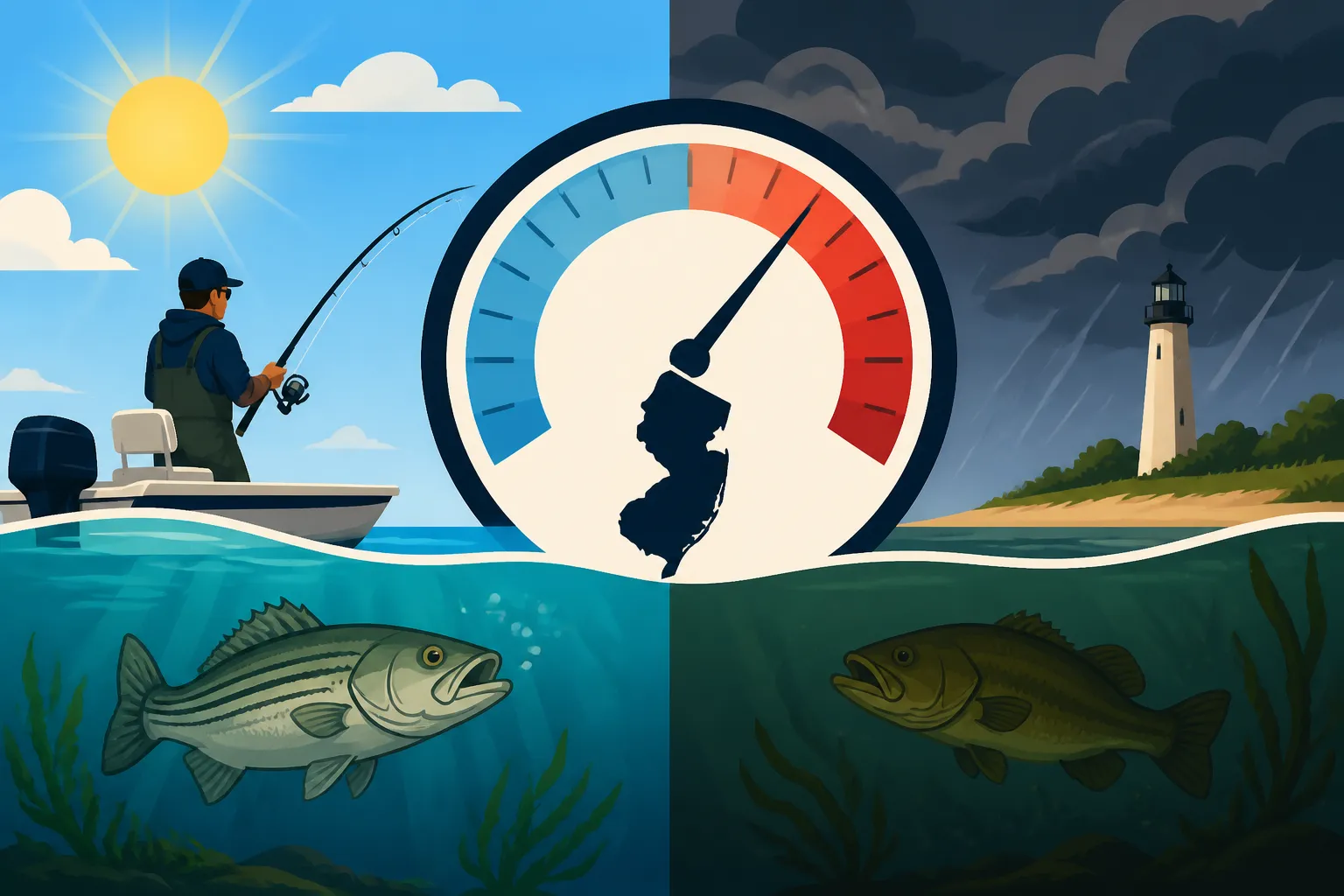
When you wake up to a beautiful, clear blue sky, light winds, and comfortable temperatures, you're likely experiencing a high-pressure system. While these days are glorious for enjoying the outdoors, they can often be the toughest for fishing. Under high pressure, the atmospheric weight pressing down is greater, which translates to increased pressure in the water. This often makes fish feel uncomfortable and sluggish. Their swim bladders are under more compression, making them reluctant to move up and down in the water column.
You'll often find fish retreating to deeper water, seeking cover, or hugging structure tightly. They become less active feeders, more finicky, and harder to entice. Think of it like a beautiful but quiet day at Lake Hopatcong; the bass might be there, but they're glued to the weeds or the bottom. This is when finesse techniques shine. Smaller baits, slower presentations, and targeting low-light periods like dawn and dusk can be your best bet. Forget the noisy topwater lures and consider subtle soft plastics or small jigs worked slowly along the bottom. For trout anglers on streams, high pressure can mean they're hunkered down under rocks, making delicate fly presentations or tiny bait offerings crucial. This is also a good time to consult the New Jersey Fish and Wildlife Digest for any specific regulations that might apply, as patience often becomes key.
Falling or Low Pressure Systems: Storms Brewing and Active Fish
Ah, the falling barometer – this is often an angler's best friend, especially if you can get out before the storm truly hits. A dropping barometric pressure indicates that the weight of the air is decreasing, often signaling approaching unsettled weather, clouds, wind, and rain. As the pressure falls, fish experience a reduction in the external pressure on their bodies. This can make them feel more comfortable and energetic. Their swim bladders expand slightly, allowing them to move more freely throughout the water column without as much effort.
This increased comfort, combined with the instinct to feed before a storm makes foraging difficult, often triggers an aggressive bite. Fish might move out from cover, come into shallower waters, and feed more actively. Think of those fantastic bluefish blitzes along the Jersey Shore, or striped bass pushing bait in Raritan Bay, often preceding a significant weather event. This is the time for bigger, more aggressive lures, faster retrieves, and covering more water. Topwater action, spinnerbaits, and crankbaits can be highly effective. If you’re freshwater fishing, say for largemouth bass, they might be cruising the weed lines or hitting frogs on the surface. Being aware of the weather and safely getting out on the water during these pre-storm windows can lead to some incredible catches. Just be sure to always prioritize safety and keep an eye on rapidly changing conditions!
Stable Pressure: A Comfort Zone for Anglers
Stable barometric pressure, whether consistently high or consistently low, often means predictable fishing. Fish become accustomed to the conditions, adjusting their behavior accordingly. When the pressure has been stable and high for a few days, fish might remain deep or tightly structured, but they will eventually feed. They've adapted to the feeling of the heavy water and will move to find food. Your finesse techniques will likely still be important, but their feeding windows might become more defined.
Conversely, a stable low-pressure system, perhaps during a prolonged period of overcast, drizzly weather without intense storms, can mean consistently good fishing. Fish will remain active and continue to feed, as they've adapted to the lighter pressure. These are often those "gray days" when the bite just never seems to quit. The key here is predictability. Stable conditions allow fish to establish routines, and once you figure out that routine (depth, bait, time of day), you can often replicate success. When planning your trips, remember that consistent conditions, even if they aren't "perfect," can be more reliable than wildly fluctuating pressure, which can really throw fish off their game.
Practical Strategies: Using Barometric Pressure to Your Advantage
Now that we understand the 'why,' let's talk about the 'how.' Armed with this knowledge, you can make smarter decisions before and during your fishing trips, transforming frustrating outings into successful ones.
Gear Up: Monitoring Pressure on the Go
You don't need a fancy scientific laboratory to track barometric pressure. Many readily available tools can help. Dedicated fishing barometers, often combined with thermometers, are fantastic and can track trends over several hours. You can find excellent, portable options on Amazon that fit right into your tackle bag. Some higher-end fish finders and marine electronics on boats also include built-in barometers.
However, the simplest tool might already be in your pocket: your smartphone. Many weather apps now include barometric pressure readings and, crucially, pressure trends. Look for apps that show whether the pressure is rising, falling, or stable. A graph showing the pressure over the last 12-24 hours is gold. A steady rise or fall of more than 0.05 inches of mercury (inHg) over a few hours is usually enough to trigger a noticeable change in fish behavior. Regularly checking this before you head out, and even during your trip, can inform your strategy. Don't leave home without this vital information, it's as important as knowing the local tides if you're saltwater fishing or scouting for new spots.
Adjusting Your Approach: Depth, Lures, and Presentation
The biggest takeaway from understanding barometric pressure is the need to adjust. Don't stick to the same game plan if the barometer is telling a different story.
Under High, Stable Pressure (Post-Front Conditions):
- Depth: Fish deeper. For saltwater species like fluke in the bays, this might mean jigging closer to the bottom in deeper channels. For freshwater bass, target drop-offs, submerged structure, or the deepest parts of weed beds.
- Lures/Bait: Think finesse. Smaller baits, natural colors, and subtle presentations. Live bait, like worms or shiners, can be highly effective. For artificials, small jigs, Ned rigs, shaky heads, or slow-moving soft plastics are excellent choices.
- Presentation: Slow and deliberate. Work your bait slowly, with long pauses. Be patient. Sometimes a dead-sticked lure is the only thing that gets a bite. In the surf, this might mean a more patient soak with a bait rig, waiting for the fish to come to you rather than actively casting.
Under Falling Pressure (Pre-Front Conditions):
- Depth: Fish can be anywhere, but often move shallower and become more active. Look for them feeding aggressively near structure, along shorelines, or busting bait on the surface.
- Lures/Bait: Go aggressive. Topwater lures, spinnerbaits, crankbaits, swimbaits, and larger jigs. Brighter colors can also be effective if the water is getting churned up.
- Presentation: Faster retrieves, more erratic action. Try to provoke a reaction strike. If you're on a party boat, this might be the time for energetic jigging for black sea bass or tautog.
Under Stable Low Pressure (Overcast, Steady Rain):
- Depth: Fish can remain active in a variety of depths, often shallower than high-pressure days. They're comfortable moving around.
- Lures/Bait: You can often be versatile. Experiment with what they're hitting. Both active and subtle presentations can work. Often, fish are less wary of lines and lures in lower light conditions.
- Presentation: Find their feeding pattern for the day. If they’re hitting aggressively, keep it up. If they’re a bit slower, scale back your retrieve.
Here’s a quick reference table to help visualize these adjustments:
| Barometric Pressure Trend | General Fish Behavior | Recommended Depth | Lure/Bait Type | Presentation Style |
|---|---|---|---|---|
| Rising (High Pressure) | Slow, lethargic, seek deep/cover | Deeper, tight to structure | Small, natural, live bait | Slow, finesse, deliberate |
| Falling (Low Pressure) | Active, aggressive, move shallower | Shallower, open water | Larger, flashy, artificials | Fast, erratic, reactive |
| Stable High | Adapt to deep, eventually feed | Deeper, defined patterns | Finesse, patience | Slow, consistent |
| Stable Low | Adapt to active, consistent feeding | Versatile, comfortable | Versatile, experiment | Moderate, adjust to bite |
Targeting Specific New Jersey Species Under Different Pressures
Different fish species react to pressure changes in their own ways, partly due to their physiology and habitat.
- Striped Bass: These migratory powerhouses are notoriously sensitive. A falling barometer often signals a feeding frenzy, especially in our bays like Sandy Hook Bay or during the fall run along the coast. They might be more willing to chase plugs or hit large chunks of bunker. Under high pressure, they'll likely retreat to deeper channels or hold tight to structure, requiring more subtle jigging or live-lining with eels. Understanding when they migrate through New Jersey also helps you plan.
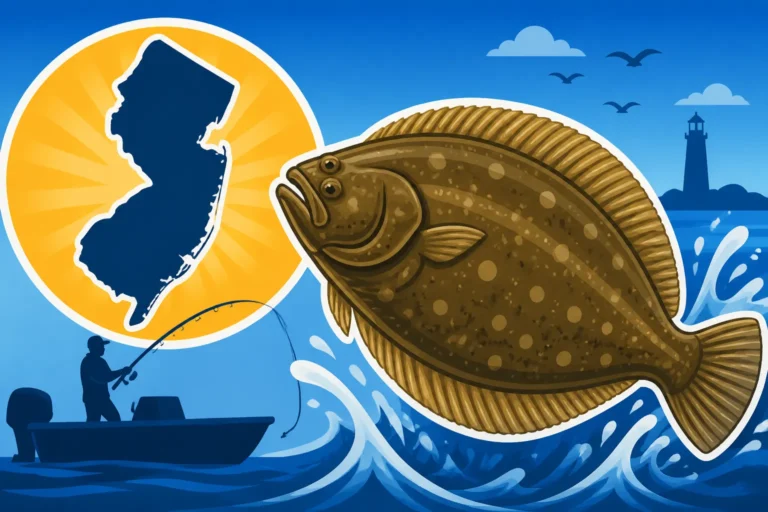
- Fluke (Summer Flounder): New Jersey's favorite flatfish can be tricky. They often hug the bottom, but a falling pressure can make them more aggressive, willing to chase bucktails or Gulp! Swimming Mullet actively. Under high pressure, they might bury deeper, requiring a slower drift and more natural bait like spearing or squid strips, barely moving. Learning how to fish for fluke in New Jersey effectively means adapting to these changes.
- Trout (Rainbow, Brown, Brook): Our freshwater trout, particularly in stocked streams and lakes like the Pequest River, can become very selective under high pressure. They'll key in on tiny insects or very subtle presentations. Falling pressure, especially before a light rain, can get them actively feeding on larger flies or worms. Knowing the best water temperature for trout fishing is also crucial, as temperature often works in conjunction with pressure.
- Largemouth and Smallmouth Bass: These popular freshwater species also respond well to a falling barometer, often moving shallow and becoming more aggressive. Topwater lures can be explosive. Under high pressure, they'll bury into heavy cover or go deep, demanding jigs, Texas rigs, or drop shots worked meticulously.
Beyond the Barometer: Other Weather Factors to Consider
While barometric pressure is a huge piece of the puzzle, it's never the only piece. Fishing success is a complex equation, and other environmental factors play significant roles, often working in concert with pressure changes.
Wind, Rain, and Temperature: The Full Picture
Think of the entire weather forecast, not just one aspect.
- Wind: Wind can be a blessing or a curse. A light chop on the water surface can break up light penetration, making fish feel more secure to feed in shallower water, especially during high pressure. It can also create current and push baitfish, concentrating game fish. However, strong winds can make boat control difficult, muddy up shallow areas, and push bait out of accessible zones. Understanding New Jersey surf fishing techniques, for instance, means learning how to cast into and with the wind.
- Rain: Light, steady rain can be fantastic, especially if paired with falling or stable low pressure. It adds natural cover on the surface, washes insects and nutrients into freshwater systems, and often increases oxygen. Heavy downpours, however, can quickly muddy water, drop water temperatures too fast, or blow out river systems, making fishing tough. Do fish bite better before or after a storm? Often, the answer is before a heavy storm and during/after a light, steady rain.
- Temperature: Water temperature is perhaps as critical as pressure. Fish are cold-blooded, and their metabolism is directly tied to water temperature. Each species has an optimal temperature range for feeding and activity. For example, knowing the best water temperature for striped bass fishing is essential, as they prefer cooler water. Extreme temperature changes, especially rapid drops, can shut down a bite faster than almost anything else, regardless of pressure.
Tides and Currents: The Saltwater Connection
For anyone fishing the vast saltwater opportunities along the Jersey Shore, understanding the tides and currents is non-negotiable. These forces dictate where baitfish move and where game fish will ambush them, often overriding or amplifying the effects of barometric pressure.
- Moving Water = Feeding Fish: In estuaries, bays like Barnegat Bay, and along the coast, moving water is almost always better than slack tide. Stronger currents dislodge bait, create eddies, and concentrate food sources. A falling barometer combined with a strong incoming or outgoing tide can lead to epic fishing.
- Reading Tide Charts: Learning how to read tide charts for better fishing in New Jersey is a skill that pays dividends. It helps you pinpoint the optimal times to target specific areas, like inlets or rips, where current-driven feeding frenzies occur.
- Saltwater Registry: Remember, if you're fishing in New Jersey's marine waters, you'll also need to be aware of the New Jersey Saltwater Registry Explained, which is a separate requirement from a freshwater license. This ensures you're compliant while enjoying the tidal influences on your favorite species.
Ultimately, fishing is about observing, adapting, and learning from every outing. While you can't control the weather or the barometer, you can control how you react to it. By paying attention to these subtle environmental cues, you'll not only catch more fish but also deepen your understanding and appreciation for the complex natural world we get to experience every time we cast a line in New Jersey.
Disclaimer
This article is for general informational purposes only and does not constitute professional advice. Laws, prices and regulations vary by location and change over time. Consult a qualified professional for guidance on your specific situation.