Best Water Temperature for Striped Bass Fishing
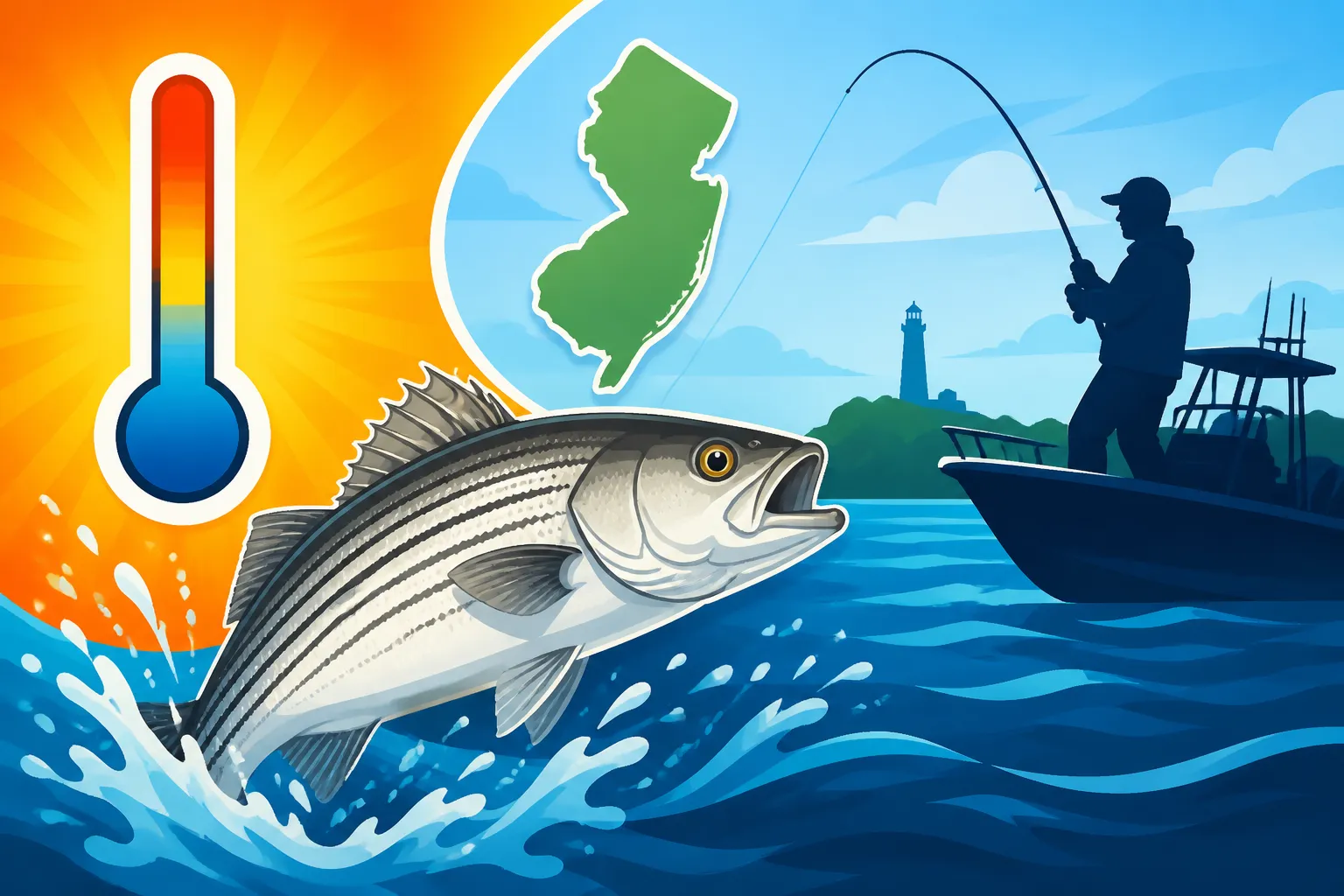
Ever wonder why some days you hit the striped bass jackpot in New Jersey, reeling in fish after fish, while other times you're left staring at an empty line, even in seemingly perfect conditions? It's a frustration every angler knows well, but often the secret lies in a factor many overlook: water temperature. This comprehensive guide will dive deep into how water temperature dictates striped bass behavior and migration, and how you can use this knowledge to dramatically improve your catch rates across the Garden State.
Understanding Striped Bass and Their Temperature Preferences
Striped bass, or stripers as we affectionately call them here in New Jersey, are incredibly sensitive to their aquatic environment. Just like us, they have a comfort zone, and veering too far outside of it can make them lethargic, unwilling to feed, or drive them to seek out more agreeable conditions. Understanding this fundamental aspect of their biology is the first step to becoming a more consistently successful striper angler.
Why Water Temperature Matters So Much to Stripers
Water temperature isn't just a number on a gauge; it's a critical environmental cue that influences nearly every aspect of a striped bass's life. Think of it as their internal thermostat. When the water is too cold, their metabolism slows down significantly. They become sluggish, their digestion slows, and they simply don't need to eat as much or as often. This is a survival mechanism, allowing them to conserve energy when food sources might be scarce or conditions too harsh for active hunting. Conversely, if the water gets too warm, especially over prolonged periods, it can lead to stress. Warmer water holds less dissolved oxygen, which is vital for fish respiration. Combine that with a higher metabolic rate from the heat, and they can become extremely uncomfortable, seeking out deeper, cooler water or even moving out of an area entirely. They become less inclined to chase bait and more focused on finding thermal relief.
The Ideal Temperature Range for Active Striped Bass
So, what's the magic number? While stripers can tolerate a wide range of temperatures, they truly thrive and become most active and aggressive within a specific "sweet spot." Generally, most seasoned New Jersey anglers agree that the ideal water temperature for actively feeding striped bass falls between 55°F and 68°F. Within this range, their metabolism is optimized, they're comfortable, and they're usually on the hunt for food. This is when you'll see them chasing baitfish, hitting lures aggressively, and generally being the voracious predators we love to target.
When temperatures dip below 50°F, stripers tend to get a bit sluggish. They'll still eat, but often require a slower presentation of bait or lures to entice a strike. Anything below 45°F, and you're typically looking at overwintering fish that are barely moving or feeding. On the warmer end, once the water climbs above 70°F, especially in shallow bays, they start to get uncomfortable. Their feeding can become sporadic, often shifting to low-light periods like dawn, dusk, or night when the water is slightly cooler. Above 75°F, and you're really pushing their limits; these conditions often lead to "dead zones" where stripers will simply not be present or will be extremely difficult to catch. Knowing these thresholds helps you understand not just if they'll bite, but how they'll bite and where they'll likely be holding.
Seasonal Temperature Shifts and Striped Bass Movement in New Jersey
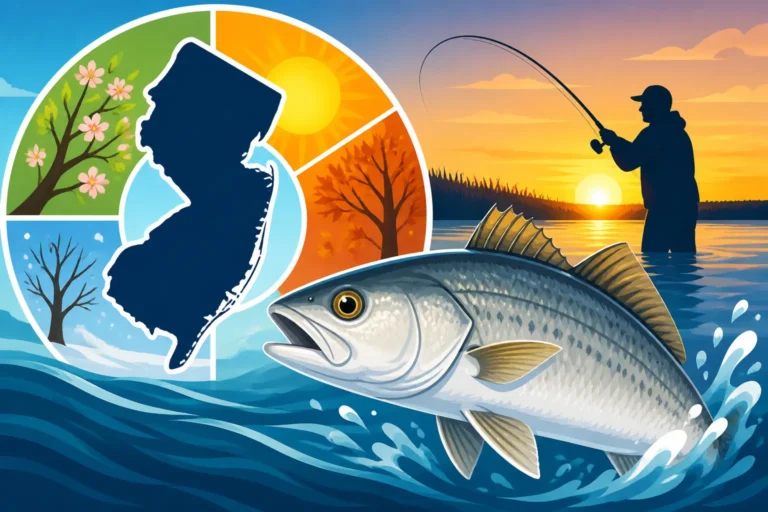
New Jersey's long coastline, diverse bays, and tidal rivers mean we see significant seasonal temperature changes. These shifts are the primary drivers for the epic striped bass migrations that define our fishing calendar. Knowing how these temperatures influence their movements is key to predicting where and when you'll find them.
Spring Run: Waking Up to Warmer Waters
As winter's grip finally loosens and the sun begins to warm our New Jersey waters, usually starting in late March and really picking up in April, the spring run of striped bass kicks off. This is a time of awakening, both for the fish and for eager anglers. Initially, you'll find smaller, resident stripers becoming active in the back bays and tidal rivers as water temperatures inch up into the high 40s and low 50s. These fish are hungry after a slow winter.
As the mercury climbs further into the mid-50s, the migratory schools, often larger fish, begin to move into our area, traveling north along the coast and pushing into estuaries like the Raritan Bay. They follow the warming water and abundant baitfish like herring and bunker. Understanding these patterns is crucial for targeting them. You'll often find these early-season fish in shallower water, soaking up the sun's warmth, or near river mouths where warmer freshwater runoff might be mixing. If you're looking for prime spots during this time, consider exploring areas covered in our Raritan Bay Striped Bass Spots guide.
Summer: Finding Cooler Havens
Ah, New Jersey summers! While we love the sunshine, the striped bass often find it a bit too much in the shallow, sun-baked waters of our bays and close-to-shore areas. As water temperatures consistently rise into the low to mid-70s, striped bass adapt by seeking out cooler environments. This often means moving to deeper channels, cooler ocean waters offshore, or congregating around structure where currents provide a steady flow of cooler water and oxygen. You might also find them hunkering down in the deeper pockets of inlets, or around artificial reefs and wrecks further out.
During peak summer heat, their feeding patterns also change. Instead of a midday bite, you'll often have more success targeting them during the cooler periods of dawn, dusk, or even at night. These low-light hours offer a slight dip in water temperature and generally make the stripers more comfortable and willing to feed. Anglers often switch to live bait or slower presentations during these times. Remember to always check the current New Jersey Striped Bass Slot Limit and Season as summer regulations can sometimes be more restrictive to protect the breeding stock.
Fall Run: The Feeding Frenzy Begins
For many New Jersey anglers, the fall run is the absolute pinnacle of striped bass fishing, and it’s all driven by falling water temperatures and massive bait migrations. As the air cools in September and October, bringing ocean temperatures back into that optimal 55°F to 68°F range, the stripers know winter is coming. This triggers an instinctual, almost frantic feeding behavior. They need to pack on as much fat as possible for the journey south and to sustain them through the cold months.
Huge schools of migratory striped bass move down the coast, following vast schools of baitfish like bunker, mullet, and anchovies. These "blitzes" can happen right off the beach, in the surf, or just outside the inlets. The key is to be where the bait is, because the stripers won't be far behind. This is when fast-moving lures, poppers, and large swimbaits shine, mimicking the panicked baitfish. To truly understand this incredible phenomenon and when to best prepare for it, our article on When Do Striped Bass Migrate Through New Jersey? is an invaluable resource.
Winter: Slowing Down and Deeper Holds
Once water temperatures consistently drop below the 50°F mark, and especially into the low 40s, the striped bass that remain in New Jersey waters enter their overwintering phase. Most of the migratory fish have moved south, but a significant population of resident stripers will stay, typically hunkering down in deeper, more stable environments. This includes deep channels in the bays, major river systems, and sometimes even offshore wrecks. Their metabolism slows dramatically, and they become far less active.
Fishing during these cold months requires a lot of patience and a very subtle approach. Forget the fast retrieves; think slow, methodical presentations of soft plastics, jigs, or live eels fished right on the bottom. The goal isn't to trigger an aggressive chase, but to present an easy meal to a lethargic fish. While not as action-packed as the spring or fall runs, winter fishing can still yield some surprisingly large, healthy stripers if you know where to look and what temperatures they prefer in these colder conditions. For a broader overview of seasonal opportunities, check out our guide on the Best Time of Year to Fish for Striped Bass in New Jersey.
Practical Tips for Monitoring Water Temperature
Gone are the days of guessing the water temperature by sticking your hand in the water! Modern anglers have a variety of tools at their disposal to get accurate readings, which can be a game-changer for finding those actively feeding stripers.
Essential Tools for Anglers
Having a reliable way to measure water temperature is fundamental to successful striped bass fishing. The simplest and most affordable option is a basic water thermometer. These are often floating designs, or even small, portable probe-style thermometers that you can dip into the water. They are great for getting spot checks in shallow water or from a boat. You can find a good range of these types of thermometers on Amazon, often for a very reasonable price.
For anglers with boats, a fish finder with a built-in temperature sensor is an absolute must-have. Most modern fish finders, even entry-level models, will display water temperature right on the screen. This allows you to monitor temperature continuously as you move, instantly identifying cooler pockets or warmer shelves where stripers might be congregating. Higher-end models might even show temperature gradients, which can be incredibly useful.
Beyond personal equipment, there are also numerous online resources and apps that provide real-time or near real-time water temperature data for various locations along the New Jersey coast and in major bays. Websites from scientific organizations, fishing forums, and even some NOAA buoy data can be surprisingly helpful for planning your trip before you even leave the house. Just remember that localized conditions can vary, so always confirm with your own equipment when you arrive.
Interpreting Temperature Readings for Better Success
Getting a temperature reading is just the first step; the real skill comes in interpreting that data. Don't just look for the "ideal" temperature; look for temperature breaks or gradients. These are areas where the water temperature changes abruptly over a short distance, perhaps due to a current, a deep channel meeting a shallow flat, or even the outflow of a warmer river into a colder bay. Striped bass often stack up on these breaks because they offer a comfortable zone while also providing ambush points for baitfish that might be moving between different thermal layers.
For example, in the spring, if the main bay is 50°F, but you find a shallow cove that's warmed up to 55°F, that's likely where the stripers will be. In the summer, if the surface water is 75°F, but your fish finder shows a thermocline (a distinct temperature layer) at 20 feet where it drops to 68°F, that's where you should focus your efforts, especially if you see baitfish holding there. Also, pay attention to how current interacts with these temperature zones; strong currents can move bait, but also provide oxygen and thermal comfort. Combining temperature data with knowledge of baitfish presence, current, and bottom structure is how you really unlock the striper code.
Adjusting Your Strategy Based on Water Temperature
Knowing the water temperature is powerful, but it’s only truly useful if you adjust your fishing techniques accordingly. The same lure and retrieve that worked wonders in 60-degree water might be completely ignored in 45-degree or 75-degree water.
Lure and Bait Choices for Different Temperatures
The pace of your presentation is paramount. In that ideal 55°F to 68°F range, stripers are usually active and aggressive. This is when fast-moving lures like poppers, pencils, swimbaits, and even bucktail jigs can be incredibly effective, mimicking fleeing baitfish. You can work them with a quicker retrieve, covering more water and provoking reaction strikes.
However, once temperatures drop below 50°F, stripers become more lethargic. You’ll want to slow things down considerably. Soft plastics, like paddle tails or jerk shads, fished slowly along the bottom or jigged subtly, can be deadly. Live bait, such as eels, bunker, or worms, presented naturally and slowly, becomes increasingly effective as fish are less inclined to chase. Conversely, in very warm water (above 70°F), fish might still hit fast-moving lures during low-light conditions, but during the day, they might be deeper and prefer a more subdued presentation of live bait or slow-moving jigs. Our guide on What Bait Works Best for Striped Bass in the Fall Run? provides excellent insights that can be adapted based on temperature.
Targeting Specific Structures and Depths
Water temperature directly influences where stripers will hold within a body of water. In cooler water (spring, fall, winter), stripers often gravitate towards areas that warm up first, such as shallow flats, dark mud bottoms that absorb sunlight, or the sunny side of channels and docks. They also seek out areas with a slightly deeper, more stable thermal layer, like drop-offs and channel edges.
In warmer summer conditions, the opposite is true. Stripers will move to deeper water where temperatures are more stable and cooler, or they’ll seek out areas with strong currents that provide more oxygen and some thermal relief. Think bridge pilings, deep rock piles, and offshore wrecks. They might also hold in shaded areas under docks or bridges during the hottest parts of the day. Using your fish finder to identify these depth and structure combinations, along with temperature readings, will help you pinpoint their hiding spots. To learn more about identifying productive areas, take a look at our article on How to Find Structure When Fishing New Jersey Bays.
Timing Your Fishing Trips for Optimal Temperatures
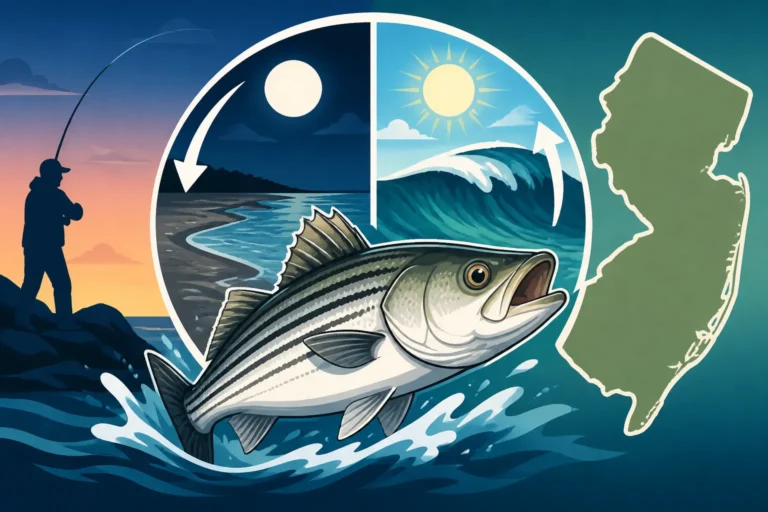
Beyond just where to fish, water temperature also dictates when to fish. In the spring, when water is warming, the midday sun can be your best friend, bringing those shallow areas into the prime temperature range. As summer progresses and water heats up, shifting your efforts to the cooler hours of dawn, dusk, or even throughout the night becomes critical. These periods offer a reprieve from the scorching sun, making stripers more comfortable and willing to move and feed.
In the fall, as waters cool, stripers are often aggressively feeding throughout the day, especially if baitfish are abundant. However, a sudden cold front can drop shallow water temperatures quickly, driving fish deeper or off the bite temporarily. Always consider the recent weather patterns and how they might affect the water temperature. Tide also plays a huge role, influencing currents and water movement. For instance, a moving tide can bring in cooler, oxygenated ocean water, which might kickstart a bite, especially during warm spells. Understanding the interplay of these factors, including using a Best Tide for Surf Fishing Striped Bass guide, can make all the difference.
Ultimately, mastering the art of striped bass fishing in New Jersey means becoming a student of water temperature. It's not just about throwing a line in; it's about understanding the environment and how the fish react to it. Pay attention to the conditions, use your tools, and adjust your tactics, and you'll be well on your way to more consistent success.
| Temperature Range (Fahrenheit) | Striper Activity Level | General Fishing Strategy | Preferred Location |
|---|---|---|---|
| Below 45°F | Very Low / Lethargic | Slow, subtle bait/jigs, deep presentation | Overwintering grounds, deepest channels, stable thermal layers |
| 45°F – 54°F | Low to Moderate | Slower retrieves, live bait, soft plastics | Deeper channels, river mouths, sun-warmed shallows |
| 55°F – 68°F | High / Aggressive | Variety of lures, live bait, faster retrieves | Throughout bays, ocean surf, inlets, near bait schools |
| 69°F – 74°F | Moderate to Low | Live bait, slow jigs, focus on low light | Deeper water, current breaks, offshore, shaded areas |
| Above 75°F | Very Low / Stressed | Extremely slow/subtle, seek thermal relief | Deepest, coolest spots, strong currents, offshore |
Disclaimer
This article is for general informational purposes only and does not constitute professional advice. Laws, prices and regulations vary by location and change over time. Consult a qualified professional for guidance on your specific situation.