Size of New Jersey’s Fall Stocked Trout
It's incredibly frustrating when you're geared up for a fantastic day of fall trout fishing in New Jersey, only to wonder if you're chasing after tiny little fingerlings or some decent-sized fish. Many anglers, especially those used to the spring frenzy, often question what to expect from the trout stocked later in the year. This comprehensive guide will clear up all that mystery, diving deep into the typical sizes of New Jersey's fall-stocked trout, what species you're likely to encounter, and how to maximize your autumn angling success.
Understanding New Jersey's Fall Trout Stocking Program
Fall trout stocking in New Jersey isn't just a repeat of the spring program; it has its own unique characteristics and goals. While spring stocking is often about quantity and providing a wide array of opportunities right after winter, fall stocking focuses on extending the season and providing a quality angling experience with generally larger fish. It's a fantastic opportunity for anglers to enjoy cooler weather and less crowded waters.
Why Fall Stocking Differs from Spring
The New Jersey Division of Fish and Wildlife (NJDEP Fish & Wildlife) manages a robust trout stocking program, but the objectives shift with the seasons. In the spring, millions of trout are released into waters across the state, often including a mix of sizes from "junior" (around 7-9 inches) to "adult" (9-12 inches), with some larger broodstock mixed in. This massive release aims to kickstart the fishing season and provide ample opportunities for everyone, from seasoned veterans to brand-new anglers.
Come fall, the strategy changes. The waters are cooler, typically leading to more active fish and healthier post-release survival rates. The focus tends to be on stocking fewer, but often larger, trout. These fish are usually more robust and have had a full season of growth at the state's Pequest Trout Hatchery, making them a more substantial and rewarding catch for those willing to brave the crisp autumn air. It’s about quality over sheer numbers, ensuring that the angling experience remains vibrant even as the leaves change color.
Key Species You'll Encounter in the Fall Stocking
Just like in the spring, the vast majority of trout stocked in New Jersey during the fall are rainbow trout. These hard-fighting fish are popular for a reason—they adapt well to various water conditions and strike readily at a wide range of baits and lures. You'll find them aggressive and eager to feed, especially as they settle into their new homes.
While less common, you might also find brown trout included in some fall stockings. Brown trout are known for being a bit more elusive and cunning than rainbows, often growing to impressive sizes. They prefer slightly colder water and more cover, making them a prized catch for those who can outsmart them. The NJDEP Fish & Wildlife aims to provide diverse angling experiences, and incorporating these species helps achieve that, especially in waters that can sustain them. If you're keen to learn more about identifying these beautiful fish, consider checking out our guide on New Jersey Rainbow Trout vs Brown Trout vs Brook Trout.
The Real Deal: Size of New Jersey's Fall Stocked Trout
Now, for the question that's on every fall angler's mind: how big are these fish, really? You'll be pleased to know that New Jersey's fall-stocked trout tend to be a very respectable size, offering a good fight and a satisfying tug on the line.
Average Length and Weight Expectations
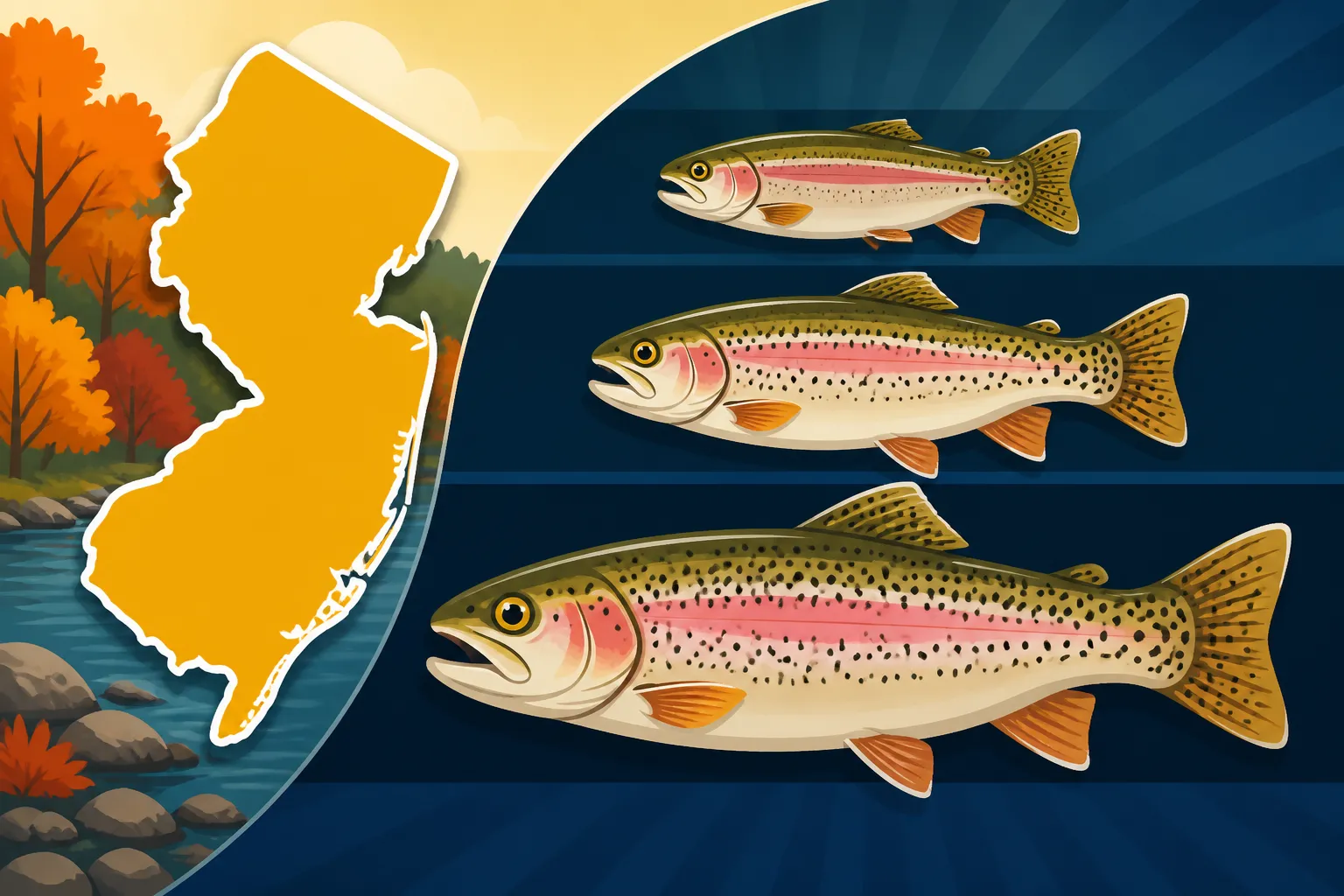
When the NJDEP Fish & Wildlife loads up their trucks for the fall stocking runs, they're generally bringing out what they refer to as "catchable-sized" trout. For the fall program, this typically means rainbow trout averaging around 10 to 14 inches in length. These aren't tiny fish by any stretch of the imagination; a 14-inch rainbow can put up a fantastic battle, especially in cooler waters where they're full of energy.
In terms of weight, a 10-inch trout might be around half a pound, while a 14-inch specimen could easily tip the scales at over a pound, sometimes closer to two pounds. This makes for a much more substantial experience compared to some of the smaller trout released during the early spring rush. It’s important to remember that these are averages, and you'll always have some variations within any stocking batch.
The Occasional Trophy Trout and Broodstock
One of the real treats of fall trout fishing in New Jersey is the increased chance of hooking into a true "trophy" fish or a large broodstock trout. These are often fish that have been held back at the Pequest Hatchery for a longer period, allowing them to grow to considerable sizes, sometimes ranging from 18 to over 20 inches, and weighing several pounds. While they don't make up the bulk of the stocking, these larger fish are strategically placed in certain waters, adding an exciting element of surprise to any fishing trip.
Imagine casting a small spinner or a perfectly presented worm, and suddenly your rod bends violently with a fish that feels like a brick on the end of your line! That's the thrill of potentially catching one of these giants. The NJDEP Fish & Wildlife often lists specific waters that receive these larger trout, so keeping an eye on their stocking schedule for New Jersey Fall Trout Stocking Dates can sometimes give you a leg up. It's truly a rewarding experience to land such a magnificent fish, making the cooler temperatures totally worth it.
Fall Trout Fishing: Strategies for Success
Knowing the size of the fish is one thing, but actually catching them is another. Fall trout fishing in New Jersey offers distinct advantages and requires some nuanced approaches to truly succeed. The cooler water temperatures make trout more active and less stressed, but they can also be more particular about their meals.
Best Baits and Lures for Larger Fall Trout
Since fall-stocked trout are generally larger and have been living in hatchery conditions for longer, they're often accustomed to a varied diet. This means you have a wide array of options when it comes to bait and lures. Natural baits like nightcrawlers, mealworms, and fathead minnows are always a solid choice. A juicy worm presented on a small hook with minimal weight is often irresistible.
For artificials, small spinners like Panther Martins or Mepps, especially in gold or silver, work wonders. Spoons such as Thomas Buoyant or Kastmasters can also entice aggressive strikes. Don't forget PowerBait in various forms (dough, nuggets) and colors; chartreuse, rainbow, and white are perennial favorites. You can find a fantastic selection of these effective baits and lures, including popular brands, readily available on Amazon, making it easy to stock up before your next trip. To learn more about common trout diets, check out our guide on What Do Stocked Trout Eat?.
Tackle Setup for Fall Trout Fishing
For these larger fall trout, a light to medium-light action spinning rod between 6 and 7 feet is ideal. Pair it with a reliable spinning reel spooled with 4 to 6-pound test monofilament or fluorocarbon line. Fluorocarbon is particularly effective as a leader material due to its low visibility and abrasion resistance. A sensitive rod will help you detect subtle bites, which can be crucial when trout are feeding softly.
When rigging, consider using a slip-sinker setup if you're fishing bait on the bottom, allowing the fish to take the bait without feeling immediate resistance. For lures, simply tie them directly to your main line or a small, strong snap swivel. If you're exploring some of the state's deeper or larger lakes known for holding bigger trout, like the ones mentioned in New Jersey's Best Trophy Trout Lakes, you might even consider a slightly heavier setup to handle potential lunkers. Having the right gear not only increases your chances but also makes the fight much more enjoyable.
Popular Fall Trout Fishing Locations
New Jersey boasts numerous excellent trout fishing spots, and many of them receive fall stockings. Some of the perennial favorites include segments of the Musconetcong River, Pequest River, and Raritan River's South Branch. These rivers are often stocked generously and provide excellent access for shore anglers and waders.
Beyond rivers, several lakes and ponds also get a healthy dose of fall trout. Round Valley Reservoir, while known for its lake trout, also receives good numbers of rainbows, and Spruce Run Reservoir is another popular spot. Many county and state park ponds that are easily accessible also get stocked, making them perfect for a family outing. Always check the NJDEP Fish & Wildlife stocking schedules, often found in the Reading the New Jersey Fish and Wildlife Digest, to confirm which specific waters are receiving fish during the fall.
Regulatory Considerations for Fall Trout Anglers
Even though the focus is on fun and catching quality fish, you still need to be mindful of New Jersey's fishing regulations. These rules are in place to ensure sustainable fishing for everyone and protect the state's valuable fisheries.
Licensing and Trout Stamp Requirements
Just like in the spring, any angler aged 16 through 69 who wishes to fish for trout in New Jersey must possess a valid New Jersey freshwater fishing license. Additionally, a New Jersey Trout Stamp is required in conjunction with that license if you are fishing for or possessing trout. It's a small investment that goes a long way in supporting the state's fantastic trout stocking program, ensuring that these opportunities continue for years to come. For a detailed breakdown, our guide on New Jersey Trout Stamp Requirements Explained can answer all your questions.
These licenses and stamps are typically valid for a calendar year, from January 1st to December 31st. So, if you bought your license in the spring, it's still good for the fall season! You can easily purchase them online through the NJDEP Fish & Wildlife website or from licensed agents across the state. Remember, conservation efforts, supported by these licenses, are crucial for maintaining the health of our fisheries.
Bag and Size Limits for Fall Trout
While the fall trout are often larger, the general statewide daily bag limits and size limits for trout in New Jersey usually remain consistent from spring through fall, unless specific emergency regulations are put into place. Typically, the daily creel limit is three trout with a minimum size of 9 inches. However, there are some designated "Trophy Trout" or "Seasonal Trout Conservation Areas" that have different, more restrictive rules, sometimes requiring catch-and-release or having higher minimum size limits.
It’s absolutely critical to consult the most current New Jersey Fish and Wildlife Digest for the exact regulations of the waters you plan to fish. Changes can occur, and ignorance of the law is no excuse. Always measure your fish carefully and release any that don't meet the legal requirements. Practicing responsible catch and release, especially for undersized fish or those you don't intend to keep, helps ensure a thriving fishery for all. If you're looking for more general angling tips, our comprehensive article on New Jersey Trout Fishing Techniques offers some excellent advice.
| Feature | Spring Stocking (General) | Fall Stocking (General) |
|---|---|---|
| Primary Goal | High volume, season kick-off | Season extension, quality angling |
| Average Size | 7-12 inches (mixed) | 10-14 inches (more consistent) |
| Trophy Fish Chance | Moderate (broodstock mixed in) | Higher (larger fish often specifically included) |
| Species Focus | Mostly Rainbow, some Brown | Mostly Rainbow, some Brown |
| Water Temperature | Warming | Cooling |
| Angler Crowds | Often high, especially early season | Generally lower, more peaceful |
Disclaimer
Fishing conditions, regulations, and stocking schedules in New Jersey are subject to change. Always consult the official New Jersey Department of Environmental Protection (NJDEP) Division of Fish and Wildlife website or the current Fish and Wildlife Digest before your trip to ensure you have the most up-to-date information. Safety first, and tight lines!