How to Cast Farther When Surf Fishing
It’s a tale as old as time for surf anglers along the New Jersey coast: you’ve got your ideal spot on the beach, the bait is fresh, and the fish are just beyond those crashing waves, tantalizingly out of reach of your current casting ability. The frustration is real when your line lands with a splash far short of where you know the bite is happening. This comprehensive guide is here to tackle that very common struggle, helping you extend your reach and put your bait right into the strike zone.
Understanding the Fundamentals: Your Gear as a Casting Machine
To really send that line flying, it's not just about brute force. It's about how your equipment works together as a system. Think of your rod, reel, and line as interconnected parts of a finely tuned machine, each playing a crucial role in achieving maximum casting distance. Neglecting any one component can severely limit your potential.
The Power of Your Rod: Length, Action, and Power
Your surf rod is your primary lever, and its characteristics directly influence how far and how effectively you can cast. When you're trying to cast farther, you're essentially looking for a rod that can store and release a tremendous amount of energy.
Rod Length Matters:
In general, a longer surf rod gives you more leverage and allows for a longer pendulum swing, which translates to greater casting distance. Most serious surf anglers along the Jersey Shore use rods between 10 and 12 feet, with some going even longer, up to 13 or 14 feet, especially for targeting fish far out or for fishing extremely heavy baits. A longer rod allows the line to unspool more smoothly from the reel, reducing friction points. Imagine trying to throw a baseball with a short, stiff stick versus a long, flexible one – the long one helps you generate more speed and distance. However, there’s a trade-off: longer rods can be heavier and more cumbersome to handle, particularly in strong winds or for anglers with smaller frames. You'll often see anglers using different lengths depending on the species they're targeting and the conditions of the day. For example, a shorter 9-foot rod might be fine for smaller species closer to shore, but to truly get past the second sandbar for striped bass, a 10-foot or 11-foot rod is often the minimum. If you're looking for guidance, our guide on the Best Rod Length for Jersey Shore Surf Fishing might offer some more specific insights.
Rod Action and Power:
- Action refers to where the rod bends. For long-distance casting, a moderate-fast or fast action rod is typically preferred. A fast-action rod bends mostly in the tip, providing excellent sensitivity and quick hook-sets, but a moderate-fast action bends a bit further down, allowing for a deeper bend and more energy storage during the cast. This deeper bend can be crucial for launching heavier weights.
- Power describes how much force it takes to bend the rod. Surf rods usually fall into medium-heavy to heavy power categories. A rod that's too light won't be able to properly load with a heavy surf sinker, and you'll struggle to generate the necessary momentum. Conversely, a rod that's too stiff for the weight you're throwing won't bend enough to store energy, making your cast feel like you're just flinging the weight with your arms. The rod needs to match the casting weight you intend to use. Most surf rods have a recommended lure weight range printed on them, like "2-6 oz." Sticking within this range is key for optimal performance and preventing rod breakage.
Selecting the Right Reel and Line
Your reel and line are just as critical as your rod. They control the release of the line, and any resistance here will steal precious yards from your cast.
Reel Type and Spool Design:
For most surf anglers, a spinning reel is the go-to choice due to its ease of use and ability to cast light lures. When selecting a spinning reel for distance, look for models with a larger, long-cast spool design. These spools are typically shallower and wider, allowing the line to come off in larger, less constricted coils, which reduces friction. The larger diameter also helps reduce line memory, which is when the line retains the shape of the spool, leading to kinks and tangles. A quality reel with a smooth drag system is essential, not just for fighting fish, but also for ensuring a consistent and unhindered line release during the cast. Conventional reels can also offer incredible distance, especially in the hands of an experienced caster, but they come with a steeper learning curve to prevent dreaded backlashes.
The Impact of Fishing Line:
The type and diameter of your fishing line significantly affect casting distance. Thinner lines encounter less air resistance, allowing them to fly farther.
- Braided Line: Braided line has become incredibly popular for surf fishing due to its very thin diameter relative to its breaking strength, minimal stretch, and impressive casting capabilities. A 30-pound braided line, for instance, might have the diameter of 8-pound monofilament, cutting through the air and water with ease. Less drag means more distance. When shopping for line on sites like Amazon, you'll find a vast array of braided options. However, braid is less abrasion-resistant than mono and requires a fluorocarbon or monofilament leader, which itself can introduce knots that impede casting.
- Monofilament Line: Traditional monofilament line is more forgiving, offers good knot strength, and is generally more abrasion-resistant. However, it's thicker than braid for the same breaking strength, meaning more air resistance and less casting distance. It also has more stretch, which can make long-distance hook-sets more challenging.
Many anglers choose a hybrid approach, using braided main line for casting distance and a monofilament or fluorocarbon leader for abrasion resistance and stealth. This leader material can be crucial when fishing around structure or for species with sharp teeth. Our article on What Pound Test Line for Surf Fishing delves deeper into choosing the right line for various surf conditions.
Table: Rod & Reel Combinations for Surf Casting Distance
| Component | Best for Max Distance | Considerations |
|---|---|---|
| Rod Length | 10-12 feet (or longer for advanced anglers) | Increased leverage, but heavier and harder to handle for some. |
| Rod Action | Moderate-Fast to Fast | Stores and releases energy effectively; provides good tip speed for launching. |
| Rod Power | Medium-Heavy to Heavy | Matches heavy surf weights (2-8 oz); ensures proper rod loading. |
| Reel Type | Large-spool Spinning Reel; or Conventional (experienced) | Spinning: easy use, less friction on large spools. Conventional: ultimate distance (skill required). |
| Main Line | 20-40 lb Braided Line (thinner diameter) | Less air resistance, minimal stretch. Requires leader. |
| Leader | 30-60 lb Fluorocarbon or Monofilament (matched to main line) | Abrasion resistance, stealth. Keep length manageable to avoid knot interference with guides. |
| Sinker Weight | Matched to rod's optimal casting weight range | Too light won't load rod, too heavy overpowers. Aerodynamic shapes help. |
Mastering the Art of Casting Technique
Having the best gear won't matter if your technique isn't dialed in. Casting is a blend of physics and finesse, and perfecting your form can add significant yardage to your casts. It's not just about muscling the rod; it's about timing, body mechanics, and a smooth, explosive release.
Stance, Grip, and Loading the Rod
Before you even begin the forward motion, your setup is critical. A stable foundation and proper grip are the launchpad for a powerful cast.
The Importance of Your Stance:
Your stance needs to be athletic and balanced. For most overhead casts, stand with your non-dominant foot forward, pointing slightly towards your target, and your dominant foot back. This creates a staggered stance that allows you to rotate your hips and transfer power efficiently through your body. Your weight should be mostly on your back foot as you begin the cast, ready to shift forward. Think of it like a baseball pitcher winding up or a golfer addressing the ball; the power starts from the ground up. Facing directly at your target limits your body's ability to coil and release energy, severely hampering distance. Practice rotating your core as part of the casting motion.
Gripping the Rod for Control and Power:
Your grip on the rod should be firm but not death-like. Too tight and you'll restrict the natural flex and energy transfer of the rod; too loose and you risk losing control during the powerful forward stroke. For two-handed surf rods, your dominant hand typically grips above the reel, and your non-dominant hand below it, providing maximum leverage. This two-handed grip is essential for controlling long, powerful rods and generating the necessary force. Before you cast, make sure you have enough line hanging from the rod tip (the "drop") – usually between 2 and 4 feet, sometimes more for pendulum casts. Too short a drop and the rod won't load properly; too long and it becomes unwieldy.
Loading the Rod: The Key to Unleashing Energy:
"Loading the rod" refers to the process of bending the rod backward during the casting motion, storing potential energy in its blank. This is where your rod’s action and power come into play. As you bring the rod back, you should feel the weight of the sinker bend the rod deeply. It's this stored energy, not just your arm strength, that propels the bait forward. A common mistake is to simply yank the rod forward without letting it load fully. This results in a weak, arm-powered cast. Instead, initiate a smooth, controlled backward motion that allows the rod to bend, then immediately transition into the forward power stroke. This fluid motion, often called the "casting stroke," is crucial for transferring energy efficiently.
Executing the Power Stroke and Release
Once you've loaded the rod, the next steps are about unleashing that stored energy with precision and power.
The Explosive Power Stroke:
The power stroke is the heart of a long cast. It's a coordinated movement involving your entire body. From your loaded back position, drive your dominant hand forward and push your non-dominant hand back and down, pulling the butt of the rod into your core. Simultaneously, rotate your hips and chest towards your target, shifting your weight from your back foot to your front foot. This full-body rotation and weight transfer are what generate the immense power needed to launch your rig. Think of it as throwing a punch or swinging a bat; the power doesn't come just from your arms, but from your core and legs. The acceleration should be smooth but rapidly increasing, culminating in a burst of speed just before release.
The Critical Release Point:
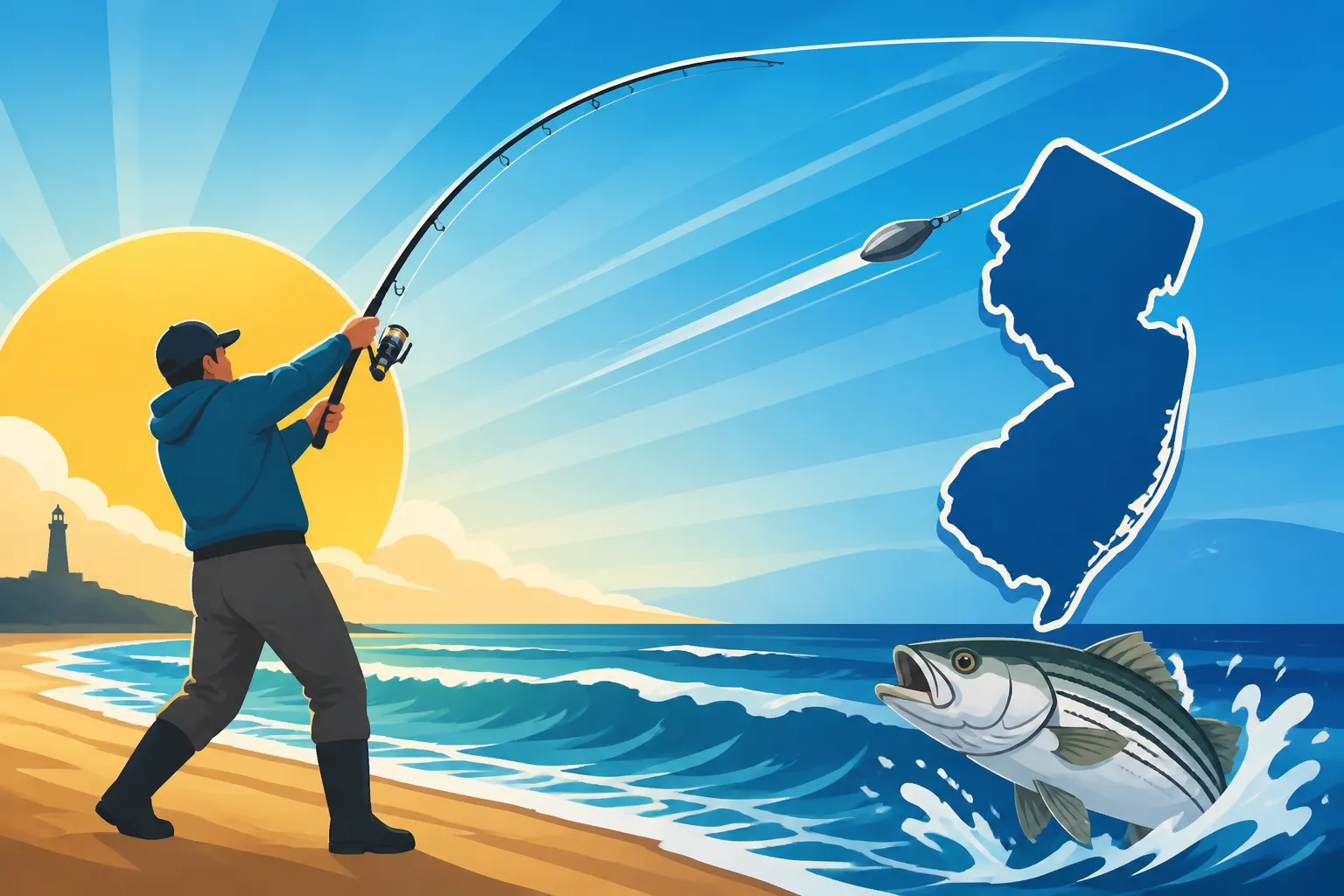
The timing of your release is paramount. For an overhead cast, you want to release the line when the rod tip is pointing slightly above your target, usually between a 45-degree and 50-degree angle from the water. Releasing too early will send your rig soaring skyward, losing distance to gravity. Releasing too late will send it into the water directly in front of you. This timing takes practice to master, as it’s a feel more than a precise measurement. With spinning reels, your index finger holds the line, and you simply lift it off the spool at the optimal moment. With conventional reels, it’s a thumb release. As soon as the line is released, keep the rod tip pointed towards your target, allowing the line to run freely off the spool until the rig splashes down. After release, allow the rod to follow through naturally, almost as if you’re pointing it at your target. This ensures all the energy is transferred to the cast.
Advanced Casting Techniques
While the overhead cast is the most common and a great starting point, some advanced techniques can unlock even greater distances, particularly in specific conditions.
The Pendulum Cast:
The pendulum cast is widely regarded as the ultimate long-distance surf casting technique, often used in tournaments. It’s not for the faint of heart or the beginner, but mastering it can add incredible distance. Instead of starting with the sinker behind you, the pendulum cast starts with the sinker dangling in front of you, like a pendulum. As you initiate the cast, you swing the sinker away from your body, then bring it back in a wide arc, using its momentum to load the rod with extreme force. The key is coordinating the swing, the rod load, and the body rotation into one fluid, powerful motion. This technique can be dangerous if not executed correctly, as the heavy sinker is swinging in a large arc close to your body. It's best learned with expert instruction and plenty of practice on an open field.
The Hatteras Cast (Off-the-Ground Cast):
Another powerful technique, particularly useful when fishing in crowded areas or when using very long leaders, is the Hatteras cast, also known as an off-the-ground cast. Instead of lifting the bait and sinker into the air behind you, you start with the rig laid out on the ground (or beach) behind you, slightly to your side. This minimizes the backswing and reduces the risk of hitting other anglers or obstacles. The power comes from dragging the rig along the ground and then smoothly lifting and launching it with a powerful body rotation. It’s a great option for minimizing tangles and maximizing power in specific scenarios, especially when you need to avoid high backcasts. These techniques are often highlighted in specialized guides, which you can find through resources on New Jersey Surf Fishing Techniques.
Optimizing Your Gear for Maximum Distance
Beyond your core rod, reel, and line, the smaller components of your setup, often called terminal tackle, can also make a big difference in how far your rig flies. Every little bit of drag or imbalance adds up.
Sinker Weight and Aerodynamics
The sinker is what carries your bait out into the surf. Choosing the right weight and shape is crucial.
Matching Sinker Weight to Your Rod:
The most important factor is to select a sinker weight that properly loads your rod. As discussed, your rod has an optimal casting weight range. If your sinker is too light, the rod won't bend enough to store energy. If it's too heavy, you risk overpowering the rod, leading to a weak cast or even breaking the rod. Experimentation is key to finding the sweet spot for your specific rod and casting style. Typically, surf fishing in New Jersey might require sinkers from 3 to 8 ounces, depending on the current, wave action, and the rod you're using.
Aerodynamic Sinker Shapes:
Beyond weight, the shape of your sinker dramatically affects its flight.
- Pyramid sinkers are standard for holding bottom in strong currents, but they aren’t very aerodynamic.
- Sputnik (spider) sinkers are excellent at anchoring, but also not streamlined for flight.
- For maximum casting distance, aerodynamic torpedo or teardrop-shaped sinkers are superior. These shapes cut through the air with less resistance, allowing for longer casts. Some specialized casting weights are designed purely for distance, often with a sleek, bullet-like profile. When the goal is distance, these shapes are your friend. Remember to check out our detailed guide on How to Rig a Sinker for Surf Fishing in Windy Conditions for more tips on keeping your bait where it needs to be after the cast.
Minimizing Air Resistance with Bait and Rigs
Even your bait and the way you rig it can create drag and shorten your cast.
Streamlining Your Bait:
Bulky baits create drag. If you're using large chunks of bunker or whole clams, they will significantly impede casting distance. When distance is a priority, consider:
- Smaller Bait Pieces: Cut your bait into more streamlined pieces.
- Bait Thread/Floss: Use specialized bait thread to tightly secure your bait to the hook. This not only keeps the bait on during the powerful cast but also creates a more compact, aerodynamic package.
- Artificial Lures: Often, artificial lures like metal spoons, plugs, or soft plastics designed for casting are inherently more aerodynamic than natural baits. If fish are hitting lures, they can be excellent for distance.
Simple, Aerodynamic Rigs:
Complicated rigs with multiple hooks, long snells, or bulky floats will tangle and create tremendous air resistance. For long-distance casting:
- Simple Pompano Rigs: These are often very streamlined with small, strong hooks and compact floats if used.
- Fish Finder Rigs: A single hook with a sliding sinker can be very effective and casts well, as the bait trails behind the sinker.
- Long Leaders: While sometimes necessary for stealth, overly long leaders (especially if thick) can create more drag and can be difficult to cast through the rod guides smoothly. Keep leaders to a practical length that balances stealth with casting efficiency. Minimizing knots, or using small, strong knots, is also important as each knot can catch wind or impede line flow.
Practice Makes Perfect: Drills and Tips for Improvement
No amount of expensive gear will make you a long-distance caster without practice. Just like any sport, repetitive action, analysis, and refinement are key to improvement.
Dry Casting and Field Practice
You don't always need to be at the beach to improve your casting.
Mastering Dry Casting at Home:
You can practice your casting mechanics without ever leaving your yard. Simply attach a practice weight (or even just an old sinker with the point removed for safety) to your line and go through the motions. Focus on:
- Stance and Body Rotation: Ensure your feet, hips, and shoulders are working together.
- Rod Loading: Feel the rod bend and store energy. Pay attention to how the rod reacts with different "weights."
- Smooth Acceleration: Practice the fluid transition from the backswing to the forward power stroke.
- Release Point: Get a feel for releasing the line at the optimal angle.
Doing this repeatedly without the pressure of fishing allows you to focus purely on form. You can even record yourself and analyze your technique.
Taking it to the Open Field:
Once you're comfortable with dry casting, head to a large, open field – a park, a football field, or even a baseball outfield. Here you can actually launch your sinker without worrying about snagging or hitting anything. This is invaluable practice for several reasons:
- Real-World Feel: You’ll experience the actual flight of the sinker and how your technique translates to distance.
- Measuring Progress: Bring a tape measure or use landmarks to track your casting distance. Set goals and try to beat your personal best.
- Troubleshooting: Experiment with different sinker weights, leader lengths, and casting angles. You’ll quickly discover what works best for your setup and technique.
This is also a great place to practice your How to Cast Net for Bait in New Jersey skills, which, while different, also benefit from open-field practice.
Environmental Factors and Consistency
Even with perfect technique, external factors can influence your cast. Learning to adapt is part of becoming a seasoned surf angler.
Harnessing or Battling the Wind:
Wind is either your best friend or your worst enemy when surf casting.
- Tailwind: A strong tailwind (blowing from behind you towards the ocean) can add significant distance to your casts. Learn to use it to your advantage, timing your cast with the strongest gusts.
- Headwind: A headwind (blowing from the ocean towards you) is the toughest to cast into. It will drastically reduce your distance and can make your line tangle. When facing a headwind, a lower, harder trajectory cast is often more effective than trying to "lob" it high. Also, ensuring your rig is as aerodynamic as possible becomes even more critical.
- Crosswind: Crosswinds can push your line off target and create bow in your line, making it harder to feel bites. Adjust your casting angle slightly into the wind to compensate.
Reading the Waves and Tides:
While not directly about casting distance, understanding the ocean conditions helps you place your cast strategically. High tide might bring fish closer, reducing the need for extreme distance. Conversely, a low tide might require you to cast further to reach deeper water. Our article on Best Time of Day to Surf Fish often touches on how tide affects where the fish are holding. Learning How to Read a Rip Current for Safer Surf Fishing can also show you natural highways for fish, sometimes negating the need for power casting if you can place your bait in the current.
Consistency is Key:
Ultimately, the goal isn't just one lucky long cast, but the ability to consistently hit your target zone. This comes from thousands of repetitions, focusing on a smooth, repeatable motion. Don't try to reinvent your cast every time. Find a technique that works for you and refine it through consistent practice. Over time, that feeling of frustration when your line falls short will be replaced by the satisfaction of watching your rig soar out past the breakers, right where the big ones are waiting.
Disclaimer
This article is for general informational purposes only and does not constitute professional advice. Laws, prices and regulations vary by location and change over time. Consult a qualified professional for guidance on your specific situation.