Best Rod Length for Jersey Shore Surf Fishing
Oh, the Jersey Shore! There’s nothing quite like the feeling of sand between your toes and the ocean breeze on your face, especially when you’re standing there, rod in hand, waiting for that tell-tale tug. But if you’ve ever found yourself staring at a wall of fishing rods, wondering which one will give you the best shot at catching dinner, you're not alone. Choosing the right surf fishing rod length for our unique New Jersey beaches can feel like a real puzzle, especially with all the options out there. This guide is here to untangle that knot, helping you understand how rod length impacts your fishing success right here on the Jersey coast.
Why Rod Length Matters for Jersey Shore Surf Fishing
When you're out on the wide-open beaches of Island Beach State Park or battling the currents at Manasquan Inlet, the length of your rod isn't just a number – it's a critical tool that dictates your casting ability, your control over the fight, and even how comfortable you are throughout the day. It’s not just about reaching the fish; it’s about reaching them effectively and efficiently.
Casting Distance and Power
Let's talk about the big one: casting distance. The longer your rod, the more leverage you can generate during your cast. Think of it like a lever; a longer lever gives you more power to propel your bait or lure further out into the waves. On the Jersey Shore, this is often crucial. We’ve all seen those days when the striped bass or bluefish are holding just beyond the furthest sandbar, mocking us with their splashes. A longer rod can be the difference between reaching that productive zone and coming up empty.
Beyond just distance, a longer rod also provides more power to control a strong fish once it’s hooked. Imagine hooking into a hefty striper in a strong undertow; that extra rod length acts as a shock absorber and a lever, helping you turn the fish's head and guide it through the powerful surf. It’s like having an extension of your arm that gives you mechanical advantage over a powerful, thrashing fish. Without that length, you might find yourself losing fish to the waves or simply lacking the backbone to bring them in.
Control and Maneuverability
While length offers distance and power, there's a flip side: control and maneuverability. A really long rod, say 12 feet or more, can be cumbersome to cast repeatedly, especially in tight quarters or when the wind is howling directly into your face. Trying to pick your way through a crowded jetty or casting quickly when a blitz erupts right in front of you can become a clumsy affair with an unwieldy long rod. It's an issue of swing weight and balance.
Shorter rods, conversely, offer superior control. They're easier to handle, cast with more precision over shorter distances, and allow for better lure manipulation. If you're working a bucktail jig through a specific trough or trying to place a plug right next to a jetty piling, a shorter rod gives you that surgical precision. They're also less tiring to cast for hours on end, which is a huge factor for many anglers who spend a full day on the beach. You have to weigh the need for distance against the practicality of handling the rod for your particular fishing spot and target.
Handling Different Baits and Lures
The type of bait or lure you plan to use also heavily influences the optimal rod length. If you're chucking a big chunk of fresh bunker with a heavy pyramid sinker, waiting for a channel bass or a large striper, a longer, more powerful rod is almost a necessity. These setups require a significant amount of weight to cast and withstand the force of the waves, and a shorter rod might not have the backbone to launch them effectively or absorb the shock without feeling like it’s going to snap.
On the other hand, if you're throwing lighter artificial lures like small bucktails, soft plastics, or slender plugs designed for fluke or schoolie stripers, a shorter, more sensitive rod can be a game-changer. These lighter presentations often require subtle twitching, jigging, or retrieving actions to impart life into the lure. A shorter rod, typically with a faster action, transmits those movements more directly to the lure and helps you feel even the most tentative bites. If you're interested in honing your artificial lure skills, understanding Best Lures for Striped Bass Fishing can further inform your rod choice.
Common Rod Length Categories for the Jersey Shore
When you walk into a tackle shop along the Jersey Shore, or browse gear on Amazon, you’ll quickly notice that surf rods generally fall into a few distinct length categories. Each has its sweet spot, tailored for different fishing situations and angler preferences.
The All-Around Workhorse: 9-10 Foot Rods
For many New Jersey surf anglers, a 9-to-10-foot rod is considered the gold standard – the true all-around workhorse of the beach. This length offers a fantastic balance that makes it incredibly versatile. It's long enough to achieve decent casting distance, allowing you to reach those modest outer sandbars and sloughs where fish often congregate. You can effectively cast a good range of baits and lures, from medium-sized plugs and poppers to a chunk of clam or cut bait with a 3-4 ounce sinker.
The 9-10 foot rod also provides enough backbone to handle most common Jersey Shore game fish, including respectable striped bass, bluefish, and even decent-sized fluke. It's manageable enough for repeated casting without causing excessive fatigue, and it doesn't feel like you're wrestling a telephone pole when trying to control a fish in the surf. If you're just starting out or only want one rod for general surf fishing, this length is often the most recommended. It’s also an excellent choice for learning different New Jersey Surf Fishing Techniques without being overwhelmed by an overly specialized setup.
Reaching Out Further: 11-12 Foot Rods
When you absolutely, positively need to cast as far as possible, an 11-to-12-foot rod steps up to the plate. These rods are designed for maximum distance, ideal for situations where the fish are holding a long way offshore, or when you need to clear multiple sandbars to get your bait into deep water. They excel at launching heavy payloads, like large chunks of bait paired with heavy pyramid sinkers, especially common during the spring and fall runs when bigger fish might be further out.
However, this increased casting power comes with trade-offs. An 11-12 foot rod can be significantly more tiring to cast repeatedly throughout the day. Their sheer length makes them less sensitive to subtle bites, so you might miss some of the lighter taps that a shorter rod would transmit clearly. They also require more open space for casting, making them less practical in crowded areas. Using these rods effectively often involves more specialized casting techniques to really maximize their potential, such as those you might learn about in a guide on How to Cast Farther When Surf Fishing.
Specialized Shorter Rods: 7-8 Foot Rods
While "surf fishing" often conjures images of long rods, there’s a definite place for shorter 7-to-8-foot rods on the Jersey Shore. These rods are considered more specialized, perfect for scenarios where extreme distance isn't the priority, but sensitivity, control, and maneuverability are. They are fantastic for lighter tackle applications, such as targeting fluke closer to shore with small jigs or bucktails, or for schoolie striped bass that are feeding in the wash. For instance, if you're learning How to Jig for Striped Bass, a shorter, more responsive rod can make a big difference in how effectively you work the lure.
Shorter rods truly shine when fishing around structure, such as jetties, rock piles, or bridge pilings. They are much easier to handle in these tighter, often crowded spots, allowing you to cast accurately without snagging on obstacles or bumping into other anglers. Their enhanced sensitivity also means you'll feel every subtle bump and bite, which can be crucial for species like tog (tautog) that often peck at bait. If your focus is on fishing the numerous piers and jetties along our coast, you'll find great information in Best New Jersey Piers and Jetties for Shore Fishing.
| Rod Length (Feet) | Primary Use Case (Jersey Shore) | Pros | Cons | Ideal Species |
|---|---|---|---|---|
| 7-8 | Jetties, inlets, light tackle | Excellent control, sensitive, portable | Limited casting distance, less leverage | Fluke, schoolie stripers, tog |
| 9-10 | General surf fishing | Versatile, good distance/power balance | Can be tiring for some, less precise than shorter | Stripers, bluefish, fluke |
| 11-12+ | Max distance, heavy bait | Longest casts, great power for big fish | Very tiring, cumbersome, less sensitive | Large stripers, channel bass |
Matching Rod Length to Your Jersey Shore Fishing Style
Your personal fishing style and the specific techniques you employ on the Jersey Shore should heavily influence your rod length decision. There's no one-size-fits-all answer because what works for one angler chasing big drum might not work for another targeting fluke.
Bait and Wait Fishing
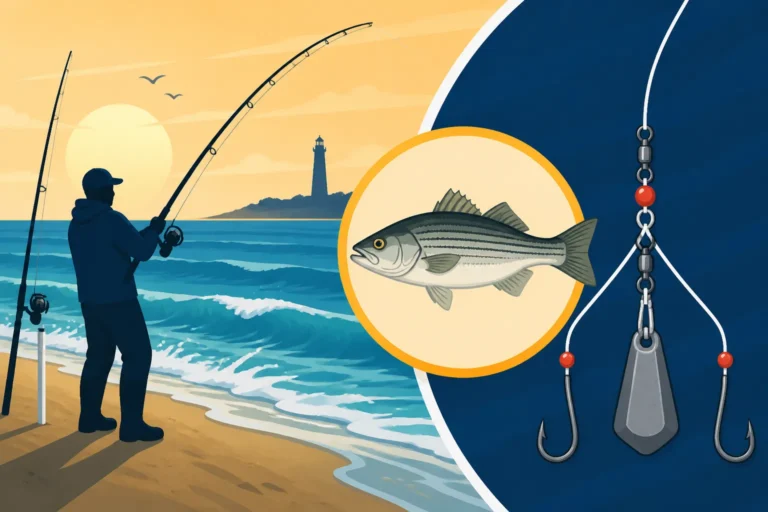
If your preferred method involves "bait and wait" – casting out a substantial bait rig, planting your rod in a sand spike, and patiently waiting for a bite – then a longer, heavier rod is almost always the better choice. These rods, typically 10-12 feet or even longer, offer the stability needed to keep heavy sinkers anchored in the wash, preventing your bait from constantly rolling in the current. They also provide the sheer power to launch large baits like whole bunker or clam bags a significant distance.
The extra length also keeps your line higher off the water, reducing the amount of line exposed to wave action and passing debris, which helps maintain contact with your bait. This style often involves using substantial weights to hold bottom, and you'll want a rod that can handle the stress of repeatedly casting 4, 6, or even 8 ounces of lead. Understanding Best Bait for Surf Fishing in New Jersey and How to Rig a Sinker for Surf Fishing in Windy Conditions can further illustrate why these longer rods are advantageous for this patient, often rewarding, style of fishing.
Lure and Plug Casting
For anglers who prefer actively working lures and plugs – casting, retrieving, and imparting action – the rod length considerations shift a bit. While you still want decent casting distance, extreme length can hinder your ability to effectively "work" the lure. A rod in the 9-10 foot range is often preferred here. This length provides enough leverage for good casts but remains nimble enough to twitch plugs, pop poppers, or jig soft plastics with precision.
Sensitivity is paramount when lure fishing, as you need to feel subtle takes or the movement of your lure through the water. A rod that's too long or too heavy can dampen these sensations. Many anglers opt for rods with a faster action in this length range, allowing for crisp casting and instant feedback. Whether you're targeting striped bass with a SP Minnow or bluefish with a metal lure, a well-matched rod allows you to become one with your presentation. You might also want to consult resources on Best Lure Color for Bluefish for specific lure choices to pair with your casting rod.
Jetty and Pier Fishing Considerations
Fishing from a jetty or pier along the Jersey Shore presents a unique set of challenges and opportunities that influence rod length. Unlike open beach fishing, you're often dealing with limited casting space, obstacles, and sometimes crowded conditions. For these reasons, shorter rods, typically 7-9 feet, often gain favor. They are much easier to handle, cast, and maneuver in tight spots. You're less likely to snag someone else's line or whack the person next to you on a backcast.
However, some anglers still prefer longer rods (10-11 feet) from piers to reach out further, especially when fishing over a wide expanse of water or trying to clear a submerged structure. From a jetty, a longer rod can help you reach around current-producing points or deeper pockets. It really depends on the specific structure and your intended target. For instance, if you're fishing for tog around a rocky jetty, a shorter, more stout rod might be better for hauling them out of their hiding spots, whereas chasing bluefish from a pier might still benefit from a slightly longer rod for casting distance. If you're wondering about the best strategy, a guide on How to Fish Around Jetties Safely is a must-read.
Other Factors Beyond Length for Surf Rod Selection
While rod length is a huge piece of the puzzle, it's really just one component of selecting the perfect surf rod for your adventures on the Jersey Shore. Don't overlook these other crucial characteristics, as they all work together to define a rod's overall performance.
Rod Power and Action
Beyond length, rod power and action are perhaps the next most important considerations. Rod power refers to the lifting strength of the rod, typically categorized as ultra-light, light, medium, medium-heavy, heavy, etc. For surf fishing, you're almost always looking at medium to heavy power rods, designed to handle larger fish and heavier baits. A "heavy" power rod will be stiff and strong, ideal for big fish and heavy sinkers, while a "medium" power rod will be more forgiving and better suited for lighter baits and a wider range of species.
Rod action describes where the rod bends when pressure is applied. A "fast action" rod bends mostly in the tip, offering excellent sensitivity and quick hook-sets, which is great for lure fishing. A "moderate action" rod bends more into the middle section, providing a smoother casting arc and better shock absorption, often preferred for live bait fishing or when you need more forgiveness with light lines. A "slow action" rod bends almost throughout its entire length, rarely seen in surf rods but common in some specialized applications. The combination of length, power, and action is what truly defines a rod's character.
Construction Materials and Weight
The materials used to construct a surf rod directly impact its weight, sensitivity, durability, and cost. Modern surf rods are typically made from fiberglass, graphite (carbon fiber), or composite blends.
- Fiberglass rods are generally heavier, more durable, and more affordable. They have a more parabolic (moderate to slow) action, making them very forgiving and excellent for soaking bait, but they lack the sensitivity of graphite.
- Graphite rods are lighter, more sensitive, and often have a faster action. This makes them fantastic for feeling subtle bites and working lures, but they can be more brittle and prone to snapping if mishandled. High-modulus graphite rods, while expensive, offer incredible performance.
- Composite rods combine fiberglass and graphite, aiming to get the best of both worlds: a good balance of durability, sensitivity, and moderate weight.
The overall weight of the rod, regardless of length, is a significant factor, especially for active lure casting. A lighter rod will reduce fatigue over hours of casting and retrieving, making your fishing experience much more enjoyable. When browsing options, whether in person or on a site like Amazon, pay attention to the stated materials and read reviews for feedback on overall feel and weight.
Your Personal Strength and Comfort
Perhaps the most overlooked factor in rod selection is you! The "best" rod length for the Jersey Shore is ultimately the one you can comfortably cast, retrieve, and fight fish with for an extended period. A powerful 12-foot rod might be technically capable of launching a bait to the moon, but if you're exhausted after ten casts, it's not the right rod for you.
Consider your physical strength, casting style, and how much effort you're willing to put into each cast. A beginner or someone with a smaller build might be much happier and more effective with a 9-foot medium-heavy rod than struggling with an 11-foot heavy action behemoth. It's always a good idea to "test cast" a rod if possible, or at least hold it and get a feel for its balance and weight before committing. Don't sacrifice comfort and enjoyment for perceived performance; a rod you love to fish with will always outperform a rod you dread holding. Also, remember that fishing styles can evolve, as can regulations, so it's always good to stay informed on topics like Best Tide for Surf Fishing Striped Bass or any new guidelines that might affect your approach.
Disclaimer
This article is for general informational purposes only and does not constitute professional advice. Laws, prices and regulations vary by location and change over time. Consult a qualified professional for guidance on your specific situation.