Where to Catch Tautog Around New Jersey Wrecks and Reefs
Finding tautog, those tough-fighting "blackfish" with a reputation for being finicky, can feel like you're searching for a needle in a haystack if you don't know where to look. Many anglers get frustrated trying to target them in open water, but the secret lies in understanding their specific habitat preferences. This comprehensive guide will dive deep into exactly where these crafty fish hide among New Jersey's intricate network of wrecks and reefs, helping you pinpoint their favorite haunts and increase your chances of a successful catch.
Understanding Tautog Habitat: Why Wrecks and Reefs are Key
Tautog are masters of camouflage and leverage, and they thrive in environments that offer plenty of nooks, crannies, and heavy cover. They're not like fluke that drift over sandy bottoms or striped bass that patrol open beaches. No, tautog are ambush predators and opportunistic feeders who prefer to cling tightly to structure. This means that if you're not fishing directly on top of or right next to some kind of hard bottom or wreckage, your chances of hooking into one are incredibly slim. It’s their natural instinct to seek out these spots, not just for feeding but also for protection from currents and larger predators.
Natural vs. Artificial Reefs: Tautog's Preferred Residences
New Jersey is blessed with a mix of both natural and artificial reef structures, and tautog love them all. Natural reefs are typically rocky outcrops, mussel beds, and shell patches that have formed over millennia. These can be trickier to locate without good sonar, but once found, they can hold impressive numbers of fish year after year. The texture and irregularity of natural rock provide endless hiding spots and attachment points for their favorite foods like crabs and mussels.
On the other hand, our artificial reef system in New Jersey is truly a marvel. These are human-made structures intentionally placed on the seafloor to create habitat for marine life. We're talking about old barges, derelict tugboats, concrete culverts, old tires, and even specially designed reef balls. These sites are typically well-charted and often become vibrant ecosystems within just a few years. Tautog quickly colonize these new structures, appreciating the diverse surfaces and protected spaces they offer. Often, the state’s Fish and Wildlife division provides coordinates for these sites, making them accessible to any angler with a GPS. When you're out there, always keep an eye on your fishfinder; it's not just about getting to the coordinates, but about finding the most productive part of the structure. Many of the larger artificial reefs are expansive, covering acres of seafloor, so identifying the densest areas of structure and fish marks is crucial.
Depth and Structure Preferences: Where the Tog Hang Out
Tautog aren't usually found in the deepest canyons, nor are they typically in ankle-deep water, although smaller ones can be found in shallow rocky areas. Generally, you’ll find the larger, more mature tautog in waters ranging from 20 to 100 feet deep, often correlating with offshore wrecks and artificial reef sites. The precise depth can vary based on water temperature, time of year, and even local currents. In cooler months, they might move slightly deeper to find more stable temperatures, while in early spring or late fall, they might push into shallower structures.
What's more important than the exact depth is the type of structure. Tautog are not interested in just any hard bottom; they want complex, intricate structure. Think jagged edges, crevices, holes, and overhangs. This is why a rusty old shipwreck, with its collapsing hull and exposed ribs, is often a goldmine. The more places for crabs and mussels to hide and grow, and for the tautog to tuck into out of the current, the better. Your sonar isn't just showing you a lump on the bottom; it's trying to tell you about the contours and complexity of that lump. If you see a large, distinct "blob" or multiple smaller, scattered marks on your fishfinder near the bottom, that's often a good indicator of tautog activity. Sometimes, the most productive spots are not the highest points of a wreck but the areas where debris has fallen, creating rubble piles around the main structure.
Identifying Prime Tautog Structures in New Jersey
Finding these honey holes isn't always easy, and it takes a bit of homework before you even leave the dock. Relying solely on a general chart can lead to disappointment. You need to get specific.
Using Sonar and Fishfinder Technology for Pinpointing Tautog
Modern sonar and fishfinder technology are absolutely indispensable for tautog fishing. Simply getting to the general vicinity of a wreck or reef isn't enough; you need to pinpoint the exact contours and the heaviest concentrations of fish. Start by slowly cruising over the known coordinates of a reef site, paying close attention to your bottom machine. Look for distinct changes in depth, hard returns that indicate solid structure, and any "marks" that look like fish holding tight to that structure. Tautog often appear as dense, dark marks right on the bottom or tucked within the structure itself. They're not usually free-swimming in mid-water columns like pelagic species.
High-frequency side-scan and down-imaging sonar can give you an almost photographic view of the bottom, allowing you to identify specific pieces of wreckage, rock piles, or concrete slabs. This level of detail helps you position your boat directly over the most productive parts, minimizing snags and maximizing bites. Don't be afraid to make several passes over an area, approaching from different angles, to get a full picture of what's beneath you. This is where patience really pays off. If you’re looking to upgrade your setup, there are fantastic options available on Amazon that offer incredible clarity and detail, making a huge difference in your ability to "read" the underwater landscape.
Reading Nautical Charts and Reef Guides
Before you even fire up the boat, you should be poring over nautical charts and specialized reef guides. These resources provide the official coordinates for many of New Jersey’s artificial reef sites, as well as indications of natural rock formations or historically known wrecks. Look for designations like "Wk" (Wreck) or specific reef names on your charts. Many experienced anglers keep a logbook of successful spots, often adding their own private numbers for productive pieces of structure within a larger reef.
The New Jersey Department of Environmental Protection (DEP) often publishes updated guides and coordinates for its extensive artificial reef program, which is an invaluable resource. These guides will list the types of material deployed at each site, its general dimensions, and sometimes even the depth range. Combining this cartographic knowledge with your real-time sonar readings allows you to create a mental map of the fishing ground, anticipating where the tautog might be holding. Remember that many wrecks are dynamic; they can shift, break apart, or become buried over time, so while charts give you a starting point, real-world observation is key. If you're looking for more general information on fishing locations, our New Jersey Artificial Reef Fishing Guide offers a broader overview of these amazing habitats.
Top Wreck and Reef Locations for Tautog
New Jersey boasts a fantastic array of wrecks and artificial reefs perfect for tautog. From the nearshore lumps to the deeper offshore structures, there's a spot for every angler, whether you're heading out in a small center console or a larger offshore vessel.
Well-Known Artificial Reef Sites
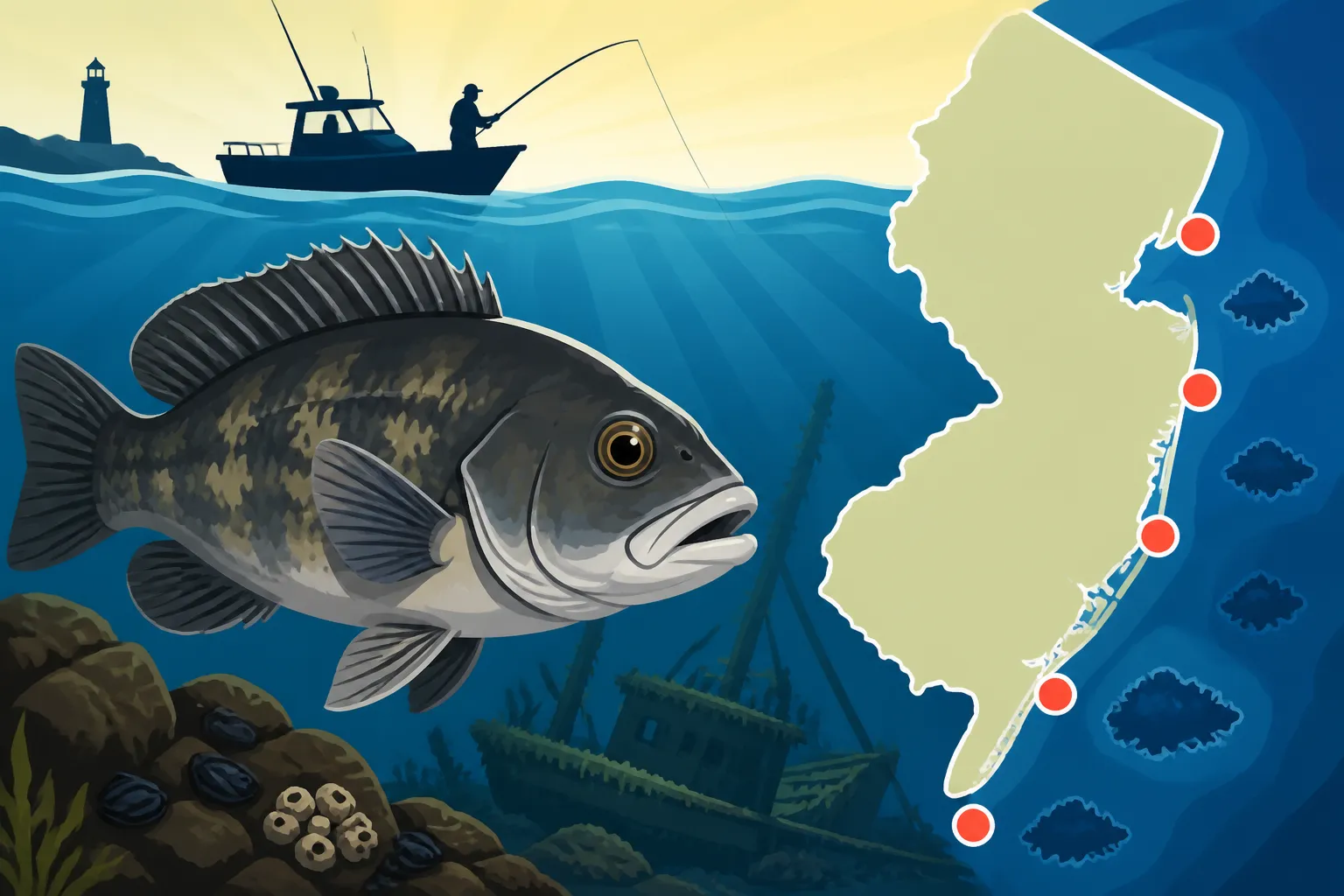
New Jersey's artificial reef program has strategically placed structures along our coastline, providing consistent tautog action. Some of the perennial favorites include:
- Sandy Hook Reef: Located relatively close to shore in northern New Jersey, this reef system has multiple deployments of concrete and steel. It offers excellent tautog opportunities, particularly for those looking for a shorter run. It’s a great spot for early season or late fall tautog. The various piles and structures here provide a wide array of hiding spots.
- Axel Carlson Reef: Off Point Pleasant Beach, this is one of our most popular and productive reef sites. It's a massive area with diverse materials, including old tugboats, concrete structures, and even old subway cars. The sheer size and variety of structure mean that tautog are almost always present, sometimes in incredible numbers. You can spend an entire day here just exploring different sections.
- Barnegat Light Reef: Further south, off Barnegat Inlet, this reef is another hotspot. It features a mix of concrete, steel, and a few larger vessels, making it ideal for tautog. The currents here can sometimes be a factor, so understanding How to Read Tide Charts for Better Fishing in New Jersey can be a huge advantage. Anglers often report excellent tautog catches around the concrete rubble piles.
- Garden State North/South Reefs: These larger reef zones are further offshore and often hold bigger, more mature tautog. They comprise many varied materials, attracting not just tautog but also black sea bass, flounder, and even cod during cooler months. These deeper reefs often require a bit more planning and a calmer weather window, but the rewards can be substantial. For those who enjoy varied bottom fishing, these reefs are often teeming with life.
Each of these sites, and many others, are consistently replenished and monitored, making them reliable choices for tautog. It’s worth noting that while these are great starting points, the subtle differences in structure and fish movement mean that no two trips are ever exactly alike. Don't just drop anchor on the first mark; really work the structure.
Natural Lumps and Rockpiles
Beyond the designated artificial reefs, New Jersey's seafloor is dotted with numerous natural lumps, rockpiles, and scattered areas of hard bottom. These can be incredible tautog spots, often holding fish that see less pressure than those on the more popular artificial reefs. These natural formations are typically harder to find, as they aren't always explicitly marked on charts. Sometimes they are simply noted as "rocky bottom" or "snags."
How do you find them? Often, it's through local knowledge, word of mouth, or persistent exploration with your fishfinder. Experienced captains or those who have been fishing the same waters for decades might have a handful of secret "numbers" for these spots. When you're running offshore, always keep an eye on your bottom machine. If you see an unexpected change in bottom composition from sand or mud to a hard return with some vertical relief, it's worth a closer look. These natural areas, once discovered, can be incredibly productive because they represent untouched habitat that tautog naturally gravitate towards. They can range from small isolated boulders to extensive fields of scattered rock. Tautog that call these natural hideouts home are often well-fed and feisty.
Essential Gear and Techniques for Wreck and Reef Tautog
Catching tautog effectively requires specialized gear and techniques tailored to their habits and their environment. This isn't your light tackle fluke fishing; you need robust equipment and a strategic approach.
Rods, Reels, and Line: Built for Battle
Tautog are tough, and they fight dirty. They'll try to dive straight back into the structure the moment they feel the hook. This means you need a powerful rod with a strong backbone, often rated for 20-50 lb line or more. A shorter rod, around 6.5 to 7.5 feet, is often preferred as it gives you more leverage against the fish and less chance of hitting the boat's gunwale during a critical moment. Look for rods designed for jigging or bottom fishing, with a sensitive tip but plenty of power in the midsection. Rods from brands like Penn or Ugly Stik are popular choices for their durability and strength, and you can find a wide selection of them on Amazon.
For reels, you'll want a conventional reel with a strong drag system and high retrieve rate. Tautog fishing is often done with braided line, which has no stretch, allowing you to feel every subtle bite and pull fish away from structure quickly. A reel like a Penn Squall or a Shimano Torium, spooled with 40-60 lb braided line, is a solid choice. The braid’s lack of stretch also means you can use a lighter sinker to hold bottom in certain conditions, improving feel. You’ll typically tie on a monofilament or fluorocarbon leader of 30-50 lb test, about 2-3 feet long, to provide some abrasion resistance against the sharp edges of wrecks and rocks. A good quality leader is non-negotiable here; a small nick can mean a lost fish.
Bait and Rigging: Crabs are King
When it comes to tautog, there's one bait that reigns supreme: crabs. Green crabs are the most common and effective, but white leggers (Asian shore crabs), hermit crabs, fiddler crabs, and even pieces of blue claw crabs can be deadly. These are natural prey for tautog, and they simply can’t resist them. Make sure your crabs are fresh and lively; tautog are picky eaters. You can often find green crabs at local bait shops along the Jersey Shore.
Rigging is simple but crucial for tautog. The most common setup is a standard two-hook dropper loop rig or a snelled hook rig. You’ll use a bank sinker or pyramid sinker, often weighing 4-8 ounces or more depending on the current and depth, tied to the very bottom. Above the sinker, you’ll have one or two snelled hooks, typically Kahle or Octopus style hooks ranging from 2/0 to 5/0, tied on dropper loops or directly to the leader. The hooks should be strong and sharp. For specific rigging instructions, check out How to Fish for Tautog Around Structure. When baiting your crab, you usually split it in half, then thread the hook through one of the leg sockets or a natural cavity to ensure it stays on during the drop and is presented naturally. Sometimes, for smaller crabs, you can fish them whole, hooking them through the belly or the edge of the shell.
| Tautog Bait Type | Pros | Cons | Best Use |
|---|---|---|---|
| Green Crabs | Readily available, very effective | Can be expensive, need to keep alive | All-around best bait |
| White Leg Crabs | Extremely effective, very tough | Harder to find, often must be caught by hand | When fishing is tough |
| Hermit Crabs | Excellent scent, natural presentation | Fragile, can be picked off easily | Finesse situations, clear water |
| Fiddler Crabs | Small, good for finicky fish | Only suitable for smaller tautog | Nearshore, shallow rock piles |
| Blue Claw Crab (pieces) | Good alternative, strong scent | Not as natural, can be easily stolen | Backup bait, strong current situations |
Tautog Fishing Challenges and How to Overcome Them
Tautog fishing isn't for the faint of heart. It presents unique challenges that can frustrate even seasoned anglers. But with the right mindset and a few tricks up your sleeve, you can turn those frustrations into successful catches.
The Snagging Frustration
If you're tautog fishing, you're going to get snagged. It's not a matter of if, but when, and how often. These fish live in gnarly, hook-grabbing environments. Lost rigs, lost sinkers, and broken lines are just part of the game. This can be incredibly frustrating, especially when you're going through expensive tackle. My best advice here is to accept it as part of the experience.
To minimize snags, always try to keep your line as vertical as possible. This means adjusting your drift constantly to stay directly over the structure. If you drift off the structure, your sinker will drag along the bottom, increasing the chance of getting hung up. Use a lighter sinker if the current allows, as a lighter sinker has less surface area to grab. When you feel a snag, don't just yank. Try to shake your rod tip, or even put your reel in free spool for a moment to let the current work the rig free. If you're on a boat, have the captain slowly move the boat in the opposite direction of the snag. Sometimes, a slow, steady pull will bend the hook and free the rig. Always carry plenty of spare rigs and sinkers; consider buying sinkers in bulk or making your own to save on costs. It's better to be over-prepared than run out of tackle when the bite is on.
Weather and Tide Considerations
Weather and tides play an enormous role in tautog fishing success. Tautog are primarily bottom dwellers, and strong currents can make it nearly impossible to hold bottom and present your bait effectively. A good weather window with light winds and manageable currents is crucial. Aim for days with minimal wind against the tide, as this creates a "washing machine" effect that makes anchoring or precise drifting very difficult.
Tides are another huge factor. While tautog can bite at any stage of the tide, many anglers find that the bite is most active during the slower parts of the tide cycle – the slack tide, or just before and after the turn. This is when the current lessens, making it easier for tautog to move around and feed without expending too much energy fighting the flow. It also makes it easier for you to present your bait naturally. Always check the tide charts for your specific fishing location. Knowing when the tide will be slowing down gives you a strategic advantage to be on your spot and ready. Fishing strong currents often requires heavier sinkers, which can reduce your feel and increase snags. Sometimes, moving to a slightly shallower or more protected wreck can make all the difference on a day with strong currents.
Conservation and Responsible Tautog Fishing
As anglers, it's our responsibility to ensure the health of our fisheries for future generations. Tautog are a prized species, and their populations require careful management. Practicing responsible fishing habits is not just a recommendation; it's essential for the sustainability of this fishery.
Understanding New Jersey Tautog Season Dates and Limits
New Jersey has specific regulations regarding tautog, including seasons, size limits, and bag limits. These regulations are designed to protect the breeding stock and ensure healthy populations. It’s absolutely critical that every angler understands and adheres to these rules. The seasons can change, so always check the latest New Jersey Fish and Wildlife Digest or their website before heading out. Generally, tautog seasons are structured to protect them during spawning, often with specific open and closed periods throughout the year, especially in spring.
For instance, New Jersey Tautog Season Dates will outline when you can legally target and keep these fish. There will also be a minimum size limit, often around 15 inches or more, and a daily bag limit on how many tautog you can keep. Keeping an illegal fish, even by accident, can result in significant penalties. Make sure you have a reliable measuring device on your boat or in your tackle box, and measure every fish carefully before deciding to keep it. When in doubt, always release the fish. These regulations are put in place based on scientific data and are vital for the long-term health of our tautog fishery.
Catch and Release Best Practices
Even when the season is open and you catch a legal-sized fish, practicing catch and release for some or all of your catch is a fantastic way to contribute to conservation. Tautog are slow-growing and long-lived, so releasing them, especially the larger breeding females, has a significant positive impact.
If you plan to release a tautog:
- Handle with Care: Support the fish horizontally, especially larger ones. Avoid holding them vertically by the jaw, as this can damage their internal organs.
- Minimize Air Exposure: Keep the fish in the water as much as possible. If you must remove it for a quick photo, do so quickly and efficiently.
- Use Appropriate Gear: Consider using circle hooks, especially when bait fishing, as they often result in jaw hookups, reducing gut hooking and increasing survival rates.
- Dehook Quickly: Have your dehooking tools ready. Pliers or a dehooker can help remove the hook cleanly and quickly.
- Revive if Necessary: If a fish appears sluggish, hold it gently in the water, facing into the current, until it regains its strength and can swim away on its own.
- Avoid Crowding Livewells: If you're keeping some and releasing others, don't crowd your livewell. Fish under stress are more likely to succumb to injury.
Remember, every released fish is an investment in the future of the fishery. By being mindful of these practices, we can all enjoy tautog fishing for years to come. For broader discussions on responsible angling, you might find our article on What New Jersey Fish Species Are Catch and Release Only? insightful, even though tautog isn't strictly catch and release, the principles still apply.
Conclusion
Tautog fishing around New Jersey's wrecks and reefs is a rewarding challenge, steeped in the satisfaction of outsmarting one of the ocean's toughest bottom dwellers. It’s not just about dropping a line; it’s about understanding their world, reading the water, and meticulously preparing your gear. We've walked through the importance of their habitat, how to use technology and charts to find them, and highlighted some of the top spots from Sandy Hook to the deeper Garden State reefs.
We've also covered the critical gear, emphasizing sturdy rods, reliable reels, and the undeniable power of fresh crab baits, rigged correctly to maximize your chances against these structure-hugging fish. And let's not forget those inevitable frustrations like snags and battling the elements—we all face them, but with a bit of foresight and technique, they become manageable. Most importantly, embracing responsible fishing through adherence to New Jersey Tautog Season Dates and practicing careful catch and release ensures that these amazing fish remain a vibrant part of our New Jersey fishing heritage. So arm yourself with knowledge, gear up, and get out there to experience the thrill of tautog fishing on our fantastic wrecks and reefs!
Disclaimer
This article is for general informational purposes only and does not constitute professional advice. Laws, prices and regulations vary by location and change over time. Consult a qualified professional for guidance on your specific situation.