What Forage Fish Do Saltwater Gamefish Feed On?
Ever wonder why sometimes the bite is on fire, and other times, despite perfect conditions, the fish just aren't interested in anything you throw at them? It's a common frustration for every angler, and often, the secret lies in what the fish are actually eating. Understanding the natural diet of New Jersey's saltwater gamefish – specifically, the forage fish they hunt – is one of the most powerful tools you can add to your angling arsenal. This guide will dive deep into the crucial role of baitfish, shrimp, and crabs, and how recognizing their presence and mimicking them can dramatically increase your success on the water, whether you're targeting striped bass in the back bays or fluke in the surf.
Understanding the Buffet: Key Forage Fish in New Jersey's Saltwater
New Jersey's coastal waters are teeming with life, forming a complex food web where different species rely on a variety of smaller creatures for sustenance. These "forage fish," along with crustaceans like shrimp and crabs, are the lifeblood of our ecosystem, dictating the movements and feeding patterns of the larger, more sought-after gamefish. If you want to find the predators, you almost always need to find their food first. This isn't just a theory; it's a fundamental principle passed down by generations of successful anglers.
Think about it: fish aren't just swimming around aimlessly hoping for a meal to appear. They follow the bait. If bunker are thick in Barnegat Bay, you can bet the bluefish and striped bass won't be far behind. If there's a good run of sand eels along the beaches of Island Beach State Park, the surfcasters will be out in force, knowing that the stripers are likely gorging themselves. It’s all about instinct and survival. By knowing which forage species are prevalent in certain areas during specific times of the year, you gain a significant advantage, moving beyond just casting blindly. It’s like knowing the secret ingredient to a perfect dish – once you know it, everything else just falls into place.
The Mighty Menhaden: Bunker's Broad Appeal
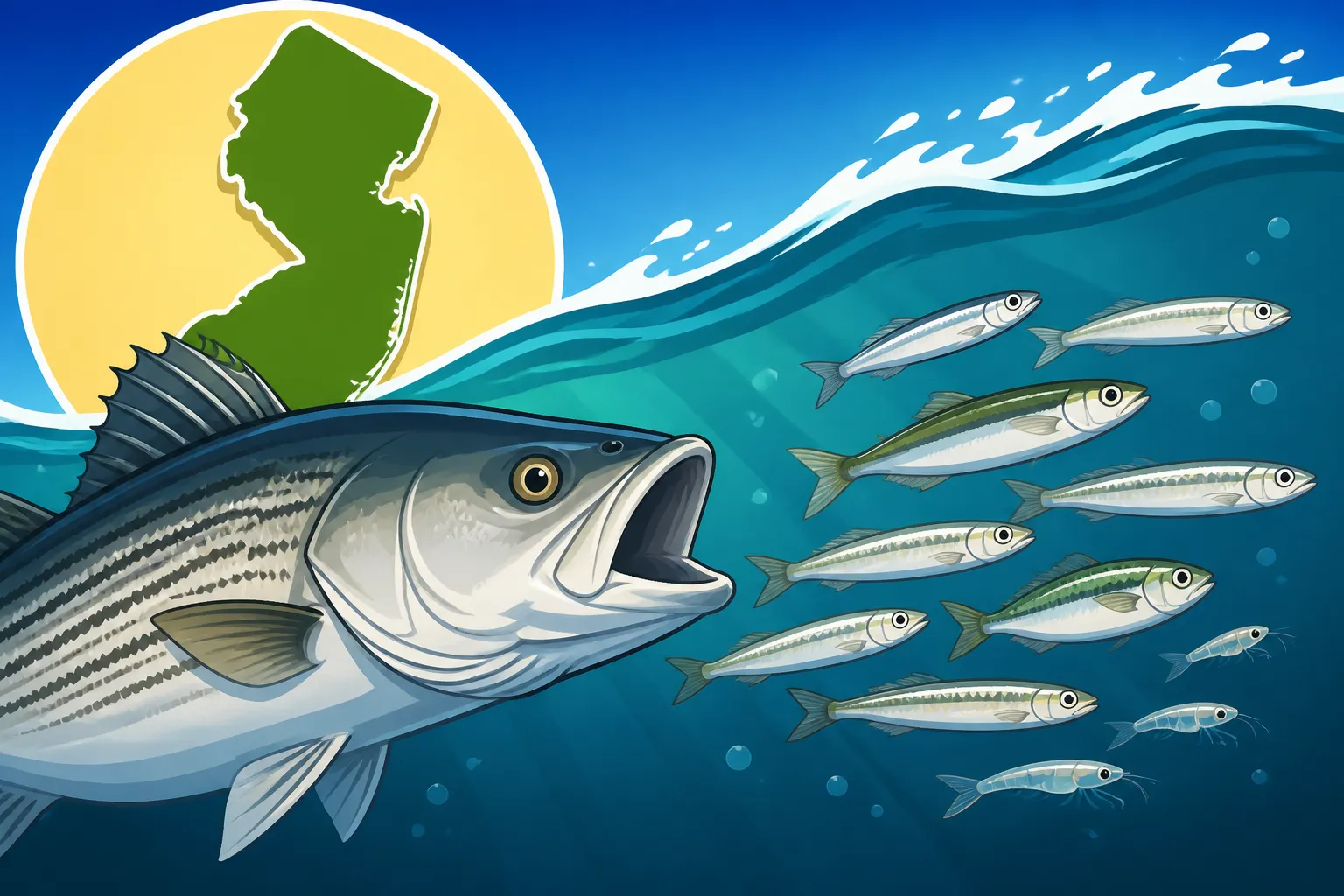
When we talk about saltwater forage in New Jersey, the Atlantic menhaden, commonly known as "bunker," usually takes center stage. These oily, protein-rich baitfish are like prime rib for many of our biggest predators. They swim in massive schools, often creating visible disturbances on the surface as they filter-feed on plankton. This makes them easily identifiable to both the gamefish below and the observant angler. Juvenile bunker are often found in the shallower, calmer backwaters, providing an easy meal for smaller gamefish, while the larger adult bunker prefer open ocean environments, attracting trophy-sized predators.
The sheer volume and nutritional value of bunker make them a cornerstone of the diet for species like Striped Bass Fishing in New Jersey and Bluefish Fishing in New Jersey. When the bunker schools are pushed to the surface by predatory fish, creating those chaotic "peanut bunker blitzes" in the fall, it's an angler's dream come true. You'll often see birds diving, baitfish showering out of the water, and the surface boiling with feeding activity. This is when matching your lure or bait to the size and profile of the bunker can lead to explosive strikes. Whether you're using fresh cut bait, a live bunker, or a large swimbait that perfectly mimics their shape and color, being on the bunker is often being on the fish.
The Elusive Sand Eel: A Skinny, Subsurface Snack
Often overlooked by the casual observer, sand eels (also known as sand launce) are another incredibly important forage fish along the New Jersey coast. These slender, silver-sided fish spend much of their lives buried in sandy bottoms, emerging to feed and becoming vulnerable to predators. They are a primary food source for a huge array of gamefish, especially Fluke and Summer Flounder Fishing in New Jersey, Weakfish Fishing in New Jersey, and, of course, striped bass and bluefish. Sand eels are particularly abundant in areas with clean, sandy bottoms, such as ocean beaches and sandy bay flats.
Anglers often don't see sand eels like they do bunker, which can make them a bit of a mystery. However, if you're catching fish that are regurgitating thin, silvery baitfish, you know sand eels are on the menu. Lures that imitate the long, thin profile and quick darting action of a sand eel are incredibly effective. Think about slender metal jigs, soft plastics, or small bucktails. In the spring and fall, when sand eels are particularly prevalent, matching their profile can be the difference between a slow day and non-stop action. Many of the most popular surf fishing lures are designed with the sand eel in mind because anglers know how crucial this baitfish is.
Reading the Menu: Matching Your Tactics to the Gamefish's Diet
Knowing what forage fish are present is only half the battle. The other half is understanding how to leverage that knowledge to make your bait or lure irresistible to the gamefish you're after. It's about presenting a meal that looks, moves, and even smells like what they're already accustomed to hunting. This often means paying close attention to environmental cues, observing nature, and adapting your tackle and techniques.
One of the biggest mistakes anglers make is stubbornly sticking to their "favorite" lure when the fish are clearly keying in on something else. If the striped bass are spitting up tiny spearing, a large bunker-imitating plug might get ignored. Conversely, if big bluefish are smashing adult bunker, a small crappie jig won't even register on their radar. Adaptability is key, and it all starts with identifying the local menu. You might even find some specialized tackle on Amazon that perfectly mimics the local bait, giving you an edge.
Observing Nature's Clues: Birds, Current, and Water Clarity
The natural world is constantly giving us clues about what's happening beneath the surface. Birds, especially terns and gulls, are often your best allies in locating forage fish. If you see them diving repeatedly in a specific area, it's a strong indicator that baitfish are being pushed to the surface by predators. This is a tell-tale sign of a "blitz" and a prime opportunity for casting. Even subtle signs, like a ripple in calm water that isn't caused by wind, can indicate a nervous school of baitfish.
Current and water clarity also play huge roles. Strong currents can concentrate baitfish in eddies or along structure, making them easier targets for gamefish. Murky water might call for baits with stronger scent or vibration, while clear water often demands a more natural presentation and subtle colors. For example, if you're fishing a tidal river like the Toms River after a heavy rain, the water might be stained. In this scenario, live or cut bait with a strong scent might outperform a visually appealing lure because the fish are relying more on smell and lateral line senses. Conversely, on a clear, sunny day in the open ocean, a perfectly matched artificial lure can be deadly. How to Read Tide Charts for Better Fishing in New Jersey is a great resource for understanding how currents impact bait movement.
Mimicking the Meal: Lures, Baits, and Presentation
Once you've identified the primary forage, your goal is to mimic it as closely as possible. This involves several aspects:
- Size and Profile: Match the length and girth of the baitfish. For sand eels, use long, thin lures. For bunker, use chunkier profiles.
- Color: Natural colors (silvers, whites, greens, blues) are almost always a safe bet. Sometimes, depending on water clarity and light, brighter colors can imitate distressed bait or trigger a reaction strike.
- Action: How does the baitfish move? Does it dart quickly (spearing), swim with a rolling wobble (bunker), or wiggle erratically (sand eels)? Choose lures that replicate these movements. For example, a soft plastic with a paddle tail might be great for mimicking a bunker, while a straight-tailed jig body works better for a sand eel.
- Scent: Live bait or fresh cut bait provides a natural scent trail that artificial lures can't fully replicate. However, scented soft plastics or "add-on" scents applied to lures can bridge this gap. You can find many effective scent additives on Amazon to complement your artificial baits.
Consider this scenario: You're targeting New Jersey Fluke Size and Bag Limits Explained in a back bay. You notice small baitfish showering on the surface, and a quick check reveals they are spearing. You then switch from a large bucktail to a smaller, silver or white soft plastic jig that mimics the spearing's size and action. Drifting this bait along the bottom, where fluke often ambush their prey, can be incredibly effective because you're literally putting their natural meal right in front of them. The presentation is everything; getting your lure into the strike zone and making it act like natural prey is crucial.
From Baitfish to Bites: Specific Gamefish and Their Favorite Meals
Different gamefish have different preferences, not just for the type of forage, but also for its size and how they prefer to hunt it. Understanding these specific preferences can help you dial in your tactics for maximum success. This isn't a one-size-fits-all approach; a fluke's diet is vastly different from a tautog's, and even within the same species, preferences can change based on availability and season.
Let's look at some of New Jersey's most popular saltwater gamefish and their go-to meals, which will give you a solid foundation for your next outing. Remember, while these are general preferences, fish are opportunistic eaters. If something easy and palatable comes along, they'll often take it, even if it's not their usual fare. That's why having a diverse tackle box, easily replenished from places like Amazon, is always a good idea.
| Gamefish Species | Primary Forage (Fish) | Secondary Forage (Crustaceans/Cephalopods) | Common Imitations / Baits |
|---|---|---|---|
| Striped Bass | Atlantic Menhaden (Bunker), Sand Eels, River Herring, Mullet | Squid, Shrimp, Crabs | Live/Cut Bunker, large swimbaits, bucktails, pencil poppers, soft plastics |
| Fluke (Summer Flounder) | Spearing, Sand Eels, Juvenile Bunker, Mummichogs | Squid, Shrimp, Crabs | Live spearing, Gulp! scented baits, bucktails with trailers, squid strips |
| Bluefish | Atlantic Menhaden (Bunker), Spearing, Mullet, Sand Eels | Squid | Live/Cut Bunker, metal jigs, poppers, chunk bait |
| Weakfish | Spearing, Sand Eels, Juvenile Herring | Shrimp, Crabs | Soft plastic jigs (pink/chartreuse), live shrimp, small bucktails |
| Tautog (Blackfish) | N/A (primarily crustacean/mollusk diet) | Green Crabs, Fiddler Crabs, Mussels, Clams | Live crabs (green, fiddler, white leg), clam pieces |
| Black Sea Bass | Small baitfish (e.g., Spearing) | Crabs, Shrimp, Squid | Clams, squid strips, small jigs, Berkley Gulp! |
Striped Bass: The Opportunistic Predator
Striped Bass Fishing in New Jersey is a cornerstone of our angling culture, and these powerful fish are incredibly adaptable eaters. Their diet largely depends on what's abundant in their current location. In the bays and tidal rivers, juvenile bunker, spearing, and river herring are primary targets. Along the open beaches, sand eels and mullet become critical. During their migratory runs, large schools of adult bunker are a magnet for trophy stripers.
When fishing for striped bass, observing the bait is paramount. If you see birds diving on small "peanut bunker," then a small soft plastic swimbait or a bucktail jig in white or chartreuse could be deadly. If you're on a boat and marking large schools of adult bunker, live-lining or chunking fresh bunker is often the most effective method. For surf fishing, understanding the presence of sand eels (often found by digging a bit in the wet sand, or simply by observing other anglers' success with sand eel imitations) means you should be throwing slender plugs or metal jigs. Best Lures for Striped Bass Fishing provides more specific recommendations based on these forage patterns.
Fluke (Summer Flounder): Masters of Ambush
Fluke are classic ambush predators, lying camouflaged on the bottom, waiting for an unsuspecting meal to swim by. Their diet is incredibly varied, but they have a strong preference for baitfish that hug the bottom, as well as crustaceans. Spearing are a top choice, as are sand eels and even juvenile bunker that stray too close to the bottom. They also absolutely love a good crab or shrimp, especially in the shallower bay waters.
When targeting fluke, your presentation needs to put the bait right in front of them, usually by drifting. Bucktails tipped with a strip of squid or a Gulp Bait vs Live Bait for Fluke Fishing are incredibly effective because they mimic a wounded baitfish or a swimming crustacean. In areas known for sand eels, a simple jig head with a slender soft plastic can be phenomenal. The key is to keep that bait dancing just above the bottom, making it look like an easy meal for a hungry fluke. How to Drift Fish for Fluke goes into detail on perfecting this technique.
Bluefish and Weakfish: Speed and Stealth
Bluefish are notorious for their aggressive feeding habits and razor-sharp teeth. They are pure predators that will chase down anything they can catch, with a particular fondness for oily baitfish like bunker and spearing. They often hunt in ravenous schools, creating those famous "bluefish blitzes" that can turn the water into a feeding frenzy. Metal jigs, poppers, and any fast-moving lure that mimics a panicked baitfish will work when the blues are around.
Weakfish, on the other hand, are a bit more subtle. While they are also predators, they prefer smaller, softer-bodied forage like spearing and shrimp. They often feed in calmer back bay waters and around structure. Soft plastic jigs in bright colors, like pink or chartreuse, fished with a slow, twitching retrieve, often perfectly imitate the small baits they key in on. Live shrimp can also be an irresistible offering for these beautiful fish. Their delicate mouths mean you need a lighter touch, but when you find them feeding on a school of spearing, the action can be steady and rewarding.
By becoming a student of the forage, you're not just fishing; you're actively participating in the ecosystem, understanding the intricate dance between predator and prey. This deeper understanding will not only lead to more successful trips but also a greater appreciation for the rich marine life off the coast of New Jersey.
Disclaimer
This article is for general informational purposes only and does not constitute professional advice. Laws, prices and regulations vary by location and change over time. Consult a qualified professional for guidance on your specific situation.