How to Fish for Black Sea Bass Near Reefs
There’s nothing quite like the thrilling tug of a black sea bass on the end of your line, especially when you’re fishing the intricate structures of New Jersey’s reefs. Many anglers find themselves scratching their heads, wondering how to consistently pinpoint these delicious bottom-dwellers in their rocky, often snag-filled habitats. This comprehensive guide is here to unravel the mysteries of fishing for black sea bass near reefs, offering you proven strategies and insider tips to turn frustrating trips into successful hauls.
Understanding Black Sea Bass and Their Habitat
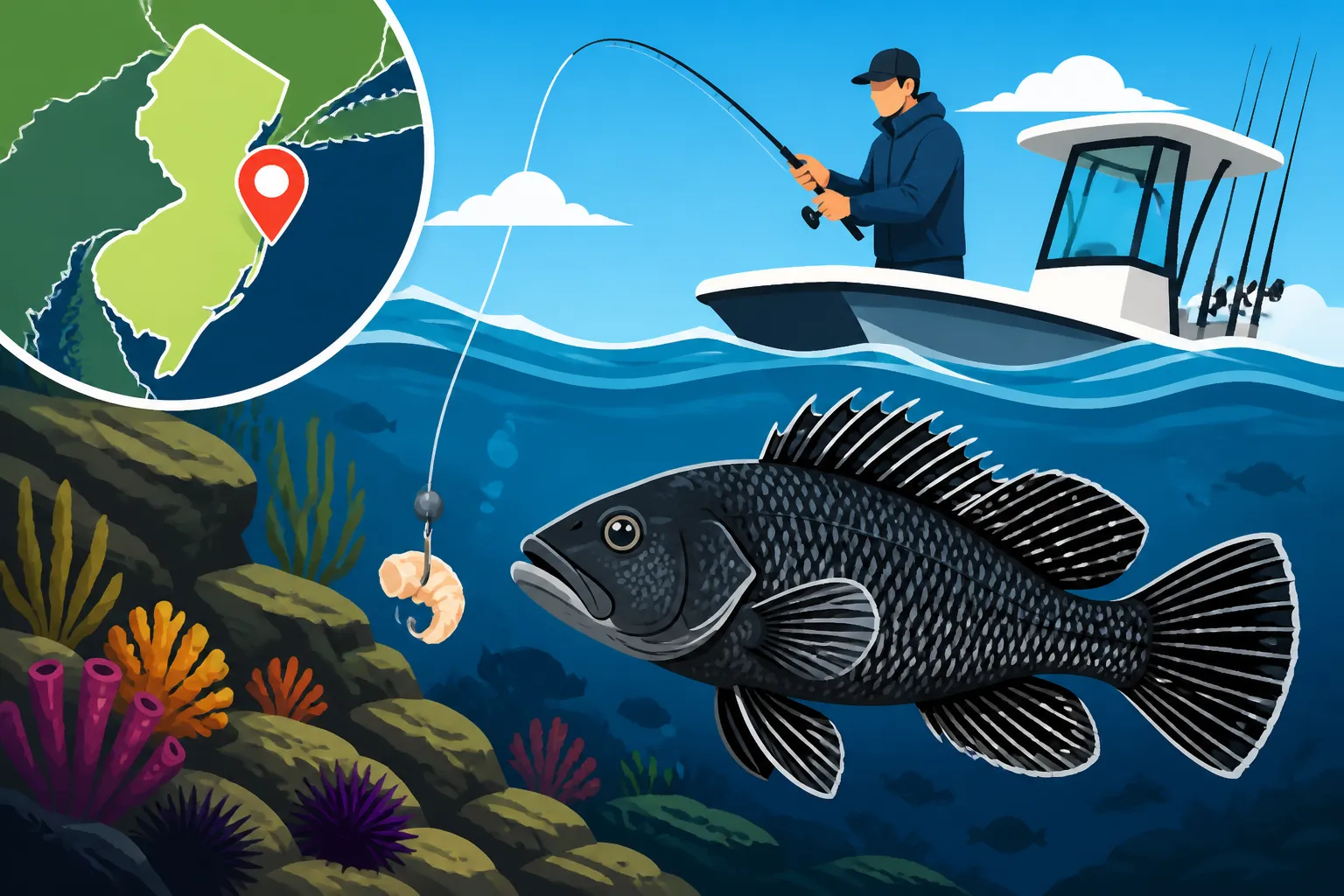
Black sea bass, or Centropristis striata, are a popular and delicious target for anglers along the New Jersey coast. These highly sought-after fish are known for their feisty fight and excellent table fare. To consistently catch them, you first need to understand their preferred environment and behaviors.
The Lure of Structure: Why Reefs and Wrecks are Key
Black sea bass are absolutely crazy about structure. It's not just a preference; it's a fundamental part of their survival and hunting strategy. Imagine a bustling underwater city: that’s what a reef or a shipwreck represents to a black sea bass. These areas provide critical shelter from strong currents and predators, offering countless nooks and crannies where they can hide. More importantly, these structures are magnets for baitfish, crabs, shrimp, and other small invertebrates that make up the bulk of a sea bass's diet. If you’re not fishing structure, you’re often just drifting over empty water.
New Jersey is blessed with an incredible network of both natural and artificial reefs. Our coast, from Cape May all the way up to Sandy Hook, is dotted with impressive natural rock formations, mussel beds, and shell patches that create ideal black sea bass habitat. Beyond these natural wonders, the state has invested heavily in creating extensive artificial reef sites. These man-made structures, often constructed from old barges, concrete rubble, retired subway cars, and even old tires, quickly become thriving ecosystems. They’re strategically placed to provide habitat for a variety of marine life, and black sea bass are usually among the first residents. Knowing the exact locations of these structures, often marked on nautical charts or readily available from the New Jersey Department of Environmental Protection (NJDEP), is your first step to success. For a more detailed dive into these fantastic fishing grounds, check out our guide on the New Jersey Artificial Reef Fishing Guide.
Identifying Black Sea Bass: What to Look For
Black sea bass are relatively easy to identify, even for novice anglers. They typically have a stout body, a continuous dorsal fin, and a dark, mottled coloration that allows them to blend in perfectly with rocky bottoms and wrecks. Their color can vary quite a bit, from dark brown to bluish-black, often with lighter spots or bars. During spawning season, or when agitated, dominant males, often called "humpbacks" due to a noticeable fatty hump on their forehead, can display vibrant blue and white markings. The average size for a legal keeper in New Jersey often hovers around 12 to 15 inches, though bigger fish, sometimes pushing 5 pounds or more, are certainly out there and provide a formidable fight.
When you're reeling them in, pay attention to their behavior. They're not subtle. Black sea bass hit hard and fight with surprising strength, often trying to dive back into the structure where they came from. This is why a quick, firm retrieve is essential to get them away from potential snags. Understanding their average size and fighting characteristics helps you prepare your gear and your technique. And, of course, knowing the current regulations is paramount, so be sure to familiarize yourself with the New Jersey Black Sea Bass Season and Limits.
Seasonal Movements and Best Fishing Times
Black sea bass are migratory, and their presence on New Jersey reefs is highly dependent on water temperature and spawning cycles. Generally, they begin to move into shallower, inshore waters and onto the reefs as water temperatures rise in late spring and early summer. This is often when the season first opens, providing some fantastic fishing opportunities. As summer progresses, they tend to spread out more, with some moving to deeper offshore reefs and others remaining closer to shore.
The fall bite for black sea bass can be absolutely phenomenal. As the water begins to cool in September and October, these fish often congregate in large numbers on reefs and wrecks, feeding aggressively in preparation for their winter migration offshore to deeper, warmer waters. This is often when anglers find the biggest "humpbacks" of the season. Knowing the specific season dates for black sea bass in New Jersey is crucial. For example, if you're planning a trip, you'll want to know New Jersey Black Sea Bass Season Opening Date to make sure you're legally fishing and targeting them at their prime. They'll eventually move away from the immediate coast for the coldest months, only to return with the warming waters of the next spring.
Essential Gear for Reef Fishing for Black Sea Bass
Fishing around reefs and wrecks means dealing with snags, strong currents, and hard-fighting fish. Having the right gear isn't just about catching more fish; it's about minimizing frustration and maximizing your enjoyment on the water. Skimping on tackle here will lead to lost rigs, lost fish, and a whole lot of head-shaking.
Rod and Reel Setups: Power and Sensitivity
For black sea bass fishing near reefs, you need a rod and reel combo that offers a delicate balance of power and sensitivity. You need enough backbone to pull a fish away from structure quickly and enough lifting power to handle sinkers often weighing several ounces in strong currents. Yet, you also need enough sensitivity in the rod tip to feel those subtle bites when a sea bass just mouths the bait, or to detect the nuances of the bottom.
A medium-heavy to heavy conventional rod, typically 6 to 7 feet long, is an excellent choice. Look for rods with a fast action tip that transitions quickly into a strong backbone. This allows you to feel the slightest tap but still have the power to winch fish up. Brands like St. Croix, Ugly Stik, and Shimano offer excellent options that can withstand the abuse of reef fishing. When it comes to reels, a conventional star-drag or lever-drag reel in the 200-300 size range (like a Penn Squall or a Shimano Torium) is ideal. These reels offer the cranking power, line capacity, and smooth drag needed to battle larger sea bass and manage heavy weights. Spool your reel with braided line, typically 30-50 lb test. Braided line has minimal stretch, which significantly increases sensitivity, helping you feel every bite and every bump on the bottom. It also cuts through the water better, reducing drag from currents. Many anglers find great deals and a wide selection for these kinds of specific conventional setups on Amazon.
Terminal Tackle: Rigs, Hooks, and Sinkers
Your terminal tackle is arguably the most critical component when reef fishing for black sea bass. It's the direct connection to the fish and the structure, and it needs to be robust and effective. The most common and effective rig for black sea bass is a high-low rig. This typically consists of two dropper loops tied above a sinker, allowing you to present two baits at different depths. You can tie your own using 30-50 lb fluorocarbon or monofilament leader material, or purchase pre-tied rigs for convenience. Fluorocarbon is often preferred for its abrasion resistance against sharp reef edges and its near invisibility underwater.
For hooks, size 1/0 to 3/0 circle hooks are generally recommended. Black sea bass have relatively small mouths, but they are aggressive eaters. Circle hooks are a game-changer because they virtually eliminate gut-hooking, ensuring that fish you release have a much higher chance of survival. When using circle hooks, remember the golden rule: don't set the hook! Just slowly apply pressure, and the hook will typically find the corner of the fish's mouth. This is also a key regulation many anglers overlook; remember to adhere to the New Jersey Circle Hook Requirements for Bait Fishing if using bait for certain species, including often incidentally caught striped bass. Sinkers are the final, but crucial, component. Pyramid or bank sinkers, ranging from 4 to 12 ounces (and sometimes even heavier in strong currents or deep water), are necessary to keep your bait on the bottom where the fish are. The exact weight will depend heavily on current strength and depth, so bring a variety.
Here's a quick comparison of common black sea bass rigs:
| Rig Type | Description | Pros | Cons | Best Use |
|---|---|---|---|---|
| High-Low Rig | Two snelled hooks on dropper loops above a sinker. | Presents multiple baits, good bait separation. | Can snag easily if not fished vertically, takes time to tie. | Most common and versatile for bait fishing. |
| Knotless Rig | Often a specialized jigging spoon or soft plastic on a heavy jig head. | Direct feel, less snagging, active presentation, good for lures. | Only one offering, requires active jigging. | When fish are aggressive and reacting to lures. |
| Dropper Loop | Single hook tied on a dropper loop above a sinker. | Simple, quick to tie, less tangles than high-low with multiple baits. | Only one bait presentation. | Minimalist approach, targeting specific depths. |
Bait and Lure Choices That Entice
Black sea bass are not particularly picky eaters, but some baits and lures definitely outperform others. Fresh bait is always king. Small pieces of squid, cut clam, or pieces of fresh bunker (menhaden) or mackerel are incredibly effective. Squid is a perennial favorite because it’s tough, stays on the hook well, and sea bass just can't resist it. You can buy it at most tackle shops, and even on Amazon if you're looking for frozen bulk supplies. Crabs, especially green crabs or small fiddler crabs, are also highly effective, especially when fished closer to the structure.
Beyond natural baits, artificial lures can be incredibly productive, especially when the fish are aggressive or when you want to minimize bait theft from smaller fish. Metal jigs, often called 'speed jigs' or 'butterfly jigs,' ranging from 2 to 6 ounces, can be dropped to the bottom and worked aggressively with sharp upward jerks. The flash and vibration can trigger incredible strikes. Soft plastic baits, such as Gulp! Swimming Mullet or Shrimp, rigged on a heavy jig head (½ oz to 2 oz depending on depth and current), are also very effective. They offer the scent and action that sea bass love, and often survive multiple bites. The key with lures is to impart action: jigging, twitching, or slowly lifting and dropping to imitate wounded baitfish or scuttling crabs.
Proven Techniques for Catching Black Sea Bass
Knowing the right gear is only half the battle; the other half is knowing how to use it effectively. Black sea bass fishing around reefs requires precision, persistence, and a willingness to adapt your approach.
Vertical Jigging and Dropping Baits: The Go-To Methods
When targeting black sea bass around structure, vertical presentation is paramount. You want your bait or lure to be directly in their strike zone, which is often right on or very close to the bottom. This means getting your offering down quickly and keeping it there, even in strong currents.
Vertical Jigging: This technique is often the most exciting and productive, particularly when fish are actively feeding. Once you’ve located a promising piece of structure on your fish finder and positioned your boat directly over it, drop your metal jig or heavy soft plastic straight down to the bottom. As soon as it hits, reel up a few feet to avoid snagging immediately. Then, begin a series of sharp, upward jerks of the rod, followed by allowing the jig to flutter back down on a semi-slack line. The idea is to mimic a wounded baitfish or squid. Pay close attention on the fall, as many strikes occur as the jig descends. Vary the intensity and speed of your jigs until you find what the fish prefer on that particular day. If you don't get a bite within a minute or two, reel up quickly and drop again to ensure you're right on the structure.
Dropping Baits (High-Low Rig): This is the bread-and-butter technique for many black sea bass anglers, especially when using natural baits. Deploy your high-low rig with fresh bait (squid, clam, or crab pieces) straight down until your sinker taps the bottom. Once it hits, reel up just one or two cranks. You want your sinker to be a foot or so off the bottom, allowing your baits to drift naturally just above the structure. This reduces snags while still keeping your offerings in the prime strike zone. Hold your rod steady, paying close attention to the tip for any tap or slight bend. When you feel a bite, don't jerk the rod. Instead, slowly lift, applying steady pressure. If you’re using circle hooks, this gentle pressure is all that's needed for the hook to set itself in the corner of the fish’s mouth. This is particularly crucial in deeper waters. For more on what depths to target, consider reading our post on How Deep Do You Need to Fish for Black Sea Bass?.
Drifting and Anchoring Strategies Around Reefs
Choosing whether to drift or anchor can significantly impact your success when reef fishing. Both have their advantages, and the best approach often depends on the specific conditions and structure you’re fishing.
Drifting: Drifting allows you to cover more ground and present your baits or lures to a wider area of the reef or wreck. This is especially effective when the fish are scattered or when you’re exploring a new piece of structure. To drift effectively, position your boat upwind or upcurrent from the area you want to fish, allowing the boat to move slowly over the reef. Deploy your baits or jigs to the bottom, and keep them there as you drift. You’ll need to adjust your sinker weight frequently to maintain bottom contact, as the depth and current can change. Use your fish finder to monitor the structure as you drift, noting where you get bites. If you hit a hot spot, you might want to make another drift over that exact path. On windier days, a drift sock or sea anchor can help slow your boat down, giving the fish more time to find your bait and allowing you to maintain better vertical control.
Anchoring: When you find a really concentrated school of black sea bass or a particularly productive small piece of structure, anchoring can be incredibly effective. Once you locate the sweet spot with your fish finder or by making successful drifts, anchor your boat so that you’re positioned directly over, or slightly upcurrent of, the structure. This allows you to present your baits repeatedly to the same fish. It’s also great for chumming, although chumming for black sea bass isn't as common as for other species, it can sometimes draw fish out from tight cover. The downside of anchoring is that it can be tricky in strong currents or over jagged bottom where your anchor might get stuck. Always have a good anchor retrieval system, like a buoy and ring, to help get a fouled anchor free. Anchoring allows for a very precise, persistent presentation, letting you pick off fish from a known productive spot.
Reading Your Fish Finder and Locating Hot Spots
Your fish finder is your most valuable tool when fishing for black sea bass near reefs. It’s not just for finding fish; it's for understanding the underwater topography and identifying the specific features that hold fish. Learning to interpret what you see on the screen can drastically improve your catch rate.
First, identify the structure. Reefs and wrecks will show up as hard returns, often with irregular shapes. The key is not just finding the main structure, but looking for the "edges" or "high points" where fish tend to congregate. Black sea bass often won't be in the thickest part of a wreck; they'll be just off it, or along its perimeter. Look for baitfish schools on your sonar, as sea bass are never far from their food source. Once you locate the structure, zoom in on the bottom. You’re looking for distinct arches or blobs that indicate individual fish or schools of fish. Sometimes these will be tightly packed right on the structure, other times they'll be suspended a few feet above it.
Pay attention to the depth and consistency of the bottom. A soft, flat bottom isn’t typically where you’ll find sea bass. They prefer hard bottom, rocks, and uneven terrain. Mark waypoints on your GPS every time you get a bite or see a good concentration of fish on the screen. Over time, these waypoints will paint a picture of the productive areas. Don't be afraid to make several passes over a suspected area, varying your speed and sonar settings, to get a clear picture of what’s down there. A good fish finder can save you hours of fruitless fishing and direct you right to the action. If you're new to these invaluable tools, consider reading our guide on How to Read a Fish Finder for Beginners to get started.
Navigating Regulations and Best Practices
Fishing responsibly is not just about following the rules; it's about ensuring healthy fish populations for future generations. Black sea bass are a federally managed species, and New Jersey implements specific regulations to align with federal guidelines.
Understanding New Jersey's Black Sea Bass Regulations
New Jersey's black sea bass regulations, including season dates, size limits, and bag limits, can change annually, so it's absolutely critical to consult the most current New Jersey Fish and Wildlife Digest before every season. These regulations are designed to manage the fishery sustainably. For instance, you might encounter a minimum size limit of 12.5 or 13 inches, and bag limits that vary from 10 to 15 fish per person per day, depending on the specific seasonal period. These regulations are put in place to protect spawning fish and allow juveniles to grow.
Always carry a current copy of the regulations, whether it’s a physical digest or access to the digital version on your phone. Ignorance of the law is not an excuse, and penalties for violations can be steep, ranging from fines to suspension of fishing privileges. Remember that if you’re fishing on a party or charter boat, they will usually be up-to-date on the rules, but it's still your responsibility to be informed. It’s also important to understand that there might be different regulations for recreational vs. commercial fishing, and different rules for different times of the year, so always confirm the current ones. For a handy reference, consult the New Jersey Marine Fish Size Chart 2026 and our detailed explanation of How Bag and Size Limits Work in New Jersey.
Responsible Angling and Conservation
Beyond just following the rules, responsible angling practices are vital for black sea bass conservation. Many times, you'll catch undersized fish or fish you don't intend to keep. Minimizing harm to these released fish is crucial.
- Handle Fish Gently: When releasing a fish, handle it as little as possible. Avoid touching its gills or eyes.
- Quick Release: Have a de-hooking tool ready to quickly remove the hook. The less time a fish spends out of the water, the better its chances of survival.
- Ventilation Tools: Black sea bass, particularly when caught from deeper water (often 60 feet or more), can suffer from barotrauma (the bends) due to the rapid change in pressure. This causes their swim bladder to expand, making them unable to swim back down. A descending device (like a seaqualizer or a weighted hook that carries the fish back down) or a venting tool (a sharp, hollow needle used to carefully puncture the swim bladder) can significantly increase their survival rate. It's a skill worth learning and a tool worth carrying if you regularly fish deeper reefs.
- Minimize Bycatch: While targeting sea bass, you might incidentally catch other species. Be aware of their regulations too, and release them promptly if not legal or desired.
These practices ensure that the black sea bass fishery remains healthy and abundant for everyone to enjoy for years to come.
Safety First: Essential Considerations on the Water
Fishing the open waters of New Jersey, especially around challenging structures, demands a strong focus on safety. The ocean can be unpredictable, and being prepared is key to a smooth and enjoyable trip.
- Weather Awareness: Always check the marine forecast before heading out. Pay attention to wind speed, wave height, and potential for storms. Conditions can change rapidly, particularly offshore. If the forecast calls for rough seas, it’s always better to stay home. No fish is worth risking your life.
- Safety Gear: Ensure your boat is equipped with all required safety gear: properly fitted PFDs (personal flotation devices) for everyone on board, fire extinguisher, flares, whistle/horn, and a throwable flotation device. Regularly check the expiration dates on your flares.
- Communication: Always have multiple forms of communication. A VHF marine radio is essential for emergencies and communicating with other boats. A fully charged cell phone is a good backup, but remember cell service can be spotty offshore. Consider a satellite messenger for truly remote areas. Let someone on shore know your float plan – where you’re going, who’s with you, and when you expect to return.
- Know Your Boat: Be familiar with your vessel's capabilities and limitations. Don't overload it, and know how to operate all its systems, including bilge pumps, in an emergency.
- First Aid: Carry a well-stocked first-aid kit. Minor cuts from hooks or fish fins are common, and being able to treat them promptly can prevent bigger issues.
- Hydration and Sun Protection: Spend long hours on the water can lead to dehydration and sunburn. Bring plenty of water, wear protective clothing, a wide-brimmed hat, and quality sunglasses.
Following these safety guidelines ensures that your focus can remain on the thrilling pursuit of black sea bass, rather than on unforeseen dangers. If you ever consider a guided trip, understanding New Jersey Fishing License Requirements on a Guided Charter is also a good safety-related piece of information.
Maximizing Your Catch and Enjoying the Experience
Catching black sea bass is only part of the fun. Knowing how to maximize your take and truly savor the experience, from boat to plate, makes the effort all the more rewarding.
Best Practices for Cleaning and Storing Your Catch
Once you’ve successfully landed your black sea bass, proper handling on the boat is essential to maintain their quality for the dinner table. If you plan to keep your catch, get the fish on ice as quickly as possible. A cooler filled with ice is non-negotiable. This rapid cooling halts bacterial growth and preserves the firm texture and fresh flavor of the meat. Don't just throw them in a bucket of water; that won't keep them cold enough. A mixture of ice and a small amount of saltwater is ideal.
When it comes to cleaning, black sea bass are relatively easy to fillet. Their scales are small, and their bone structure is straightforward. Use a sharp, flexible fillet knife. Start by making a cut behind the gill plate, down to the spine. Then, turn the knife and run it along the backbone towards the tail, separating the fillet. Repeat on the other side. Some anglers prefer to skin the fillets, while others leave the skin on for cooking. If you're new to filleting, there are plenty of online tutorials, or you can ask an experienced angler for a quick lesson. Once filleted, rinse the meat quickly with cold water, pat it dry, and store it in zip-top bags on ice or in the refrigerator. For longer storage, vacuum sealing and freezing is the best option.
Cooking Black Sea Bass: Delicious Ways to Enjoy
Black sea bass is, without a doubt, one of the best-eating fish in New Jersey waters. Its flaky, white flesh has a delicate, sweet flavor that holds up well to a variety of cooking methods. This isn't a fish you need to overpower with heavy sauces or strong spices; its natural taste is a highlight. In fact, many anglers consider it among the top contenders for What Is the Best Eating Fish Caught in New Jersey Waters?.
Simple Pan-Seared Fillets: This is arguably the most popular and delicious way to prepare black sea bass. Pat your fillets dry, season generously with salt, pepper, and a touch of garlic powder. Heat a non-stick skillet over medium-high heat with a little olive oil or butter. Sear the fillets skin-side down (if skin-on) for 3-4 minutes until crispy, then flip and cook for another 2-3 minutes until the flesh is opaque and flakes easily. Serve with a squeeze of fresh lemon and a side of steamed vegetables.
Baked or Broiled: For a hands-off approach, season your fillets and place them on a baking sheet. Drizzle with olive oil, a sprinkle of fresh herbs (dill, parsley, or thyme work wonderfully), and a few lemon slices. Bake at 400°F (200°C) for 10-15 minutes, or broil for 5-8 minutes, until cooked through. This method keeps the fish incredibly moist.
Grilled: If you're a fan of grilling, black sea bass fillets can be fantastic. Brush them lightly with olive oil to prevent sticking and season them. Place them on a medium-hot grill, turning once, until cooked through. The slight char adds another layer of flavor. No matter how you prepare it, fresh black sea bass from the New Jersey reefs is a culinary delight that makes all the effort of fishing worth it.
Troubleshooting Common Challenges
Fishing for black sea bass around reefs comes with its own set of challenges, from relentless snags to finicky fish. Learning to troubleshoot these common problems will save you frustration and keep your lines in the water longer.
Dealing with Snags: This is perhaps the most frustrating aspect of reef fishing. You’re intentionally fishing in a snaggy environment! When you get snagged, don’t just pull harder. First, try to "jiggle" your rod tip gently, sometimes that's enough to free the sinker. If that doesn't work, point your rod tip directly at the snag, engage your reel's drag (or thumb the spool on a conventional reel), and pull straight back with steady pressure. Often, this will either straighten out the hook, break the leader at the sinker knot (if tied properly to break there), or free the rig. If you're still stuck, try moving the boat slightly to change the angle of the pull. To prevent snags, use lighter leaders for your sinker connection than your main line or hook snells, so if you do get stuck, you only lose the sinker, not the entire rig. And always retrieve your rig a foot or two off the bottom as soon as your sinker hits, never letting it drag.
Picky Fish: Sometimes, despite being on a promising spot, the black sea bass just aren't biting aggressively. This is when you need to experiment.
- Vary Your Bait: If squid isn't working, try clam, small pieces of fish, or even a different type of crab.
- Change Your Lure: Switch from a metal jig to a soft plastic, or vice versa. Try different colors.
- Adjust Your Presentation: Are you jigging too fast or too slow? Is your bait sitting too far off the bottom? Try letting it sit directly on the bottom for a moment, or raising it a bit higher. Sometimes, a subtle, almost motionless presentation is what they want.
- Move On: If you've tried everything and the fish are just not cooperating, don't be afraid to pull anchor or make another drift to a different part of the reef or even a different reef entirely. Sometimes a fresh start is all it takes.
Strong Currents: New Jersey's coastal waters can have incredibly strong currents, making it difficult to hold bottom.
- Heavier Sinkers: The most straightforward solution is to increase your sinker weight. Carry a range of sizes.
- Thinner Line: Braided line with a smaller diameter will cut through the water better than monofilament, reducing drag.
- Fish During Slack Tide: If possible, plan your trips around the slack tide, which is the period of minimal current between the incoming and outgoing tides. This is often the easiest time to hold bottom and target structure effectively. You can easily find tide charts online or at local bait and tackle shops to help plan your day.
By understanding these challenges and having a few solutions in your back pocket, you’ll be much better equipped to turn a tough day into a successful one.
Disclaimer
Fishing regulations, including seasons, size limits, and bag limits, can change frequently. While we strive to provide accurate and up-to-date information, it is your responsibility to consult the latest New Jersey Fish and Wildlife Digest or visit the official NJDEP website before heading out on any fishing trip. Always prioritize safety and adhere to all local, state, and federal laws.