How Big Do Striped Bass Get?
It's a question that echoes in the minds of every angler casting a line into New Jersey's waters: "Just how big do striped bass truly get?" We all dream of landing that monster, a "cow" striped bass that tests our tackle and our resolve. But beyond the tall tales and the occasional viral photo, understanding the actual size potential of these magnificent fish, and what influences it, can really help you set realistic goals and appreciate every catch. This guide will help you understand the factors that dictate their growth, the typical sizes you might encounter, and the absolute giants that hold the state record.
The General Growth and Maximum Size of Striped Bass
Let's start with the big picture. Striped bass, or Morone saxatilis, are anadromous fish, meaning they spend most of their lives in saltwater but migrate to freshwater to spawn. They are known for their impressive growth rates and potential for considerable size, making them one of the most sought-after game fish along the Atlantic coast. Their lifespan can be quite long, with some individuals living well over 30 years, especially the females, which grow larger and live longer than males.
In their optimal environment, with abundant food sources and favorable conditions, striped bass can grow to be truly immense. While the average recreational catch might fall within a certain slot limit, the biological capacity of these fish goes far beyond that. These fish are powerful, built for speed and endurance, capable of long migrations and sustained fights once hooked. Their body shape, with its sleek profile and strong caudal fin, is perfectly designed for navigating both strong currents and open ocean.
When we talk about "how big" these fish get, we're really looking at a spectrum. You'll catch countless smaller schoolie stripers, which are often a blast on light tackle. Then there are the "keepers," those fish that meet New Jersey's New Jersey Striped Bass Slot Limit and Season requirements and are a respectable size for the dinner table. And then, there are the true giants, the fish that challenge the record books and become the stuff of legend. These are the fish that demand heavy-duty gear, patient angling, and often a bit of luck.
Factors Influencing Striped Bass Size in New Jersey
Several key elements come into play when determining how large a striped bass will grow in New Jersey's diverse aquatic environments. It's not just about age; it's a complex interplay of biology and environment.
Age and Sex: The Primary Drivers
As mentioned, striped bass can live for many years, and generally, the older they get, the larger they become. However, there's a significant difference between the sexes. Female striped bass mature later but grow much larger and live longer than their male counterparts. This is a crucial biological strategy for their species, as larger females can produce far more eggs, contributing significantly more to the population's future generations. So, if you're chasing a true trophy, odds are you're after a mature female. Their growth isn't linear; they often have periods of rapid growth when food is plentiful, followed by slower periods.
Food Availability and Quality of Habitat
Think about it: a fish needs to eat to grow. New Jersey's waters, from the back bays to the offshore wrecks, are teeming with various baitfish that form the striped bass diet. Species like bunker (menhaden), herring, spearing, and squid are critical forage. Areas with consistent, dense schools of these baitfish will naturally support larger, healthier striped bass populations. For example, the rich estuaries and tidal rivers where juvenile baitfish thrive provide an excellent nursery and feeding ground. When resources are scarce, growth can slow, and fish may not reach their full potential. What Do Striped Bass Eat in New Jersey Waters? explores this topic in more detail.
Beyond food, the quality of their habitat plays a huge role. Clean water, suitable temperatures, and access to diverse structures (like jetties, wrecks, and mussel beds) for ambush and shelter are all vital. Pollution, habitat degradation, and changes in water temperature due to climate shifts can all negatively impact growth rates and overall health, regardless of how much food is around. New Jersey's efforts in conservation and managing water quality are essential for sustaining healthy fish populations.
Genetics and Regional Variations
Just like people, individual fish have genetic predispositions that can influence their maximum size. Some fish are simply born with the genes to grow bigger and faster. While impossible for an angler to predict, this genetic lottery certainly plays a role in those exceptional catches.
Furthermore, there can be subtle regional variations in growth patterns along the East Coast. New Jersey sits in the middle of a vast migratory corridor. When Do Striped Bass Migrate Through New Jersey? reveals that fish moving through our waters might originate from different spawning grounds (like the Chesapeake Bay or Delaware River), and their growth trajectories can differ based on their specific life history and the conditions they've experienced throughout their journey. These migratory patterns bring a diverse range of sizes and ages through our area, offering anglers a shot at fish from various cohorts.
Real-World Expectations: Typical Sizes for New Jersey Anglers
While it's exciting to imagine catching a monstrous striper, what can a typical angler actually expect when fishing in New Jersey? Reality often sits somewhere between the dream and the casual outing.
The Average Catch: Schoolies and Keepers
Most anglers will primarily encounter "schoolie" stripers, especially in the spring and fall. These are younger, smaller fish, usually under the current slot limit, providing fantastic light tackle action. They might be anywhere from 18 to 26 inches. These fish are abundant, feisty, and a blast to catch, making them perfect for beginners or those just enjoying a day on the water.
"Keepers" are the fish that fall within New Jersey's legal slot limit. This changes periodically based on conservation efforts, so always check the latest regulations in the New Jersey Fish and Wildlife Digest: Where to Find the Current Rules. These fish are generally in the 28-38 inch range, offering a good fight and a decent amount of meat. Landing one of these is a great accomplishment for most recreational anglers, and they represent a healthy, mature fish population. They can weigh anywhere from 8 to 20 pounds, depending on their length and girth.
Chasing Trophy Fish: Over 40 Pounds
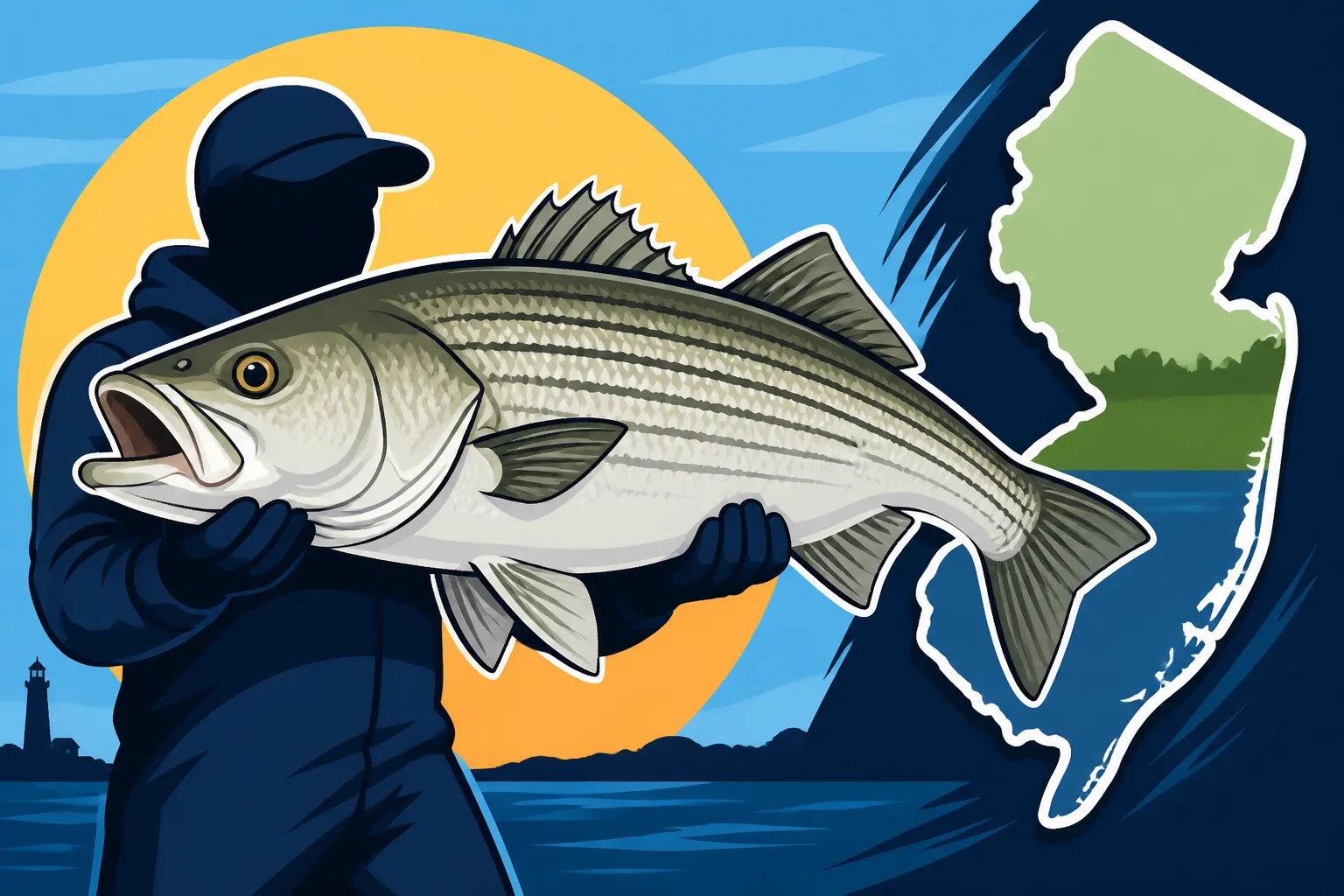
Now, for those who dream big. A trophy striped bass in New Jersey is generally considered to be a fish exceeding 40 pounds, or often, over 45-50 inches in length. These are substantial fish that require dedicated effort, specialized tackle, and often, an understanding of specific tactics. Targeting these larger fish often involves different strategies than schoolie fishing, like using larger baits or lures, fishing specific times of year (like the fall run), or focusing on certain areas known for holding big fish.
Trophy stripers are often caught during the spring spawning migrations or the robust fall run, as these are the times when large numbers of mature fish move through the state's waters. Key areas like the Raritan Bay, the inlets along the coast, and specific surf fishing beaches during these runs can produce these giants. Landing a fish of this caliber is a truly memorable experience and the culmination of skill, perseverance, and often, a little bit of angler's luck. Many anglers choose to New Jersey Catch and Release Striped Bass Handling Rules for these larger, breeding females, helping to ensure the future of the fishery.
To give you an idea of the spectrum, here's a general table of typical striped bass sizes and their associated effort in New Jersey:
| Size Range (Length) | Estimated Weight (avg) | Angler Experience Level | Typical Catch Spot | Gear |
|---|---|---|---|---|
| 18-26 inches | 2-6 lbs | Beginner/Casual | Bays, Rivers, Surf | Light Spinning |
| 28-38 inches | 8-20 lbs | Intermediate | Inlets, Bays, Surf | Medium Spinning |
| 38-45 inches | 20-35 lbs | Experienced | Inlets, Ocean, Surf | Heavy Spinning/Conventional |
| 45+ inches | 35+ lbs | Dedicated Trophy Hunter | Ocean, Specific Inlets | Heavy Conventional |
For those looking to upgrade their gear for these larger fish, a wide range of heavy-duty rods, reels, and specialized lines are available. Online retailers like Amazon offer extensive selections, from robust surf rods capable of launching heavy baits to powerful conventional reels for boat fishing, ensuring you're ready when that big one bites. Investing in a good quality fishing scale is also a wise move for accurately measuring your trophy catch before release or for documentation.
Chasing Giants: New Jersey's State Record Striped Bass
Every state has its legendary fish, and New Jersey is no exception. The state record stands as the ultimate benchmark for how big a striped bass can truly get within our waters. It's a testament to the immense size potential of this species and the dedication of the anglers who pursue them.
The New Jersey State Record
The current New Jersey state record for striped bass is a truly colossal fish. While specific weight and details are subject to official records, this record fish pushed the limits of what was thought possible for a striped bass caught in our area. What Is the New Jersey Striped Bass State Record? delves into the specifics, but suffice it to say, it's a fish that dwarfs most recreational catches and represents the pinnacle of striped bass angling in the state.
Reaching such an extraordinary size takes many years of growth, perfect environmental conditions, and a lucky encounter with an angler. These record-breaking fish are almost always very old, mature females that have navigated countless migrations and evaded numerous predators and fishing pressures throughout their lives. They are survivors, and catching one is a once-in-a-lifetime achievement.
The Thrill of the Pursuit
For many, the pursuit of a record-breaking or even personal best striped bass is what drives their passion for fishing. It's not just about the size, but the challenge, the strategy, and the connection to the natural world. Anglers will dedicate countless hours to studying tides, reading water, understanding baitfish movements, and refining their techniques. They'll experiment with different Best Lures for Striped Bass Fishing and baits, sometimes even custom-making rigs to gain an edge.
The possibility of hooking into a fish of such magnitude means being prepared. This includes having well-maintained, heavy-duty tackle, knowing how to properly fight a large fish to minimize stress, and understanding how to safely land, measure, and potentially release a trophy. A strong net, reliable fishing line (which can be found on Amazon, for example, in various pound tests suitable for large fish), and a good plan for photography are all part of the serious trophy angler's arsenal. While breaking the state record is an incredibly rare feat, the journey to catch a personal best, a fish that pushes your own limits, is an equally rewarding aspect of Striped Bass Fishing in New Jersey.
Disclaimer
This article is for general informational purposes only and does not constitute professional advice. Laws, prices and regulations vary by location and change over time. Consult a qualified professional for guidance on your specific situation.