Best Lures for Largemouth Bass in Summer Heat
Summer in New Jersey can be absolutely brutal for largemouth bass anglers. That scorching sun drives our green-backed friends deep, making them notoriously difficult to entice. If you've spent countless hot afternoons casting fruitlessly, feeling like the fish have simply vanished, you're not alone. This guide is all about tackling that summer heat head-on, sharing the best lures and techniques to put New Jersey largemouth bass in your net, even when the mercury is soaring.
The Summer Slump: Why Largemouth Bass Get Finicky in the Heat
When those long, hot New Jersey summer days hit, many anglers find themselves scratching their heads. The bass seem to disappear, and the bite gets incredibly tough. It's not that the fish are gone; it's that their entire world changes, and we, as anglers, need to adapt our approach to match. Understanding why they behave this way is the first step to figuring out what lures will tempt them.
Understanding Thermoclines and Oxygen Levels
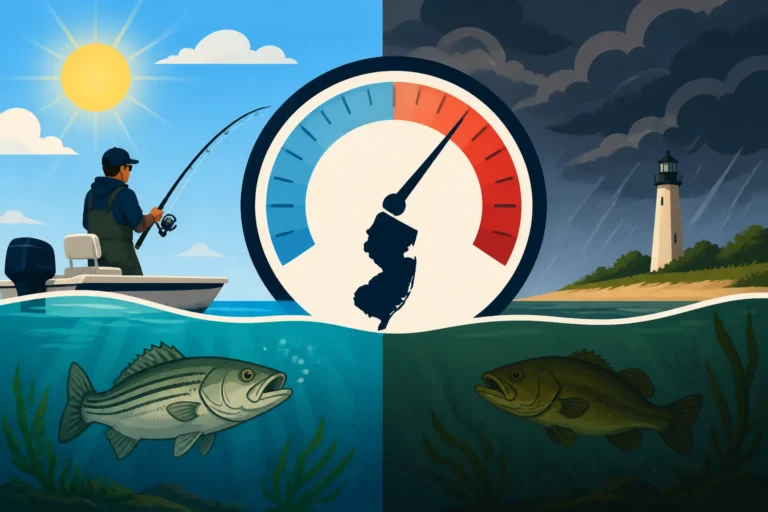
One of the biggest factors influencing largemouth bass in summer is water temperature and, consequently, oxygen levels. As the surface water heats up, it creates distinct layers in deeper lakes and reservoirs. This is known as a thermocline – a boundary where the warm, less dense surface water meets the cooler, denser deep water. While the cooler water below the thermocline might seem appealing, it often has significantly lower oxygen levels, making it unsuitable for sustained fish life. Bass are cold-blooded creatures, and their metabolism is directly affected by water temperature. They're looking for that "Goldilocks zone": water that's cool enough to be comfortable but still rich in dissolved oxygen to support their activity.
This means bass will often seek out areas just above or within the thermocline, or in parts of the lake where oxygen is more readily available, such as near springs, creeks, or aeration systems. They might also gravitate towards cooler, shaded areas like thick vegetation, fallen trees, or deep structure. For instance, in a place like Lake Hopatcong Bass Fishing Hotspots, knowing where these cooler, oxygenated zones are can be the difference between a frustrating skunk and a successful day. The challenge for us then becomes getting our lures into these specific zones without spooking the fish.
Feeding Patterns Shift with the Sun
Just like us, largemouth bass aren't keen on expending a ton of energy in the oppressive midday sun. Their feeding patterns become much more condensed and strategic during the summer. Instead of cruising and actively hunting all day, they'll become more opportunistic, often preferring to ambush prey from heavy cover. Their primary feeding windows typically shift to the cooler, lower-light periods of early morning and late evening, or even into the night.
During the brightest, hottest parts of the day, bass will hunker down in dense cover – think lily pads, submerged timber, thick hydrilla, or deep rock piles. They become almost lethargic, waiting for an easy meal to come to them rather than chasing it down. This is where your lure selection and presentation become absolutely critical. You need lures that can penetrate heavy cover, mimic distressed prey, or simply annoy a bass enough to strike out of instinct. Understanding these subtle shifts in behavior is key to choosing the right lure at the right time. This is also why knowing the Best Time of Day for Bass Fishing can significantly improve your summer catch rates.
Topwater Tactics for Explosive Summer Bites
When the sun is just creeping over the horizon or dipping below the treeline, signaling cooler temperatures and lower light, that's prime time for topwater action. There's nothing quite like the explosive strike of a largemouth bass blowing up on a topwater lure. These conditions mimic when many of their natural prey, like frogs, mice, or struggling baitfish, are most active or vulnerable near the surface.
Frogs and Toads for Weedy Cover
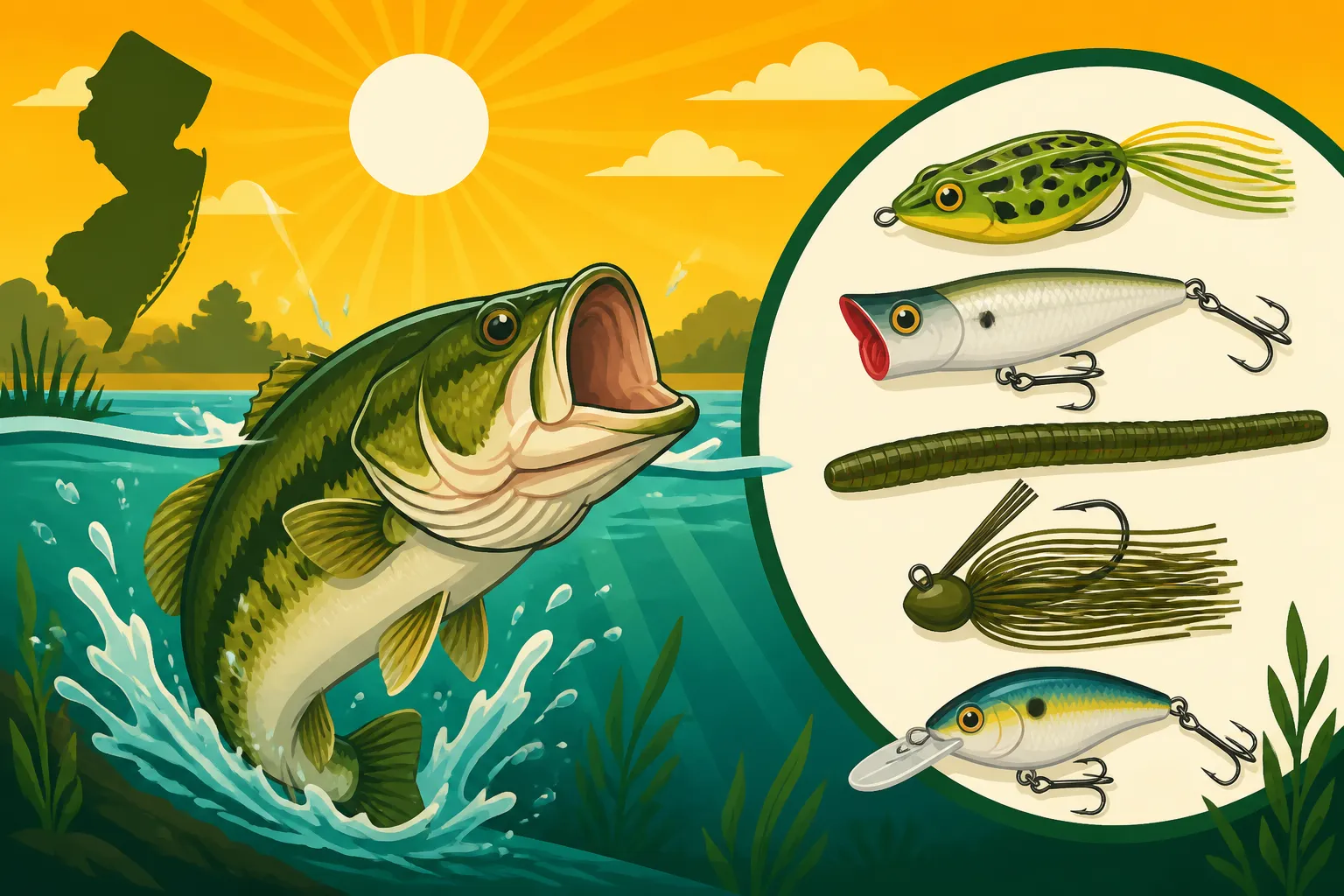
If you're fishing lakes or ponds in New Jersey that are choked with lily pads, matted grass, or dense hydrilla – places like some of the shallow coves in Greenwood Lake Fishing Guide or the quieter sections of the Mullica River – then hollow-bodied frogs and soft plastic toads are your absolute best friends. These lures are designed to be completely weedless, allowing you to cast them directly into the nastiest, thickest cover where big bass love to hide.
The key with frog fishing is patience and presentation. Cast your frog right onto a lily pad or a mat of grass and let it sit for a few seconds, mimicking a real frog that's just landed. Then, give it a twitch or two, just enough to make it walk or spit a little water. Pause again. Many strikes happen on the pause. When a bass does hit, resist the urge to set the hook immediately. Wait until you feel the weight of the fish, ensuring it has fully engulfed the lure. My personal favorites include models from LIVETARGET or the classic Spro Bronzeye Frog. You can find a huge selection of these, often with customer reviews that highlight their effectiveness in specific conditions, by browsing fishing gear on Amazon. The realistic leg action and weedless design make them irresistible to bass lurking beneath the canopy.
Poppers and Walk-the-Dogs for Open Water Ambush
For those slightly less dense areas, or when bass are pushing baitfish to the surface in pockets of open water, poppers and "walk-the-dog" style lures are phenomenal choices. Poppers, with their concave faces, create a distinct "pop" and splash when twitched, imitating a struggling baitfish or a bug falling into the water. They are excellent for drawing attention from a distance, especially around docks, fallen timber, or along weed edges.
Walk-the-dog lures, like the classic Heddon Super Spook or the Zara Spook, require a bit more finesse but are incredibly rewarding. With a rhythmic twitch-twitch-pause retrieve, you can make these lures glide from side to side across the surface, mimicking a frantic baitfish. This erratic, vulnerable action often triggers aggressive strikes from even hesitant bass. Consider fishing these over submerged humps or points, or in areas where baitfish are schooling. Timing is everything with these lures; use them during those low-light hours when bass feel confident enough to break the surface for a meal. For a deeper dive into this technique, check out our guide on How to Fish Topwater Lures for Largemouth Bass.
Diving Deeper: Subsurface Lures for Midday Bass
Once the sun climbs high and those topwater bites slow down, it's time to switch gears and go where the bass have retreated: deeper water and dense cover. This is where subsurface lures shine, offering presentations that mimic prey hiding in the depths or provide an irresistible target for a lethargic fish.
Soft Plastics: Worms, Jigs, and Creature Baits
Soft plastics are, without a doubt, the workhorses of summer largemouth bass fishing. Their versatility is unmatched, allowing you to imitate a huge range of prey – from worms and crawfish to baitfish and leeches. When bass are tucked away in thick cover or deep structure, a precisely placed soft plastic can be the only thing that gets a bite.
- Texas-Rigged Worms: This is a classic for a reason. Rigged weedless, a plastic worm (like a Berkley PowerBait worm or a Zoom Trick Worm) can be pitched or flipped into almost impenetrable cover. Let it sink, twitch it, drag it, and be ready for a subtle "thump." The key is feeling the bite, which often feels like nothing more than extra weight or a slight tap. Vary your worm size and color; natural greens, browns, and black/blue are always good starting points.
- Jigs with Trailers: A bass jig, especially a skirted jig, perfectly mimics a crawfish or a bluegill trying to hide in cover. Pair it with a soft plastic crawfish or chunk trailer to add bulk and action. Flipping jigs into wood, brush piles, or beneath docks is incredibly effective. The slow, methodical presentation can often provoke a strike from a bass that wouldn't chase anything else.
- Creature Baits: These oddly shaped soft plastics, with various appendages, are designed to create a lot of subtle movement and displace water, making them highly visible and feel-able to bass in dark, dense cover. Think about punching these through heavy mats of vegetation with a heavy weight; the sudden drop and disturbance can trigger an immediate reaction strike.
For deeper applications in clear water lakes like Round Valley Reservoir, longer drops and more natural colors might be the ticket. Don't be afraid to experiment with different weights for your Texas rigs or jigs – a heavier weight can penetrate cover better, while a lighter weight offers a slower, more natural fall that can tempt finicky fish. Looking for variety? Amazon has an incredible array of soft plastic shapes and colors to choose from, often in bulk packs.
Deep-Diving Crankbaits and Spinnerbaits
While soft plastics are great for pinpoint accuracy, deep-diving crankbaits and spinnerbaits are fantastic search baits that allow you to cover water efficiently and appeal to aggressive, albeit deeper, bass.
- Deep-Diving Crankbaits: These lures are designed with large bills that force them down to specific depths. In summer, you'll want models that can reach 10, 15, or even 20+ feet, depending on the fishery. Cast these out over submerged points, rock piles, or along channel edges. The erratic wobble and deflections off submerged structure often trigger reaction strikes from bass holding tight to cover. Match your crankbait color to local baitfish; shad, bluegill, and crawfish patterns are generally reliable. Brands like Rapala, Strike King, and Norman offer excellent deep divers.
- Spinnerbaits: While often thought of as a spring lure, spinnerbaits can be deadly in summer, especially if you're fishing around submerged timber, hydrilla lines, or other vertical cover. Their flashing blades and vibrating skirts are excellent for attracting attention in low visibility or when bass are slightly more active, perhaps during a cloudy spell. Slowly "slow-roll" a spinnerbait along the bottom or through cover; the thumping vibration can call in fish from a surprising distance. White, chartreuse, and combinations thereof are popular colors. For those considering their gear choices, our guide on Spinning Reel vs Baitcasting Reel for Bass Fishing can help you decide which setup best handles these versatile lures.
Here's a quick comparison of some popular summer bass lures:
| Lure Type | Best Conditions | Retrieve Style | Pros | Cons |
|---|---|---|---|---|
| Hollow-Bodied Frog | Heavy matted vegetation, lily pads | Walk, twitch, pause, often on top of cover | Weedless, incredible action, draws explosive strikes | Missed hooksets if you set too early |
| Popper | Calm open water, shallow edges, docks | Pop, pause, twitch | Great for calling fish, good noise/splash, effective in low light | Less effective in thick cover, can be ignored in bright sun |
| Walk-the-Dog | Open water, baitfish schools, points | Continuous twitch-twitch-pause for side-to-side | Erratic action triggers reaction strikes, covers water effectively | Requires practice for proper retrieve, less effective in dense cover |
| Texas-Rigged Worm/Creature | Dense cover, brush piles, deep grass | Drag, hop, twitch along bottom or through cover | Highly versatile, weedless, effective on finicky fish, natural presentation | Subtle bites can be hard to detect, slow retrieve |
| Skirted Jig | Wood, rock, docks, thick cover | Flip, pitch, hop, drag | Excellent imitation of crawfish/bluegill, good hook-up ratio, weedless | Slower presentation, can snag in extreme cover |
| Deep-Diving Crankbait | Deep points, humps, channel edges | Cast, retrieve quickly to desired depth, deflect | Covers water fast, triggers reaction strikes, dives to specific depths | Can snag easily in heavy cover, can be expensive to lose |
| Spinnerbait | Vertical cover, weed lines, stained water | Slow roll, burn, stop-and-go | Good vibration/flash, covers water, can be fished through cover | Less effective in ultra-clear water, not entirely weedless |
Essential Summer Bass Fishing Tips Beyond the Lure
Choosing the right lure is only half the battle. How you present it, when you present it, and where you focus your efforts are just as critical, especially when dealing with hot-weather bass. Think of it as fine-tuning your entire approach to match the fish's summer mood.
Color Selection and Presentation Nuances
When it comes to lure color in summer, it's not a one-size-fits-all answer. Generally, in clearer waters like some of the deeper sections of Round Valley Reservoir Lake Trout Fishing (where bass also reside), natural colors such as green pumpkin, watermelon, or brown often work best, mimicking the subtle hues of real forage. However, in stained or muddy water, or during low-light conditions, brighter colors like chartreuse, white, or black/blue combinations can provide better visibility and appeal. For soft plastics, adding a bit of scent or dipping the tail in a dye can sometimes make a significant difference for a hesitant bass. Remember, the goal is often to trigger a reaction strike from a bass that isn't actively hunting, so subtle enhancements can really pay off.
The speed and action of your retrieve are equally important. In summer, bass are often less willing to chase. This means slowing down your presentation considerably. For topwater lures, longer pauses between twitches can be key. For soft plastics and jigs, a slow drag, a gentle hop, or just letting the bait sit on the bottom for an extended period can be what it takes. Don't be afraid to experiment; sometimes a sudden burst of speed, or a subtle deflection off a stump, is what finally makes a bass commit. The nuances of presentation are often what separate successful summer anglers from those who struggle.
Timing Your Attack and Locating Key Structure
As we've discussed, morning and evening are your golden hours for summer bass fishing. Plan your trips to coincide with these cooler, lower-light periods whenever possible. If you must fish midday, then you absolutely need to focus on locating deep, oxygenated cover. Look for the deepest points, brush piles, rock formations, or dense submerged vegetation. Bass will stack up in these areas seeking refuge from the sun and heat.
Understanding New Jersey Fishing Season Dates and Closures can also give you insights into when certain waters might be less pressured. Utilize your electronics if you have them – depth finders can help you identify thermoclines, submerged structures, and even schools of baitfish that will attract bass. Pay close attention to current. Even in lakes, subtle currents around points or neck-downs can concentrate bait and, therefore, bass. Fishing near the mouth of a cool-water inlet or where a stream enters a lake can also be a prime spot, as these areas often provide a consistent source of cooler, oxygenated water. By combining smart lure choices with careful timing and location scouting, you'll significantly increase your chances of finding and catching largemouth bass throughout the New Jersey summer.
Disclaimer
Please be aware that fishing regulations in New Jersey can change. Always consult the most current New Jersey Fish and Wildlife Digest or visit their official website before heading out. This guide provides general information and best practices, but it is your responsibility to comply with all state and local fishing laws, including How Bag and Size Limits Work in New Jersey and specific license requirements.