New Jersey Bluefish Size and Behavior
The thrill of fishing along the New Jersey coast often brings anglers face-to-face with one of the ocean's most energetic and aggressive predators: the bluefish. Many anglers are curious about just how big these toothy critters get and what drives their infamous feeding frenzies. This comprehensive guide will dive deep into the typical sizes, record-breaking catches, and fascinating behaviors of bluefish in our local waters, helping you better understand and prepare for your next encounter.
Understanding Bluefish in New Jersey Waters
Bluefish are a staple of the New Jersey fishing scene, bringing excitement, strong fights, and sometimes, a little chaos to our bays, inlets, and offshore waters. They're known for their voracious appetites and sharp teeth, earning them nicknames like "choppers" and "snappers" depending on their size. For many anglers, the arrival of bluefish signals prime time for thrilling action.
These migratory fish pass through our waters from spring to fall, offering consistent opportunities for both recreational and serious anglers. They are an important part of the marine ecosystem, preying on smaller baitfish and, in turn, becoming a food source for larger pelagic species. Their presence often dictates where other species choose to feed, making them a significant factor in local fishing dynamics.
Why Bluefish Are So Popular
The sheer power and aggressive nature of bluefish are what draw many anglers to target them. Unlike some more finicky species, bluefish are generally eager to bite, making them a fantastic target for beginners and seasoned pros alike. The fight they put up, characterized by strong runs and head shakes, is exhilarating, often leaving anglers with sore arms and big smiles. Plus, they can be caught using a wide variety of methods, from casting lures from the beach to trolling offshore.
Their popularity also stems from their accessibility. You don't always need a boat to get into some great bluefish action. Many can be caught from jetties, piers, and beaches, especially when schools of baitfish are pushed close to shore. This makes them a democratic target, open to anyone with a rod, reel, and a bit of determination.
Their Role in the Local Ecosystem
Bluefish play a crucial role as apex predators in our coastal ecosystems. They actively hunt and consume a vast quantity of baitfish, such as bunker (menhaden), spearing, and mullet, which helps to regulate populations and maintain a healthy food chain. While sometimes seen as a nuisance by anglers targeting other species, their predatory habits are vital for ecological balance.
However, their aggressive feeding can also impact local baitfish populations, and in turn, affect the presence of other gamefish like striped bass, which often share the same forage. Understanding this dynamic helps anglers appreciate the complex web of marine life and how bluefish fit into the broader picture of New Jersey's coastal environment.
Decoding Bluefish Size: What to Expect in New Jersey
When it comes to bluefish, their size can vary dramatically, and anglers often classify them by informal terms related to their fighting capabilities and table quality. From small "snappers" to massive "gorillas," New Jersey waters offer the chance to catch bluefish of all dimensions.
Snappers, Choppers, and Gorillas: Size Categories
Anglers often categorize bluefish into three general size classes, each offering a different kind of angling experience:
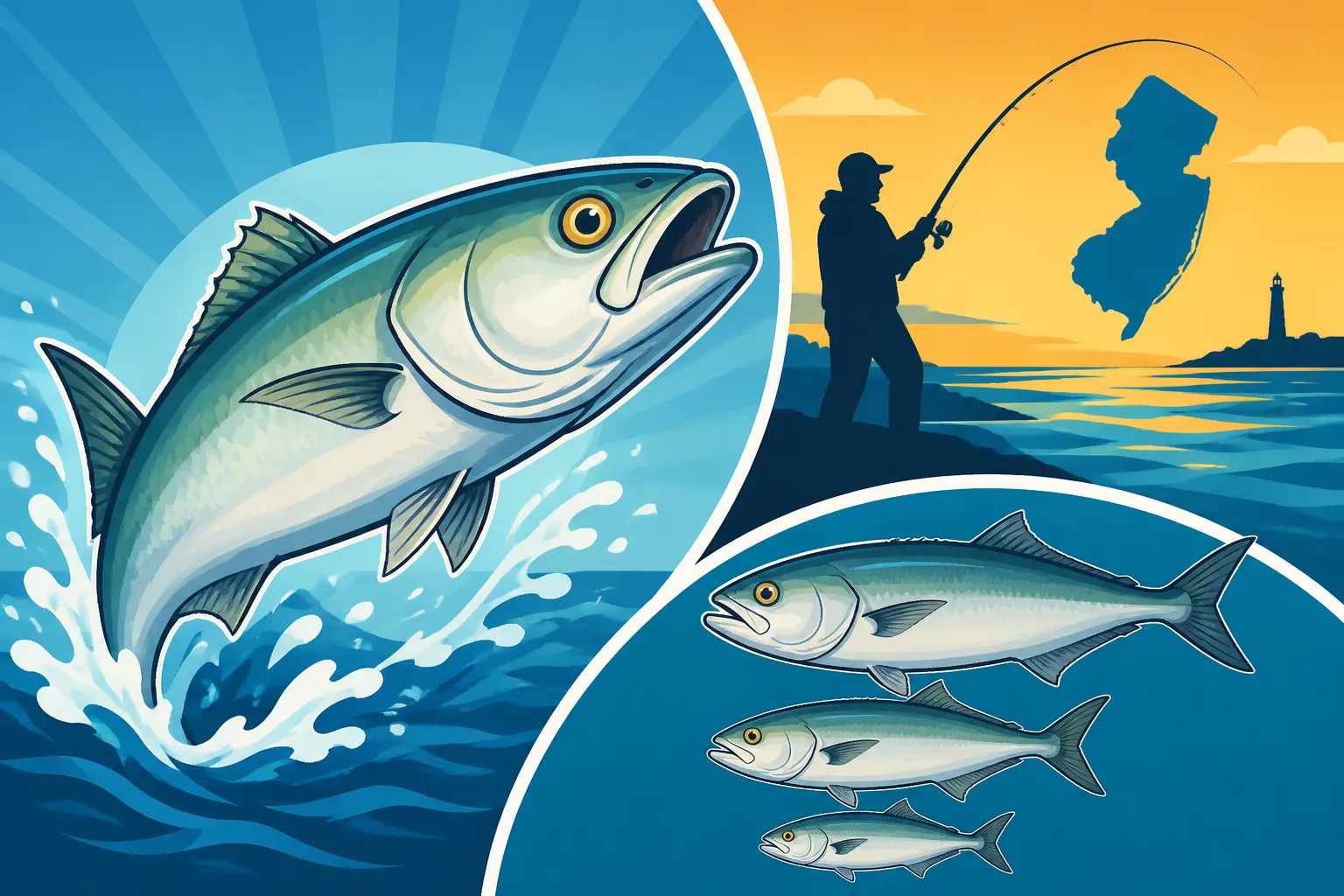
- Snappers: These are the smallest bluefish, typically ranging from a few ounces to about 2 pounds. You'll often find them in estuaries and back bays during the late summer and early fall. They're usually caught on light tackle, making them perfect for kids or beginners, and they put up a surprisingly spirited fight for their size.
- Choppers: This is perhaps the most common size class for recreational anglers, usually weighing between 3 and 10 pounds. These are the classic "choppers" that give bluefish their reputation for aggression and sharp teeth. They are plentiful along the beaches, in inlets, and in nearshore ocean waters. This size offers an excellent fight and is often considered good eating.
- Gorillas: These are the big boys, tipping the scales at 10 pounds and often much more. While less common, New Jersey definitely has its share of these larger bluefish, particularly during the spring and fall migrations. Catching a gorilla bluefish is a memorable experience, testing your tackle and your stamina. These fish are true powerhouses and require heavier gear to land effectively.
The size of the bluefish you encounter often depends on the time of year and the specific location. Generally, the largest fish are caught in the open ocean or larger bays during peak migration periods.
New Jersey State Records and Notable Catches
New Jersey has a rich history of impressive bluefish catches, with anglers continually striving to land a new personal best or even challenge the state record. The state record for bluefish currently stands at an impressive 27 pounds, 1 ounce, a testament to the massive size these fish can achieve in our local waters. While breaking the state record is a rare feat, catches in the 15-20 pound range are not uncommon, particularly during the spring and fall runs when large migratory schools move through.
These large bluefish often congregate around specific structures or follow significant baitfish schools. Targeting them requires robust tackle, strong leaders, and often, a bit of patience. Stories of anglers battling these beasts from the surf or from charter boats are common, adding to the lore and excitement of bluefish fishing in New Jersey. What Is the New Jersey Bluefish State Record? provides more historical context on these impressive catches.
Average Sizes and Legal Limits
While the record books showcase the giants, most recreational anglers in New Jersey will encounter bluefish in the 3 to 10-pound range. These "choppers" are abundant and provide consistent action. It's always a good idea to check the current regulations set by the New Jersey Division of Fish and Wildlife for bluefish, as bag and size limits can change. These regulations are designed to ensure the sustainability of the bluefish population for future generations.
Knowing the average sizes helps you select appropriate tackle. For instance, if you're targeting snappers in the back bay, a light spinning rod with 8-10 lb test line might be perfect. However, if you're hitting the ocean jetties for choppers, you'll want something more substantial, perhaps a medium-heavy rod with 15-20 lb test. For those truly aiming for gorillas, heavy surf rods or boat rods with 30 lb test or more, along with strong leaders, are essential. You can often find a good selection of specialized fishing lines and leaders on Amazon if you're preparing for a specific size class of bluefish.
Bluefish Behavior: The "Chopper" Mentality
Bluefish are not subtle creatures. Their behavior is largely defined by their insatiable hunger and aggressive feeding strategy, which can be both thrilling and a little intimidating for anglers. Understanding this "chopper" mentality is key to successfully targeting them.
Aggressive Feeding Habits and the "Blitz"
Bluefish are known for their incredibly aggressive feeding habits. They are opportunistic predators, and when they find a school of baitfish, they enter a frenzy known as a "bluefish blitz." During a blitz, bluefish will actively chase, slash, and chop through schools of bunker or other forage, creating a chaotic scene of splashing water, fleeing bait, and often, birds diving from above. This behavior is not just about eating; it's also about maiming, as they often injure more fish than they consume, letting the scraps drift to the bottom for other scavengers.
These blitzes can happen suddenly and are an incredible spectacle to witness. Anglers who find themselves in the middle of a bluefish blitz often experience non-stop action, with nearly every cast resulting in a strike. It's a prime example of their predatory efficiency and their significant impact on the baitfish populations in an area. Why Do Bluefish Blitzes Happen Near the Shore? offers more insight into these exciting events.
Social Behavior and Schooling
Bluefish are highly social fish, typically moving in large schools. The size of these schools can vary from a few dozen fish to massive aggregations that stretch for miles. Smaller bluefish (snappers) often stay in tighter schools in protected waters, while larger choppers and gorillas will roam the open ocean in formidable packs.
This schooling behavior is a key survival strategy, offering protection in numbers and increasing their hunting efficiency. When one bluefish locates a food source, the entire school quickly converges, turning a calm area of water into a boiling cauldron of feeding activity. This also means that if you catch one bluefish, chances are there are many more in the immediate vicinity, making it a great target for New Jersey party boat trips.
Adaptable Hunters
Bluefish are incredibly adaptable hunters, capable of feeding in various environments and at different depths. They can be found in shallow back bays, deep ocean wrecks, and everywhere in between. Their diet is broad, consisting primarily of small schooling fish, but they won't hesitate to take on squid, crabs, or even smaller bluefish if the opportunity arises. This adaptability means they can be targeted using a diverse array of baits and lures, from live bunker to metal spoons and poppers.
Their versatility extends to their preferred feeding times. While they can feed throughout the day, bluefish often exhibit heightened activity during dawn and dusk, or when there's a strong tidal current. Understanding these patterns can help anglers predict when and where the bite might be best. Best Time of Day to Fish for Bluefish delves deeper into these optimal fishing windows.
Seasonal Movements and Migration Patterns
New Jersey's coastal waters are part of the vast migratory highway for bluefish along the Atlantic seaboard. Their movements are largely dictated by water temperature and the availability of their primary food sources. Understanding these patterns is crucial for successful bluefish angling throughout the year.
Spring and Fall Runs
The most anticipated times for bluefish fishing in New Jersey are during the spring and fall runs.
- Spring Run: As ocean waters begin to warm in late April and May, large schools of bluefish move northward along the coast, following the migratory schools of bunker and other baitfish into New Jersey's bays, inlets, and nearshore ocean waters. This is when some of the largest "gorilla" bluefish can be encountered, fresh off their southern wintering grounds and eager to feed. The spring run is characterized by intense feeding activity as the fish build up energy. When Do Striped Bass Migrate Through New Jersey? also touches on the similar migratory patterns of other species, often alongside bluefish.
- Fall Run: The reverse migration occurs in September and October, as water temperatures begin to drop. Bluefish, often fatter and stronger from a summer of feeding, move south, again following massive schools of baitfish. The fall run is equally, if not more, prolific than the spring run, offering incredible action from the beaches, inlets, and boats. This is often when bluefish are at their peak physical condition, putting up epic fights.
These runs are prime times for surf fishing, boat fishing, and even kayak fishing, as the fish are often close to shore and highly active.
Summer Residency and Winter Retreat
During the summer months, a resident population of bluefish remains in New Jersey waters, particularly in the warmer bay systems and nearshore ocean. While the largest migratory fish may have moved further north, plenty of choppers and even some smaller gorillas can be found throughout June, July, and August. These summer fish often stick to specific areas with good current and bait availability, like around inlets, jetties, and artificial reefs.
As winter approaches and water temperatures drop significantly, most bluefish migrate south to warmer offshore waters, often off the Carolinas or further south. It's rare to catch bluefish in New Jersey during the coldest winter months, as they prefer waters above a certain temperature threshold. They essentially "disappear" from our local scene until the warming waters of spring beckon them northward once more.
Impact of Water Temperature and Baitfish
Water temperature is the primary driver of bluefish migration. They are comfortable in a wide range, but generally prefer waters between 60-75 degrees Fahrenheit. As soon as these temperatures start to shift, so do the bluefish. The presence of dense baitfish schools is the other critical factor. Bluefish will follow their food source relentlessly. If bunker or mullet are plentiful, bluefish will be close behind.
This connection to baitfish is why anglers often look for signs of bunker schools – whether it's nervous water, actual sightings, or flocks of birds diving – as a strong indicator of bluefish presence. Having a good pair of polarized sunglasses (which you can easily find on Amazon) can be incredibly helpful for spotting these signs from shore or a boat.
Identifying and Handling Bluefish Safely
Encountering a bluefish is an exciting part of fishing in New Jersey, but their formidable set of teeth requires some careful handling to ensure safety for both the angler and the fish. Proper identification and handling techniques are crucial.
Key Identification Features
Bluefish are relatively easy to identify due to their distinct appearance:
- Coloration: They typically have a greenish-blue back that fades to silvery sides and a white belly. The intensity of the blue-green can vary based on water clarity and depth.
- Body Shape: They have a sleek, streamlined body built for speed, with a moderately compressed, football-like shape.
- Mouth and Teeth: This is their most distinctive and dangerous feature. Bluefish have a large mouth armed with a single row of razor-sharp, triangular teeth on both the upper and lower jaws. These teeth are perfectly designed for shearing through baitfish and can inflict a nasty bite on an unsuspecting angler.
- Fins: They have two dorsal fins, the first being spiny and the second soft-rayed. Their caudal fin (tail) is deeply forked, indicating their fast-swimming nature.
When trying to distinguish them from other species, especially from juvenile striped bass, pay close attention to the mouth. Striped bass have two distinct patches of teeth on their tongue and no single row of razor-sharp teeth. What Is the Difference Between Bluefish and Striped Bass? offers a more detailed comparison.
Safe Handling Techniques
Because of their sharp teeth and aggressive nature, handling bluefish requires caution. Here are some essential tips:
- Use Pliers or a Dehooker: Never put your fingers near a bluefish's mouth. Always use long-nosed pliers or a dehooker to remove the hook. If the hook is deep, consider cutting the line and leaving the hook, especially if you plan to release the fish.
- Hold Firmly: If you need to handle the fish directly, grip it firmly by the tail with one hand and support its belly with the other. Keep your fingers away from its mouth and gills.
- Lip Grippers: A specialized tool like lip grippers can be invaluable. These securely hold the fish by the jaw, keeping your hands away from the teeth. They also help minimize stress on the fish if you're practicing catch and release. You can find many effective lip grippers designed for toothy fish available on Amazon.
- Control the Head: Even after being landed, a bluefish can thrash violently. Keep its head pointed away from you and others.
- Bleed if Keeping: If you plan to keep the bluefish for consumption, it's best to bleed it immediately by cutting a gill arch. This improves the quality of the meat. Place it on ice quickly.
Protecting Your Gear and Lures
Bluefish are notorious for destroying tackle. Their sharp teeth can cut through monofilament line and even damage lures. To minimize gear loss:
- Use Wire or Heavy Fluorocarbon Leaders: Always use a leader when targeting bluefish. A 6-12 inch section of wire leader or heavy (40-80 lb test) fluorocarbon leader will protect your main line from their teeth.
- Durable Lures: Bluefish will scar and bend soft plastic lures and even damage hard baits. Consider using metal lures like spoons, jigs, or durable plugs that can withstand repeated attacks.
- Strong Hooks: Their powerful bites can straighten weaker hooks. Ensure your lures and baits are equipped with strong, sharp hooks that can handle the abuse.
Being prepared with the right gear means less frustration and more enjoyable fishing when the choppers are around.
Impact on the Ecosystem and Other Species
Bluefish are more than just a prized catch for anglers; they are a vital, yet sometimes disruptive, force within the New Jersey marine ecosystem. Their presence and predatory nature have cascading effects on other species and the overall health of coastal waters.
Competition with Striped Bass
One of the most significant interactions involving bluefish in New Jersey is their competition with striped bass. Both species often target the same baitfish, such as bunker, and frequently inhabit the same coastal areas during their migrations. When large schools of bluefish arrive, their aggressive feeding can disperse baitfish or outcompete striped bass for food.
This competition is a constant topic among New Jersey anglers. Some days, bluefish dominate the bite, making it challenging to catch striped bass. Other days, they coexist. Understanding these dynamics helps anglers choose their fishing spots and tactics. If you're hoping for striped bass, a strong bluefish presence might mean you need to adjust your approach or look for different feeding grounds.
Predation on Baitfish Populations
As discussed, bluefish are highly efficient predators of schooling baitfish. Their blitzes can significantly reduce local baitfish populations in a short amount of time. While this is a natural part of the food web, unusually large or sustained bluefish populations could put pressure on specific baitfish species, impacting the availability of food for other predators and potentially affecting the overall ecosystem balance.
The health of baitfish populations, in turn, directly influences the health and abundance of gamefish like bluefish. It's a delicate balance that marine biologists closely monitor to ensure sustainable fisheries management.
Bluefish and Artificial Reefs
New Jersey has an extensive system of artificial reefs that provide crucial habitat for a wide array of marine life. Bluefish are often found around these structures, using them as ambush points to hunt smaller fish that seek shelter there. These reefs become hotspots for bluefish, attracting them with the promise of food and structure.
Anglers targeting bluefish around these reefs often use jigging techniques or drift baits over the structure. However, it's worth noting that the aggressive nature of bluefish means they can sometimes outcompete or disrupt the feeding patterns of other reef inhabitants, like black sea bass or tautog. Learning How to Fish for Black Sea Bass Near Reefs often involves understanding when and how bluefish interact with these same structures.
| Bluefish Size Category | Typical Weight Range | Common Location | Common Tackle | Eating Quality |
|---|---|---|---|---|
| Snapper | < 2 lbs | Bays, estuaries, shallow creeks | Light spinning, fly rod | Good (mild, delicate) |
| Chopper | 3 – 10 lbs | Inlets, nearshore ocean, beaches | Medium spinning, baitcasting | Fair to Good (stronger flavor) |
| Gorilla | 10+ lbs | Open ocean, deep channels, major inlets | Heavy spinning, surf, boat rods | Fair (strongest flavor, can be oily) |
Are Bluefish Good to Eat?
The question of edibility is always popular, and bluefish meat can be polarizing. They are known for having a stronger, more "fishy" flavor compared to milder species like fluke or cod. This is due to their darker, oilier flesh. However, when handled and prepared correctly, bluefish can be delicious.
Tips for better-tasting bluefish:
- Bleed Immediately: As mentioned, bleeding the fish upon capture is crucial. This removes blood from the flesh, which contributes to the strong flavor.
- Ice Down Quickly: Get the fish on ice as soon as possible to preserve freshness.
- Skin the Fillets: Many anglers find that removing the skin from bluefish fillets helps reduce the strong flavor.
- Cook Fresh: Bluefish is best eaten very fresh, ideally the same day it's caught. It doesn't freeze particularly well due to its oil content, which can turn rancid.
- Preparation Methods: Grilling, smoking, or baking with strong flavors (like lemon, garlic, or herbs) can complement the fish's richness. Some also enjoy pickling bluefish. Are Bluefish Good to Eat? delves deeper into preparation and culinary tips.
Ultimately, whether you enjoy eating bluefish often comes down to personal preference and how well you handle them from the moment they come out of the water.
Disclaimer
This article is for general informational purposes only and does not constitute professional advice. Laws, prices and regulations vary by location and change over time. Consult a qualified professional for guidance on your specific situation.