What Color Are Juvenile Striped Bass in New Jersey?
When you're out on the water, whether it's a calm back bay or the crashing surf along the Jersey Shore, there's nothing quite like the thrill of hooking into a striped bass. But sometimes, especially when you're looking at a smaller fish, you might find yourself wondering, "Is this truly a juvenile striped bass, and how can I tell?" It's a question many anglers ponder, often because the vibrant, silvery flanks we associate with a big striper aren't always what you see in the younger generation. Understanding the nuances of their coloration isn't just a fun fact; it's a crucial part of identifying your catch correctly and being a responsible angler in New Jersey.
The Signature Stripes and Their Early Appearance
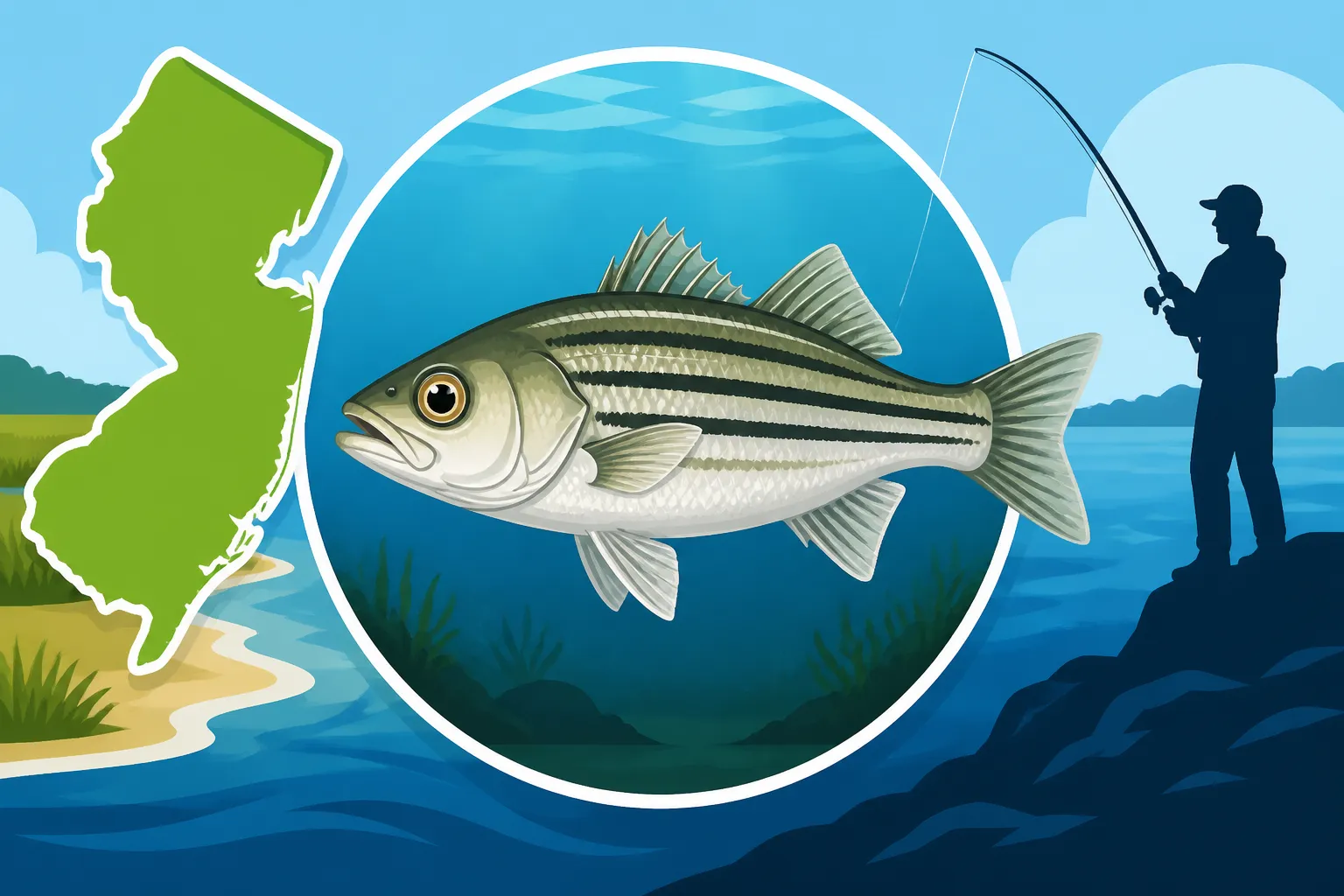
Let's cut right to it: the most defining characteristic of any striped bass, no matter its age, is its distinctive set of seven or eight dark horizontal stripes running along its body. These stripes are why they're affectionately called "stripers" by so many of us. These aren't just for show; they're an evolutionary marvel, helping them break up their silhouette in the water, making them harder for both prey and predators to spot.
What Makes a Striped Bass a "Striper" from Day One
Even as tiny fry, barely larger than your pinky finger, these nascent striped bass already begin to show the faint outlines of those characteristic lateral lines. It's truly incredible how quickly this identifying mark develops. Imagine a school of tiny bass, no more than an inch or two long, darting through the shallow reeds of a tidal creek. If you look closely, perhaps with a pair of good polarized sunglasses that you might find on Amazon, you'd see those initial stripes, albeit lighter and sometimes a bit broken up compared to a fully grown fish. These stripes are a genetic blueprint, present from the earliest stages of their development, distinguishing them immediately from other species that might inhabit the same waters. They might not be as bold or as dark as the ones on a twenty-pounder, but they are undeniably there, serving as the fish's constant identification badge.
The Underlying Body Color: A Canvas of Variation
Now, while those stripes are consistent, the actual body color of a juvenile striped bass is where you'll see some fascinating variations. Unlike the deep silver and olive-green back of a mature striper, juveniles often present a more muted, sometimes even yellowish or bronze undertone, especially when they are very young and spending a lot of time in shallower, warmer waters. This isn't a hard and fast rule, but it's a common observation. Their bellies will almost always be white or very light, transitioning to these more subtle colors on their sides and backs. This color variation isn't random; it's a dynamic adaptation to their immediate environment, acting as a crucial camouflage mechanism. A juvenile living over a sandy bottom in a clear bay might appear lighter and more silvery-gold, while one hiding among muddy banks or dark vegetation in a tidal river might take on a darker, almost bronzy-green hue. It's like nature's own chameleon effect, helping them blend in perfectly.
How Environment and Diet Influence Juvenile Coloration
It's truly a marvel how a fish's surroundings and what it eats can so profoundly impact its appearance. For juvenile striped bass, their color isn't just predetermined; it's an evolving canvas that tells a story of where they've been and what they've encountered. This adaptability is key to their survival in the diverse aquatic landscapes of New Jersey.
Camouflage in Action: Adapting to Different Habitats
Think about it: a young fish has to hide from everything. Birds, larger fish, even us anglers! Their skin pigmentation becomes a critical tool for survival, allowing them to blend seamlessly into their surroundings. In the crystal-clear, shallower waters of certain estuaries or near sandy flats, a juvenile striper might appear much lighter, often with a more pronounced silvery sheen and maybe a yellowish tint along its sides. This helps it disappear against the light-colored bottom, making it a ghost to predators lurking above or below.
Conversely, take a juvenile striper that's spending its early life in a murky, tannin-stained tidal river or an area with dense underwater vegetation and dark, muddy bottoms. These fish often exhibit a darker, more olive-green or even bronze coloration on their backs and sides. This darker pigmentation allows them to melt into the shadows and the darker tones of their habitat. The water clarity also plays a huge role; in clearer water, colors tend to be more distinct, while in turbid water, fish can appear more uniformly dull. It's a direct response to their immediate home, constantly adjusting to avoid becoming someone else's meal. This adaptation is a continuous process, shifting as the fish moves from one part of a bay or river to another, or even as the seasons change and aquatic vegetation grows or recedes.
The Role of Food in Pigmentation: A Subtle Palette Shift
What a juvenile striped bass eats can also contribute to the subtle variations in its overall hue. Just like how flamingos get their pink color from eating brine shrimp, certain pigments found in a fish's diet can influence its skin coloration. While striped bass won't turn bright pink, a diet rich in certain types of crustaceans or baitfish that contain specific carotenoids could potentially lead to a slightly richer, more vibrant yellow or orange tint in their skin.
For instance, if a young striper is feeding heavily on a particular type of shrimp or small minnow prevalent in a specific estuary, those dietary components can be absorbed and utilized in their skin cells. This doesn't mean you'll see drastically different colored fish, but it can contribute to the "bronzy" or "golden" appearance that some anglers report, especially compared to a purely silver-scaled counterpart that might be eating a different diet. It's one of those subtle natural phenomena that reminds us how interconnected everything in the ecosystem truly is. Understanding these influences can even help you predict where certain colored juveniles might be holding, allowing you to fine-tune your approach for Striped Bass Fishing in New Jersey.
Practical Identification Tips for Anglers in New Jersey
When you're out on the water, the last thing you want to do is mistakenly keep a fish that's either undersized or not the species you thought it was. Proper identification, especially of juvenile striped bass, is paramount for responsible angling in New Jersey. It's not just about knowing the rules; it's about respecting the fish and the ecosystem.
Beyond Color: Key Features to Confirm a Juvenile Striper
While color and those tell-tale stripes are crucial, they're not the only things to look for when identifying a juvenile striped bass. Often, size is the first thing that catches our eye, but you need to combine that observation with other physical characteristics to be absolutely sure. A juvenile striper will have a streamlined, elongated body shape, even at a smaller size. Their head will be somewhat pointed, and their mouth will be terminal, meaning it's at the very end of their snout, not upturned or downturned significantly.
One excellent identifying feature, unique to striped bass, is the two separate dorsal fins. The first dorsal fin is spiny, while the second one is soft-rayed. Many other similar-looking species might have continuous dorsal fins or different structures. Take a close look at the lateral lines—are they continuous and unbroken, running from just behind the gill plate all the way to the tail? While the overall body color can vary, these distinct, dark stripes remain a constant. For a visual aid, you might consider picking up a good fish identification guide, many of which are readily available on Amazon, to keep handy in your tackle box. This combination of size, body shape, fin structure, and those iconic stripes will give you a definitive answer.
Why Proper Identification Matters: Conservation and Regulation
Knowing exactly what you've caught isn't just for bragging rights; it's fundamental to conservation efforts and adhering to New Jersey's fishing regulations. Striped bass populations are carefully managed, and that includes strict size and bag limits. If you're not sure whether that small fish is a juvenile striper or another species, you could inadvertently violate regulations. For instance, New Jersey has a specific slot limit for striped bass. Knowing New Jersey Striped Bass Slot Limit: 28 to 38 Inches means you have to be able to identify the species first, then measure it accurately.
Misidentifying a juvenile striped bass could lead to keeping an undersized fish, which carries penalties. More importantly, it impacts the future of the fishery. By releasing juveniles unharmed, we give them the chance to grow, mature, and reproduce, contributing to a healthier and more robust population for years to come. It’s about being a steward of the environment and ensuring that future generations of anglers can experience the same joy of catching these magnificent fish. Always check the latest New Jersey Freshwater Fishing Regulations Every Angler Should Know or saltwater rules to stay informed.
The Journey of Color: From Fry to Full-Grown Fighter
The transformation of a striped bass throughout its life is truly remarkable, and this includes a fascinating evolution of its coloration. What begins as an almost translucent speck gradually develops into the powerful, silvery predator we all admire. Understanding this journey helps us appreciate their resilience and the delicate balance of their ecosystem.
The Youngest Stripers: Almost Transparent Beginnings
In their very earliest stages, shortly after hatching from eggs laid in the freshwater spawning grounds of rivers like the Delaware or Hudson, striped bass larvae are almost transparent. They are tiny, delicate creatures, perhaps just a few millimeters long, often lacking much distinct pigmentation. Their main goal at this stage is to grow rapidly, feeding on microscopic organisms in the nutrient-rich nursery waters. As they transition from larva to fry, they begin to develop the basic outline of their form and, crucially, the first faint hints of those signature lateral stripes.
At this size, usually only an inch or two long, their bodies are generally a very light, almost silvery-white, with iridescent flashes. This subtle coloration helps them blend into the shallow, sunlit waters where they spend their initial weeks, making them harder for small predators to spot. It's a vulnerable period, and their early, minimal pigmentation is a key part of their survival strategy, allowing them to remain inconspicuous as they navigate the currents and grow.
Maturing Hues: A Gradual Transformation
As juvenile striped bass grow and move into larger estuaries, tidal rivers, and eventually coastal bays, their coloration continues to mature and solidify. The initial translucence gives way to a more defined base color, often ranging from a clean silver to the more golden or bronze tones we discussed earlier, heavily influenced by their specific habitat and diet. The seven or eight distinct lateral stripes become much darker and more prominent, standing out sharply against their body. This shift isn't instantaneous; it's a gradual process that reflects their increasing size, their changing diet, and their deeper integration into the aquatic environment.
When a striper reaches the "keeper" size, as defined by regulations like New Jersey Striped Bass Slot Limit Explained, their colors typically settle into the more familiar adult pattern: a dark, often olive-green to bluish-black back, fading into bright, reflective silver sides adorned with those bold black stripes, and a pure white belly. This adult coloration is optimized for open water, providing camouflage from above and below. The journey from a nearly invisible speck to a powerfully colored adult is a testament to their life cycle, with their changing hues serving as a visual record of their development and the environments they've called home.
Comparing Juvenile vs. Adult Striped Bass Features
To help clarify the differences, here's a quick rundown of what to look for when trying to distinguish a juvenile striped bass from its older, larger counterparts:
| Feature | Juvenile Striped Bass | Adult Striped Bass |
|---|---|---|
| Size | Generally under 28 inches (varies by region/growth rate) | Typically 28 inches and larger |
| Body Color | More muted, often silvery-white, yellowish, or bronze tones | Deeper olive-green to bluish-black back, bright silver sides |
| Stripe Prominence | Present, but can be lighter, less defined, or broken | Distinct, bold, dark, continuous lateral lines |
| Habitat | Often found in shallow estuaries, tidal rivers, protected bays | Open bays, ocean, deeper inlets, migratory routes |
| Diet | Smaller baitfish, crustaceans, worms, insects | Larger baitfish (bunker, herring), squid, crabs |
| Overall Appearance | More delicate, slender, sometimes iridescent | Robust, powerful, often thicker body |
Understanding these distinctions helps every angler, whether you're sight fishing in clear water or checking your catch on the deck of a party boat. It also reinforces the importance of knowing when a fish needs to be released to grow bigger and stronger. If you're ever in doubt, it's always best to err on the side of caution and release the fish, ensuring it has the best chance to mature into a trophy.
Disclaimer
This article is for general informational purposes only and does not constitute professional advice. Laws, prices and regulations vary by location and change over time. Consult a qualified professional for guidance on your specific situation.