Where Do Fluke Go in Winter?
Ah, the chill is settling in, the days are shorter, and if you're anything like me, you're probably looking out at the cold, gray New Jersey waters wondering where all our beloved fluke went. It's a common frustration, isn't it? One day they're here, hitting our bucktails and Gulp! baits with enthusiasm, and the next, it feels like they've vanished into thin air. But trust me, they haven't disappeared; they've simply embarked on their annual winter migration. This guide is all about unraveling that mystery, taking a deep dive into exactly where these flatfish spend their colder months, and what that means for their survival and for us anticipating next season.
The Fluke's Seasonal Migration: More Than Just a Winter Nap
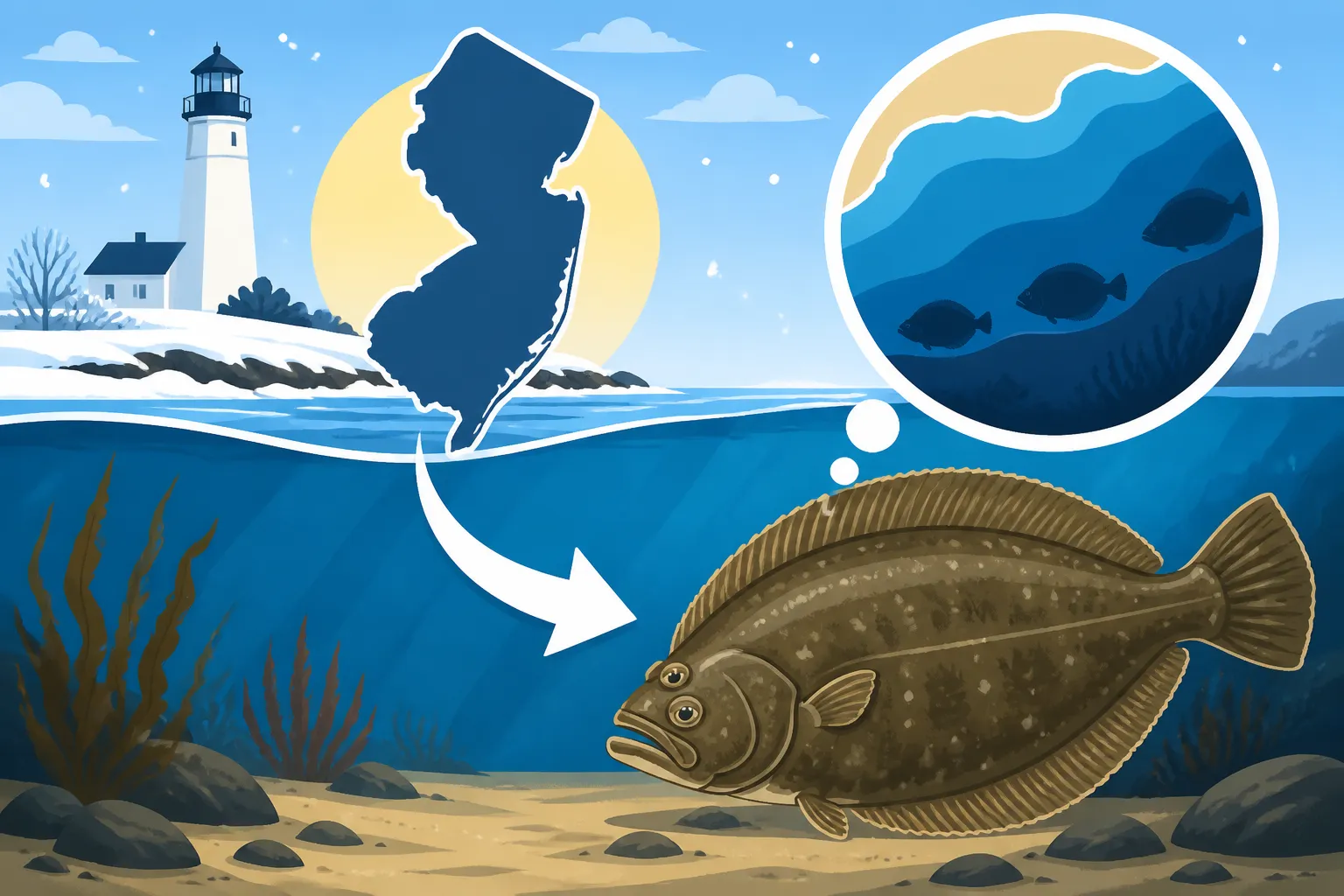
When the water temperatures in our bays and along the New Jersey coast start to dip, usually as early as late September and certainly by October and November, our summer flounder (which we affectionately call fluke) don't just burrow deeper into the mud and go dormant in the shallows. Oh no, that would be far too simple! What they actually do is undertake a significant migration, a journey that takes them away from their summer feeding grounds to much deeper, more stable offshore waters.
Why They Move: Temperature and Food
Think about it from a fluke's perspective. They're cold-blooded creatures, meaning their body temperature mirrors the water around them. As our inshore waters cool down drastically, it becomes uncomfortable and energetically inefficient for them to remain. Their metabolism slows, their food sources become scarcer, and they become more vulnerable. So, their instinct kicks in, driving them towards the warmer, more consistent temperatures found offshore. This isn't just about comfort; it's a matter of survival. They're seeking thermal refuge where they can conserve energy and find some sustenance, however limited.
It's a similar story for many marine species along our coast. They have evolved to follow these temperature gradients. If they stayed put in the shallow bays and along the beaches, they'd risk being caught in dangerously cold water that could stun them or reduce their ability to forage and escape predators. This migratory pattern is a testament to the incredible adaptations fish have developed to thrive in ever-changing environments. It's a massive undertaking, but one that is absolutely essential for the species.
When the Migration Begins: Signs of the Season
You can almost set your calendar by it. As the air turns crisp and those first few biting winds sweep through, typically from late September into November, that’s when the great fluke exodus from our inshore waters truly begins. Anglers often notice a shift in fishing. The bay bite might slow dramatically, while the ocean bite along the beaches and in nearshore waters can sometimes light up briefly with larger, "doormat" fluke making their way offshore. This transitional period, often coinciding with the renowned fall striped bass run, can be fantastic if you know where to look. The fluke are actively feeding, bulking up for their long journey and the leaner times ahead.
We see this change most distinctly in the behavior of the fish. They'll move out of the very shallowest flats first, staging in deeper channels within the bays or just outside the inlets. Then, driven by further drops in temperature, they'll make their push offshore. It's not a sudden, synchronized mass movement; rather, it's a gradual exodus, with individual fish responding to the changing conditions at their own pace. By the time December rolls around, most of our New Jersey fluke population has vacated their summer haunts and are well on their way to their wintering grounds. Understanding these movements can even help you plan your last fluke trips of the season!
The Deep Dive: Where Fluke Spend Their Winter Months
So, if they're not just hanging out in the mud flats of Barnegat Bay, where exactly do our New Jersey fluke go? The answer lies in the deeper, more stable environments far offshore. We're talking about areas that most recreational anglers never see, unless they're on a dedicated deep-sea trip for other species.
Offshore Canyons and Deeper Waters
Our fluke generally move to the edge of the continental shelf, into what are known as offshore canyons and the deeper waters surrounding them. These aren't the dramatic, vertical canyons you might imagine on land, but rather vast, sloping underwater ravines and depressions that descend thousands of feet. For fluke, the sweet spot is typically much shallower than the true canyon depths, often in waters ranging from 100 to 600 feet or more. Here, the water temperature remains much more consistent, usually hovering in the mid-40s to low-50s Fahrenheit, which is ideal for their winter survival. It's a far cry from the rapidly cooling 60-degree water they might have left behind closer to shore.
The continental shelf break offers a natural highway and a safe haven. These areas are vast, covering hundreds of square miles, and provide ample space for large populations of fluke to congregate. They utilize the subtle contours and drops-offs, finding areas where they can settle in for the long haul. While they might still feed opportunistically, their primary goal is survival and energy conservation. It's a quiet, cold existence compared to their active summer days.
Bottom Structure and Substrate Preference
Even in the deep offshore, fluke don't just randomly scatter. Like their summer habits, they have preferences for bottom structure and substrate. They'll seek out areas with soft, sandy, or muddy bottoms where they can easily camouflage themselves. This is crucial for both ambushing any unsuspecting prey that might pass by and for hiding from larger predators that also frequent these deep waters. They are masters of disguise, flattening themselves against the seabed and blending in perfectly with their surroundings.
Beyond the soft bottom, they also utilize deeper ledges, subtle humps, and other geological features on the ocean floor. These structures can create slight currents or eddies that concentrate baitfish, providing potential feeding opportunities. Moreover, these features offer additional refuge and ambush points. While it's unlikely a typical recreational angler would target wintering fluke, commercial trawlers might encounter them in these offshore zones. It's a completely different world down there, but one perfectly suited for the fluke's winter retreat. Imagine a vast, underwater landscape, dotted with these subtle hills and valleys, where countless flatfish settle in for the season.
How Wintering Fluke Survive: Adapting to the Deep
Life in the deep during winter isn't about thriving; it's about enduring. Fluke have evolved several key adaptations to make it through these colder, darker months, ensuring they're ready to make the return journey when spring rolls around.
Reduced Metabolism and Feeding
One of the primary ways fluke conserve energy during winter is by drastically reducing their metabolic rate. Think of it like a slow-motion existence. Their heart rate slows, their digestive processes become less active, and their overall energy expenditure drops significantly. This allows them to survive on less food. While they might still consume small crustaceans or invertebrates if the opportunity arises, they aren't actively chasing down large baitfish with the same vigor they display in summer. They're essentially in a state of semi-dormancy, much like some terrestrial animals hibernate, though not as extreme.
This metabolic slowdown means that if you were to somehow catch a fluke in the deep during winter, it would likely be a much less active, more sluggish fish than the feisty fighters we know in summer. Their movements would be minimal, and their focus entirely on conserving every ounce of energy. This is a critical survival mechanism, especially in an environment where food resources might be less abundant or harder to find compared to the productive inshore estuaries of summer.
Hiding from Predators
Even in the deep, fluke aren't entirely safe. Larger fish, sharks, and even some marine mammals might roam these offshore grounds. Their ability to bury themselves partially in the soft bottom, a behavior they exhibit inshore, becomes even more vital here. By lying flat and often kicking up sand or mud to cover themselves, they become almost invisible. This camouflage is their primary defense mechanism against anything that might be looking for a meal.
They also leverage the darkness of the deep water. Less light penetrates hundreds of feet down, providing an additional layer of concealment. Their flat profile and mottled coloration are perfectly designed for this bottom-dwelling, ambush predator lifestyle. It's a constant game of hide and seek, even in the "off-season" for us anglers. When you buy fishing gear for next season, like a new rod and reel combo from Amazon, remember that these fluke have been doing their best to survive the winter using their natural advantages.
What This Means for New Jersey Anglers (Even Though We Can't Fish For Them)
Understanding the winter migration of fluke isn't just a fun fact; it helps us appreciate the species and reinforces the importance of the regulations put in place to protect them. While we can't fish for them during this time, knowing where they go gives us a broader perspective on their life cycle.
Planning for Next Season's Return
When you think about where the fluke are in winter, it makes their spring return even more exciting. As water temperatures begin to rise again in late spring and early summer, the reverse migration begins. The fluke move back towards the coast, seeking out the warmer, food-rich bays and nearshore ocean waters where they'll spend the next several months feeding aggressively and preparing to spawn. This is why when New Jersey Fluke Season Dates for 2026 are announced, anglers eagerly await those first legal opportunities.
Knowing they've survived the long winter offshore makes those first catches of the new season feel even more rewarding. It encourages us to take good care of the fishery, practicing responsible angling and adhering to New Jersey Fluke Size and Bag Limits Explained. We're all part of a larger ecosystem, and understanding the complete life cycle of the fish we target makes us better stewards of the environment. Imagine ordering new tackle or a fishing hat from Amazon in anticipation, knowing that those fluke are already starting their journey back!
Understanding Conservation
The fact that fluke undertake such a significant and vulnerable migration is a key reason why conservation efforts, including season closures, are so important. Preventing fishing during their critical wintering and early spring migration helps protect them when they are most concentrated and potentially more susceptible to pressure. These regulations are designed to ensure that enough fluke survive to spawn and replenish the population, maintaining a healthy fishery for years to come.
It's easy to get frustrated by closed seasons, but when you consider the immense journey and survival challenges fluke face each winter, it highlights the necessity. By giving them this protected time, we contribute to a sustainable future for Fluke and Summer Flounder Fishing in New Jersey. It's a long-term investment that pays off every summer when we're able to enjoy a productive fluke season. This biological understanding forms the backbone of why rules like How Bag and Size Limits Work in New Jersey are so vital.
Debunking Myths About Winter Fluke
There are always whispers and legends circulating among anglers, especially when fish seem to vanish. Let's clear up a couple of common misconceptions about fluke in winter.
They Don't Bury Themselves in the Mud Forever
One popular myth is that fluke simply bury themselves deep in the mud of our bays and estuaries, essentially hibernating there until spring. While it's true that fluke are masters of camouflage and will partially bury themselves in soft substrates to ambush prey or hide from predators, this isn't their primary winter survival strategy inshore. The extreme temperature fluctuations and potential for freezing conditions in shallow bays would be too risky for their long-term survival.
They might spend short periods partially buried, but this is a behavior, not a state of full dormancy for months in a freezing bay. Their instinct is to seek the thermal stability of the offshore environment, not to hunker down in rapidly cooling, often ice-covered, shallow waters. The deep burial story is a bit more dramatic than the reality of a long, slow migration. This is why you won't find many reports of ice fishing for fluke in New Jersey!
They Aren't Just "Gone"
Another common sentiment, especially for new anglers, is that the fluke are simply "gone" or have disappeared completely. It's easy to feel that way when your favorite summer spot goes completely quiet. However, "gone" implies a disappearance without a trace, which isn't the case. They are merely in a different location, actively engaged in a critical part of their annual life cycle. They are still out there, just in deeper, more stable waters.
This migratory pattern is a well-documented biological phenomenon, not some mysterious vanishing act. Understanding that they're undertaking this journey helps us connect the dots between the vibrant summer fishery and the quiet winter months. It also drives home the point that when you learn How to Fish for Fluke in New Jersey in the summer, you're tapping into a fish that has already survived a long, hard winter out at sea. Even the best tackle, whether from Amazon or your local shop, won't help you catch them if they're not there.
Here’s a quick comparison of the summer and winter life of a fluke:
| Feature | Summer Fluke (May-Sept) | Winter Fluke (Oct-April) |
|---|---|---|
| Location | Bays, estuaries, shallow coastal waters, nearshore ocean | Offshore continental shelf, deep canyons, deeper ocean bottoms |
| Water Depth | 5-100 feet (often much shallower) | 100-600+ feet |
| Water Temperature | Warm, fluctuating (60-80°F) | Cold, stable (mid-40s to low-50s °F) |
| Activity Level | High metabolism, active feeding, aggressive | Low metabolism, reduced feeding, sluggish |
| Primary Goal | Feeding, growing, spawning (late summer/fall) | Survival, energy conservation |
| Camouflage Behavior | Ambush predators, hiding in sand/mud for prey | Hiding in sand/mud from predators, energy conservation |
| Fishing Season (NJ) | Open, highly targeted recreational fishery (specific dates) | Closed to recreational fishing |
| Bait Sources | Abundant baitfish (spearing, bunker), crabs, squid, shrimp | Scarcer, small crustaceans, invertebrates, opportunistic feeding |
So, the next time you're bundled up on a cold winter day, looking out at the barren New Jersey coastline, remember that our fluke are doing just fine. They're out there in the deep, riding out the colder months, conserving their energy, and preparing for their grand return to our waters next spring. It’s a testament to nature's resilience and a comforting thought for any angler dreaming of those first signs of summer.
Disclaimer
This article is for general informational purposes only and does not constitute professional advice. Laws, prices and regulations vary by location and change over time. Consult a qualified professional for guidance on your specific situation.