New Jersey Sea Robin and Bycatch Species
There's a moment every New Jersey angler knows well: you feel a solid tug on your line, reel in with anticipation, only to find… a sea robin. Or maybe a dogfish, a skate, or some other critter you weren't expecting. It can be a little frustrating, especially when you're after dinner, but understanding these "bycatch" species isn't just about identifying them; it's about appreciating their role in our waters and learning how to handle them responsibly. This guide will walk you through the most common bycatch you'll encounter and why they're more interesting than you might think.
What Exactly is Bycatch, Anyway?
The term "bycatch" gets tossed around a lot in fishing circles, and often with a bit of a negative connotation. But when we talk about recreational fishing in New Jersey, it simply refers to any fish or marine creature that you catch unintentionally while targeting a different species. It's not always a bad thing, but it certainly brings up questions about responsible angling.
Defining Bycatch in Recreational Fishing
Think about it this way: you're out on Barnegat Bay, specifically jigging for fluke, hoping to land a nice summer flounder for the grill. Suddenly, you get a bite, reel it in, and it's a cunner. That cunner, while a perfectly legitimate fish in its own right, is considered bycatch because it wasn't your intended target for that particular outing. It's not necessarily "trash fish" – a term we really should retire – but rather an unexpected bonus or a temporary diversion. Bycatch can be anything from a small snapper bluefish when you're after striped bass, to a giant skate while you're bottom fishing for black sea bass. The key is the unintended nature of the catch.
Distinguishing "Target" from "Bycatch"
The line between target and bycatch can sometimes be a bit blurry, especially if you're an opportunistic angler who's happy to catch anything that bites. However, from a management perspective and for the sake of conversation, it's pretty clear. If you set out with a specific species in mind, like How to Fish for Fluke in New Jersey or How to Fish for Striped Bass in New Jersey, then anything else that latches onto your hook is, by definition, bycatch. For instance, if you're surf fishing with clams for striped bass and you hook a kingfish, that kingfish is bycatch. If you switch your bait to bloodworms specifically for kingfish, then a striped bass that bites would be the bycatch. It's all about intent. Understanding this distinction helps us talk about fishing regulations, conservation efforts, and even how we tell our fishing stories around the campfire.
The Unmistakable Sea Robin: New Jersey's Grunt-and-Glide Fish
If there's one bycatch species that nearly every New Jersey angler has encountered, it's the sea robin. These unique fish are often misunderstood and even maligned, but they're fascinating creatures once you get past their somewhat unusual appearance.
Identifying New Jersey's Sea Robin Species
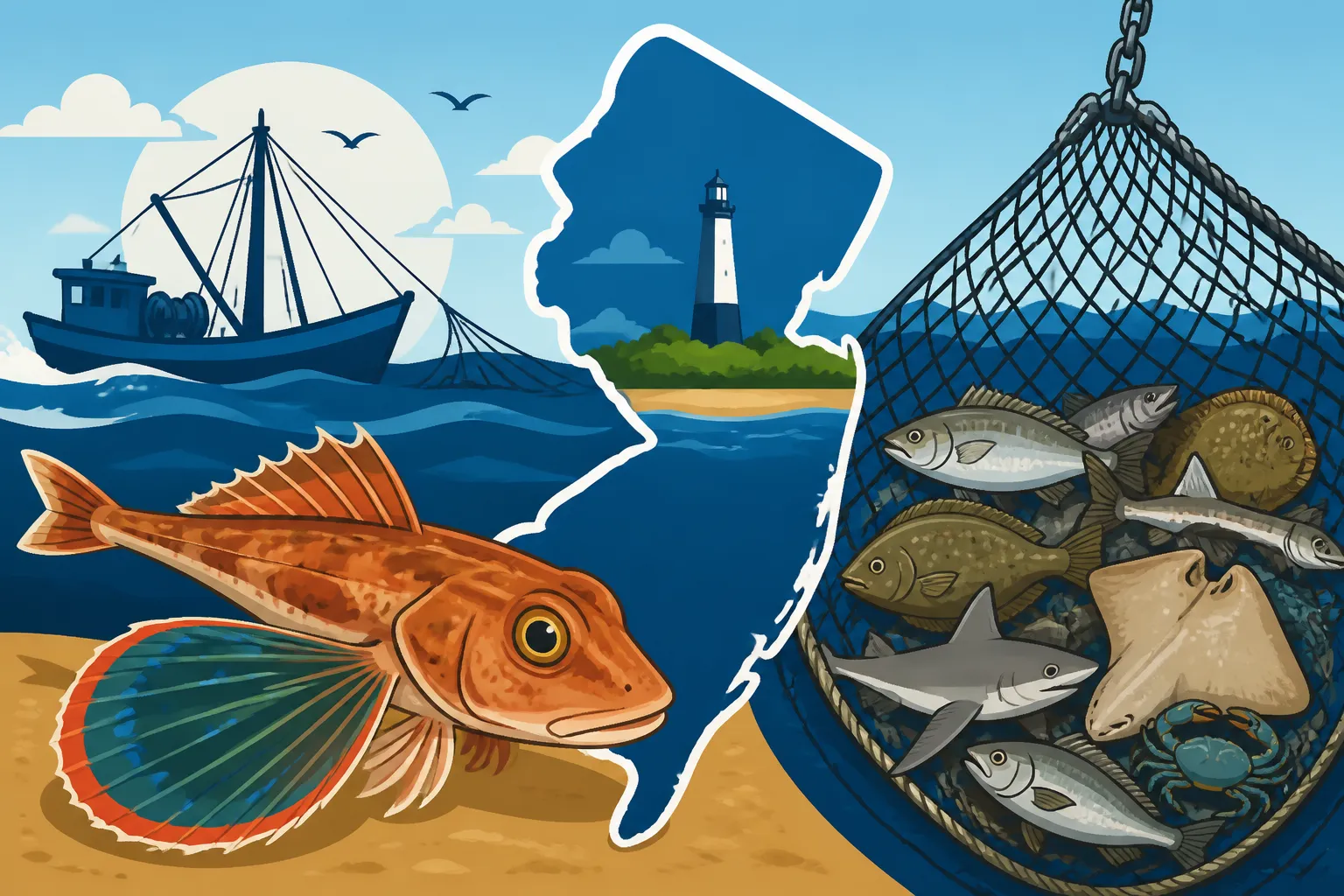
New Jersey waters are home to several species of sea robins, with the northern sea robin being the most common. They're easily identifiable by their large, bony, almost armored heads and prominent, spiny pectoral fins that resemble wings. What really sets them apart are the three detached, finger-like rays on their pectoral fins, which they actually use to "walk" along the seafloor. Their bodies are typically mottled brown or gray, allowing them to blend perfectly with sandy or muddy bottoms. When you pull one out of the water, you'll often hear a distinct grunting or croaking sound, which is how they earned their name. It's quite the experience when you first hear it! You might think it's coming from something much larger, but it's just your little winged friend telling you he's not thrilled about being on your line.
The Sea Robin's Unique Behaviors and Habitat
Sea robins are primarily bottom dwellers, preferring sandy and muddy substrates in both shallow bays and deeper coastal waters. They're voracious, opportunistic predators, using those finger-like rays to probe the sediment for small crustaceans, worms, and tiny fish. This behavior is precisely why they're so often caught as bycatch; they're constantly foraging on the bottom where anglers often target species like fluke, black sea bass, or scup. They're incredibly resilient and can tolerate a wide range of water conditions, which contributes to their abundance throughout the season. You'll find them almost everywhere, from the calm backwaters of our estuaries to the surf zone along the Jersey Shore. Their prevalence means that if you're fishing the bottom, chances are you're going to meet a sea robin or two.
Are Sea Robins Good to Eat? Dispelling Myths
Here's the million-dollar question that often comes up: are sea robins edible? The answer is a resounding yes! Despite their somewhat intimidating appearance and the "trash fish" stigma, sea robins are surprisingly delicious, offering firm, white, flaky meat that's quite versatile. Many European cultures have long enjoyed them, often calling them "gurnard." The challenge lies in cleaning them, as their bony heads and spiny fins can be a bit tricky. However, if you learn how to properly fillet them, you'll be rewarded with a tasty meal. The fillets are small, so you might need a few of them, but they’re excellent pan-fried, baked, or even in a fish stew. Don't let their looks deceive you; they're a hidden culinary gem. If you're looking for more details, check out What Is a Sea Robin and Is It Good to Eat?.
Common Bycatch Species You'll Encounter
While sea robins are probably the most iconic bycatch in New Jersey, they're far from the only ones. Our diverse waters host a variety of creatures that frequently end up on the hook when you're aiming for something else.
Skates and Rays: The Flatfish of the Bottom
New Jersey's sandy and muddy bottoms are also prime real estate for various species of skates and rays. You're likely to encounter clearnose skates, little skates, or perhaps even a cownose ray, especially in the bays and nearshore ocean. These cartilaginous fish are relatives of sharks and possess unique flattened bodies, often with long, whip-like tails. Skates typically have thorny backs and thick tails, while rays tend to be smoother and have barbed tails (though the ones commonly caught recreationally in New Jersey are usually harmless, a little caution is always wise). They're bottom feeders, much like sea robins, and will readily snatch baits meant for fluke or other groundfish. Reeling in a large skate can feel like pulling up a dinner plate, offering a surprisingly strong fight! Many anglers release them quickly, sometimes without even realizing they're also quite edible. If you're curious, Are Skates and Rays Common in New Jersey Waters? dives deeper into these fascinating creatures.
| Species | Common Characteristics | Edibility & Handling Tips |
|---|---|---|
| Sea Robin | Bony head, "finger" rays, grunting sound | Excellent white, flaky meat; challenging to fillet. Handle carefully due to spines. |
| Clearnose Skate | Diamond-shaped, clear spots on "nose" | Edible "wings" (pectoral fins); firm, mild taste. Release carefully, avoid tail barbs. |
| Little Skate | Rounder body, darker spots, smaller | Similar to clearnose, but smaller wings. Good for smaller portions. |
| Spiny Dogfish | Slender shark, sharp spine near dorsal fins | Edible, often used in "fish and chips" in Europe. Handle very carefully due to spines (wear thick gloves if keeping). |
| Oyster Toadfish | Mottled, lumpy, large head, sharp teeth | Edible, but small fillets and tough skin make it less popular. Release quickly; can bite. |
| Cunner | Brown/reddish, small mouth, prominent scales | Edible, but small size makes them more suitable for bait or stew. Release gently. |
Dogfish: Small Sharks, Big Nuisance (Sometimes)
Another common bycatch, particularly in cooler ocean waters or deeper wrecks, is the spiny dogfish. These are small, migratory sharks that travel in large schools and can quickly become a nuisance if they move into your fishing spot. They're identifiable by their slender bodies, two dorsal fins, each preceded by a sharp spine (hence "spiny"), and lack of an anal fin. While they don't grow to monstrous sizes, they can be quite aggressive feeders, readily biting various baits. It's not uncommon to be catching black sea bass one minute, only for a school of dogfish to move in and suddenly dominate every bite. These fish, while often viewed as pests, are indeed a type of shark and are fascinating predators. They're also quite edible, with firm, white flesh, but their spines require extreme caution during handling. Many anglers just snip the line rather than risking a jab.
Oyster Toads and Cunners: The Hidden Bouncers
You're fishing a rocky area or around some structure, and suddenly you pull up something that looks like it belongs on the moon – mottled, lumpy, with a huge head and beady eyes. That's likely an oyster toadfish, often affectionately called a "toad" or "oyster cracker." These hardy, ambush predators are masters of camouflage, blending perfectly with barnacle-covered pilings, rock piles, and oyster beds. They're not the prettiest fish, and they certainly have a strong bite, but they're an integral part of the bay ecosystem. Then there are cunners, smaller, reddish-brown fish often found around rocky bottoms and structures. They're like the little bouncers of the reef, constantly pecking at baits. While they're often too small to keep for dinner, they can be excellent live bait for larger predators. Handling toads and cunners is usually straightforward, but watch out for the toadfish's powerful jaws if you need to retrieve a hook!
Why Bycatch Matters: Ecological Impact and Ethical Angling
While some bycatch is inevitable, and some species are resilient, it's important to recognize that bycatch isn't always benign. Our actions as anglers have an impact, and understanding the ecological implications helps us fish more responsibly.
Understanding Bycatch Mortality
Every time a fish is caught and released, there's a chance it won't survive. This is known as bycatch mortality. Factors like the depth at which the fish was caught (especially for species sensitive to barotrauma, like black sea bass or tautog pulled from deep water), the type of hook used, how long the fish was out of water, and how it was handled all play a role. A fish that fights hard and is exhausted, or one that's roughly handled, has a lower chance of survival, even if it swims away. For instance, a sea robin is generally quite tough, but a large skate can be very vulnerable if dragged onto hot sand for too long. Minimizing stress and injury to bycatch is a critical part of ethical angling, especially for species that might be protected or have strict Catch and Release Rules in New Jersey.
The Role of Bycatch in the Ecosystem
It's easy to dismiss bycatch species as "unwanted," but every creature plays a vital role in the intricate web of our marine and freshwater ecosystems. Sea robins, skates, and dogfish, for example, are important predators and scavengers on the seafloor, helping to keep populations of smaller invertebrates and fish in check. They're also a food source for larger predators, like striped bass, sharks, and marine mammals. A healthy ecosystem relies on this diversity and the balance it creates. Bycatch, therefore, isn't just about what we want to catch; it's about respecting the entire environment and recognizing that even the seemingly insignificant species contribute to the health and vitality of New Jersey's waters.
Promoting Sustainable Fishing Practices
Responsible anglers strive to minimize negative impacts, and that includes being mindful of bycatch. This means making conscious choices about our gear, techniques, and how we interact with the fish we catch. Using circle hooks when bait fishing, for example, can significantly reduce gut-hooking, which improves the survival rate of released fish. Being able to quickly and safely dehook a fish is also crucial. Taking the time to educate yourself on New Jersey Fishing Regulation Changes for 2026 and specific species guidelines, like New Jersey Fluke Size and Bag Limits Explained or New Jersey Black Sea Bass Season and Limits, helps ensure you're fishing within legal and sustainable parameters. Ultimately, promoting sustainable practices ensures that future generations of anglers can enjoy the same rich fishing experiences we do.
Making the Most of Bycatch: From Table to Tackle
Instead of viewing bycatch as a nuisance, why not see it as an opportunity? Many of these often-discarded species have practical uses, from culinary delights to effective bait.
Culinary Delights: Eating the Unexpected
As we've already touched upon with the sea robin, many bycatch species are perfectly edible, often with surprisingly good flavor and texture. Skates, for example, offer delicious "wings" – the pectoral fins – that can be cut out and fried, baked, or sautéed. They have a unique, slightly cartilaginous texture and a mild, sweet flavor, sometimes compared to scallops. Even dogfish, often scorned, is the very fish used in traditional British "fish and chips." The key is knowing how to clean and prepare them properly. Don't be afraid to experiment! There are countless recipes available online that celebrate these overlooked species. Embracing bycatch for the table is a fantastic way to reduce waste and expand your culinary horizons. Just be sure to check How Bag and Size Limits Work in New Jersey for any harvest regulations that might apply, even for species you weren't targeting.
Baiting Up: Using Bycatch as Cut Bait
Sometimes, the best bait is what's readily available. Many bycatch species make excellent cut bait for larger predators. A fresh sea robin, skate wing, or even a dogfish fillet can be cut into strips or chunks and used to target larger species like striped bass, bluefish, or even sharks. The oily flesh and strong scent of some of these fish can be irresistible to hungry game fish. Imagine you're out surf fishing along New Jersey's Island Beach State Park Shore Fishing Rules and those pesky sea robins keep biting. Instead of throwing them all back, consider keeping a few, filleting them, and using their fresh meat as bait. This turns a "nuisance" into a strategic advantage, ensuring that nothing goes to waste and you're always prepared for the next big bite.
Creative Uses: Beyond the Pot
Beyond eating or baiting, there are other creative ways to think about bycatch. For instance, the skin of some larger fish can be tanned into leather, though this is a more specialized endeavor. For the more practical angler, thinking about how your gear holds up against these diverse species can be helpful. A durable pair of fishing gloves, a quality dehooker, and a sharp knife are essential tools that any angler should have, whether they're bought from a local tackle shop or an online retailer like Amazon. Having the right tools on hand not only makes handling bycatch easier but also ensures you can process any keepers efficiently. Even if you're just releasing a fish, having the right tools like a long-nosed plier or a specialized dehooker, which you can find on Amazon, makes the process quicker and safer for both you and the fish.
Regulations and Responsible Bycatch Handling
Knowing the rules and practicing good handling techniques are paramount for any angler, especially when dealing with unintended catches. It's about respecting the fish and the regulations designed to protect them.
New Jersey's Bycatch Handling Guidelines
New Jersey, through its Division of Fish and Wildlife, has general guidelines for handling fish, whether they are target species or bycatch. For most bycatch species that aren't specifically regulated (like sea robins or many types of skates), the best practice is to release them as quickly and safely as possible if you don't intend to keep them. This means minimizing their time out of the water, handling them gently with wet hands or gloves, and using tools like dehookers to remove hooks efficiently. For species that do have specific regulations, even if you weren't targeting them (like an undersized striped bass caught while fluke fishing), you must adhere to all New Jersey fishing regulations, including size limits and closed seasons. Always have the latest regulations handy, whether it's the physical Reading the New Jersey Fish and Wildlife Digest or a digital copy on your phone.
Minimizing Harm: Best Practices for Release
The goal when releasing bycatch, especially if it's not a legal keeper or simply not what you're after, is to ensure its highest chance of survival. Here are some key practices:
- Reduce Fight Time: Try to reel the fish in efficiently to avoid excessive exhaustion.
- Use Appropriate Gear: Choose tackle that's strong enough for the fish you're likely to encounter, reducing prolonged fights.
- Wet Hands/Gloves: Always wet your hands before handling a fish to protect its protective slime coat.
- Dehook Quickly: Use a dehooker or pliers to remove the hook as swiftly and cleanly as possible. Avoid tearing flesh. If the fish is deeply gut-hooked and you can't remove the hook without causing more damage, it's often better to cut the line as close to the hook as possible.
- Minimize Air Exposure: Keep the fish in the water as much as possible, especially during hook removal and photos.
- Support the Fish: When handling, support the fish horizontally, especially larger or heavier species, to avoid damaging internal organs.
- Revive if Necessary: For exhausted fish, gently hold them in the water, facing into the current, until they regain strength and can swim away on their own.
Practicing these techniques not only benefits the fish but also helps foster a culture of conservation among anglers. A sturdy pair of pliers or a dehooker, easily found on Amazon, can be a game changer for quick, ethical releases.
Reporting Important Bycatch Information
Sometimes, bycatch can provide valuable data for fisheries management. If you encounter unusual species, or a large number of a particular bycatch species, state agencies like the New Jersey Division of Fish and Wildlife may be interested. They often conduct surveys, such as the New Jersey Recreational Fishing Survey: Why You Might Get a Call, to gather data from anglers. Being a part of these efforts helps biologists track populations, understand migration patterns, and make informed decisions about future regulations. It’s another way we, as anglers, can contribute to the health of our marine environment, turning what might seem like an inconvenience into a meaningful contribution.
Disclaimer
This article is for general informational purposes only and does not constitute professional advice. Laws, prices and regulations vary by location and change over time. Consult a qualified professional for guidance on your specific situation.