Fishing Manasquan Reservoir for Bass and Trout
You know that feeling when you're itching to hit the water, but you’re tired of the same old local spots? Or maybe you're in Central Jersey, searching for that one special lake that truly delivers on both quantity and quality for multiple species? It's a common frustration, finding a truly productive freshwater fishery that’s also beautiful and accessible. This guide is dedicated to one of New Jersey's true freshwater jewels: the Manasquan Reservoir, a fantastic destination where you can reliably target both feisty bass and impressive trout.
Why Manasquan Reservoir is a Freshwater Gem for Anglers
Manasquan Reservoir isn't just another body of water; it's a 770-acre haven nestled in Howell Township, Monmouth County, serving as a critical drinking water supply for the region. But don't let its primary purpose fool you—it's also a phenomenal fishing destination, renowned for its diverse fish population and picturesque surroundings. What makes Manasquan stand out is its deep, clear waters, ample forage, and a thoughtful stocking program that supports robust populations of both cold-water and warm-water species. It’s a place where you can feel that satisfying tug on your line, whether you’re after a chunky largemouth or a hard-fighting trout.
Understanding the Reservoir's Unique Features
The Manasquan Reservoir is a unique fishery due to its characteristics as a water supply. The clarity of the water, its significant depth (reaching over 20 feet in many areas), and the abundant submerged structure make it an ideal habitat for a variety of fish. It’s primarily fed by the Manasquan River, which helps maintain water quality and flow. One of the most important features for anglers is the presence of extensive rocky bottoms, submerged timber, and varying depths, all of which create excellent holding areas for fish. There's also a large dam area that creates a distinct habitat.
Because it's a drinking water source, there are specific regulations unique to the reservoir. For instance, only electric motors are allowed on boats, which contributes to a quieter, more peaceful fishing experience and helps preserve water quality. This also means you're generally sharing the water with fewer large, noisy vessels, making it more serene for kayak and canoe anglers, or those with smaller electric-powered boats. You'll need a state fishing license, of course, but also a reservoir-specific boat permit if you're launching your own vessel, which you can usually acquire at the Environmental Center. Understanding these nuances is key to enjoying your time without any unexpected hiccups. For general requirements, you might want to review the New Jersey Fishing License Guide for 2026 before you head out.
Target Species and What Makes Them Thrive Here
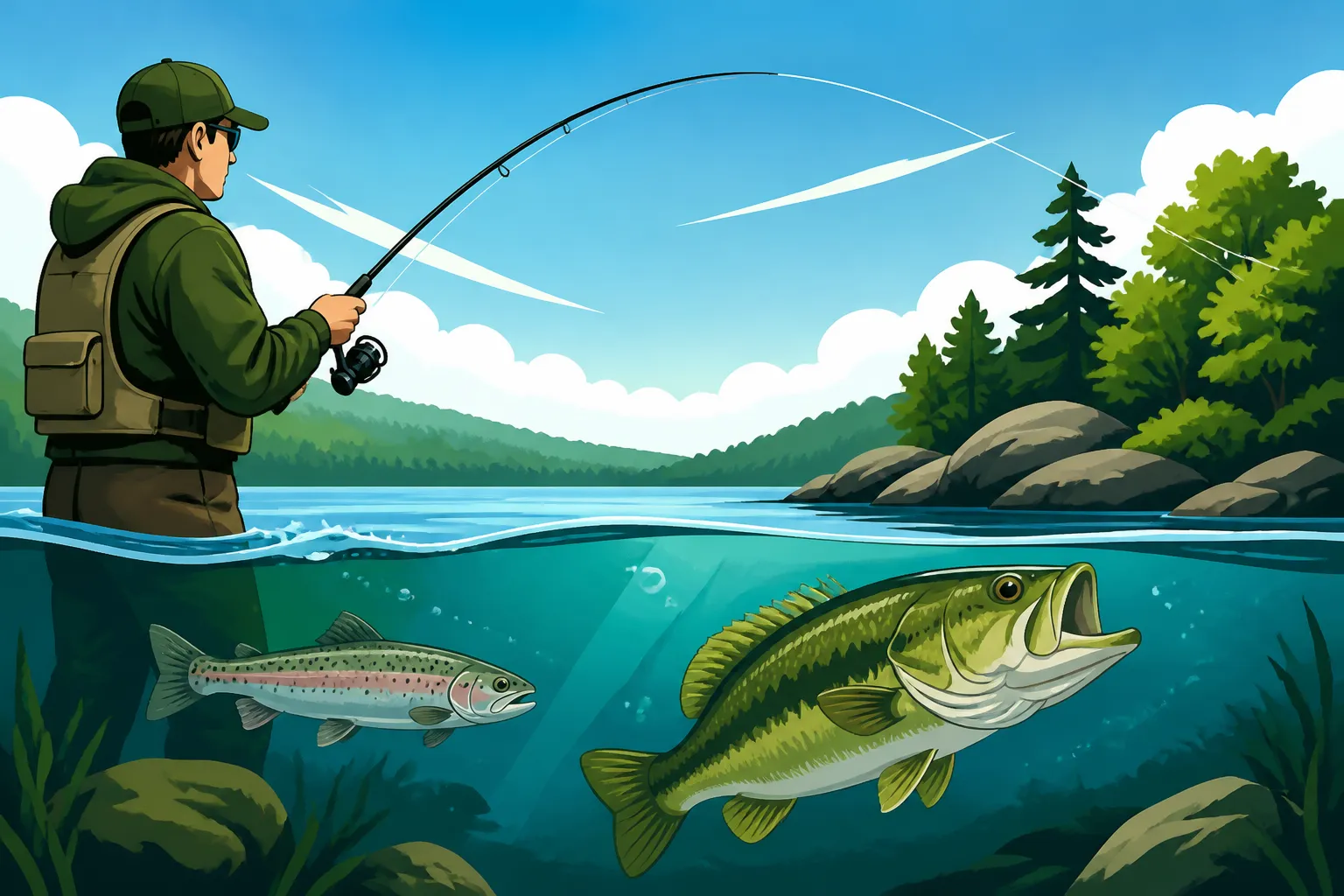
Manasquan Reservoir is a true multi-species fishery, but it truly shines for two main categories: bass and trout. For bass anglers, both largemouth and smallmouth thrive here. The largemouth tend to inhabit the shallower coves, around submerged brush, and along the shoreline where they can ambush prey. Smallmouth bass, on the other hand, prefer the deeper, rockier structures, drop-offs, and main lake points, especially in the central and western portions of the reservoir. They're often found chasing baitfish in open water or hugging the bottom contours. The abundant forage, including baitfish like alewives and various panfish, ensures a healthy and growing bass population, often leading to impressive catches.
When it comes to trout, Manasquan is regularly stocked with rainbow and brown trout, with occasional tiger trout stockings. These cold-water species thrive in the reservoir's deeper, cooler waters, particularly during the cooler months of spring and fall, and can often be found suspended in the water column during summer. The state's diligent stocking program ensures a fresh supply of trout for anglers, making it a reliable destination for those seeking these beautiful, hard-fighting fish. The clear water here means these trout often grow to considerable sizes, offering a real challenge and rewarding experience. This variety makes Manasquan Reservoir a dynamic place to fish, as you can switch up your tactics to target different species depending on the season and your preference. For more in-depth information on these fish, you can check out our guides on Largemouth Bass Fishing in New Jersey and Smallmouth Bass Fishing in New Jersey.
Cracking the Code: Techniques for Bass and Trout at Manasquan
Fishing Manasquan Reservoir successfully means understanding the behavior of both bass and trout in its unique environment. These two species, while coexisting, often require very different approaches. The reservoir's clear water can make fish wary, so stealth and presentation are often more critical here than in murkier waters. Being able to adapt your strategy based on conditions and target species is what will make your day on the water truly productive.
Tactics for Manasquan Reservoir Largemouth and Smallmouth Bass
For largemouth bass, focus your efforts on the shallower coves, fallen timber, and weed lines that develop closer to shore, particularly early in the morning, late in the evening, or on overcast days. Topwater lures like poppers, walking baits, or frogs can be incredibly exciting and effective when bass are actively feeding on the surface. During brighter conditions or when fish move deeper, try flipping jigs or Texas-rigged worms into heavy cover. Crankbaits and spinnerbaits can be fantastic for covering water and locating active fish along the gradual slopes and points. Remember that the electric-only rule means a slower approach, which can actually be an advantage for quiet presentations.
Smallmouth bass, on the other hand, are often found in deeper water, typically around rocky points, humps, and steep drop-offs. Drop-shot rigs with finesse worms or small tubes are incredibly effective for targeting these fish, especially when they are holding tight to structure. You can learn more about this technique in our guide on How to Drop Shot for Smallmouth Bass. Jigging spoons or blade baits can also tempt smallmouth holding near the bottom. During warmer months, you might find smallmouth chasing baitfish in open water, where casting jerkbaits or small swimbaits can yield strikes. Always pay attention to your fish finder if you have one; identifying schools of bait or abrupt changes in depth will put you on the smallmouth fast. And if you're keen on seeing surface strikes, don't forget to check out How to Fish Topwater Lures for Largemouth Bass.
Successful Approaches for Manasquan Reservoir Trout
Trout fishing at Manasquan Reservoir often involves different gear and techniques. Since trout prefer cooler water, they will typically be found deeper in the water column, especially as the seasons warm up. In early spring and late fall, however, they might cruise shallower areas near inlets or the dam. Trolling is a very popular and effective method here, using small spoons, spinners, or stickbaits like Rapalas or Rebels. Pay close attention to your depth and vary it until you find the strike zone. Downriggers or lead core line can be invaluable for getting your lures down to the fish. For more specific advice, our article on Trolling Techniques for New Jersey Lake Trout is a great resource.
For shore anglers, casting PowerBait, small spoons, or inline spinners can be productive, especially near the Environmental Center access point or other accessible areas with deeper water nearby. Fly fishing can also be productive in the spring and fall, particularly with streamers or nymphs mimicking baitfish or aquatic insects. The clear water at Manasquan means that your line size and leader material are important; fluorocarbon leaders are often preferred for their low visibility. Always remember that trout are often stocked, so checking the New Jersey Trout Season: Spring vs Fall and stocking schedules from the NJDEP Fish and Wildlife can give you a leg up on when and where to find the most active fish. For those looking for a guided trip to maximize their trout or bass catch, platforms like FishingBooker can help connect you with local experts familiar with Manasquan Reservoir's unique challenges and hotspots.
Essential Tips for a Productive Day on the Water
Fishing at Manasquan Reservoir is a rewarding experience, but a little preparation and knowledge of the rules can make your day even better. It’s not just about what lure you throw; it’s about understanding the environment and how to best navigate it while respecting its purpose as a drinking water source. Thinking through access, regulations, and conservation will ensure a smooth and successful outing.
Navigating Access, Boating, and Shoreline Fishing
Access to Manasquan Reservoir is primarily through the Manasquan Reservoir Environmental Center, located at 311 Windeler Road in Howell. This is where you’ll find boat ramps, a fishing pier, and facilities. If you plan to launch your own boat, remember that you’ll need to purchase a specific reservoir boat permit from the Monmouth County Park System, in addition to your state fishing license. The electric-motor-only rule is strictly enforced, so leave your gas engine at home or be prepared to keep it trimmed out of the water. For kayakers and canoeists, this is fantastic news, as it means less competition and a quieter experience on the water. If you’re a kayak angler, make sure you understand if Do Kayak Anglers Need a License in New Jersey? applies to you, though a state license is always required for fishing.
Shoreline fishing opportunities are available at various points around the reservoir, especially near the Environmental Center where there's a fishing pier that can be quite productive, particularly for trout after stockings. There are also walking trails around parts of the reservoir that offer additional access points, but always be mindful of private property and designated fishing areas. The Manasquan Reservoir County Park provides extensive trails, and while fishing isn't permitted everywhere, designated spots offer great bank access, allowing anglers without boats to enjoy this fantastic fishery.
Here's a quick comparison of fishing access types:
| Access Type | Advantages | Considerations | Key Regulations |
|---|---|---|---|
| Private Boat | Covers most water, strategic positioning | Electric motors only, reservoir boat permit required | NJ Fishing License, Reservoir Permit, Boat Registration |
| Rental Boat | Convenient, no personal boat/permit needed | Limited availability, hourly/daily fees | NJ Fishing License, often includes boat/safety gear |
| Shoreline | No boat needed, easy access at designated spots | Limited range, can be crowded at popular spots | NJ Fishing License, stick to marked fishing areas |
| Fishing Pier | Safe, accessible, great for families | Can be crowded, fixed location, subject to rules | NJ Fishing License, follow pier-specific rules |
| Kayak/Canoe | Quiet, stealthy, access to tight spots | Requires paddling, reservoir permit for own craft | NJ Fishing License, Reservoir Permit (if applicable), PFD |
For those bringing their own watercraft, remember that proper New Jersey Boat Registration Requirements for Anglers are essential for larger vessels.
Key Regulations and Conservation Efforts
Fishing at Manasquan Reservoir, like any public fishery, comes with its share of regulations. Beyond the general New Jersey Freshwater Fishing Regulations Every Angler Should Know, there are specific rules unique to this body of water. As mentioned, electric motors only for boats is a big one. There are also restrictions on bait (some bait types might be prohibited to prevent introduction of invasive species, always check current regulations), and always adhere to the statewide bag and size limits for bass and trout. It’s crucial to pick up a copy of the current New Jersey Fish and Wildlife Digest or check the NJDEP website annually, as rules can change.
The Monmouth County Park System, which manages the recreational aspects of the reservoir, places a strong emphasis on conservation and responsible use. This means practicing "Leave No Trace" principles, disposing of all trash properly, and being mindful of wildlife. Catch and release for bass is highly encouraged, especially for larger fish, to maintain a healthy breeding population. For trout, while many anglers keep their catch, adhering to daily creel limits is vital for sustainable fishing. Being a responsible angler not only helps preserve the fantastic fishing at Manasquan Reservoir for future generations but also ensures that the community can continue to enjoy this valuable water resource. If you're looking for guidance or to book a charter to learn the ropes, local guides listed on platforms like FishingBooker are usually well-versed in all the specific regulations and best practices for the Manasquan Reservoir.
Disclaimer
Please note that fishing regulations, access rules, and stocking schedules can change. Always consult the latest New Jersey Department of Environmental Protection (NJDEP) Fish and Wildlife Digest and the Monmouth County Park System's official website for the most current information before planning your trip to Manasquan Reservoir. This guide is for informational purposes only and should not replace official sources.