New Jersey Fly Fishing Techniques
Many aspiring anglers in New Jersey feel a bit intimidated by fly fishing. There’s this misconception that it's an overly complicated, highly specialized pursuit reserved for pristine mountain streams out west or only for targeting trout. But trust me, that couldn't be further from the truth in the Garden State! New Jersey offers an incredible, diverse tapestry of waters perfectly suited for the long rod, from tranquil freshwater lakes and rivers to the vibrant coastal bays and even the open ocean. This comprehensive guide will peel back the layers of mystery and provide you with actionable techniques to confidently pursue a wide array of species across New Jersey's remarkable fly fishing landscape.
Understanding New Jersey's Fly Fishing Landscape
When most people think of fly fishing, images of crystal-clear trout streams in Montana or the Catskills often come to mind. While New Jersey certainly has its share of fantastic trout waters, to limit fly fishing here to just trout would be a huge disservice to the incredible variety of opportunities available. The truth is, our state boasts a surprisingly diverse range of environments that are just begging to be explored with a fly rod. This incredible variety is what makes fly fishing in New Jersey so unique and, frankly, so rewarding once you get the hang of adapting your approach.
Diverse Waters: From Mountain Streams to Tidal Flats
One of the most exciting aspects of fly fishing in New Jersey is the sheer diversity of the aquatic ecosystems at your fingertips. Up in the northern reaches, you'll find classic freestone trout streams like the Musconetcong, Pequest, and Paulinskill, tumbling through rocky terrain. These are the waters where you can truly hone your dry fly and nymphing skills, often wading through picturesque settings that feel a world away from the busy highways. The challenge here is learning to read the currents, navigate the slippery rocks, and present delicate flies to wary trout. It’s a meditative experience, truly.
Move a little further south and you encounter a multitude of warmwater lakes and ponds, from the sprawling Lake Hopatcong, the largest in the state, to smaller, intimate local impoundments. These waters are teeming with largemouth and smallmouth bass, pickerel, and panfish like bluegill and crappie, all of which absolutely inhale a well-placed fly. The tactics here shift dramatically from the trout streams; you'll be casting poppers into lily pads, stripping streamers along weed lines, and feeling explosive strikes that will make your heart jump. It's a completely different rhythm, but equally exhilarating.
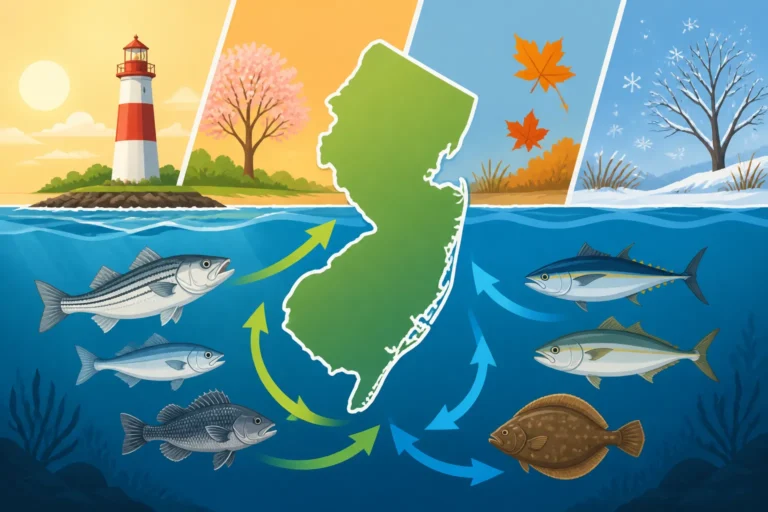
And then, there's the coast. New Jersey's extensive coastline, with its back bays, estuaries, and surf, provides outstanding saltwater fly fishing opportunities that many anglers completely overlook. Think about it: our vast network of tidal rivers and bays, like Raritan Bay and Barnegat Bay, are nurseries for baitfish, which in turn attract predatory species like striped bass, bluefish, and fluke. Fly fishing in these environments demands a robust setup and a different set of skills, but the reward of hooking into a powerful striper or a hard-fighting bluefish on the fly is an experience that keeps you coming back for more. It’s a testament to New Jersey's rich aquatic environment that you can literally fish for trout in the morning and stripers in the afternoon.
Key Species Targeted by Fly Anglers in New Jersey
Given the wide variety of waters, it's no surprise that New Jersey fly anglers target an impressive array of fish species. For many, the journey begins with trout. Our coldwater streams and lakes are regularly stocked with rainbow trout and brown trout, offering consistent action, especially during the spring and fall stocking seasons. You'll also find wild brook trout in some of the more pristine, higher-elevation streams, which are truly a special catch due to their native status and beautiful coloration. Targeting these fish often involves delicate presentations with small dry flies or nymphs, requiring a keen eye and a gentle touch.
Beyond trout, freshwater fly fishing opens up a whole new world. Largemouth bass are incredibly popular targets, especially in the state's numerous lakes, reservoirs, and slow-moving rivers. These aggressive predators will readily strike poppers and various streamer patterns, providing powerful fights. Smallmouth bass, found in rivers like the Delaware and some rocky lakes, offer a similar thrill with their acrobatic leaps. Don't overlook the panfish either – bluegill and crappie on tiny poppers or wet flies can provide endless fun, especially for beginners or when teaching kids. Even carp, often underestimated, can provide a surprisingly challenging and rewarding fight on a fly rod.
When you venture into saltwater, the game changes entirely. Striped bass are arguably the most sought-after fly rod species on the coast. From the spring migration in Raritan Bay to the fall run along the beaches of Island Beach State Park, stripers will chase baitfish patterns with incredible vigor. Bluefish, with their razor-sharp teeth and aggressive nature, offer explosive strikes and blistering runs, making them another favorite. Fluke (summer flounder) can also be targeted with jigging flies, often requiring a heavier sinking line to get down to them. The seasonal availability for these species is key, with different times of the year offering prime opportunities for specific fish, making year-round fly fishing a very real possibility in New Jersey.
Essential Gear for New Jersey Fly Fishing
Getting into fly fishing can feel like learning a new language, especially when it comes to the gear. There are so many options, so many numbers, and it's easy to get overwhelmed by all the choices out there. But don't despair! While specialized equipment can make a difference, the core principle is finding the right balance for the fish you're pursuing and the waters you'll be fishing. Think of it as building a versatile toolkit, rather than needing every single tool from day one.
Rod and Reel Selection for Different Waters
The fly rod and reel are your primary tools, and their selection is dictated largely by the size of the fish you're targeting and the conditions you'll face. Fly rods are categorized by "weight" — a number ranging from 1 to 15, which corresponds to the weight of the fly line they are designed to cast. This system helps balance your setup for optimal performance. For delicate trout fishing in smaller streams, a 3-weight or 4-weight rod is often ideal, allowing for subtle presentations of tiny flies. If you're tackling larger trout rivers or chasing feisty smallmouth bass, a 5-weight rod offers a bit more backbone and versatility. These lighter rods are incredibly sensitive and make even smaller fish feel like giants, which is part of their charm.
Moving into warmer freshwater, such as for largemouth bass, pickerel, or carp, you'll want to step up to a 6-weight or 7-weight rod. These rods have the power to cast larger, air-resistant flies like poppers and bulky streamers, and they provide the leverage needed to pull bigger fish out of heavy cover. For dedicated pike or muskie anglers, an 8-weight or even 9-weight might be necessary. When you venture into New Jersey's saltwater environments, you'll definitely need a heavier setup to handle the larger, more powerful fish and the often windy coastal conditions. An 8-weight or 9-weight rod is a good starting point for striped bass and bluefish in the bays and surf, allowing you to cast big flies into the wind and battle strong currents. If you're going offshore for larger species or battling big stripers on the open coast, a 10-weight or even 11-weight rod will give you the necessary power.
The reel's primary function in fly fishing, unlike conventional spinning or baitcasting, isn't typically for casting. Its main job is to hold your fly line and backing, and to provide drag when a fish runs. For lighter freshwater applications (3-weight to 6-weight), a simple click-and-pawl reel or an entry-level disc drag reel will suffice; often, you're just hand-lining the fish in anyway. However, for heavier freshwater species and especially for saltwater fly fishing, a robust reel with a smooth, powerful, and sealed disc drag system is absolutely critical. This drag system will help you tame strong-running fish and prevent break-offs. Additionally, for saltwater, look for reels made from corrosion-resistant materials to withstand the harsh conditions. A good starting point for finding reliable, affordable fly fishing gear, from entry-level combos to specialized saltwater setups, is often a quick browse on Amazon. They have a vast selection of rods, reels, and accessories from various manufacturers that cater to every budget and need.
Fly Lines, Leaders, and Tippet: The Unsung Heroes
While the rod gets all the glory, your fly line, leader, and tippet are arguably the most crucial components for successful fly fishing. Unlike conventional fishing where the lure's weight carries the line, in fly fishing, it's the weight of the specialized fly line itself that loads the rod and propels your virtually weightless fly forward. Fly lines come in various tapers and densities. A "weight-forward" (WF) line, which has most of its weight concentrated at the front, is the most common and versatile, making it easier to cast longer distances and handle larger flies. "Double-taper" (DT) lines, with an even taper on both ends, are excellent for delicate presentations and roll casting in close quarters.
Beyond taper, line density is vital. Most freshwater trout fishing starts with a floating line, which keeps your fly on the surface for dry flies or allows you to suspend nymphs at various depths with indicators. However, for fishing deeper waters, fast currents, or subsurface in saltwater, intermediate (slow-sinking) or full-sinking lines become essential. These lines get your fly down to where the fish are holding, and they are critical for targeting species like fluke or deep-feeding bass. Choosing the right line for the situation can often be the difference between a frustrating day and a successful one.
The leader and tippet are the invisible connection between your fly line and your fly. The leader is typically a tapered monofilament or fluorocarbon line, designed to smoothly transfer the casting energy from the heavy fly line to the lighter tippet, and to help present your fly naturally. It tapers from a thick butt section down to a fine tip. The tippet is the final, thinnest section of line, usually 12-24 inches long, to which you tie your fly. It's designed to be easily replaced as you change flies or if it gets frayed, saving your more expensive tapered leader. Understanding leader formulas and matching tippet strength to your fly size and target species can be a bit daunting at first, but it's a fundamental skill. For instance, you wouldn't use a heavy 10-pound test tippet for a tiny size 22 dry fly, nor would you use a delicate 4X tippet for a large, aggressive striped bass. Learning to tie a good leader knot is key here.
Waders, Boots, and Safety Gear
Fly fishing often involves getting into the water, especially when pursuing trout in rivers or exploring shallow bay flats. This makes a good pair of waders and wading boots indispensable for comfort and safety. Breathable waders, typically made from GORE-TEX or similar waterproof fabrics, are incredibly popular because they allow perspiration to escape, keeping you cool in summer and easy to layer under in winter. Neoprene waders offer more warmth for colder conditions but can be bulky and hot. When choosing wading boots, prioritize grip and ankle support. Felt soles are excellent for slippery stream beds but are often prohibited in some states due to the risk of transferring invasive species. Rubber soles with studs or cleated options provide superior traction on a variety of terrains, from rocky river bottoms to muddy estuarine flats.
Beyond the essentials of rods, reels, lines, and waders, a few key pieces of safety and convenience gear can significantly enhance your New Jersey fly fishing experience. Polarized sunglasses are non-negotiable; they cut glare, allowing you to see into the water, spot fish, and navigate underwater obstacles more effectively. A good pair of nippers (small clippers for cutting line) and forceps (hemostats for unhooking fish) are crucial tools that should always be within easy reach. A wading staff can provide invaluable stability when crossing strong currents or navigating uneven river bottoms, especially if you have bad knees or a shaky sense of balance. It's a lifesaver, literally.
When wading in deeper or faster water, a wading belt is not just for keeping water out of your waders; it's a critical safety item. In the event of a fall, it can prevent your waders from filling completely with water, which can quickly become dangerous. For saltwater excursions, especially in kayak fishing or deeper wading, a personal flotation device (PFD) is highly recommended. Always be aware of your surroundings, understand the local conditions, and never take unnecessary risks. A small first-aid kit, a whistle, and a fully charged cell phone (in a waterproof case) are also smart additions to your pack. You can find a wide array of reliable wading gear, safety equipment, and essential fly fishing tools, often with detailed reviews, on platforms like Amazon, making it easy to compare and select items that fit your specific needs and budget for your New Jersey adventures.
Freshwater Fly Fishing Techniques in New Jersey
New Jersey's freshwater fly fishing offers an incredible range of experiences, from the delicate presentations required for spooky trout to the aggressive retrieves that provoke an explosive bass strike. Each technique has its own rhythm, its own challenge, and its own unique reward. Mastering them takes time and practice, but the satisfaction of fooling a fish on a fly you tied or a technique you perfected is truly unmatched.
Mastering the Dry Fly for Trout
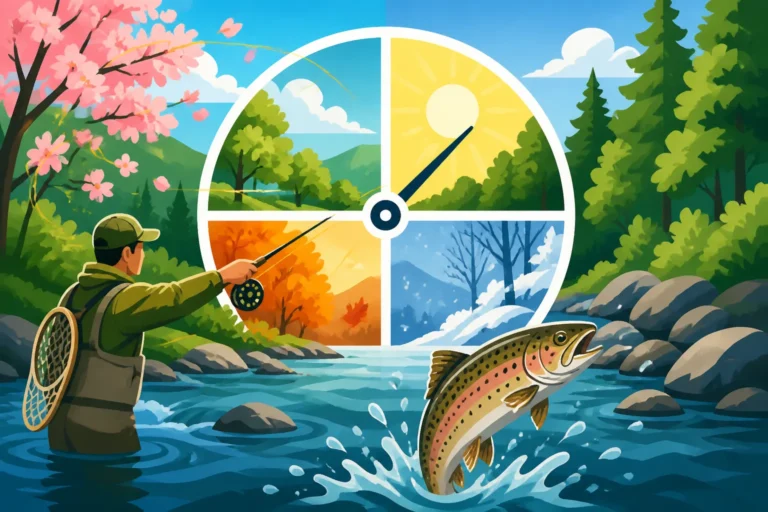
For many fly anglers, the dry fly represents the purest form of the sport. There's nothing quite like watching a trout slowly rise through the water column and gently sip your perfectly presented artificial insect from the surface. In New Jersey's trout streams, mastering the dry fly often means paying close attention to "matching the hatch" – identifying the natural insects that are emerging from the water and selecting an artificial fly that closely imitates them in size, shape, and color. Mayflies, caddisflies, and stoneflies are the primary aquatic insects that hatch throughout the year, and having a selection of patterns to imitate these, such as an Adams, Elk Hair Caddis, or a Stimulator, is crucial.
The technique itself involves reading the water to identify likely holding lies – seams between currents, behind large rocks, under undercut banks, or in quiet eddies. You'll want to cast your dry fly upstream or up-and-across, allowing it to drift naturally downstream without any drag (often called a "dead drift"). Any unnatural drag on the line, where the fly moves faster or slower than the surrounding current, will immediately signal to a wary trout that something is amiss. This often requires mending your line – an artful flip of the rod tip that repositions the line without disturbing the fly's drift. The patience required to wait for a rise, and the thrill when a fish finally commits, is what makes dry fly fishing so addictive. It's a truly visceral experience, and New Jersey's designated trout waters, like those you'd explore when learning New Jersey Trout Fishing Techniques, offer ample opportunities to practice this rewarding skill.
Nymphing and Streamer Fishing for Subsurface Success
While dry fly fishing is exhilarating, the vast majority of a trout's diet consists of subsurface insects, or nymphs. This means that nymphing, the art of presenting an imitation of these underwater insects, is often the most productive way to catch trout, especially when no insects are hatching on the surface. There are several effective nymphing techniques. "Indicator nymphing" involves placing a small float (indicator) on your leader, which helps detect subtle strikes and control the depth of your fly. You cast upstream and allow the nymph to drift naturally with the current, watching the indicator for any twitch, hesitation, or sudden movement that signals a take.
More advanced methods, like "Euro nymphing" or "tightline nymphing," involve specialized leaders and no indicator, using the fly line itself or a colored sighter to detect strikes through tension. This technique requires a very direct connection to your flies, allowing for extremely sensitive strike detection and precise depth control in turbulent water. Popular nymph patterns for New Jersey include the Pheasant Tail, Hare's Ear, Prince Nymph, and various caddis larva imitations. These flies are often fished in tandem, with a heavier "point fly" to get down quickly and a lighter "dropper fly" trailing behind. For a deeper dive into these methods, consider exploring resources on Nymphing Techniques for Trout Streams.
Beyond nymphs, streamer fishing offers a more aggressive approach, imitating baitfish, leeches, or other larger prey. This technique can be incredibly effective for targeting larger, more predatory trout, as well as smallmouth and largemouth bass. You typically cast a weighted streamer pattern, such as a Woolly Bugger, Clouser Minnow, or Sculpin pattern, across or downstream and retrieve it with short, erratic strips, mimicking a fleeing baitfish. The strikes can be incredibly aggressive and often occur with a jarring tug on the line. Streamer fishing is particularly effective in higher, slightly off-color water or during periods of low light when fish are more willing to chase a larger meal.
Warmwater Techniques: Bass and Panfish on the Fly
While trout often steal the fly fishing spotlight, New Jersey's warmwater fisheries offer some of the most exciting and accessible fly rod action, especially for bass and panfish. Largemouth bass, in particular, are fantastic targets for fly anglers. They are aggressive, readily take surface and subsurface flies, and put up a strong fight. For surface action, nothing beats the thrill of a bass blowing up on a popper or a deer hair bug. These flies, designed to make noise and commotion on the surface, are cast into prime bass habitat – along lily pad edges, beside fallen logs, near weed lines, or under overhanging branches. The retrieve is usually erratic, with pauses that often trigger a strike from an opportunistic bass.
When bass are holding deeper or aren't willing to come to the surface, subsurface flies are incredibly effective. Large streamers that imitate baitfish (such as shad or shiners) or crayfish patterns are excellent choices. These can be retrieved with a strip-and-pause motion, jigged along the bottom, or slowly swung through deeper pockets. Focusing on structure is key; bass are ambush predators, so targeting brush piles, submerged timber, docks, and rocky points will increase your success. Our guide to Largemouth Bass Fishing in New Jersey can point you to some of the best locations for these powerful fish.
Don't underestimate the sheer fun of targeting panfish like bluegill and crappie on the fly. These eager biters are perfect for beginners, kids, or anyone looking for consistent action. Smaller poppers, foam spiders, and wet flies (like a size 12 or 14 Green Weenie or a tiny Woolly Bugger) are irresistible to them. You can find panfish virtually anywhere in New Jersey's warmwater lakes and ponds, often congregated around docks, brush, or submerged vegetation. The light tackle makes even a palm-sized bluegill feel like a trophy, and it's a fantastic way to sharpen your casting skills and learn how to detect subtle takes. It’s accessible, abundant, and pure enjoyment.
Saltwater Fly Fishing in New Jersey's Coastal Waters
New Jersey's extensive coastline, from the sprawling Raritan Bay to the barrier islands and back bays of the south, offers truly world-class saltwater fly fishing. While it demands a different set of skills and more robust gear than freshwater, the adrenaline rush of hooking into a powerful ocean-dwelling fish on a fly rod is an experience that rivals any. Forget the delicate whispers of a trout stream; saltwater fly fishing is about power, speed, and finding the feeding frenzy.
Targeting Striped Bass with the Long Rod
Striped bass are, without a doubt, the quintessential saltwater fly rod target in New Jersey. These powerful anadromous fish migrate along our coast, offering prime opportunities for fly anglers from spring through late fall. The key to success often lies in finding the baitfish – bunker (menhaden), spearing, mullet, and anchovies – that stripers feed on. Look for diving birds, surface commotion, or bait schools visible on your fishfinder. Prime locations include tidal rips, inlets like the Manasquan Inlet or Shark River Inlet, sod banks in the back bays, and sandy beaches during the migration.
Casting for stripers often means contending with wind, which is a constant companion on the coast. You'll need to master powerful double-haul casts to propel larger, wind-resistant fly patterns long distances. Flies like the Clouser Minnow, Deceiver, and Half-and-Half, tied to imitate common baitfish, are staples in any New Jersey saltwater fly box. Depending on where the fish are feeding, you might use a floating line for surface blitzes or an intermediate or sinking line to get your fly down to deeper-holding fish. The retrieve should mimic a panicked baitfish – short, aggressive strips with occasional pauses. Hooking into a strong, fast-running striper on the fly is an unforgettable experience, validating the commitment you put into honing your cast and understanding the tides. Our comprehensive guide on Striped Bass Fishing in New Jersey can provide more in-depth knowledge on their habits and best fishing times.
Fluke and Bluefish on the Fly
While striped bass dominate the headlines, New Jersey offers fantastic fly fishing opportunities for other popular saltwater species, notably fluke (summer flounder) and bluefish. Fluke, with their distinctive flat bodies, are ambush predators that lie on the bottom waiting for prey. Targeting them on the fly typically requires getting your fly down deep, often necessitating a heavy sinking line or a fast-sinking shooting head. You'll want to use jigging patterns that imitate baitfish or small crustaceans, and present them near structure, channel edges, or sandy drop-offs. Drifting with the current while jigging your fly can be incredibly effective, allowing you to cover ground and find actively feeding fish. The strike is often a subtle thump, followed by a surprisingly strong tug. For specific details on where and when to target these flatfish, refer to our Fluke and Summer Flounder Fishing in New Jersey guide.
Bluefish, on the other hand, are the complete opposite of fluke in terms of temperament. These voracious, toothy predators are known for their aggressive strikes and blistering runs. When a bluefish blitz occurs, often indicated by diving birds and boiling water, you can cast almost any baitfish imitation into the fray and get a strike. Topwater poppers can create incredibly explosive surface action, but subsurface Deceivers and Gurglers also work wonders. Because of their sharp teeth, a short section of heavy monofilament or a wire leader is essential to prevent bite-offs. Be prepared for a fight; bluefish are powerful and can quickly unravel your fly line. The sheer power and speed they display on a fly rod are truly something to behold, making them an exciting, albeit sometimes destructive, target.
Back Bay and Estuary Fly Fishing Opportunities
New Jersey's extensive network of back bays, marshes, and tidal creeks offers a quieter, yet incredibly productive, saltwater fly fishing experience. These calmer, shallower waters are often protected from the open ocean's fury, making them ideal for smaller boats, kayaks, or even wading. The target species here include juvenile striped bass, which use these areas as nurseries, as well as occasional weakfish, speckled trout (though less common in NJ than southern states), and even some resident bluefish.
Fishing these areas often means targeting marsh edges, grass beds, oyster bars, and shallow flats where baitfish congregate. The stealth provided by a kayak or quiet wading is a huge advantage, as fish in these shallower environments can be easily spooked. Intermediate or floating lines are generally preferred here, allowing for precise presentations to visible fish or along specific structures. Fly patterns are typically smaller baitfish imitations or crab patterns. The beauty of back bay fly fishing lies in its visual nature; you're often sight-fishing to cruising fish or casting to subtle disturbances on the water. It’s a fantastic way to explore the quieter side of New Jersey’s coastal fishing and offers a unique challenge of reading subtle signs and making accurate casts in often tight quarters.
Reading the Water and Environmental Factors
Successful fly fishing, regardless of whether you're in freshwater or saltwater, is as much about understanding the environment as it is about casting a fly. Fish are intimately connected to their surroundings, and learning to "read the water" is perhaps the most important skill you can develop. It's about looking at a piece of water and instinctively knowing where a fish might be holding, what it might be feeding on, and how to best present your fly. This skill comes with time on the water, but understanding the underlying principles can accelerate your learning curve.
Understanding Currents, Structure, and Holding Lies
In any moving water, whether it's a trout stream or a tidal estuary, currents are king. Fish use currents to their advantage, conserving energy by holding in slower water adjacent to faster currents, where food is swept to them. These areas are known as "holding lies." Look for seams where two currents meet, the calmer water behind large rocks or logs, the deep pockets at the tailout of a pool, or the slower water along an undercut bank. In saltwater, understanding how currents interact with jetties, channel markers, and sandbars is equally crucial. Fish will position themselves where they can ambush prey with minimal effort.
Structure, both natural and man-made, is another key element. In freshwater, this includes fallen trees, boulders, weed beds, bridge pilings, and deep holes. These structures provide cover from predators, shelter from strong currents, and often attract baitfish or insects, making them prime feeding grounds. For instance, a submerged log on a sunny day might provide shade and a sense of security for a largemouth bass. In saltwater, jetties, wrecks, artificial reefs, oyster beds, and marsh banks all serve as crucial structure, concentrating bait and attracting predatory fish. Learning to identify these structures, even if they're not immediately visible on the surface, can dramatically increase your success. It can sometimes feel like solving a puzzle, which can be frustrating, but the reward of a strike from a fish you instinctively knew was there is incredibly satisfying.
The Importance of Tides and Weather in Saltwater
In New Jersey's coastal environment, understanding tides is absolutely paramount to saltwater fly fishing success. The rise and fall of the tide dictates current flow, water depth, and bait movement, all of which directly influence fish behavior. Generally, moving water—either an incoming or outgoing tide—is better than slack tide, as it concentrates bait and stimulates feeding. However, specific stages of the tide can be better for different locations or species. For example, a rising tide might push baitfish into shallow marsh grass, making it a prime feeding area for stripers, while a falling tide might pull bait out of those same areas, concentrating fish at bottlenecks. Consulting a tide chart is not just a good idea; it's a necessity for planning any saltwater fly fishing trip in New Jersey. Our How to Read Tide Charts for Better Fishing in New Jersey guide offers a deeper dive into this essential skill.
Weather also plays a significant role. Wind, in particular, can be both a blessing and a curse. A light breeze can create a chop on the water, breaking up the surface and making fish less wary, but a strong wind can make casting a heavy saltwater fly a monumental challenge. Rain can cool water temperatures and wash insects or bait into the water, triggering feeding frenzies, but heavy downpours can muddy rivers and make visibility difficult. Barometric pressure changes, often associated with approaching or departing storms, can also affect fish activity. High, stable pressure often means consistent fishing, while rapidly dropping pressure can sometimes shut fish down, or conversely, make them feed aggressively before a storm. These variables can certainly add a layer of complexity and frustration to your trip planning, but learning to adapt to them is part of becoming a seasoned fly angler.
Matching the Hatch and Fly Selection
In freshwater fly fishing, the concept of "matching the hatch" is a cornerstone of success, especially when targeting trout. It involves observing the natural insect activity on or near the water – are there mayflies fluttering, caddisflies skittering, or midges dancing? Then, you select an artificial fly that closely imitates that natural insect in terms of size, shape, and color. Carrying a small magnifying glass and a simple insect identification chart can be incredibly helpful. If no insects are visible, it's often best to fish subsurface with nymph patterns, imitating the larval stages of these insects, which are almost always present.
In saltwater, the "hatch" is typically baitfish. New Jersey's coastal waters see huge migrations of baitfish like bunker, spearing, mullet, and anchovies. Your fly selection should revolve around imitating these forage species. This means carrying a variety of patterns in different sizes and colors, often with flash to imitate scales. Observe what the fish are feeding on, if possible. Are they chasing small, slender spearing or larger, broader bunker? This will inform your choice of fly. If you see stripers aggressively feeding on bunker, a large, dark-colored Deceiver or Half-and-Half might be the ticket. If they're keying in on smaller anchovies, a slim Clouser Minnow in olive and white would be more appropriate.
Here's a quick reference table of common New Jersey fly fishing targets and some general fly recommendations:
| Species Targeted | Water Type | Common Forage/Insect | Recommended Fly Patterns |
|---|---|---|---|
| Trout (Freestone Stream) | Freshwater | Mayflies, Caddisflies, Stoneflies, Midges, Small Baitfish | Adams, Elk Hair Caddis, Blue-winged Olive, Pheasant Tail Nymph, Hare's Ear Nymph, Woolly Bugger |
| Largemouth Bass | Freshwater | Frogs, Crayfish, Shad, Minnows | Poppers, Gurgler, Deer Hair Bug, Clouser Minnow, Leech Pattern |
| Smallmouth Bass | Freshwater | Crayfish, Minnows, Hellgrammites | Clouser Minnow, Crayfish Pattern, Poppers, Wiggle Minnow |
| Panfish (Bluegill/Crappie) | Freshwater | Small Insects, Minnows | Foam Spider, Ant, Beetle, Small Poppers, Tiny Woolly Bugger |
| Striped Bass | Saltwater | Bunker, Spearing, Anchovies, Mullet, Crabs | Deceiver, Clouser Minnow, Half-and-Half, Surf Candy, Gurgler, Crab Fly |
| Bluefish | Saltwater | Spearing, Bay Anchovies, Smaller Baitfish | Popper, Deceiver, Gurglers (often with wire leader) |
| Fluke (Summer Flounder) | Saltwater | Spearing, Sand Eels, Small Crustaceans | Jig Flies (e.g., Fluke Candy), Shrimp Patterns, Small Clousers |
Practical Tips for Success and Ethical Angling
Fly fishing is a journey, not a destination. There will be days of frustration, tangled lines, and missed fish, but there will also be moments of pure magic that make it all worthwhile. To help you along this path, focusing on casting fundamentals, practicing ethical angling, and knowing where to focus your efforts will accelerate your learning and enhance your enjoyment of New Jersey's incredible fly fishing scene.
Casting Fundamentals and Accuracy
At its core, fly casting is about smoothly accelerating and decelerating the fly line, allowing the line's momentum to unfurl the leader and present the fly. The most fundamental cast is the "overhead cast," which involves a smooth backward stroke and an equally smooth forward stroke. The key is stopping the rod tip cleanly at the end of each stroke, allowing the line to unroll in a tight loop. Many beginners struggle by trying to overpower the cast or making jerky motions, which often results in a messy, inefficient loop (or worse, a tangled mess). Patience and a smooth rhythm are far more important than brute strength.
Another essential cast, especially for New Jersey's often overgrown freshwater streams, is the "roll cast." This cast allows you to cast forward without any backcast, making it invaluable in tight quarters with bushes or trees behind you. It's a fundamental skill for anyone fishing small streams. As you progress, you'll learn to "false cast" to dry your fly or extend line, and develop accuracy to place your fly precisely where you want it. There are numerous instructional videos and guides online, and even local fly shops often offer casting clinics. Don't be afraid to invest in some dedicated practice time in your backyard or a local park; even just swinging the rod with some line can do wonders for your muscle memory. You can even find specialized casting practice tools and instructional books on platforms like Amazon to help you hone your technique before you even hit the water. Remember, every cast is a learning opportunity.
Catch and Release Best Practices
As fly anglers, we have a deep appreciation for the fish we pursue, and practicing ethical catch and release is paramount to preserving New Jersey's fisheries for future generations. Many of our wild trout populations are fragile, and even robust populations of bass and stripers benefit from careful handling. The goal is to minimize stress and injury to the fish, giving it the best possible chance of survival after release.
Here are some key best practices:
- Handle Fish as Little as Possible: Avoid taking fish out of the water, especially larger ones. If you must lift a fish for a quick photo, keep it over the water and return it quickly.
- Wet Your Hands: Always wet your hands before touching a fish. Dry hands can remove the fish's protective slime coat, making it vulnerable to disease.
- Use Barbless Hooks: Crimp down the barbs on your flies with pliers. Barbless hooks penetrate easily and, more importantly, come out easily, reducing harm to the fish's mouth. Many modern flies come barbless these days.
- Use Forceps or Pliers: These tools allow you to quickly and safely remove hooks without tearing the fish's mouth.
- Revive Gently: If a fish is lethargic after the fight, hold it gently in the water, facing upstream, allowing water to flow over its gills until it swims away under its own power. Don't pump it back and forth, as this forces water the wrong way over the gills.
- Cut the Line (if necessary): If a hook is deeply embedded and cannot be removed without causing significant trauma, it's often better to simply cut the line as close to the hook as possible. The hook will eventually rust out.
Understanding and adhering to these practices is not just about following rules; it's about respecting the resource. Our guide to Catch and Release Rules in New Jersey offers further insights into responsible angling.
Where to Go: Top New Jersey Fly Fishing Destinations
New Jersey offers a plethora of fly fishing destinations, each with its own charm and challenges. Knowing where to start can feel overwhelming, but a few key spots consistently deliver great action.
For freshwater trout enthusiasts, the northern reaches of the state are a treasure trove. The Musconetcong River, particularly its designated "Trophy Trout" sections, is a phenomenal river that gets regular stockings and holds some impressive wild fish. The Pequest River, flowing through the Pequest Trout Hatchery, also offers excellent fishing. These rivers are perfect for practicing your nymphing, dry fly, and streamer techniques in a classic freestone environment. Our general guide to Best Places to Fish in New Jersey will certainly highlight these gems.
For warmwater bass and panfish, you have countless options. Lake Hopatcong is a fantastic multi-species lake where you can target largemouth and smallmouth bass with poppers and streamers. Smaller impoundments like Spruce Run Reservoir and numerous county park ponds also hold abundant bass and panfish, offering accessible fly fishing close to home. Exploring these waters provides a great opportunity to switch gears from delicate trout presentations to more aggressive warmwater tactics, as detailed in our Fishing Lake Hopatcong: New Jersey's Largest Lake article.
When it comes to saltwater fly fishing, the choices are equally exciting. Raritan Bay and Sandy Hook Bay are legendary for their spring and fall striped bass runs, where fly anglers can experience incredible blitzes chasing bunker schools. The area around the Raritan Bay is perfect for exploring on foot or from a kayak, casting large baitfish imitations. Further south, the vast Barnegat Bay system offers shallow-water opportunities for stripers, bluefish, and fluke along its expansive sod banks and marsh islands. Even surf fishing the open beaches, particularly at locations like Island Beach State Park, can be incredibly productive during the migrations, though it requires longer casts and heavier gear. Our Raritan Bay and Sandy Hook Bay Fishing Guide can help you pinpoint specific spots and strategies for this vibrant fishery. Each of these locations presents a unique challenge and reward, making New Jersey a truly diverse and exciting place to wield a fly rod.
Disclaimer
The information provided in this guide is for general informational purposes only and is not intended as legal advice. Fishing regulations, license requirements, and seasonal rules in New Jersey can change frequently. Always consult the most current New Jersey Fish and Wildlife Digest or visit the official NJDEP Fish and Wildlife website before engaging in any fishing activities to ensure compliance with all applicable laws and regulations. The author and publisher are not responsible for any actions taken based on the information presented herein.