How to Fly Fish for Trout in New Jersey Streams
It’s easy to feel a bit overwhelmed when you first consider fly fishing for trout in New Jersey’s scenic streams. Many folks envision complicated casts, delicate presentations, and a seemingly endless array of gear. But honestly, it’s a deeply rewarding and accessible pursuit, and with the right approach, you’ll be wading our beautiful waters with confidence. This guide is designed to demystify fly fishing in the Garden State, walking you through everything you need to know to cast your first line.
Understanding New Jersey's Trout Streams and Regulations
Before you even think about buying a fly rod, it’s crucial to understand the unique characteristics of New Jersey’s trout streams and the rules that govern them. Our state offers a surprising variety of trout fishing opportunities, from small, freestone streams tumbling through the highlands to wider, more meandering rivers in the flatter regions. Knowing where to go and what you can and can't do is the first step toward a successful and legal outing.
Identifying Prime Trout Habitats
New Jersey's trout streams are generally categorized into a few types: stocked waters, wild trout streams, and delayed harvest/Trout Conservation Areas. Each offers a different experience and holds trout in distinct ways. Stocked waters, like many sections of the Musconetcong River, Pequest River, and the South Branch Raritan River, are regularly replenished by the state, especially in spring and fall. These spots often have easier access and provide more consistent action, making them great for beginners. Trout in these areas might be a bit less wary, having just been introduced.
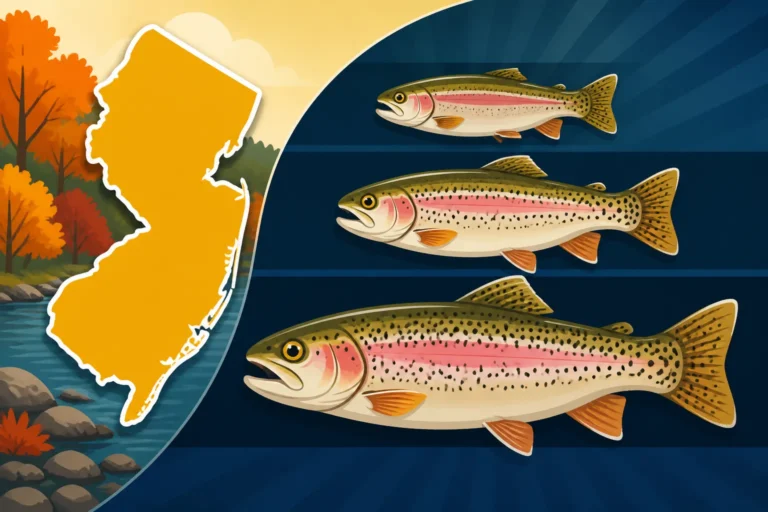
Wild trout streams, on the other hand, are often smaller, colder, and more remote, typically found in the northwestern parts of the state. These streams hold self-sustaining populations of brook, brown, and sometimes rainbow trout, which are generally more challenging to catch due to their natural caution and smaller numbers. They demand a stealthier approach and often reward anglers with incredibly beautiful, native fish. Understanding the difference between these environments will help you choose the right stream for your skill level and target species, and you can learn more about New Jersey Rainbow Trout vs Brown Trout vs Brook Trout to appreciate the specific characteristics of each.
Key Regulations for Fly Anglers
New Jersey’s Division of Fish and Wildlife sets very specific rules for trout fishing, and it’s imperative to understand them. These regulations cover everything from season dates and size limits to gear restrictions in certain areas. For instance, in "Trout Conservation Areas" or "Seasonal Trout Conservation Areas" (often marked as "Delayed Harvest" or "Catch and Release Only" sections), fly fishing is typically permitted, but only with artificial lures and flies, and all trout must be immediately released unharmed during specific periods. These areas are designed to provide high-quality fishing throughout the year, as fish accumulate and are not harvested.
It’s not just about the type of lure; you also need to be aware of licensing. Anyone aged 16 through 69 who wants to fish freshwater in New Jersey needs a valid fishing license. And if you’re specifically targeting trout, you’ll also need a separate New Jersey Trout Stamp Requirements Explained. Even if you plan on catch-and-release, these licenses and stamps are mandatory. Always check the current New Jersey Fish and Wildlife Digest, as regulations can change annually. The Digest is your ultimate source for understanding New Jersey Freshwater Fishing Regulations Every Angler Should Know. Ignoring these rules isn't just irresponsible; it can lead to hefty fines from conservation officers who patrol our waters diligently.
Essential Fly Fishing Gear for New Jersey Waters
One of the biggest hurdles for new fly anglers is figuring out what gear to buy. It doesn’t have to break the bank, and you certainly don't need the most expensive equipment to get started. The key is choosing versatile, appropriate gear for the typical New Jersey trout stream environment. Think "functional and reliable" over "fancy and high-tech."
Rod, Reel, and Line Selection
For most trout fishing in New Jersey, a 7.5 to 9-foot fly rod in a 4, 5, or 6-weight is your sweet spot. A 5-weight rod is often recommended as the best all-around choice. It’s light enough to make delicate presentations with small dry flies, but has enough backbone to cast larger nymphs or streamers, and handle an unexpected beefy rainbow or brown trout in a strong current. A 4-weight might be favored for smaller streams and lighter presentations, while a 6-weight offers a bit more power for windier days or larger flies. You can find excellent starter combos on Amazon that include a rod, reel, and line, often making the initial investment much more manageable.
Matching your reel to your rod weight is crucial for balance, though for trout, the reel mostly serves as a line holder and a counterweight; the actual fighting of the fish is typically done by stripping line by hand. As for fly line, a weight-forward (WF) floating line matching your rod weight (e.g., WF5F for a 5-weight rod) is the standard for most trout applications. This line taper helps with casting distance and accuracy. You'll also need a leader and tippet. A 9-foot tapered leader, with a breaking strength of 4X, 5X, or 6X, is a good starting point. The "X" rating refers to the diameter of the tippet, with higher numbers indicating finer, less visible line, ideal for wary trout. Many anglers prefer to carry a spool of tippet material (say, 5X and 6X) to extend their leader or tie on smaller flies.
Must-Have Flies for Local Trout
The world of fly patterns can seem endless, but for New Jersey trout, you can start with a relatively small, versatile selection. Generally, you'll want a mix of dry flies, nymphs, and a few streamers.
Here’s a breakdown of some essential patterns:
| Fly Category | Pattern Example | Common Size | Description & Use in NJ |
|---|---|---|---|
| Dry Flies | Elk Hair Caddis | #12-18 | Imitates adult caddisflies. Great all-around dry fly, especially during evening hatches. Fish on the surface. |
| Parachute Adams | #12-20 | Mimics various mayfly species and general attractors. Excellent for matching many common hatches. | |
| Stimulator | #10-16 | A larger, bushier attractor pattern. Good for aggressive fish or when trying to imitate larger terrestrial insects. | |
| Griffiths Gnat | #18-24 | Effective for small midges and clusters of midges. Crucial for picky fish sipping tiny insects. | |
| Nymphs | Pheasant Tail | #14-20 | Imitates various mayfly nymphs. A classic, highly effective subsurface pattern. |
| Hare's Ear | #12-18 | Another versatile mayfly nymph imitation, also good for caddis larvae. Slightly bulkier, with a buggy look. | |
| Prince Nymph | #10-16 | An attractor nymph that doesn't imitate a specific insect but is incredibly effective. | |
| Caddis Larva (e.g., Green Weenie) | #14-18 | Imitates the larval stage of caddisflies, which are abundant in many NJ streams. | |
| Streamers | Woolly Bugger | #6-10 | Imitates baitfish, leeches, and aquatic insects. A versatile, fish-catching machine for aggressive trout. |
| Clouser Minnow | #6-8 | Excellent for imitating minnows. Can be fished deep with a jigging motion. |
It's wise to carry a variety of sizes for each pattern. For instance, the Fly Selection for Trout Streams in Spring can vary greatly depending on the hatch, so having smaller and larger options gives you flexibility. Many of these patterns can be easily purchased online through retailers like Amazon, or at your local fly shop.
Waders, Boots, and Safety Gear
Staying dry and comfortable is key to enjoying your time on the water, especially in colder months. Breathable chest waders are essential for fly fishing in New Jersey, allowing you to get into the stream for better casting angles and access. Pair them with wading boots that provide good ankle support and traction. Felt soles are traditional for excellent grip on slippery rocks, but rubber soles with studs or cleats are becoming more popular due to their versatility and compliance with some states' regulations to prevent the spread of invasive species (though currently, felt is still generally permitted in NJ).
Beyond waders, consider polarized sunglasses – they are non-negotiable. They cut glare, allowing you to see into the water to spot fish and submerged obstacles, making them a crucial safety item. A vest or chest pack will hold your fly boxes, tippet, nippers, and other small tools, keeping them easily accessible. Don’t forget a hat for sun protection, bug spray in warmer months, and a small first-aid kit. A wading staff can also be a lifesaver, providing stability in swift currents or on uneven stream beds. Remember, How to Wade Fish New Jersey's Rocky Trout Streams Safely is a skill you'll develop, and good gear helps immensely.
Mastering Basic Fly Casting Techniques
The cast is often what intimidates people most about fly fishing, but with a little practice, it's something anyone can learn. It's less about brute force and more about timing, rhythm, and leveraging the weight of the fly line itself.
The Fundamental Overhead Cast
The overhead cast is your bread and butter in fly fishing. It’s the foundation for almost every other cast you’ll learn. Picture it as a smooth, controlled motion, not a whip. Start with about 10-15 feet of line out, letting your rod tip dictate the motion.
- The Back Cast: Start with the rod tip low, pointing towards your target. Smoothly accelerate the rod backward, lifting the line off the water. Stop your rod abruptly at about the 1 o’clock position (imagine a clock face). This sudden stop loads the rod, causing the line to fly backward. Crucially, wait for the line to fully unroll behind you. Don't rush! This pause is called the "pause" or "drift."
- The Forward Cast: Once you feel the line straighten out behind you, smoothly accelerate the rod forward, stopping abruptly at the 10 or 11 o’clock position. This "power stroke" propels the line forward. As the line unfurls, gently drop your rod tip towards the water, guiding the fly to its landing spot. The key is a smooth, continuous acceleration and an abrupt stop on both the back and forward casts. Practice this motion in an open field without water, aiming for accuracy and a tight loop in your line.
Roll Casting for Tight Quarters
Not every stream offers wide-open spaces for a full overhead cast. Often, you'll find yourself surrounded by trees, brush, or steep banks – classic New Jersey stream conditions! This is where the roll cast becomes invaluable. It allows you to cast effectively when there's no room for a back cast.
To perform a roll cast, gather some line on the water directly in front of you. Lift your rod tip slowly, drawing the line into a "D" loop shape beside your rod, with most of the line still on the water. Once the loop is formed and the rod is loaded (typically around 1 to 2 o’clock), make a smooth, forward casting stroke, similar to the overhead cast, stopping cleanly at 10 or 11 o’clock. The energy from the rod will "roll" the line forward off the water, presenting your fly. It takes some practice to get the timing and loop right, but mastering this cast will open up many more fishing opportunities in brushy areas along the Musconetcong or Pequest rivers.
Reading the Water and Locating Trout
Catching trout isn't just about casting; it's about understanding where the fish are and why they're there. Trout are creatures of comfort and efficiency, seeking out spots that provide food, shelter, and favorable water conditions.
Decoding Riffles, Pools, and Runs
Trout streams can be broken down into three primary structural elements:
- Riffles: These are shallow, fast-moving sections of water, often with rocky bottoms. Riffles are oxygen-rich and act as cafeterias for trout, dislodging insects and providing a conveyor belt of food. Trout won’t hold directly in the fastest current but will position themselves in the slower water adjacent to or directly downstream from riffles, waiting for food to drift by. Think of the seams where fast water meets slow water.
- Pools: Pools are deeper, slower-moving sections, often found downstream of a riffle or bend in the river. They provide trout with a sense of security from predators and offer comfortable resting areas. The deepest parts of a pool can hold larger, more cautious fish, while the edges and the "tail-out" (the shallower, faster-moving water at the end of the pool) are excellent feeding zones. Look for submerged logs, undercut banks, or large boulders within a pool—these are prime holding lies.
- Runs: Runs are typically deeper and faster than riffles but shallower and more uniform than pools. They offer a good balance of food delivery and cover. Trout often spread out in runs, especially during active feeding periods. The head of a run (where faster water enters) and the edges are particularly productive.
When you approach a section of a New Jersey trout stream, take a moment to "read" the water. Identify these features and then think about where a trout would logically position itself based on food, cover, and current. You might find a big brown trout tucked under an undercut bank on the Raritan River, or a school of rainbows actively feeding in a riffle on the Musconetcong.
Seasonal Trout Behavior and Lie Patterns
Trout behavior changes with the seasons, largely dictated by water temperature and available food.
- Spring: After the cold winter, trout become very active as water temperatures rise and insect hatches begin. This is often when New Jersey Spring Trout Stocking Start Date occurs, adding fresh fish to the system. Trout will be found throughout the stream, actively feeding in riffles and the heads of pools and runs. High, slightly off-color water after rain can push fish to the edges and slower pockets.
- Summer: As water temperatures climb, trout become more stressed, especially in shallower streams. They'll seek out colder, more oxygenated water. This means focusing your efforts on deep pools, spring-fed sections, and early mornings or late evenings when water temperatures are at their lowest. Fishing near tributaries that feed colder water into the main stream can also be very productive. Look for trout holding tight to cover, such as large rocks or submerged logs, to escape the sun and heat.
- Fall: Fall is another fantastic season for fly fishing in New Jersey. Water temperatures cool, and trout become very active again, feeding heavily to prepare for winter and, for brown and brook trout, spawning. Larger fish become more aggressive. You’ll find them in similar places as spring, but also actively migrating or holding in areas with suitable spawning gravel. The New Jersey Fall Trout Stocking Dates also contribute to excellent fishing.
- Winter: Fly fishing in winter is a test of dedication. Trout are less active, conserving energy. They'll typically hold in the deepest, slowest parts of pools and runs, close to the bottom. Your presentations need to be slow and deliberate, often focusing on nymphs presented deep. While many might shy away from it, winter can offer surprising rewards for the patient angler, though some areas might be closed for New Jersey Trout Season Preseason Closure Explained before opening day.
Understanding these patterns, combined with knowing Best Time to Fly Fish New Jersey's Trout Streams, will significantly increase your chances of success.
Effective Drifting and Presentation Strategies
Once you've spotted a likely holding lie and selected your fly, the next challenge is presenting it naturally. A drag-free drift is often the most critical element for tricking a wary trout.
Nymphing Techniques for Subsurface Success
Nymphing is arguably the most productive fly fishing technique for trout in New Jersey, as trout feed on subsurface insects (nymphs, larvae, pupae) for about 80-90% of their diet. The goal is to get your fly down to the fish's feeding lane and have it drift as naturally as possible, mimicking a dislodged insect.
- Indicator Nymphing: This is a fantastic method for beginners. You attach a strike indicator (a small bobber-like device) to your leader, typically 1.5 to 2 times the depth of the water you're fishing above your fly. The indicator helps you detect subtle takes and keeps your nymph drifting at the correct depth. Cast upstream or quartering upstream and let the indicator drift downstream without any drag. When the indicator hesitates, dips, or darts, set the hook! The weight of your nymph is crucial; you might need to add small split shot above your fly to get it down quickly in faster water. For more specific guidance, explore dedicated Nymphing Techniques for Trout Streams.
- Euro Nymphing (Tightline Nymphing): This advanced technique eliminates the strike indicator, relying on a colored sighter (a piece of brightly colored monofilament or braided line) built into your leader. You fish with a very short line, often holding your rod tip high, following your nymph through the current. The direct connection to the fly allows for incredibly sensitive strike detection and precise depth control. It's incredibly effective in complex currents and for picky fish but requires significant practice to master the feel and presentation.
Dry Fly Fishing for Surface Action
Ah, the dry fly! This is often what people envision when they think of fly fishing: a graceful cast, a delicate landing, and a trout sipping your fly off the surface. It's exhilarating when it works, but it requires precise timing and presentation.
To dry fly fish, you’re imitating adult aquatic insects (mayflies, caddis, stoneflies) or terrestrials (grasshoppers, ants, beetles) that have landed on the water. Your fly must float, so you’ll use a dry fly floatant. Cast your dry fly upstream or slightly quartering upstream of where you expect a trout to be rising. The key is a "drag-free drift," meaning your fly floats at the same speed as the natural current, without being pulled or pushed unnaturally by your fly line. Any drag will instantly tell a trout that your fly is artificial. When a fish rises and takes your fly, a gentle, swift upward hook set is all that's needed. Best Time of Day for Fly Fishing Trout Streams for dry fly action is often during a hatch, usually in the late morning, afternoon, or early evening.
Streamer Fishing for Aggressive Takes
Streamer fishing is a more aggressive, active style of fly fishing that imitates baitfish, leeches, or larger aquatic prey. It’s a great way to target larger, predatory trout, especially brown trout, which are known to be quite carnivorous.
Instead of a natural drift, you’ll actively strip your line, giving your streamer an enticing, darting motion through the water. Cast your streamer across or downstream and allow it to sink. Then, use various retrieves – short, quick strips; long, slow pulls; or a combination – to make the fly look alive. Often, the strike will be sudden and violent, so be ready! Streamer fishing is particularly effective in larger pools, runs, and around structure like submerged logs or undercut banks on rivers like the Raritan. It’s also very productive in off-color water or on overcast days when fish are less shy about chasing prey.
Catch and Release Best Practices in New Jersey
New Jersey has many catch-and-release-only sections, and even in areas where harvest is permitted, many fly anglers choose to release their fish. Responsible catch and release practices are vital for sustaining healthy trout populations in our streams.
Handling Trout with Care
When you land a trout, the way you handle it can be the difference between its survival and mortality. Here are some critical guidelines:
- Minimize Fight Time: Bring the fish in as quickly as possible without over-stressing your tackle. A prolonged fight can exhaust the fish, reducing its chances of recovery.
- Keep Fish in Water: This is paramount. Trout need to breathe through their gills, and exposing them to air, especially for extended periods, can cause severe stress and damage. If you must remove the fish for a quick photo, do so as quickly as possible, ensuring your hands are wet.
- Wet Hands: Always wet your hands thoroughly before touching a fish. Dry hands can remove the protective slime layer (mucus) that protects the fish from disease and parasites.
- Avoid Squeezing: Never squeeze a fish, particularly around its belly or gills. This can cause internal organ damage.
- Use Barbless Hooks: Consider crimping down the barb on your flies with pliers. Barbless hooks are much easier to remove, causing less trauma to the fish and making releases quicker. Many fly fishing purists only use barbless hooks.
Minimizing Stress and Maximizing Survival
Beyond gentle handling, there are other considerations to ensure your released trout swim away healthy. If a fish is deeply hooked (which is less common with flies than with bait), cut the line as close to the hook as possible. Attempting to dig out a deeply embedded hook often causes more harm than good. The hook will eventually rust out, or the fish's body may reject it.
When releasing, hold the fish gently in the water, facing upstream into a slow current. Allow water to flow over its gills. Don't move it back and forth; this doesn't help it breathe. When it kicks strongly and swims away on its own, then you can let go. Sometimes, a tired fish might need a few minutes to recover before it’s ready. Be patient. Our state's fisheries depend on responsible angling, and practicing proper catch and release helps ensure that the beautiful trout in New Jersey's rivers and streams are there for future generations to enjoy.
Disclaimer
Fishing conditions and regulations in New Jersey can change frequently. Always consult the latest New Jersey Division of Fish and Wildlife regulations and local advisories before heading out on any fishing trip. This guide is for informational purposes only and does not supersede official state regulations.