Why Do Striped Bass Follow a Slot Limit Migration Pattern?
It can be incredibly frustrating to be out on the water, hooking into what feels like a fantastic striped bass, only to realize it doesn't fit the current slot limit. Many anglers scratch their heads, wondering why these rules exist and how they relate to the fish's natural movements. This guide is here to untangle the complexities of striped bass migration patterns and explain the crucial role that slot limits play in managing this iconic New Jersey fishery.
Understanding the Striped Bass Life Cycle and Their Epic Migrations
Striped bass, often affectionately called "stripers" or "rockfish," are truly remarkable creatures, undertaking some of the most impressive migrations in the saltwater fishing world. Their entire life cycle, from tiny larvae to massive breeding adults, is intrinsically linked to these movements. For many anglers, understanding this journey is key to appreciating the conservation efforts surrounding them.
The Northeast Migration Highway
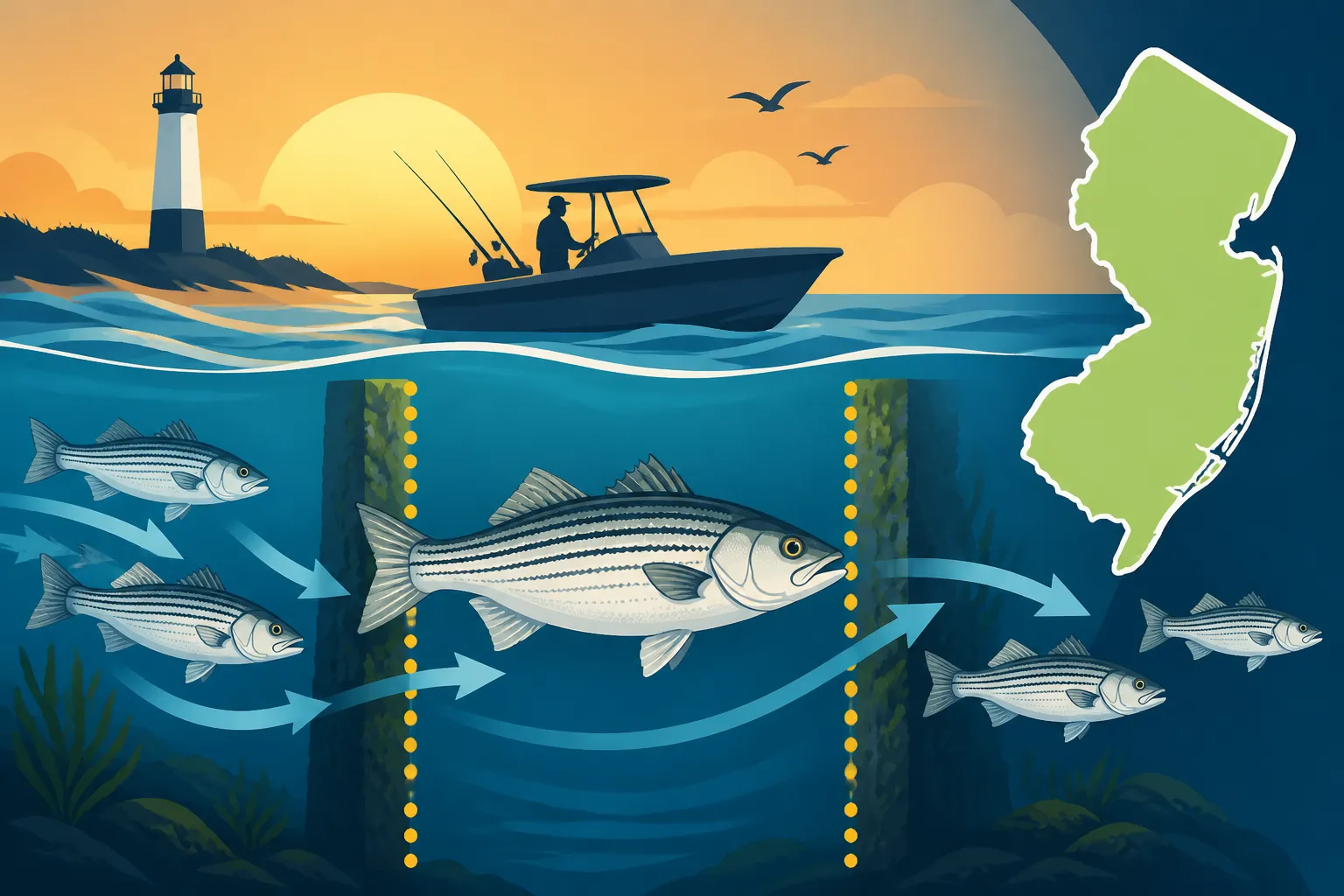
Imagine a superhighway for fish, stretching from North Carolina all the way up to Maine. That's essentially the migratory path for Atlantic striped bass. The vast majority of striped bass that migrate along the New Jersey coast are born in the Chesapeake Bay, Delaware River, or Hudson River. Once they mature past their juvenile stages, these fish begin their annual migration. In spring, they move north to cooler feeding grounds off the coast of New England, often making a pit stop along the Jersey Shore to gorge on baitfish. Come fall, as water temperatures drop, they reverse course, heading south to their overwintering areas, primarily off the Mid-Atlantic states.
This seasonal back-and-forth isn't just a leisurely cruise; it's a critical part of their survival and reproductive strategy. They seek out abundant food sources in cooler waters during summer and return to warmer, more stable environments for winter. These migrations are also driven by their need to return to natal rivers (the rivers where they were born) to spawn, a process we'll dive into next. This constant movement means the fish we encounter in New Jersey waters might have traveled hundreds of miles, making our local fishery part of a much larger, interconnected ecosystem. It's why efforts like the New Jersey Saltwater Registry Explained are so important, helping to track these fish across state lines.
Spawning Habits and Growth Stages
Striped bass are anadromous, meaning they spend most of their adult lives in saltwater but return to freshwater rivers to spawn. The Delaware and Hudson Rivers are vital spawning grounds for the fish we see in New Jersey. This spawning typically occurs in spring when water temperatures are just right, usually between 55 and 65 degrees Fahrenheit. Females can lay millions of eggs, which are then fertilized by males.
After hatching, the tiny striped bass larvae spend their early lives in the freshwater and brackish nursery areas of these rivers. As they grow into juveniles, they gradually move downstream into the estuaries and eventually out into the open ocean, joining the migratory population.
Here's a simplified look at their life stages and how they generally relate to their size:
| Life Stage | Approximate Size Range (Length) | Primary Activity / Location | Relation to Slot Limit |
|---|---|---|---|
| Juvenile | Up to ~18 inches | Estuaries, nearshore; non-migratory or short migrations | Typically below slot |
| Sub-Adult | ~18 – 28 inches | Begins extensive coastal migrations; feeding | Often below or at lower end of slot |
| Mature Adult | ~28 – 40+ inches | Robust coastal migrations; prime breeding stock; spawning | Targeted by slot limit for protection |
| Large Adult | 40+ inches | Powerful migrants; significant breeders | Often above slot (trophy size or protected from harvest) |
It’s these mature adults, particularly those in the 28-to-38-inch range that are key to the future of the fishery, and this is where slot limits really come into play. Many anglers turn to reliable sources like Amazon for detailed guides on identifying different fish species and understanding their growth patterns, ensuring they're always compliant with regulations.
The Science Behind Slot Limits: Conservation and Management
When state agencies like the New Jersey Department of Environmental Protection (NJDEP) implement regulations, they're not just pulling numbers out of a hat. There's a deep scientific rationale, primarily driven by the need for conservation and sustainable management. Slot limits are a powerful tool in that arsenal, designed to achieve specific ecological and fishery goals.
Protecting the Breeding Stock
The primary reason for a slot limit, especially one like New Jersey's 28-to-38-inch rule for striped bass, is to protect the breeding stock. Think about it: the fish in that "slot" are typically mature adults. They've reached an age and size where they are highly effective at reproduction. Protecting these fish ensures that they can return to the spawning grounds year after year, contributing significantly to the next generation of striped bass. If we were to harvest too many of these prime breeders, the overall population would suffer, leading to fewer fish in the future.
This management strategy recognizes that not all fish are created equal when it comes to reproductive value. Smaller, younger fish might not be sexually mature yet, and very large, older fish might have declining reproductive output or might be less critical than the bulk of the prime-age breeders. The slot limit creates a protected "middle ground" of the most reproductively valuable fish. It's a way to ensure the species' long-term viability, even if it means some tough decisions for anglers in the short term. The intricacies of these rules are often detailed in the New Jersey Fish and Wildlife Digest which is essential reading for any serious angler.
Allowing for Growth and Dispersal
Another critical aspect of the slot limit is that it allows younger fish to grow into that productive breeding size, and it lets some of the larger, more experienced breeders continue their migrations and spawning cycles without pressure. By releasing fish below the slot, we give them a chance to mature and spawn at least once, if not multiple times. By releasing fish above the slot, we acknowledge their long-term contribution to genetics and the overall health of the ecosystem.
This staggered approach helps maintain a healthy age and size structure within the population, which is crucial for resilience against environmental changes or disease. It’s not just about protecting individual fish, but about safeguarding the population's ability to adapt and thrive. This thoughtful management contrasts sharply with the "take all you can" mentality of decades past, which led to significant declines in many fisheries. Understanding this historical context helps us appreciate why modern regulations, including how New Jersey Sets Its Fishing Regulations Each Year, are so vital today.
How Slot Limits Influence Striped Bass Behavior and Angler Strategies
It's not just the fish biologists who need to understand slot limits; anglers also need to adapt their techniques and expectations. The regulations directly impact how we fish, what gear we use, and our approach to a day on the water.
Adapting Your Fishing Techniques
A slot limit means you're often targeting a specific size range, or you're preparing for significant catch and release. For striped bass in New Jersey, if the slot is 28-38 inches, you might use lures or baits that are more likely to attract fish within or just outside that range. For example, if you're consistently catching smaller schoolie stripers below the slot, you might consider upsizing your lure or bait to try and tempt a larger fish. Conversely, if you're focused on purely catch-and-release, perhaps chasing trophy-sized fish outside the slot, you might adjust your gear to minimize harm during release. Many anglers invest in specialized gear from retailers like Amazon, such as longer pliers or dehookers, to facilitate quick and safe releases.
This also brings up the importance of careful handling. Since many fish caught will be released (either because they are too small, too large, or you've already filled your bag limit), ethical catch and release practices become paramount. Using circle hooks when bait fishing, for instance, dramatically increases the chances of a lip hook, reducing gut hooking and improving survival rates. This is why New Jersey Circle Hook Requirements for Bait Fishing are now in place for striped bass.
The Role of Migration in Angler Success
Striped bass migrations are predictable enough that savvy anglers can often anticipate when the "right" sized fish will be in specific areas. For instance, during the spring run, larger, pre-spawn fish move through the New Jersey coast as they head to spawning grounds in the Delaware or Hudson Rivers. Many of these fish will fall squarely within the protected slot, making it a prime time for careful catch and release, or for targeting fish at the very extremes of the slot.
As the season progresses and fish disperse to summer feeding grounds, anglers might find a broader mix of sizes. Then, during the famous fall run, as fish move south, you might encounter large schools of actively feeding stripers, often with many fish hitting the slot or being slightly over. Knowing When Do Striped Bass Migrate Through New Jersey is key to planning your fishing trips and understanding the size of fish you're likely to encounter. This constant flux means that what's legal and what you're likely to catch can change dramatically throughout the year.
Connecting Migration Patterns to New Jersey's Fishery
New Jersey sits squarely in the middle of the Atlantic striped bass migration, making our waters a critical stopping point for these fish. The dynamic nature of the fishery requires continuous adaptation from both management agencies and anglers.
New Jersey's Position in the Coastal Migration
Our state's extensive coastline, rich estuaries like Barnegat Bay and Raritan Bay, and numerous inlets provide crucial habitats and feeding grounds for migrating striped bass. Both the spring and fall migrations bring a diverse range of striped bass sizes through our waters. In spring, as fish push north, we often see a mix of smaller, resident fish and larger, migratory ones. The fall run, on the other hand, can bring massive schools of larger fish, often from the Chesapeake Bay stock, moving aggressively along the beaches and in the inlets.
This position means New Jersey anglers have unique opportunities, but also unique responsibilities. Our actions directly impact a resource that is shared across multiple states. That's why understanding regulations like New Jersey Striped Bass Slot Limit Explained is not just about avoiding a fine, but about contributing to a healthy coast-wide population. Anglers often discuss strategies and gear, sometimes finding that a reliable tackle box from Amazon filled with a variety of lures and baits is essential for adapting to the different conditions and fish sizes encountered during these migratory periods.
The Continuous Evolution of Regulations
Fisheries management is not static; it’s an ongoing process. Biologists continuously monitor fish stocks, assess spawning success, and track catch rates to determine the health of the striped bass population. This data directly informs adjustments to regulations, including bag limits, size limits, and slot limits. It’s a delicate balancing act to provide recreational opportunities while ensuring the long-term sustainability of the species. So, if you've ever felt like the rules are always changing, you're not wrong – they are, but for good reason. It’s an adaptive process based on the best available science.
For anglers, this means staying informed. Before heading out, always check the current New Jersey Fishing Season Dates and Closures and specific regulations for striped bass. These details can change from year to year, or even mid-season if significant biological data dictates an emergency change. By adhering to these slot limits, New Jersey anglers play a vital role in protecting the future of striped bass fishing, ensuring that this incredible fishery remains robust for generations to come.
Disclaimer
Please note that fishing regulations, including bag limits, size limits, and slot limits, can change frequently. Always consult the official New Jersey Department of Environmental Protection (NJDEP) Fish and Wildlife regulations or the most current New Jersey Fish and Wildlife Digest before heading out to fish. This guide provides general information and should not be considered a substitute for official legal guidance.