Best Tide for Surf Fishing Striped Bass
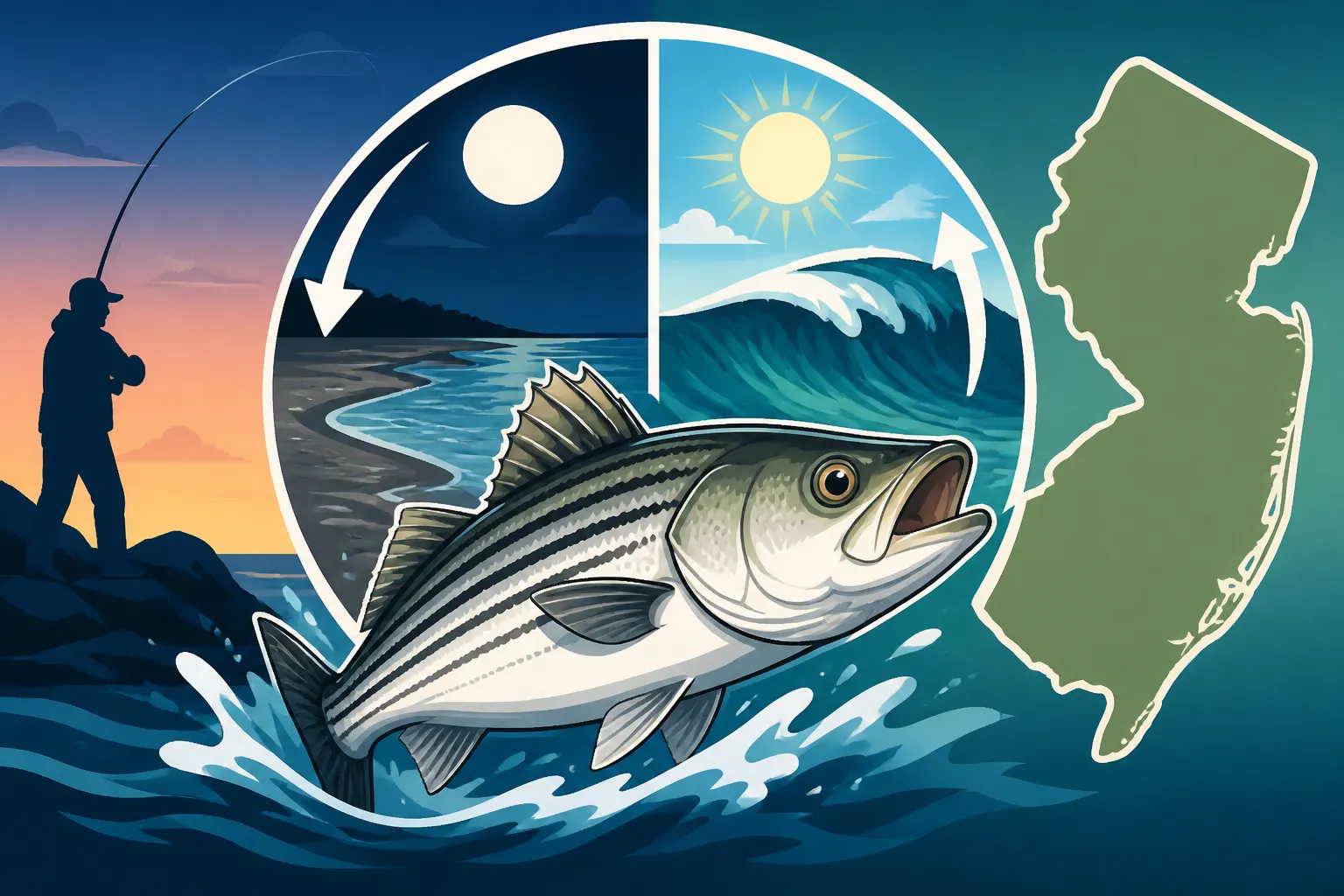
If you've ever stood on a New Jersey beach, watching the waves roll in, a surf rod in hand, and wondered if the current tide was helping or hindering your chances of hooking into a striped bass, you're not alone. The rhythm of the ocean's tides can feel like a secret code, and for surf anglers, deciphering it is key to consistent success. This guide is all about breaking down the mysteries of the tide, focusing on how each stage impacts striped bass behavior, and helping you develop a strategy to put more lines tight along the Jersey Shore.
Understanding the Rhythmic Dance of New Jersey Tides
Tides are quite literally the pulse of the ocean, driven primarily by the gravitational pull of the moon and, to a lesser extent, the sun. Along the New Jersey coastline, we experience semidiurnal tides, meaning we generally have two high tides and two low tides each day. This constant rise and fall of water creates currents that are absolutely vital to the lives of marine fish, especially our beloved striped bass.
Forget the idea that any single tide is always the "best." The truth is far more nuanced, often depending on the specific location, time of year, and even the unique structure of the beach you're fishing. What we're really looking for isn't just a high or a low, but the movement of water that these tidal changes generate. Strong currents can sweep baitfish, crabs, and other forage, concentrating them for predators. Conversely, slack water, where the current briefly pauses at the peak of high or low tide, often signals a lull in feeding activity.
Learning to read a tide chart is your first crucial step in becoming a more effective surf angler. These charts, readily available online or at local bait and tackle shops, predict the exact times of high and low tide for specific locations along the coast, like Barnegat Inlet or Sandy Hook. Armed with this knowledge, you can begin to anticipate when the water will be moving most vigorously, and thus, when the striped bass are most likely to be actively feeding. For a deeper dive into decoding these vital predictions, check out our guide on How to Read Tide Charts for Better Fishing in New Jersey.
Why Moving Water is Your Striped Bass Best Friend
Striped bass are opportunistic predators, and like many game fish, they thrive in areas where currents help them with their hunting. Think of moving water as a conveyer belt for their food. When the tide is pushing or pulling, it dislodges crabs from the bottom, stirs up worms from the sand, and sweeps schools of baitfish like bunker, spearing, and mullet through channels and nearshore structures. This creates a natural buffet line that striped bass are quick to exploit.
Strong currents provide cover for striped bass, allowing them to ambush prey with less effort. They can sit just out of the main current, conserving energy, and dart out when an unsuspecting baitfish or crab gets swept by. This is particularly true around structure like jetties, submerged rocks, or even subtle sandbars and troughs where the current is altered. These areas become prime feeding grounds during strong tidal flows.
Beyond simply delivering food, moving water also oxygenates the water, which is important for active fish. Stagnant water, especially in warmer months, can lead to less active fish. So, when you're looking for that "best tide" for surf fishing striped bass, you're really searching for the phases of the tide that create the most beneficial conditions for the fish to feed aggressively. If you're curious about what fuels these hungry predators, you might find our article on What Do Striped Bass Eat in New Jersey Waters? very insightful.
Deconstructing Each Tide Stage for Striped Bass Success
Now, let's break down each tidal stage and explore how it influences striped bass behavior, giving you actionable strategies for each.
The Incoming Tide: A Highway for Hungry Stripers
Many seasoned New Jersey surf anglers will tell you that the incoming tide is often their favorite for striped bass, and for good reason. As the water begins to flood in from the ocean, it creates a powerful influx of bait, energy, and opportunity.
During the initial hours of the incoming tide, especially the first two to three hours after low tide, the rising water pushes baitfish closer to shore and into shallower areas. These newly submerged zones, which were dry or barely covered at low tide, suddenly become accessible feeding grounds. Stripers, always on the hunt, will follow this advancing water, cruising the newly formed channels, guts, and the backside of sandbars. This is an excellent time to target areas where baitfish might be seeking refuge or getting pushed against structure.
Think about fishing the leading edge of the incoming tide. As the water rises, it can create productive rips and current seams around inlets and points. Locations like Manasquan Inlet or Barnegat Inlet become incredibly active. Stripers often line up in these currents, waiting for food to be swept past them. A well-placed bucktail jig or a presentation of fresh clam or bunker on a fish-finder rig can be deadly. If you're planning to fish these dynamic areas, our guide on the Best Tide to Fish a New Jersey Inlet offers excellent specific advice.
The Peak of High Tide: Sometimes Great, Sometimes Quiet
Once the incoming tide reaches its peak and transitions into high tide, the dynamics shift. The water is at its highest point, and for a short period, the current often slackens. This slack high tide can be a tricky time for surf fishing striped bass. With less current, baitfish tend to disperse, and stripers may spread out into deeper water or retreat to specific structures where they can still find ambush points.
However, don't write off high tide entirely. If you're fishing near jetties, rock outcroppings, or deep troughs close to shore, the increased water depth at high tide can make these spots more accessible to larger stripers. They might move in to forage on crabs and mussels clinging to the structure, or ambush baitfish that venture too close. Fishing these structures can still be productive, especially if there's any residual current or wave action providing cover. It’s also a prime time to cast longer, reaching those outer sandbars or deeper holes that are only fishable at the peak of the tide. Understanding how to navigate these structures safely and effectively can make a huge difference, so take a moment to review How to Fish Around Jetties Safely.
The Outgoing Tide: Draining the Buffet
The outgoing tide, especially the last few hours before low tide, is another highly productive period for surf fishing striped bass, particularly around inlets, estuaries, and bay mouths. As the water recedes, it acts like a drain, pulling baitfish, crabs, and other forage out of the shallow bays and estuaries and into the deeper ocean.
Striped bass instinctively know this and will often position themselves at choke points or along current lines where this outflowing bounty is concentrated. Think about fishing the edges of channels, the tips of jetties, or any funnel points where the current intensifies. The last few hours of the outgoing tide can be explosive, as vast quantities of food are flushed out, creating a feeding frenzy.
This is a fantastic time for techniques that mimic struggling baitfish being swept out, such as bucktail jigs or soft plastics fished on the bottom. Natural baits like fresh bunker chunks or clams, allowed to drift naturally with the current, can also be incredibly effective. Pay close attention to current seams and rips, as these are often where baitfish are disoriented and easy prey. If you're looking to capitalize on this powerful phase, our article on How to Fish a Falling Tide provides excellent specific guidance.
Slack Tide: The Brief Lull
Slack tide refers to the short period of time, typically around 30-45 minutes, right at the peak of high tide and the absolute bottom of low tide, when the water movement ceases or becomes minimal before reversing direction. For striped bass, which rely heavily on current for feeding, this is generally the least productive time to fish.
With no current to dislodge bait or provide ambush cover, stripers tend to become less active. They might move to deeper, quieter water or simply rest until the current picks up again. For the surf angler, this can be a good time to take a break, re-tie knots, check your gear, or switch out baits. While a stray fish might occasionally pick up an offering during slack water, your chances of consistent action are significantly lower. It's often best to save your most intense fishing efforts for the periods of strong water movement leading up to and following slack water.
Tailoring Your Strategy to Conditions and Locations
While understanding the general principles of tidal movement is crucial, successful surf fishing for striped bass in New Jersey requires an adaptive approach. The "best" tide isn't a static concept; it's dynamic, influenced by a multitude of local factors.
Reading the Beach and the Wind
The New Jersey coastline is incredibly diverse, from the wide, sandy beaches of Island Beach State Park to the rocky jetties and inlets that dot the northern and central shore. Each location interacts with the tide differently. A strong incoming tide that creates a productive rip at one inlet might simply create a gentle push over a shallow flat in another area.
Beyond the tide itself, wind plays an enormous role. An onshore wind, blowing from the ocean towards the beach, can create strong waves and wash baitfish closer to shore, even against a weak tide. Conversely, a strong offshore wind can flatten the surf and make casting difficult. The combination of wind and tide can create unique fishing scenarios. For example, a strong incoming tide combined with an onshore wind can create exceptionally rough but very productive surf conditions, as the waves disorient bait and create a feeding frenzy for stripers. However, safety should always be your priority, especially when fishing rough conditions. Understanding how to navigate these powerful currents is crucial, and our detailed explanation of How to Read a Rip Current for Safer Surf Fishing is a must-read.
Visually inspect the beach when you arrive. Look for signs of baitfish, diving birds, and any visible rips, cuts, or troughs in the sand. These topographical features act as highways and ambush points for striped bass, regardless of the tide. You're trying to put all the pieces together: the tide, the wind, the waves, and the structure of the beach.
Baits, Lures, and Techniques for Different Tides
Your choice of presentation should also adapt to the prevailing tidal conditions.
- Strong Currents: When the tide is ripping, you'll need heavier offerings to get your bait or lure to the bottom and keep it in the strike zone. For bait fishing, use heavier pyramid or sputnik sinkers. When throwing lures, opt for heavier bucktail jigs, metal lures, or larger swimming plugs that can cut through the current. You might find a wide selection of these essential items on Amazon, allowing you to stock up for any condition.
- Moderate Currents: During less intense tidal movements, you can scale down your weight and use lighter lures or bait rigs. This allows for a more natural presentation. Soft plastics, smaller swimming plugs, and lighter bucktails can all be very effective.
- Slack Water: As mentioned, slack tide is generally tougher. If you're determined to fish it, very slow retrieves with soft plastics or small, natural baits like worms or clams can sometimes coax a lethargic striper.
For a comprehensive breakdown of what to put on your hook, consider diving into our guides on Best Bait for Surf Fishing in New Jersey and Best Lures for Striped Bass Fishing. Combining these bait and lure strategies with your tidal knowledge will significantly increase your odds.
Here's a quick reference table summarizing how different tides affect striped bass fishing:
| Tide Stage | Current Strength | Striped Bass Activity | Best Strategy | Common Gear Considerations |
|---|---|---|---|---|
| Incoming Tide | Increasing | High, especially first 2-3 hours | Target channels, rips, new feeding grounds close to shore | Medium-heavy tackle, various lures/baits, adjust sinker weight as current increases |
| High Tide (Slack) | Minimal | Often slow | Target deep structures, jetties, outer bars. Consider break. | Heavy sinkers for structure, lighter lures if any residual current exists |
| Outgoing Tide | Strong, decreasing | High, especially last 2-3 hours | Target choke points, inlets, outflow currents, rips | Medium-heavy tackle, heavy bucktails/metals, bait on fish-finder rigs |
| Low Tide (Slack) | Minimal | Often slow | Rarely productive. Re-rig, scout new areas. | Minimal fishing; observe beach structure, look for bait. |
Local Knowledge Trumps General Rules
While these guidelines provide a strong foundation, the absolute "best" tide for striped bass fishing can vary drastically from one beach to the next, even just a few miles apart. The local topography, the presence of specific baitfish, and the seasonal migration patterns all play a role.
The absolute best thing you can do is talk to the folks at your local New Jersey bait and tackle shop. They are a treasure trove of hyper-local knowledge and will be able to tell you what's been working where and on what tide. They live and breathe this stuff. Pay attention to what other successful anglers are doing, and most importantly, keep your own fishing log. Note down the tide, time of day, weather conditions, bait/lure used, and whether you caught anything. Over time, you'll start to see patterns emerge that are specific to your favorite fishing spots. For general techniques that apply across the Jersey Shore, our comprehensive guide on New Jersey Surf Fishing Techniques is a great read.
Remember, a slot limit for striped bass (currently 28 to 38 inches in New Jersey, but always check the most recent regulations) means that even if you catch a trophy, it might need to go back. Always know the current New Jersey Striped Bass Slot Limit: 28 to 38 Inches before you hit the water. This also applies to the best times of year to target them, which you can learn more about in Best Time of Year to Fish for Striped Bass in New Jersey. And if you're still looking for new spots, our guide on Where to Surf Fish for Striped Bass in New Jersey is packed with ideas.
Ultimately, the best tide for surf fishing striped bass isn't a rigid rule; it's a dynamic puzzle that changes with every fishing trip. But by understanding the principles of moving water, observing your surroundings, and adapting your tactics, you'll dramatically improve your chances of enjoying the thrill of a striper on the line along the beautiful New Jersey coast.
Disclaimer
Fishing regulations, including size and bag limits, as well as licensing requirements, can change. Always consult the most current New Jersey Fish and Wildlife Digest or their official website before heading out to fish. This guide is for informational purposes only and does not supersede state regulations.