Gulp Bait vs Live Bait for Fluke Fishing
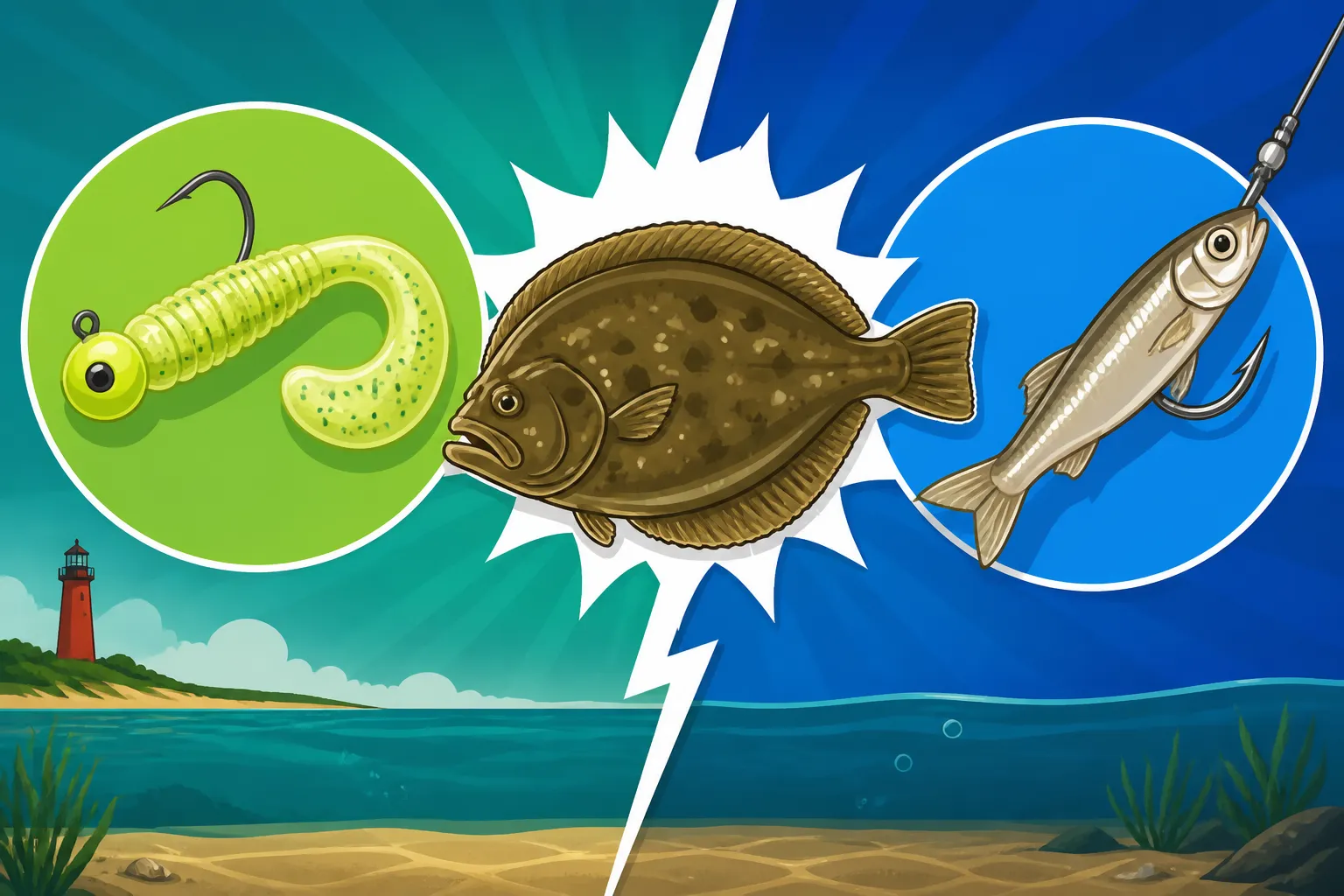
For many New Jersey fluke anglers, standing at the bait shop or tackle store, a familiar dilemma often arises: do you reach for the lively, wiggling minnows and fresh squid, or do you grab a few tubs of those brightly colored, scented Gulp! baits? It's a question that sparks endless debates on the docks and boat ramps, with passionate advocates on both sides. This guide is here to break down the nuances of Gulp! bait versus natural live bait, helping you understand their strengths and weaknesses so you can make the best choice for your next fluke fishing adventure on the Jersey Shore.
The Allure and Effectiveness of Gulp! Baits for Fluke
Let's be honest, the convenience of artificial baits like Berkley Gulp! is incredibly appealing. No need to worry about aerators, keeping bait alive, or the messy business of handling live creatures. But Gulp! is more than just convenient; it’s designed to actively attract fish. These soft plastic baits are impregnated with a water-soluble scent that disperses widely, mimicking the natural smell of forage. For fluke, which are primarily ambush predators relying heavily on sight and smell, this can be a game-changer.
Understanding Gulp!'s Scent Dispersion Technology
The secret behind Gulp!'s success lies in its proprietary formula, which releases scent at a much higher rate than traditional plastic baits. When submerged, the bait continuously sloughs off microscopic particles that carry its fish-attracting odor through the water column. This creates a "scent trail" that can draw in fluke from a distance, much like natural bait would. Think of it as leaving a breadcrumb trail of deliciousness for a hungry fluke to follow right to your hook. This strong scent can be particularly effective in stained or turbid water conditions, where visibility might be low, forcing fluke to rely more on their sense of smell to locate prey. It's a significant advantage when the water isn't crystal clear, a common scenario in many of New Jersey's back bays and tidal rivers after a good rain.
Durability and Variety of Gulp! Offerings
One of the biggest frustrations with live bait is its fragility. A single bite can render a minnow useless, meaning constant re-baiting. Gulp! baits, on the other hand, are incredibly durable. While not indestructible, they can often withstand multiple strikes from toothy fluke, saving you time and money on bait. This durability also means less time spent rigging and more time with your line in the water, which, as any angler knows, directly translates to more opportunities to catch fish.
Beyond durability, the sheer variety of Gulp! shapes, sizes, and colors is staggering. For fluke fishing, popular choices include the Gulp! Swimming Mullet, Gulp! Grub, and Gulp! Shrimp, often in bright colors like chartreuse, white, or new penny. Each mimics a different natural food source for fluke. You can easily find a wide selection of these baits on platforms like Amazon, allowing you to stock up on different options to match various conditions or experiment with what the fish are biting on a given day. This versatility allows anglers to adapt quickly to what the fluke prefer, whether they're keying in on silversides, spearing, or even a crab imitation.
The Undeniable Power of Live Bait for Fluke
Despite the advancements in artificial baits, live bait holds a special place in the hearts of many seasoned fluke anglers, and for good reason. There’s simply no replicating the natural action, smell, and vibration of a truly live offering. The subtle movements of a distressed minnow or the natural scent of a freshly cut piece of squid can often be irresistible to a hungry fluke, especially larger, more wary fish.
The Irresistible Natural Presentation
When you hook a live killifish or a lively spearing just right, it swims naturally, struggling subtly on the hook. This erratic, lifelike movement is often exactly what triggers a fluke's predatory instinct. An artificial bait, no matter how well designed, can't quite replicate that organic twitch and flutter. This is especially true in clearer waters or on calm days, where fluke have excellent visibility and can scrutinize their prey. The natural oils and enzymes released by live bait also create a powerful scent plume that can't be fully matched by synthetic alternatives, even Gulp!. This potent combination of natural movement and scent makes live bait a formidable weapon in any fluke angler's arsenal.
Consider a sunny day in Barnegat Bay, where the water is gin clear. A fluke lying on the bottom has a wide field of vision. A live peanut bunker, struggling against the current, will present itself in a way that perfectly mimics the fluke's natural prey, often drawing a more aggressive strike than even the most realistic artificial.
Popular Live Bait Options and Their Acquisition
For fluke fishing in New Jersey, several live bait options consistently produce results. Local bait shops along the coast, from Cape May to Raritan Bay, typically carry a good supply. Here's a quick rundown:
- Minnows/Killifish: These small, lively baitfish are a classic choice and are readily available. They're excellent when fished on a traditional How to Tie a Fluke Rig or a bucktail trailer.
- Spearing: Similar to silversides, spearing are slender baitfish that fluke absolutely love. They can be found in estuaries and back bays and are very effective.
- Squid: While not "live" in the swimming sense, fresh cut squid strips are incredibly effective. Their scent and durability make them a staple for many anglers, often tipped onto bucktails or How to Drift Fish for Fluke.
- Peanut Bunker: These juvenile Atlantic menhaden are fluke candy, especially for bigger fish. They can be netted in the bays during certain times of the year.
- Live Herring: Another excellent, albeit less common, choice for larger fluke, often found during spring runs.
Acquiring live bait can be a bit of a chore. You either buy it fresh daily from a bait shop (which adds to the cost) or you catch it yourself using a cast net or traps. Keeping it alive requires a bait bucket with an aerator, especially on warmer days, which adds equipment and maintenance to your fishing trip. However, for many, the extra effort is worth the potential for bigger, more consistent catches.
When to Choose Gulp! vs. Live Bait: Making the Call
Deciding between Gulp! and live bait isn't about one being inherently "better" than the other. It's about understanding the conditions, your fishing style, and what the fluke are responding to on a particular day. Both have their prime situations and their drawbacks.
Situational Effectiveness: Matching Bait to Conditions
The environment plays a huge role in which bait will be more effective.
- Water Clarity: In murky or stained water, where visibility is low, Gulp!'s potent scent dispersion can outperform live bait. Fluke rely more on smell here, and Gulp! excels at broadcasting its odor. Conversely, in crystal clear waters, the natural action of live bait often trumps Gulp!, as fluke can easily spot and evaluate their prey.
- Current and Structure: When fishing in strong currents or around complex structure like jetties or wrecks, Gulp!'s durability becomes a major advantage. It stays on the hook better, allowing for longer drifts and fewer re-baits. Live bait can get ripped off the hook or tangled more easily. However, a live bait struggling against a strong current might also create a more enticing visual cue. This is where you might consider where to target fluke based on the New Jersey Fluke Size and Bag Limits Explained and the particular structure you are fishing.
- Aggressive vs. Finicky Fish: Sometimes fluke are incredibly aggressive, hitting anything that moves. In these scenarios, Gulp! can be just as effective as live bait, and its durability means you can keep fishing through a hot bite without interruption. Other times, fluke can be finicky, only responding to the most natural presentation. This is when live bait truly shines, often drawing strikes when Gulp! gets ignored.
- Time of Year and Location: The New Jersey Fluke Season Start Date and New Jersey Fluke Season End Date dictate when fluke are even available. Early in the season, when water temperatures are still on the cooler side, fluke might be less active and more discerning, sometimes preferring live bait's subtle appeal. As waters warm up in peak summer, they might become more aggressive and willing to hit a Gulp!. Specific locations, like the back bays versus deeper ocean waters, might also influence preference. For instance, in the shallower, warmer backwaters of the Mullica River, live minnows might be key, while offshore wrecks might see Gulp! tipped bucktails performing well for larger fish.
Pros and Cons: A Quick Comparison
To help visualize the trade-offs, here’s a table summarizing the main points:
| Feature | Gulp! Baits | Live Bait |
|---|---|---|
| Convenience | High (easy storage, no aeration needed) | Low (requires aerator, daily purchase/catch) |
| Scent | Strong, consistent, wide dispersion | Natural, potent, variable based on freshness |
| Durability | High (multiple fish per bait possible) | Low (often one fish per bait, falls off easily) |
| Action/Motion | Artificial (requires angler manipulation) | Natural, lifelike (inherent movement) |
| Cost | Higher initial cost, but reusable | Variable (purchase price, or time/effort to catch) |
| Mess Factor | Low (clean, easy handling) | High (slimy, scales, odor) |
| Availability | Excellent (tackle shops, online via Amazon) | Good (seasonal at bait shops, or self-caught) |
| Effectiveness | Highly effective, especially in murky water | Extremely effective, especially in clear water, for finicky/larger fish |
Combining Forces: The Best of Both Worlds
You don't always have to choose one over the other. Savvy anglers often combine Gulp! with live bait to create an irresistible presentation that leverages the strengths of both. This hybrid approach can significantly increase your strike rate and is particularly effective when you're trying to cover all your bases or when fish are being picky.
Tipping a Bucktail with Gulp! and Live Bait
One of the most popular and effective strategies is to tip a bucktail jig with both Gulp! and a piece of live bait. Imagine a well-dressed bucktail jig, its hair undulating in the current, tipped with a chartreuse Gulp! Grub and a small live killifish or a strip of fresh squid. The Gulp! provides that strong, continuous scent trail and vibrant visual appeal, while the live bait adds natural movement, texture, and an additional layer of natural scent that no artificial can truly replicate.
This combination can be incredibly potent. The bucktail gets the offering to the bottom where fluke lie, the Gulp! brings the flash and long-range scent, and the live bait provides the final, irresistible, natural trigger. When a fluke approaches, it's drawn in by the Gulp!'s scent and color, but then it sees and feels the natural movement of the live bait, often sealing the deal for a strike. This technique is fantastic when drifting over uneven bottom or when working around structure, allowing you to maximize your appeal.
Advanced Rigs for Hybrid Presentations
Beyond the simple bucktail tip, you can get more creative with your rigs. For example, a dropper rig could feature a Gulp! bait on one hook and a live minnow on another, offering two distinct presentations simultaneously. Another method is to use a Gulp! Swimming Mullet as a primary attractor on a jig head, and then snell a small, lively minnow on a trailing hook right behind it, ensuring that any short strikes on the Gulp! still have a chance to connect with the live offering.
This dual approach is especially useful in situations where you're unsure what the fluke are keying in on, or when you want to target both active and more hesitant fish. It’s like offering a buffet – the fluke can choose what appeals most to them, and either way, you’re presenting a compelling target. When preparing these rigs, remember to check your knots and lines, especially when aiming for larger fluke that may require stronger tackle. You can find detailed guides on knots for saltwater fishing to ensure your setup is robust enough for these challenging conditions.
Ultimately, the choice between Gulp! and live bait for fluke fishing in New Jersey often comes down to personal preference, budget, and the specific conditions you face. There's no single "right" answer, but by understanding the strengths of each, you can make more informed decisions and increase your chances of a successful day on the water.
Disclaimer
Fishing regulations, including size and bag limits, seasons, and licensing requirements, can change frequently. Always consult the latest New Jersey Fish and Wildlife Digest or their official website before heading out to fish. This article is for informational purposes only and does not constitute legal advice.